
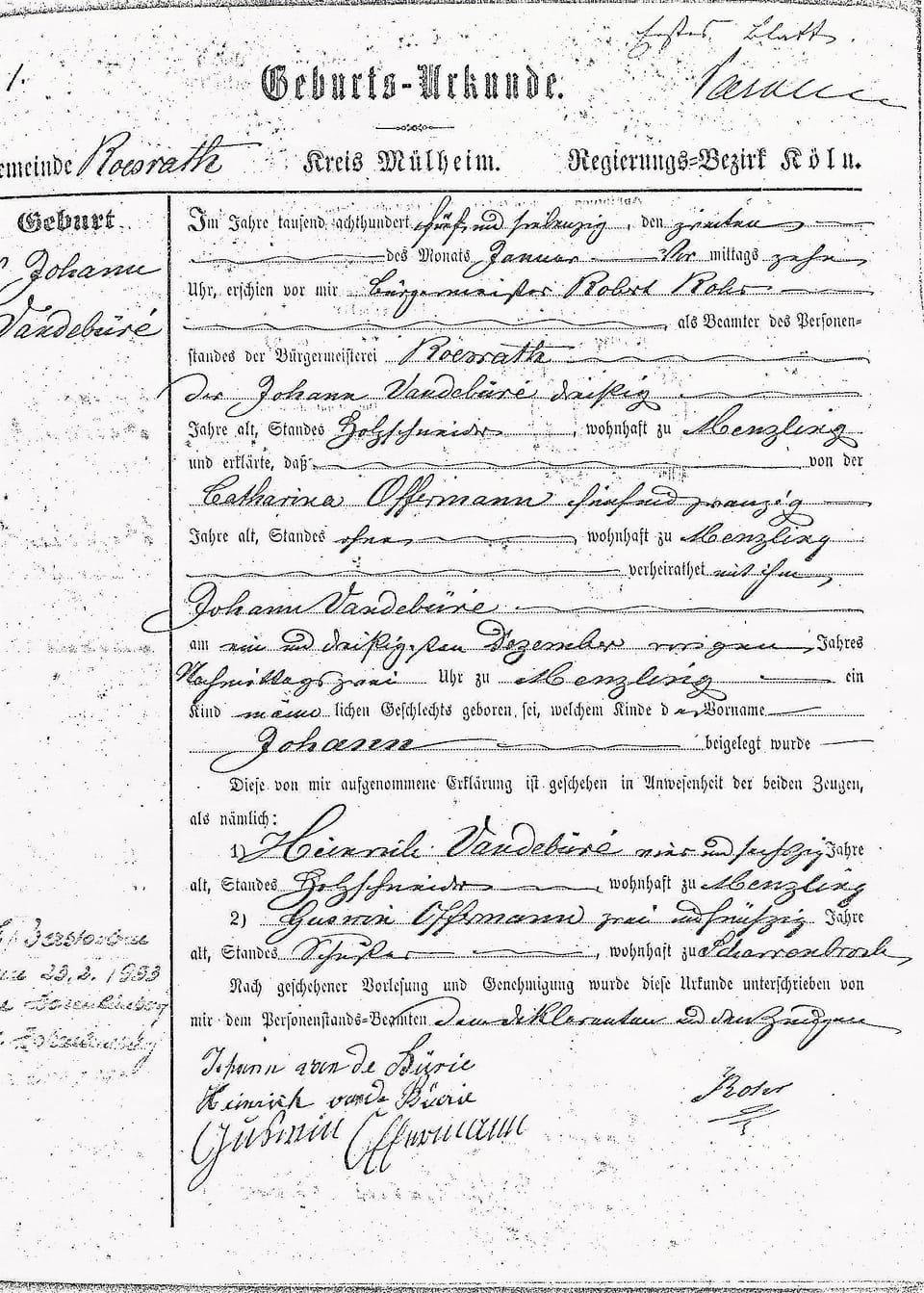
An embassy wants it, a university admissions office wants it, an immigration portal wants it: your birth certificate, translated into English, accurately and credibly. It is a single small document, yet one misspelled name or flipped date can push your application back by weeks. This guide covers the entire route: when the translation is required and at what level of certification, a complete field-by-field template you can fill with your own data, an Arabic-English glossary covering every field found on Arab birth certificates, the crucial difference between apostille and the traditional attestation chain across six Arab countries, the translator's certification statement demanded by US-bound applications, common rejection patterns, and answers to the questions applicants ask most.
When do you need a birth certificate translated into English?
Five situations generate nearly all demand. University admission and scholarship applications, where institutions require a translated birth certificate inside the enrollment file. Visa and family-reunification petitions, where embassies use the certificate to prove kinship. Citizenship and permanent residence applications, which treat the certificate as a core civil identity document. Marriage abroad or registering a newborn in another country. And files with international organizations or credential-evaluation bodies. The rule across all five: the receiving authority wants to read your data in its own language and to trust that what it reads matches the original exactly.
A branch question that saves research time: English or French? If the destination is an English-speaking country's university or embassy, English. If it is France, Belgium, francophone procedures in Tunisia, or Canadian Quebec, French. Canada's federal bodies accept either official language. Everything in this guide about precision and layout applies to both — only the target language changes.
One overlooked point costs applicants dearly: ask the requesting authority what certification level it requires before you pay anyone. Some offices accept any accurate signed translation. Some require a certified translation with a translator's statement. Some require ministry attestation or an apostille. One page of requirements from the authority saves a week of corrections.
Prepare the certificate before translating it: five steps
Before paying an office or printing any template, confirm the document itself is ready:
- Order a fresh extract, not an old photocopy. A certificate issued this month prints cleanly with intact seals; a photocopy of a photocopy loses faint details. A fresh extract costs a nominal fee and saves review days.
- Match the name spelling to your passport. Compare the Latin spelling in your passport letter by letter with what the translator will produce. If your certificate exists only in Arabic, write the approved transliteration on a slip and hand it over — never leave name transliteration to chance.
- Check consistency across your other documents. Your name on the birth certificate, passport, degree, and transcript must match. Any discrepancy (an extra family name, a transposed letter) must be fixed at the civil registry first, because translation faithfully reproduces the error and the file is then rejected for internal inconsistency.
- Scan every page, both sides, at high quality. Some certificates carry a seal or number on the back; scan it too. The translator translates what reaches them — nothing more.
- Bundle every document destined for the same application. If you are assembling a scholarship file you will likely need the birth certificate, degree, and transcript together. Translating the batch at one office unifies formatting and costs less time and money than separate jobs.
After receiving the translation, run a three-point verification before submitting: all names, all dates, all numbers (registration and certificate numbers). These three categories cause most rejections. Then confirm every seal on the original is represented in the translation.
The complete field-by-field template
Professional translation is matching, not re-writing: each field in the original occupies its counterpart position in the translation. This is the standard layout international authorities expect from Arab birth certificates:
BIRTH CERTIFICATE
Arab Republic of Egypt / People's Democratic Republic of Algeria / Kingdom of Morocco (the state's official name exactly as issued)
Ministry of Health — Civil Registry Office
(issuing authority as printed: Ministry of Interior / Ministry of Justice)
Certificate No.: [number]
Registration No. (Qayd No.): [number]
This is to certify that the following birth was registered in the civil registry of [Governorate/Province], Office of Civil Status [number]:
Full Name of the Child: [four-part name exactly as shown]
Sex: Male / Female
Date of Birth: [Day Month Year]
Place of Birth: [city, governorate, country]
Father's Full Name: [name]
Father's Nationality: [nationality]
Father's Religion: (only if present on the original)
Mother's Full Name: [name]
Mother's Nationality: [nationality]
Date of Registration: [date]
Place of Registration: [place]
Issuing Office: [issuing office]
Date of Issue: [date]
[Official seals and stamps on the original]
[Signature of the Registrar]
Golden rules while filling it: render names in Latin script exactly as they appear in your passport — this is the single strictest match test authorities run; transliterate names by sound, never by meaning; keep one unambiguous date format (Day Month Year written out avoids day/month flips between countries); represent every stamp and signature with a bracketed note rather than omitting it; and never add data absent from the original, however helpful it seems.
Arabic-English glossary for birth certificates
| Arabic term | Accepted English rendering |
|---|---|
| شهادة ميلاد | Birth Certificate |
| الاسم الرباعي | Full Name (four-part name) |
| تاريخ الميلاد | Date of Birth |
| مكان الميلاد | Place of Birth |
| الجنس | Sex |
| الذكر / الأنثى | Male / Female |
| اسم الأب | Father's Name |
| اسم الأم | Mother's Name |
| الجنسية | Nationality |
| الديانة | Religion |
| رقم القيد | Registration No. |
| الدائرة الصحية | Health Directorate |
| مكتب الأحوال المدنية / السجل المدني | Civil Status Office / Civil Registry |
| المحافظة / الولاية / اللواء | Governorate / Wilaya / Province |
| وزارة الصحة | Ministry of Health |
| وزارة الداخلية | Ministry of Interior |
| وزارة العدل | Ministry of Justice |
| تاريخ التسجيل | Date of Registration |
| تاريخ الإصدار | Date of Issue |
| بيان قيد ميلاد | Extract of Birth Registration |
| حديث الولادة | Newborn |
| التوائم | Twins |
Two distinctions matter. An "extract of birth registration" (بيان قيد ميلاد) is not a full certificate but an official registry extract — translate it as Extract of Birth Certificate and the receiving authority understands the document type correctly. And administrative divisions differ across the region (governorate, wilaya, province): translate the actual term on your document rather than flattening it into a generic one.
Three levels of acceptance: which one does your authority want?
Think of acceptance as three concentric circles:
- Circle one — accurate signed translation. The receiving body needs correctness and a signature from whoever produced it. Most universities and many employers sit here.
- Circle two — certified translation. The translation travels with a signed, dated statement in which the translator certifies competence and attests that the translation is complete and accurate. This is the format US immigration rules mandate: any foreign-language document must arrive with a full English translation plus the translator's certification of competence and accuracy — signed and dated. Notably, the US rule does not require a state-licensed translator; it requires the certification statement itself.
- Circle three — sworn or officially attested translation. A qualified authority stands behind the translation: a court-sworn translator, a justice-ministry-licensed office, with ministry or consular attestations layered above. Several European countries require this tier, and it is what people usually mean by "attested translation."
The practical summary: identify which circle your authority occupies, then pay for exactly that. Buying circle-three attestation for an office satisfied with circle two is wasted money and time.
Apostille or attestation chain: the full map
After translation comes authentication of the document itself, and the world splits into two systems:
- The apostille system. The Hague Conference's 1961 Apostille Convention created a single certificate — the apostille — issued by a designated competent authority in the document's country, replacing every intermediate legalization among member states. The United States, United Kingdom, France, Germany, Türkiye, and the Netherlands are members, so an apostilled document from your country is accepted there directly. The official HCCH site lists every member state and its competent authorities — verify membership there before planning your route.
- The traditional attestation chain. Where the destination state is not a member (the situation for most Arab countries), the classic route applies: attestation by the issuing authority, then the foreign ministry of your country, then the destination country's embassy or consulate. Some states insert a justice-ministry or translators-association step before the foreign ministry.
Country-by-country outline for six common origin countries — details change, so verify with the requesting authority before each step:
- Egypt: certified-office translation, then (per request type) translators' syndicate attestation, Ministry of Foreign Affairs, then the destination embassy in Cairo if required.
- Algeria: sworn court-approved translator, then the attestation department of the Algerian foreign ministry, then the destination consulate as needed.
- Morocco: translator sworn before the Court of Appeal, then Ministry of Justice, then foreign ministry, then destination embassy.
- Tunisia: court-sworn translator, then the attestation office at the Tunisian foreign ministry, then the destination embassy.
- Jordan: certified office, then Ministry of Justice, then foreign ministry, then destination embassy; some educational routes add the higher-education ministry.
- Saudi Arabia: certified office, then Ministry of Justice, then foreign ministry, then the requesting body (some accept the justice-plus-foreign-ministry route alone).
End-to-end timing runs from days to weeks depending on country and season — start authentication well before your submission deadline, not after.
The translator's certification statement
If your destination is the United States or any authority following its rules, attach this page after the translation. It satisfies the regulatory requirement completely:
CERTIFICATE OF TRANSLATOR'S ACCURACY
I, [Full Name of Translator], certify that I am competent to translate from [Arabic] to [English], and that the above translation of the Birth Certificate of [Name on Document], issued by [Issuing Authority], is a complete and accurate translation of the original document.
Translator's Signature: ________
Printed Name: [Full Name]
Address: [full address]
Phone: [number]
Date: [date]
An ethical boundary worth stating plainly: never sign a certification for a translation you did not personally produce and verify. The statement is a legal declaration, and signing over an unreviewed machine translation exposes the application to rejection the moment the authority spots mismatched details.
Rejection patterns and how to prevent them
Evaluation services and embassies review thousands of documents, and their rejection reasons repeat:
- Flipped date formats. A translator writes 03/04/2015; an American officer reads March 4th; the original says April 3rd. Write the month out in words for every critical date.
- Inconsistent name spelling across documents. Ahmed on the new translation, Ahmad on an older degree. Standardize on the passport spelling everywhere.
- Literal translation of administrative terms. Translate the issuing authority's function, not word-for-word structure.
- Omitted seals. A certificate with three stamps translated as text only looks incomplete against the original and violates the completeness requirement.
- Half-page translations. The certificate's back side, carrying a seal or number, never reached the scan.
- "Improving" the document. Adding a national ID number or religion absent from the original is falsification, discovered instantly on comparison.
- Wrong-country templates. An Egyptian layout applied to a Saudi certificate names the wrong ministry in the first line. Check the real issuing authority first.
Every item above is fixable in minutes if caught before submission, and costs about two weeks if caught after. Run the three-point verification yourself even when a professional produced the translation.
And if your destination is francophone?
Many applicants search for the French route as well: France itself, Belgium, francophone procedures in Tunisia, Algeria, and Morocco, or Quebec. The method is identical — literal matching, seal representation, translator's statement. What changes is terminology: the document becomes an Acte de Naissance, an extract becomes an Extract d'Acte de Naissance, and core fields read Nom et Prénom, Date de Naissance, Lieu de Naissance, Nom du Père, Nom de la Mère, with authorities rendered as Ministère de la Santé, Ministère de l'Intérieur, Bureau d'État Civil. One caution specific to France: for sensitive official transactions it effectively expects a traducteur expert agréé — a sworn translator registered with a Court of Appeal — with the original attached beside the translation. If France is your destination, start from the sworn tier directly rather than testing a cheaper option first; redoing the French route takes longer.
Fast, accurate, reasonably priced: your three options
Three practical routes exist, each with its own price, speed, and risk profile. A local certified office: best when you need the full attestation chain, at the highest cost and longest timeline. Self-translation: cheapest and riskiest, viable only when you know the target language well and the authority accepts a signed translation — unacceptable for circles two and three. Digital translation services: deliver a formatted file quickly and inexpensively, suited to authorities that accept an accurate signed translation.
That third route is exactly what Qaddimli built its service around: the AI-powered academic document translation service delivers your certificate translation as an official PDF with letterhead, stamp, and QR code, preserving tables, dates, and numbers through automated per-number checking, with your name rendered in Latin script exactly as in your passport and pricing scaled by page count — the right fit for authorities requiring accuracy without sworn certification. For paths demanding human review or specialized professional translation, Qaddimli also offers a human translation service with professional translators and editable Word delivery.
One honest caveat: fast digital translation never replaces official attestation. If your authority demands a sworn translator or an apostille, walk the official route from the start.
Your documents serve a bigger file
Document translation is a technical step inside a larger journey: admission and funding. Every page you translate today serves tomorrow's application. Among the currently open opportunities on Truescho requiring translated documents in the application file: the University of Tabuk 2026/2027 Scholarships in Saudi Arabia, fully funded for bachelor's and postgraduate study. For translating the rest of an academic file — degrees and transcripts — see our comprehensive guide Certified translation of academic documents.
The whole route in five steps
To compress this guide into a map: first, identify the authority and read its exact translation and attestation requirements — this determines everything downstream. Second, prepare the certificate: fresh extract, passport-matched name spelling. Third, produce the complete accurate translation with seals represented and a translator's statement if required. Fourth, add precisely the demanded authentication layer: nothing, a statement, an apostille if the destination is a Hague member, or the traditional chain if not. Fifth, verify names, dates, and numbers across the whole file before submission. Follow the five in order and the file is complete on the first pass; skip one and you likely return to the back of the queue.
Frequently asked questions
Does the translation have to be certified?
It depends on the requesting authority. Most universities accept an accurate signed translation; embassies and immigration bodies usually require certification with a translator's statement; some demand full attestation. Ask before paying.
Apostille versus attestation — what is the difference?
An apostille is a single certificate from the document's country, sufficient among Hague Convention member states. Attestation is the sequential chain — issuing authority, foreign ministry, destination embassy — used with non-member states.
How much does birth certificate translation cost?
Prices span from low per-page AI-based services to higher per-page human office rates, with sworn translation the most expensive. Always ask whether attestation fees are inside or outside the quoted price.
Can I translate my own certificate?
If the authority accepts a signed translation and your English is strong, yes — with meticulous proofreading. If a sworn translator is required, no: signing a competence statement over an unverified translation is a risk not worth taking.
My old certificate shows a family name absent from my passport. What now?
Request a fresh extract with the matching name from the civil registry, or a name-unification document, then translate. Name-spelling mismatches between documents are the leading cause of file rejection.
Original or copy — what do authorities accept?
Most accept a clear copy with the translation; some want the original or a certified copy. The translation itself must always be produced from the complete original or a clear copy of all its faces.
Do translations or attestations expire?
The translation does not expire while it matches the original, but some authorities require recent attestation or apostille (six months to a year), and some want a fresh extract. The safe rule: submit extracts and attestations under six months old.
Want someone to handle this step for you?
Qaddimli's academic document translation delivers your birth certificate translation as an official PDF with letterhead, stamp, and QR code, matching names and dates precisely — start at the translation service page.