
Last updated: October 3, 2026
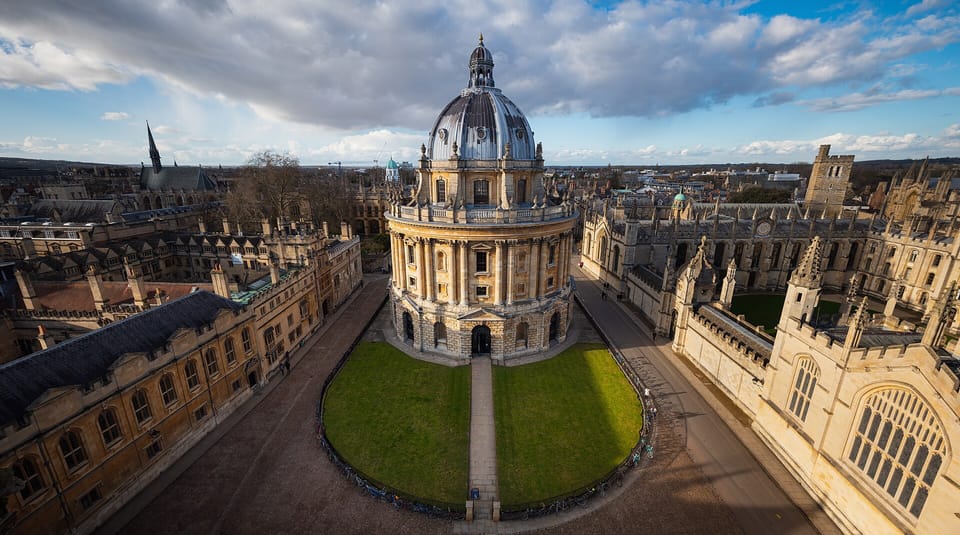
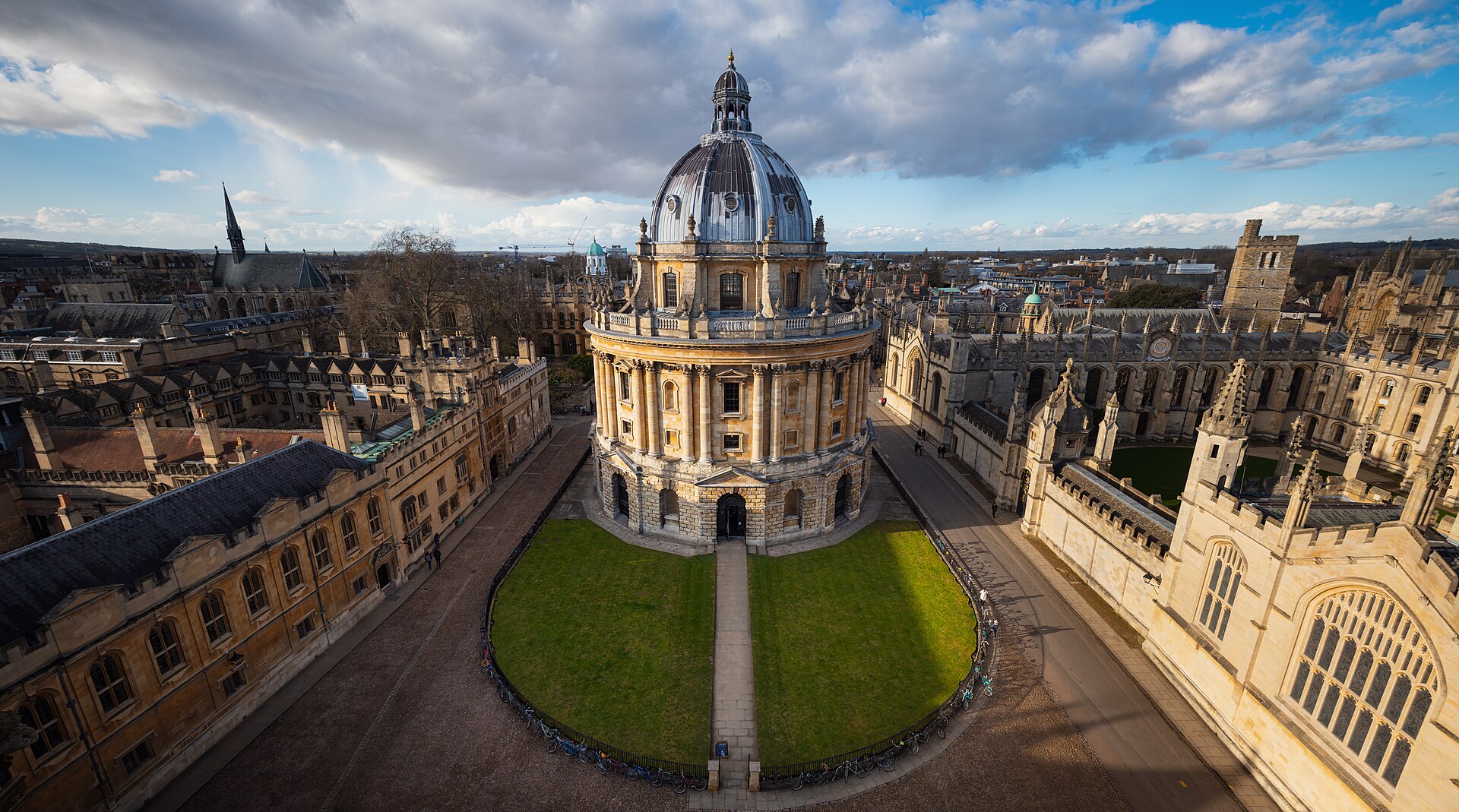
In the early hours of September 30, 2026, Times Higher Education (THE) published its World University Rankings 2027 — and the summit has never been this close. The University of Oxford held onto first place for a record eleventh consecutive year, beating MIT by just 0.1 points in the overall score. Further down, Tsinghua University in China made history at 11th place by overtaking ETH Zurich — the first time Asia's best university has ranked above the best of continental Europe — while Qatar's Hamad Bin Khalifa University (HBKU) entered at joint 126th globally, becoming the first Arab university ever to break into the world's top 150.
This year's edition ranks 2,297 universities from 118 countries and territories — up from 2,191 in the 2026 edition — making it one of the most comprehensive international rankings ever assembled. For international students planning a 2027 intake, the results carry three clear signals: the race at the top is now decided by decimals, the center of academic gravity is drifting steadily toward Asia, and Gulf universities are beginning to harvest returns on a decade of research investment.
What does this mean for you?
If you are preparing scholarship applications or university admissions for 2027, these results are more than a celebration list:
- A destination shortlist: the universities at the top are precisely the ones tied to the most competitive funding — from the UK's Chevening Scholarships, which close October 6 to Stanford's Knight-Hennessy Scholars program at a university now ranked joint 3rd globally.
- Degree value in the job market: employers across the Gulf, Asia and Europe still routinely screen international credentials by institutional rank, particularly for public-sector hiring.
- A research compass: if you are targeting a PhD or research master's, the ranking's "research quality" and "research environment" indicators are the ones most directly tied to your academic future.
The 2027 top 10
| Rank (2027) | Institution | Country | Rank (2026) |
|---|---|---|---|
| 1 | University of Oxford | UK | 1 |
| 2 | MIT | US | 2 |
| =3 | Princeton University | US | =3 |
| =3 | Stanford University | US | =5 |
| 5 | University of Cambridge | UK | =3 |
| 6 | Harvard University | US | =5 |
| 7 | Caltech | US | 7 |
| 8 | Imperial College London | UK | 8 |
| =9 | UC Berkeley | US | 9 |
| =9 | Yale University | US | 10 |
The top 10 remains an exclusively US–UK club — but the ground beneath it is eroding faster than ever.
The 0.1-point story: how Oxford beat MIT
The gap between first and second place this year is one tenth of a single point in the overall score — the slimmest margin announced in years. The underlying numbers reveal a two-track contest:
- Where Oxford won: research productivity, international co-authorship (papers written with collaborators abroad), and the ratio of doctoral-degree holders among staff.
- Where MIT won: student-to-staff ratio, citation impact, and aggregate research strength.
In plain terms: Oxford wins on research depth and international spread; MIT wins on teaching intensity and the sheer influence of its publications. The final margin was almost too small to measure — which makes the 2028 summit genuinely open in either direction.
The bigger shift: Asia passes continental Europe for the first time
The deepest news of this edition is not at the summit but at 11th place. Tsinghua, stalled at 12th for three consecutive years, finally climbed past ETH Zurich to become the highest-ranked Asian university ever to sit above continental Europe's best in the ranking's history.

Three accompanying facts complete the picture:
- Three Asian universities in the top 15 for the first time: Tsinghua (11th), Peking (13th), and the National University of Singapore (15th, up two places).
- China broke a three-year stalemate: the number of Chinese universities in the top 200 rose from 13 (unchanged since 2024) to 17, with 71% of its ranked institutions improving.
- New entrants at the edges: Malaysia entered the top 200 for the first time, while sub-Saharan Africa's ranked institutions grew from 55 to 69.
The West's presence inside the top 200 thinned slightly in parallel: the US lost two institutions (from 55 to 53) and the UK one (from 26 to 25). The World Economic Forum's analysis of the results ran under an unambiguous headline — "academic power shifts East" — noting that the combined average scores of the US and UK now only just outpace the combined averages of China, Singapore and Hong Kong, that Asia now leads on industry-linked metrics, and that the US and UK retain the lead in international outlook and, narrowly, in research and teaching.
The Arab results: Qatar makes history, Saudi Arabia climbs
The region's headline came from Doha. Hamad Bin Khalifa University (HBKU), a member of Qatar Foundation, entered the ranking at joint 126th globally — by its own official statement of October 1, 2026, the first and only Arab university inside the world's top 150, a milestone achieved in a debut appearance at this level.
University President Dr. Ahmad M. Hasnah said the standing "reflects the dedication of our faculty, researchers, students, and staff, and the enabling vision of Qatar Foundation," adding that HBKU's mission "has never been solely about benchmarks, but about driving purposeful innovation and nurturing homegrown intellectual capacity that directly serves Qatar's national priorities and contributes to the global knowledge economy."
In Saudi Arabia, KFUPM (King Fahd University of Petroleum & Minerals) continued its climb, moving from joint 184th to joint 176th — a trajectory consistent with the Kingdom's broader research expansion, which also shows up in fully funded graduate programs such as the KAUST Fellowship for master's and PhD study.
It is worth noting that the rankings' main results report named no UAE or Egyptian institutions among the spotlighted universities this year — a reflection of how competitive the upper bands have become, rather than of absence from the expanded tables.
Risers and fallers in 2027
Beyond the summit and the macro story, this edition produced several movements worth an applicant's attention:
- UC San Diego jumped ten places to 37th — one of the biggest climbs among US public universities.
- UCL returned to the top 20 at joint 17th; LSE sits at 47th.
- The University of Melbourne held at joint 34th, effectively the southern hemisphere's flagship.
- Japan's decline continued: Tokyo at 27th and Kyoto at joint 62nd, heading in the opposite direction from China and Singapore.
- France took a symbolic hit: Université Paris Cité dropped out of the top 200 to joint 201st.
- First-time countries: Albania (University of Tirana) and Malawi (Kamuzu University of Health Sciences) appeared in the tables.
- The merger wave continues: 35 merged institutions were ranked, up from 30 in 2026 — a global trend toward building bigger research entities.
UC Berkeley's official coverage of the results also confirmed it as the No. 1 public university in North America at joint 9th — essential context for anyone weighing large US public universities against smaller private ones.
How the ranking works: the five pillars
THE's World University Rankings evaluate research-intensive universities across five core pillars: Teaching (the learning environment), Research Environment (funding and infrastructure), Research Quality (volume, influence and citations), International Outlook (the share of international students, staff and co-authored publications), and Industry (knowledge transfer and research income from the private sector). These are the pillars that produced the decimal-thin Oxford–MIT split described above.
Three takeaways for the 2027 academic year
- A ranking is a signal, not a verdict. The gap between 1st and 11th place is narrower than most people assume — 0.1 points separated first from second. Choose the program, the supervisor and the funding package before the university's number.
- Asian value is real and rising. Universities in China, Singapore and Malaysia now offer genuinely growing research quality, often with competitive costs and scholarship pipelines — a serious angle for 2027 planning.
- Top-university scholarships close soon. If a top-10 institution is your target, this week is decisive: review the fully funded scholarships open now for the current cycle — updated with the nearest deadlines — before October 6.
Frequently asked questions
Which university is ranked No. 1 in the world in 2027?
The University of Oxford, for the eleventh consecutive year, ahead of MIT by just 0.1 points in the overall score — the slimmest margin in recent editions.
What is the best-ranked Arab university in THE 2027?
Hamad Bin Khalifa University (HBKU) in Qatar at joint 126th globally — the first Arab university to enter the world's top 150 according to its official statement. Saudi Arabia's KFUPM follows at joint 176th.
Did the methodology change this year?
THE announced no major methodology changes in the official results report; universities were assessed across the usual five pillars — Teaching, Research Environment, Research Quality, International Outlook and Industry.
Does a university's rank matter for scholarship applications?
It matters as one factor among several. Many major scholarships fund study at highly ranked universities, but selection committees look first at your academic record, motivation letter and research plan — a ranking number alone guarantees neither admission nor rejection.
When was the 2027 edition released, and are the results final?
It was published in the early hours of September 30, 2026, covering 2,297 universities from 118 countries. The published results stand for the full cycle until the 2028 edition is released in autumn 2027.
Sources
- Official THE World University Rankings 2027 results announcement — Times Higher Education: https://www.timeshighereducation.com/news/world-university-rankings-2027-results-announced
- HBKU official statement on its 126th place: https://www.hbku.edu.qa/en/news/hbku-ranks-in-times-higher-education
- UC Berkeley's official coverage of the rankings results — Berkeley News (joint 9th; No. 1 public university in North America).
- World Economic Forum analysis: "World University Rankings 2027: Academic power shifts East."