
Article 1 ===
US Judge Blocks Four-Year Cap on Student Visas One Day Before It Took Effect
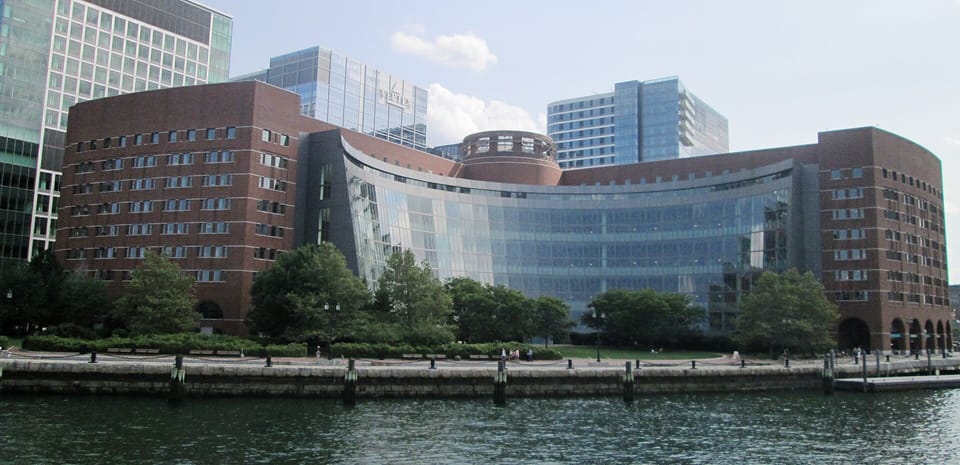
On Monday, September 14, 2026 — with hours to spare — US District Judge F. Dennis Saylor IV of the District of Massachusetts issued an order blocking a Department of Homeland Security rule that would have imposed a fixed four-year limit on how long international students can stay in the United States. The rule was scheduled to take effect the very next morning, Tuesday, September 15, 2026. The practical bottom line for students: the decades-old "duration of status" framework remains in force for now, and the next court hearing is set for October 2, 2026.
What exactly happened on September 14, 2026?
Judge Saylor granted a postponement of the rule's effective date under the Administrative Procedure Act (APA), in response to a lawsuit filed by a coalition of eight higher-education and labor organizations, including the Presidents' Alliance on Higher Education and Immigration, NAFSA: Association of International Educators, the Association of Independent Colleges and Universities of Massachusetts, and the United Auto Workers. The judge declined to grant summary judgment striking the rule down permanently, but found the plaintiffs show a "substantial likelihood of success" — enough, legally, to freeze the rule while the case proceeds.
The rule itself was announced by DHS on July 16, 2026, published in the Federal Register on July 17, 2026 (Vol. 91, No. 136, Document 2026-14439), and set to take effect 60 days after publication — September 15, 2026. Arguments were heard on September 3, and the decision landed at almost the last possible moment.
The rule the judge froze, term by term
The regulation would have retired the "duration of status" system — in place since 1978 — under which students may remain in the US for the length of their academic program as documented on their I-20 form. Its core provisions:
- A four-year ceiling: a fixed admission period capped at four years for holders of student (F), exchange visitor (J), and foreign media (I) visas, regardless of actual program length.
- Extensions through USCIS: anyone needing more time would have to file an Extension of Stay request with US Citizenship and Immigration Services, complete with biometric vetting and background checks — shifting oversight from university international-student advisers to federal authorities.
- A shorter grace period: the post-completion grace period for F-1 students would drop from 60 days to 30 days to depart, transfer, or change status.
- Transition rules: students whose programs end before September 2030 would have been exempt from needing an extension, while longer programs — PhDs above all — faced the hard cap directly.
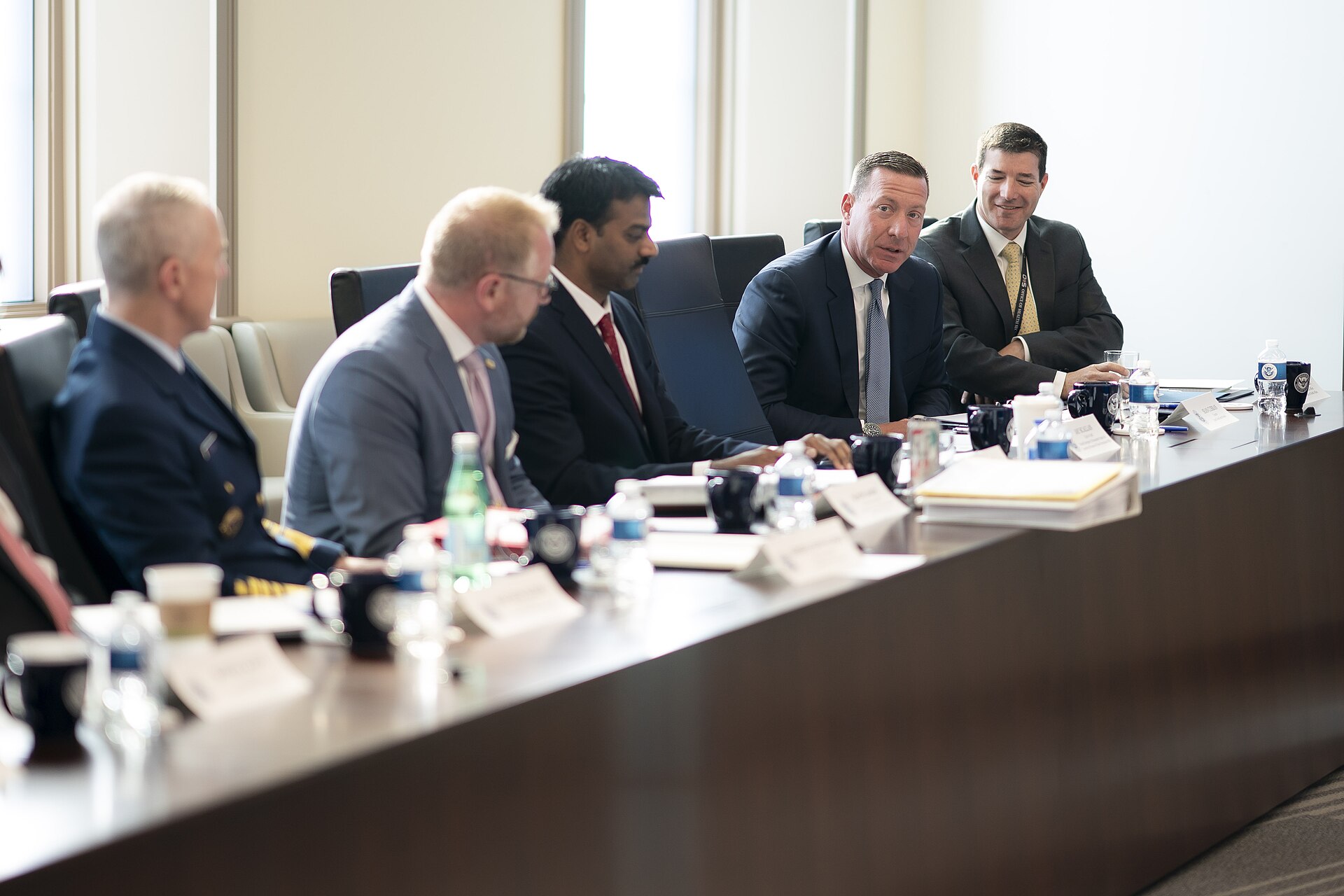
Source: U.S. Department of Homeland Security — Wikimedia Commons
_component_meeting_at_DHS_Headquarters_in_Washington,_D.C.,_August_27,_2025_-_14.jpg?ref=blogs.truescho.com)
Announcing the rule in July, DHS Secretary Markwayne Mullin said that "for nearly half a century, the outdated 'duration of status' system has compromised national security," accusing it of enabling "forever students" who avoid departure through perpetual enrollment. That is the government argument the judge found unconvincing.
Why the judge ruled against the government
In his order, Judge Saylor wrote that "the promulgation of the rule clearly failed to comply with the [Administrative Procedure Act]," faulting DHS for not adequately justifying the change or analyzing its effects on enrollment. The sharpest lines from the ruling and the September 3 hearing:
- On the risk of abuse, he warned the system "might be abused to punish those whose viewpoints or research are disfavored by the officials making the decision."
- On the human cost: "An international student who is one credit short of graduating could be required to leave the United States without a degree," with no real recourse — a "high degree of uncertainty" he found unacceptable.
- On the national-security rationale: it "raises legitimate questions as to whether its real purpose is not to safeguard national security and protect our borders," suggesting the goal may instead be "asserting greater government control over academic institutions."
- From the bench: "I am struggling to see any real, rational connection between national security issues identified" and the cap — noting the incidents cited by the government totaled fewer than half a dozen over 50 years.
Government attorney Michael Celone defended the rule by arguing affected students could seek extensions or apply to other schools, comparing school choice to "taking a book out of the library." The judge was unmoved: replacing Harvard and MIT graduate students with others, he said, is "not a rational response to a legitimate concern."
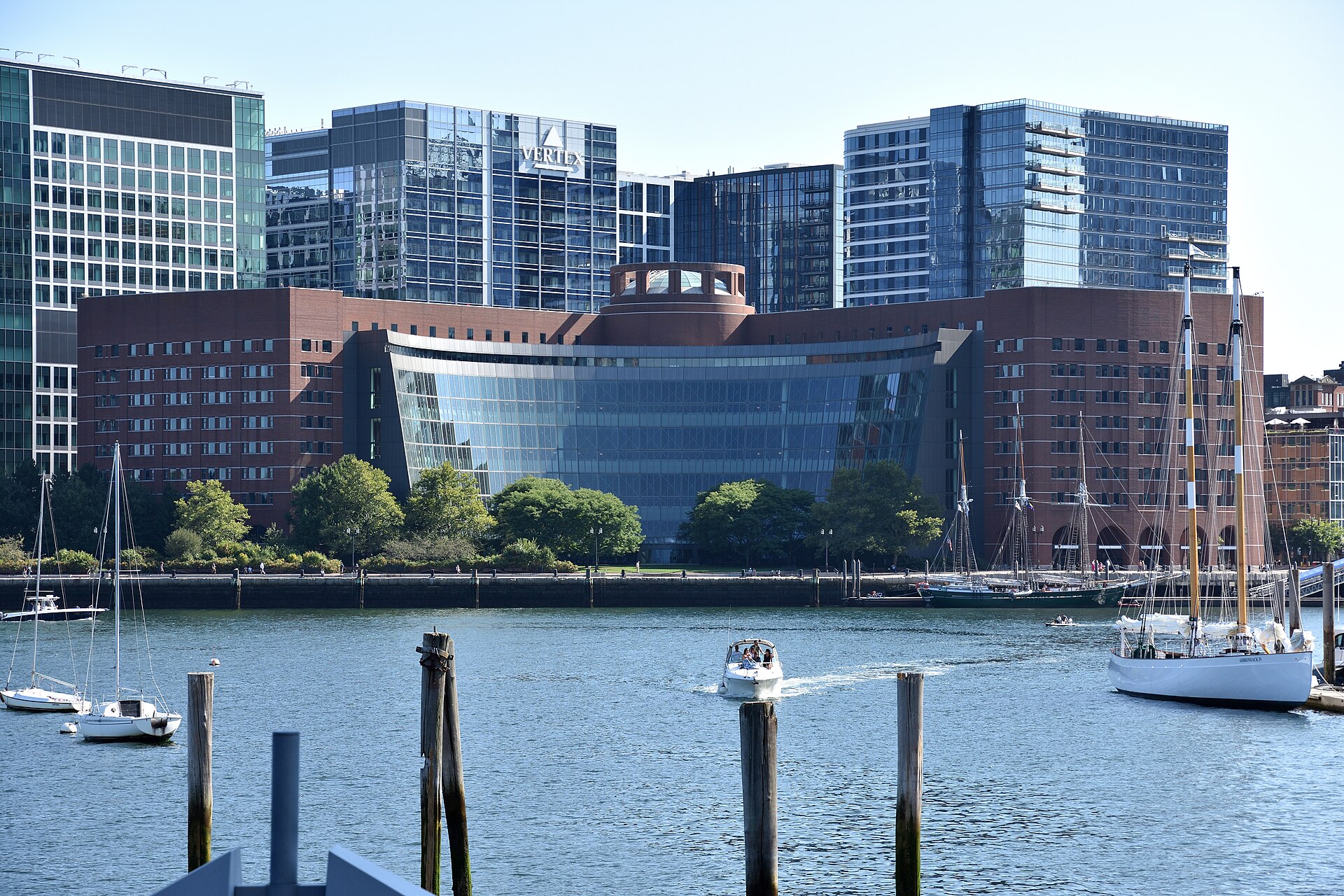
Source: John Joseph Moakley United States Courthouse — Wikimedia Commons

Why universities warned of "irreparable harm"
The numbers filed by the plaintiffs explain the alarm. International students make up 38 percent of Harvard's Graduate School of Arts and Sciences student body, and a typical PhD there runs at least six years — two full years beyond the proposed cutoff. Harvard President Alan Garber put it plainly: "A typical Ph.D. program usually takes at least six years, so four years is a bit odd as the cutoff for the visa."
The plaintiffs' legal team, led by attorney Paul Hughes, argued the government failed to analyze the fallout — from declining international enrollment to research disruption — and that universities would suffer "irreparable harm." Health-law and science reporters noted that graduate students and postdoctoral researchers on these visas carry a large share of the US biomedical research workforce, which is why the STAT News coverage framed the injunction as consequential for the future of American research preeminence itself.
For readers weighing the US against other destinations, this is also a reminder to plan financing early: competitive funding packages — see our guide to fully funded master's scholarships in the USA for 2027 — can make a long program far more manageable whatever the visa rules turn out to be.
What this means for international students right now: five facts
- Nothing changed overnight. The injunction preserves "duration of status." An F-1 student who is maintaining program requirements keeps their current lawful status — no new action is required today.
- The fight is not over. This is a pause, not a repeal. A status hearing is scheduled for October 2, 2026, and a final merits ruling could take months, with appeals possible after that.
- The 60-day grace period stands. The cut to 30 days was part of the frozen rule. Rumors to the contrary on social media can be ignored for now.
- Long-program students: document everything. Keep transcripts, advisor letters, and enrollment confirmations current. If a similar rule ever takes effect, that paper trail becomes your Extension of Stay evidence.
- Keep a plan B warm. Applicants from Lagos to Manila to Lahore are wisely applying to parallel programs in Canada, Germany, Australia, or the UK this cycle. Diversifying applications costs little; being stranded mid-PhD costs years.
If you are early in the journey, our step-by-step F-1 student visa guide for 2026 covers the I-20, SEVIS fee, DS-160, and interview questions, and the broader study in the United States walkthrough explains costs, admissions, and funding in one place.
Before and after: the rule vs. the status quo
| Provision | Frozen rule (would have started Sept 15) | Position after the Sept 14 ruling |
|---|---|---|
| Length of stay | Fixed 4-year cap (F, J, I categories) | Duration of status, as since 1978 |
| Extensions | USCIS filing with biometrics | Not required while program is active |
| Post-graduation grace period (F-1) | 30 days | 60 days |
| Program changes | Strict new limits | Current rules unchanged |
| Who is covered | Students (F), exchange visitors (J), media (I) | No change until the case is decided |
Frequently asked questions
Is my current F-1 visa invalid or at risk because of this case?
No. The September 14, 2026 order froze the new rule before it ever took effect, so "duration of status" remains the law in practice. An F-1 student enrolled in a certified program keeps lawful status for the duration of the program. The only action item is staying informed about the October 2 hearing.
When will this uncertainty finally be resolved?
The October 2, 2026 status hearing will set the schedule for full merits arguments. Cases of this type typically take several months to a final district-court decision, and appellate review could extend well into 2027. Treat any single headline as a chapter, not the ending.
Did the rule apply to two-year master's programs?
The frozen rule included transition relief exempting programs ending before September 2030 from extension filings, but the hard cap still loomed over anything longer. Short master's programs were never the main target — the sharpest impact fell on doctoral students, long-degree candidates, and postdoctoral researchers.
What is the practical difference between duration of status and a fixed cap?
Duration of status ties your lawful stay to your program's end date on the I-20, so it flexes if your defense slips a semester. A fixed cap grants a rigid window regardless of academic reality; crossing it requires a federal extension filing. That rigidity — "one credit short of graduating" being forced to leave — is the heart of the legal dispute.
What happens if the government ultimately wins in court?
The rule would then take effect on a timeline set by the courts and DHS, with the transition provisions intact (exemptions for programs ending before September 2030). The official Study in the States portal is the most reliable place to monitor implementation, and the full regulation text is published in the Federal Register.
Sources
- U.S. Department of Homeland Security — Final rule announcement, July 16, 2026
- Federal Register — Full regulation text (Vol. 91, No. 136)
- The Harvard Crimson — Ruling coverage, September 14, 2026
- STAT News — Injunction details and research-workforce impact
- Harvard International Office — Duration-of-status rule change tracker
The practical summary: if you are planning to study in the US, proceed — the system you researched is still the one in force. Long-program students should watch October 2 and keep their records impeccable. And whatever your destination, Truescho keeps thousands of verified scholarships and opportunities in one place, with a free GPA calculator to convert your grades across US, UK, and German systems as you build applications.