
The United States Department of Homeland Security (DHS), acting through Immigration and Customs Enforcement (ICE), published a proposed rule in the Federal Register on Thursday, 8 October 2026 that would impose a $70,000 fee on the first Optional Practical Training (OPT) work recommendation for every international student — plus a $30,000 fee on every subsequent recommendation, including the 24-month STEM extension.
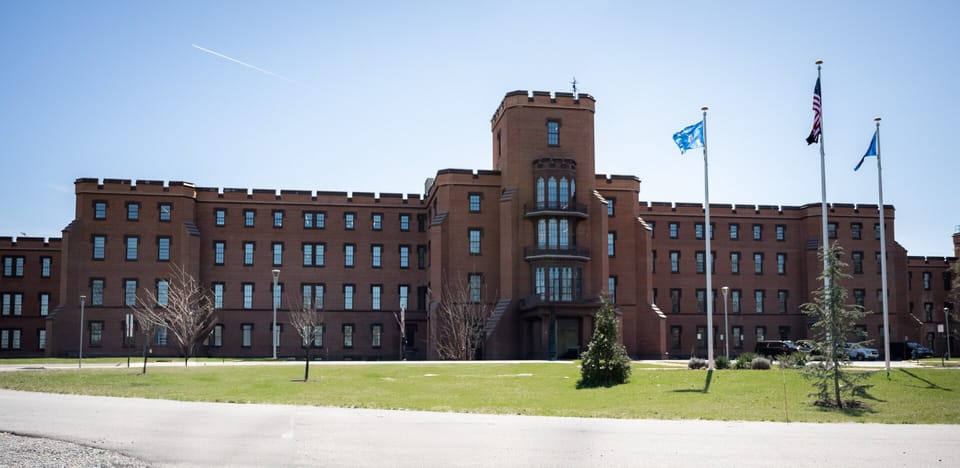
Source: official photo of the DHS headquarters — U.S. public domain
The detail that most early headlines missed: the fee is not paid by the student — it is paid by the university. The SEVP-certified institution must pay before its Designated School Official (DSO) even enters the OPT recommendation into the SEVIS system. Which means that, if the rule is finalized, the real decision-maker becomes your school: either it pays $70,000 for every international student it recommends for work training, or it simply stops recommending students altogether. In practice, the "study first, work after" pathway that has drawn millions of international students to American campuses could turn from a standing rule into an expensive exception.
What is OPT, and why does this matter?
Optional Practical Training is the permission that lets an F-1 international student work in their field of study during or after their degree — a concept with roots in U.S. immigration law going back to the 1920s. In its current form it grants 12 months of post-completion work for all fields, and — since the 2016 rule — an additional 24 months for graduates in science, technology, engineering and mathematics, for up to three years of practical experience on the same student visa.
For much of the world's students, especially from India, the Gulf, South Asia and Africa, that window is precisely where the value of an American degree lives: globally recognized experience and income that offsets part of a very expensive education. International students are also a financial pillar for U.S. universities, usually paying higher tuition than domestic peers. Charging institutions five figures per recommended student flips the equation for both sides at once — the student who may lose the work opportunity, and the university choosing between paying hundreds of thousands or giving up one of its main draws.
What the proposed rule actually says
The document published in the Federal Register (91 FR 64566, document 2026-20660, docket ICEB-2026-0100) sets out a strict mechanism:
- An initial fee of $70,000, paid by the SEVP-certified institution for each F-1 student it recommends for any type of OPT for the first time — whether pre-completion or post-completion.
- A subsequent fee of $30,000 for any later OPT recommendation for the same student after their first participation, regardless of type — explicitly including the STEM OPT extension of up to 24 additional months.
- The fee is not tied to an employer or a change of employer; the only trigger is the school's decision to recommend a student for any kind of practical training.
- A DSO may not enter the recommendation into SEVIS before the fee is paid, and U.S. Citizenship and Immigration Services (USCIS) would not grant employment authorization to any student whose fee has not been paid.

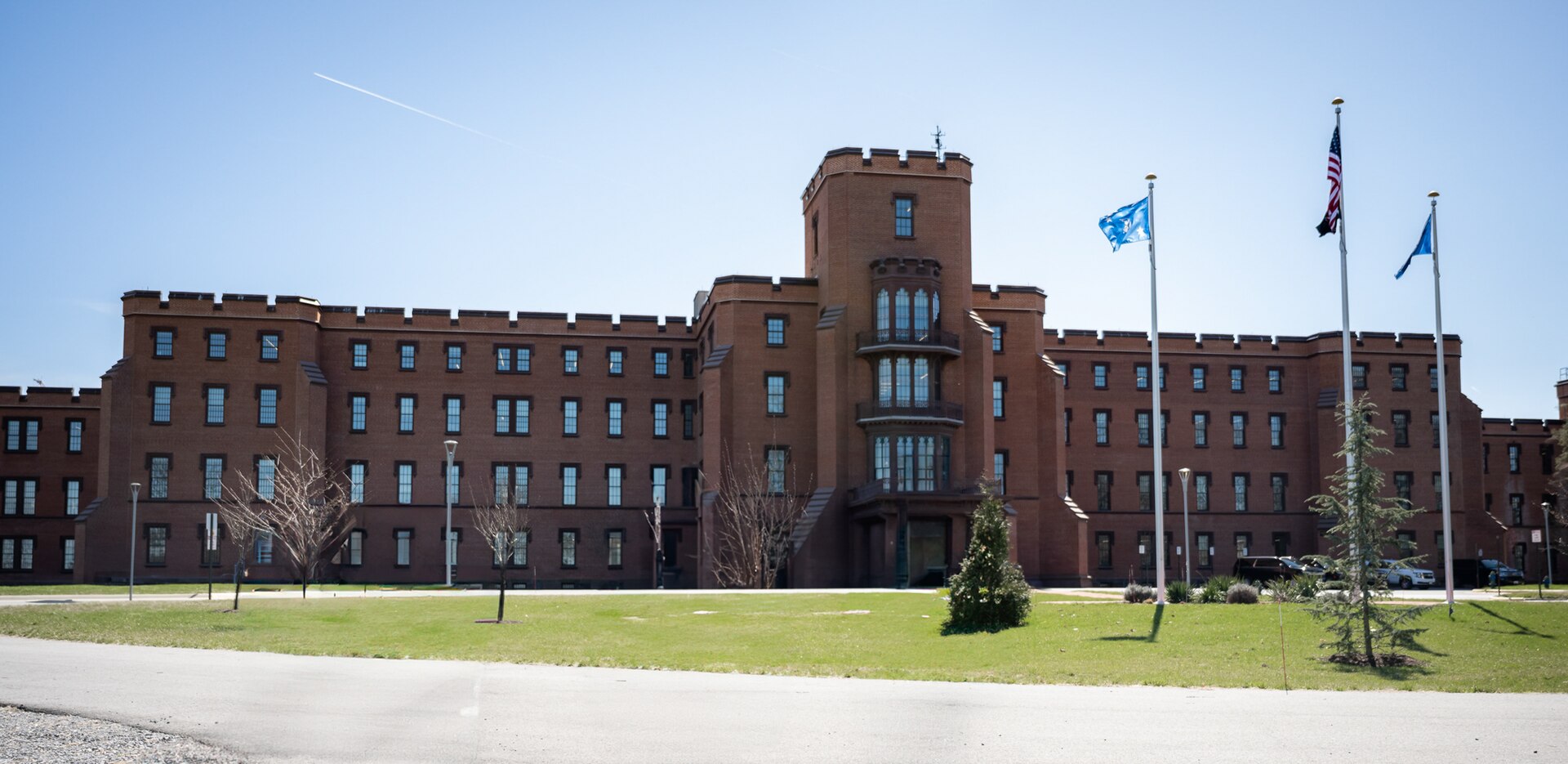
Source: official USCIS event photo — U.S. public domain
The text gives a blunt example: a student who receives a pre-completion OPT recommendation and then needs a post-completion recommendation costs their school $70,000 + $30,000 = $100,000. Refunds are nearly impossible — available only if the student never received an employment authorization document at all, at SEVP's sole discretion with no appeal, and once an EAD is issued the fee is non-refundable "under any circumstances."
DHS has also opened the door to an even harsher scenario: it invites public comment on an alternative that would make the $70,000 initial fee apply again each time a student moves to a higher educational level — bachelor's, then master's, then doctorate. A student who completes a full academic path in the United States under that alternative could cost their university well over $200,000 in OPT fees alone.
The numbers: how many students does this actually touch?
The figures inside the rule itself — drawn from official SEVIS data — show the scale of the potential impact:
- In 2024, the highest year on record, roughly 194,554 students participated in OPT, alongside 95,384 participants in the STEM OPT extension.
- The lower 2022–2024 annual average estimates about 88,374 OPT and 74,088 STEM OPT participants per year.
- DHS identified 2,478 schools whose students participated in OPT between 2022 and 2024 — the "regulated population" directly affected — out of approximately 6,186 SEVP-certified schools as of June 2026.
- Based on 2021–2024 data, about 56 percent of OPT participants obtained a STEM extension the following year.
In other words: hundreds of thousands of international students — and the families budgeting years ahead for them — now face a rule that could push American universities themselves to stop arranging work training for their international enrollees.
The government's own scenarios admit the impact
Strikingly, the regulatory impact analysis does not hide the effect. The text concedes that the proposed fee "represents a significant increase in the cost of participating in OPT and STEM OPT" and could affect future participation rates — while admitting DHS "cannot confidently predict" how large the drop would be.
In its own low-participation scenario, DHS anticipates that institutions whose students are in non-STEM fields — eligible for only one year of OPT — "may be less likely to pay the $70,000 initial fee" for a single year of benefit, while institutions whose students can stack the 24-month STEM extension (for a total of up to three years against $100,000 in fees) may be more willing to pay. The department's own modeling, in short, expects work authorization to collapse toward STEM-only students if the fees survive.
The stated purpose, per the official summary, is "to combat fraud, strengthen the integrity of the immigration system, and protect U.S. workers" — the same rationale family that preceded a separate, now court-blocked package of F-1 restrictions.
The official timeline: when would the fees start?
- Public comments are open until 9 November 2026 under docket ICEB-2026-0100; comments on the information-collection burden run to 7 December 2026.
- DHS proposes that the final rule take effect 60 days after publication in the Federal Register.
- Application is prospective only: the fees would apply to DSO recommendations dated on or after the effective date, leaving earlier recommendations untouched — students holding standing recommendations and work authorization at that point would not be retroactively charged.
And the essential caveat: this is a proposed rule, not law. The final version may change, be delayed, or end up in court — exactly what happened to the duration-of-status rule before it.
How this connects to the blocked "duration of status" rule
The fee proposal is not an isolated move. Weeks earlier, Judge F. Dennis Saylor IV of the U.S. District Court in Massachusetts blocked a separate rule that would have set fixed time limits on international students' stays, restricted transfers between institutions, and limited changes to graduate students' educational objectives. We covered that decision in depth in our explainer on the blocked four-year F-1 visa duration cap.
According to The PIE News on 9 October 2026, at a 2 October status conference the government announced it will seek an expedited appeal at the U.S. Court of Appeals for the First Circuit while pausing the district-court case; the plaintiffs want a prompt district judgment so the full record moves up together. The pattern across fronts is consistent: sustained regulatory pressure on the most attractive feature of American higher education for international students — study followed by practical work experience.
What this means for you
If you are planning to study in the United States: do not build your financial plan on post-graduation earnings. Budget as if funding will come from scholarships, family support, or teaching and research assistantships — not from OPT wages. Our complete study in the United States guide breaks down real costs and scholarship options.
If you are already studying in the U.S.: recommendations issued before any effective date are outside the fee's reach, but prepare early alternatives. Ask your DSO how the institution would handle the fee if it becomes final, and calendar your recommendation deadlines carefully.
If you want more stable alternatives: there are fully funded scholarships with close deadlines reviewed weekly in our open funded opportunities list, plus the daily-updated Truescho opportunities hub — and our team can manage your entire application through the Apply for Me service.
The golden rule through all of this: make decisions based on the official source only — the rule's page on the Federal Register — and remember that the comment window until 9 November is a real opportunity for institutions and associations to shrink or kill these fees.
Frequently asked questions
Who pays the $70,000 fee — the student or the university?
The SEVP-certified school pays, before the DSO enters the OPT recommendation into SEVIS. The student never pays the fee directly — but the effect lands on them all the same: schools that will not pay will not recommend, and without a recommendation there is no work authorization.
Is the fee in force right now?
No. It was published as a proposed rule on 8 October 2026, with comments open until 9 November 2026. No fee applies until a final rule is published — and even then it starts 60 days later and only prospectively.
Does the fee cover the STEM OPT extension?
Yes. Every OPT recommendation after the first participation — including the 24-month STEM extension — carries a $30,000 subsequent fee, bringing the total a university could pay for one STEM student to $100,000.
What happens to students who already hold OPT authorization?
The rule is prospective: recommendations dated before the effective date are untouched, and existing work authorization carries no retroactive fee. Later recommendations after the effective date — such as moving on to a STEM extension — would be subject to the subsequent fee.
Could the fees still change or be withdrawn?
Yes, and that is a realistic scenario. Comment periods have produced major changes to previous rules, and the U.S. higher-education sector is known for aggressive legal and lobbying campaigns against student-immigration rules — as the currently blocked duration-of-status litigation shows.
Sources
- Federal Register proposed rule: Optional Practical Training Fees (91 FR 64566)
- Official SEVIS annual data on OPT, STEM OPT and CPT authorizations (ICE)
- The PIE News: US to seek expedited appeal over blocked international student time limits
- Images: official assets via Wikimedia Commons (DHS and USCIS headquarters) — U.S. public domain.