
There is one question Arab university students type into search engines at the start of every academic year: can I travel and study abroad for a semester or a year without paying out of my own pocket, and without waiting until graduation? The short answer is yes — through university cultural exchange programs that fund your travel, your studies and sometimes a monthly stipend. The real number of programs available is larger than most students expect, but the information is scattered across the websites of ministries and international institutions that never gather it in one place.
This guide assembles 12 programs verified directly from their official sources — American, European, Turkish, Japanese and international — and compares them in a single table showing who funds each one, who can apply, what funding you actually receive, how long it lasts, and when the 2027 application window opens. Then we explain the correct way to apply through your university's international relations office, because that office is the gateway to most of these programs, and ignoring it is the number-one reason strong files get rejected.
Comparison Table: 12 Exchange Programs for University Students
| Program | Funder | Who is eligible | Funding | Duration | 2027 cycle timing |
|---|---|---|---|---|---|
| Global UGRAD | U.S. Department of State | Undergraduate students (eligible countries) | Fully funded: tuition, monthly stipend, airfare, health insurance | One semester at a U.S. university | Apply November 1 – December 15, 2026 |
| Fulbright FLTA | U.S. Department of State | Young graduates teaching Arabic as assistants | Fulbright-program funding | One academic year | Announced by the Fulbright commission/U.S. embassy in your country |
| Fulbright Foreign Student | U.S. Dept of State, administered by IIE | Bachelor's graduates for master's/PhD | Comprehensive funding per country terms | Two years and beyond | Per your country's commission deadlines |
| Fulbright Visiting Student Researcher | U.S. Department of State | Graduate students doing short research | Funding per country and program | One semester to a year | Per your country's commission |
| Erasmus+ study exchange (ICM) | European Commission | Students enrolled at a partner university | Monthly grant funding your study and travel via your university's project | 2 to 12 months | Per your university's calls (usually 2+ months before the semester) |
| Erasmus+ traineeship | European Commission | Students and recent graduates | Grant for a traineeship at a European organization | 2 to 12 months | Per your university's calls |
| Erasmus Mundus joint master's | European Commission | Bachelor's graduates | Full funding: tuition, monthly stipend, travel | Two years in two or more European countries | Per program in the official catalogue |
| Türkiye Scholarships | Government of Türkiye | Students and researchers; full-degree or short-term programs | Competitive government scholarship with officially published benefits | Language year + degree years | The 2026 cycle received applications January 10 – February 20; the 2027 window is announced officially each cycle |
| IAESTE technical traineeship | IAESTE international (100+ countries) | Engineering, science, technology and accounting students | Paid traineeship funded by the employer | Weeks to 12 months | Per your national committee |
| AIESEC volunteer & traineeship | The world's largest youth-led organization | Students and recent graduates | Varies by track: volunteering, traineeship or teaching abroad | Weeks to a year | Per openings on the platform |
| JASSO short-term exchange | Japan Student Services Organization | Exchange students under a university partnership agreement | Monthly scholarship set annually | One semester to a year | Through your university's international office |
| Hansen Leadership Institute | Hansen Institute — USA | University students and young graduates | Fully funded: flights, accommodation and a leadership program in the US | Short program | Applications open until January 16, 2027 via the Truescho opportunity page |

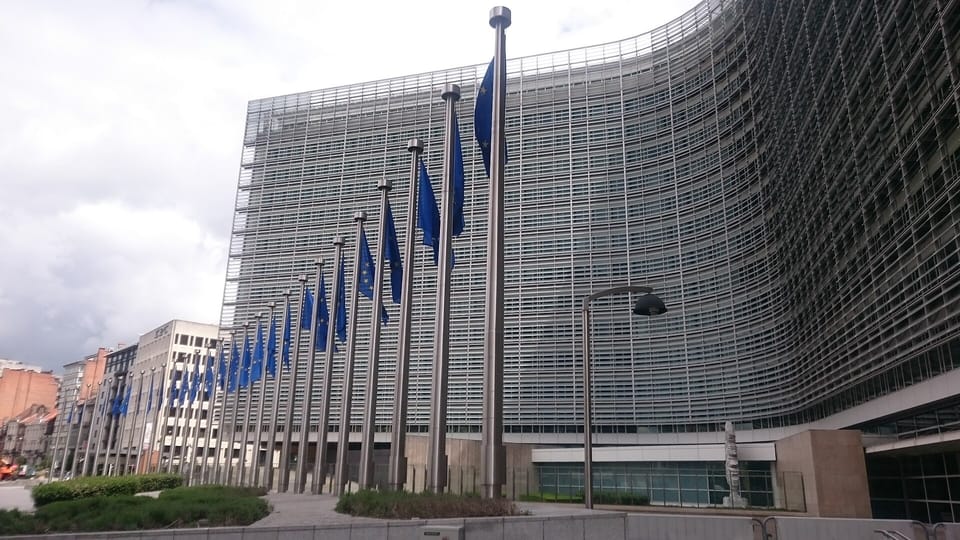
Source: Wikimedia Commons — Flag of Europe
Read the table critically on two points. First, the timing column comes in two kinds: programs with fixed, centrally announced windows (Global UGRAD, Türkiye Scholarships, Hansen) and programs whose windows are tied to your institution (all Erasmus+ tracks, JASSO, IAESTE). For the second kind, do not wait for a public announcement that will never come — ask directly, because these calls are usually internal. Second, "funding" differs in scope: "fully funded" usually covers tuition, stipend and travel, while a "paid traineeship" means a salary from the host employer that typically covers your living costs. The difference determines how much you actually need in savings.
What University Cultural Exchange Actually Is — and Why It Sometimes Beats a Full Degree Scholarship
A student exchange is an agreement between two institutions, or between a government and students from several countries, under which a student spends a defined period (a semester or a year) at another institution studying, training or joining a leadership program, then returns to their home university with credits counted toward their original degree. The essential difference from a full-degree scholarship: you do not restart your life from zero in a new country. You live an intense international experience and come back, and your final degree remains from your home university.
This distinction carries practical gains that people who compare programs by funding alone tend to miss. An exchange student builds an international network at an early age, tests life in a specific country before betting years of a full degree on it, and adds an international line to their CV before graduating — and that line is increasingly what separates candidates in competitive Arab job markets. Some students chain exchanges deliberately: a semester in Europe through Erasmus+, a summer traineeship through IAESTE, then an application to a funded master's — each link funding the next.
One point deserves honesty: an exchange is not a paid vacation. You will complete credited coursework in the language of instruction, and some programs require community activity or a final project, and selection is competitive on academic and leadership criteria. But that is exactly what makes the completion certificate credible to any future employer.
The American Programs: Global UGRAD and the Fulbright Family
Global UGRAD is the most famous among Arab undergraduates because it is designed for non-Americans in the first place: one semester at an American university with full funding covering tuition, a monthly stipend, airfare and health insurance, run by the U.S. Department of State through its implementing partners. The application window for the 2027-2028 cycle is fixed: November 1 to December 15, 2026. If you are reading this guide while eligible, you are standing inside the window right now — and missing it by a single week after December 15 means waiting a full year.
Its general criteria are well known: enrolled in your first, second or third year, a good grade average, documented community leadership, working English proficiency, and returning to your country after the program. The file requires personal essays and two recommendation letters, with interviews for finalists. The golden rule for its essays: write about impact you actually delivered, not dreams you hope to deliver.
Fulbright is the older, wider framework — a U.S. Department of State program funded by the U.S. Government and administered by the Institute of International Education (IIE), serving students from more than 150 countries through three tracks relevant here: the Foreign Language Teaching Assistant (FLTA) program for young graduates who teach Arabic at American universities; the Foreign Student Program for master's and PhD study; and the Visiting Student Researcher track for graduate students needing a short research period. Applications for all tracks run through the Fulbright commission or U.S. embassy in your country, with deadlines announced locally per country. We have previously published a comprehensive Fulbright scholarship guide covering files and interviews in detail.
Europe: Erasmus+ Is Not One Scholarship — It Is Four Different Doors
The biggest mistake Arab students make with Erasmus+ is imagining it as a single program you apply to yourself through a European website. In reality, Erasmus+ is the European Commission's program that grants funding to institutions — your university, your training organization or a youth organization — and those institutions manage your participation. The program's own rule is stated plainly: you take part through your organization, and the grants fund your participation.
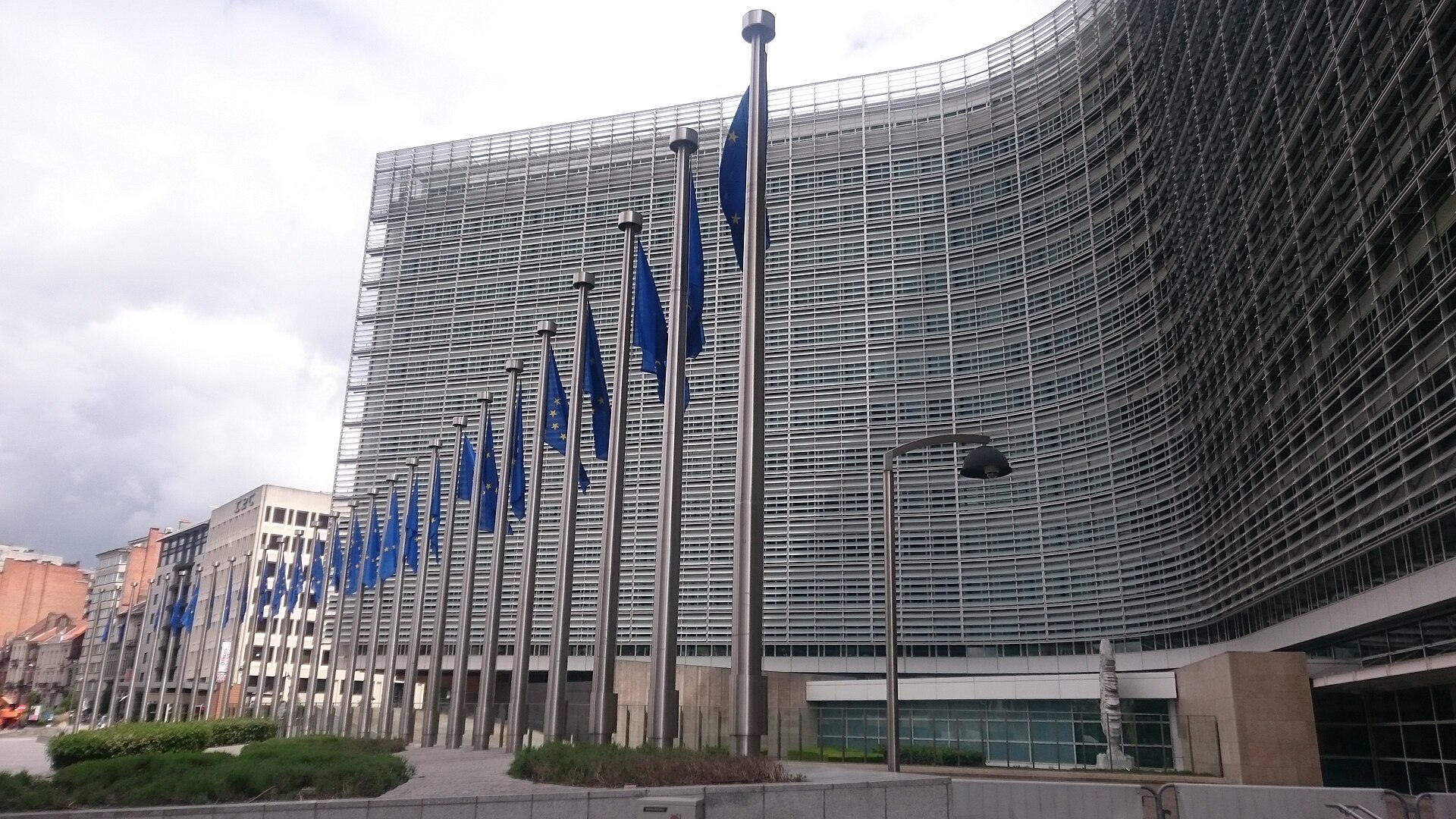
Source: Wikimedia Commons — Berlaymont building
That makes four practical tracks for you as a student. The study exchange: a semester or year at a European partner university under an agreement with your university. The traineeship: a funded internship at a European organization, during or right after your studies. The Erasmus Mundus joint master's: you study in two or more European countries with full funding, and its official catalogue lists hundreds of programs across all fields, most open to all nationalities. And the youth and volunteering tracks run through accredited youth organizations.
The first practical step in every one of these tracks is identical: walk into your university's international relations office and ask specifically — which active partnership agreements do we have, and do we have an active Erasmus+ student-mobility project? The answer defines your real options immediately. For students drawn to Germany specifically, our DAAD scholarships guide details the comparable German programs and their timelines.
Asia and Beyond: Türkiye, Japan, IAESTE and AIESEC
Türkiye Scholarships (Türkiye Bursları) is the largest Turkish government program for international students: competitive scholarships funding full-degree or short-term programs at Turkish universities, with benefits published officially on the program's site. The window is relatively stable: the 2026 cycle received applications from January 10 to February 20, 2026 in a single period, so anyone planning for 2027 should block roughly the same weeks and follow the official announcement, since the program publishes its own window every cycle.
Japan offers exchange students two routes. The first is JASSO: a monthly scholarship for short-term exchange students whose university has a partnership agreement with a Japanese university, with applications handled exclusively through your home university, not the Japanese website. The second is technical training through IAESTE, a decades-old international organization operating a network across more than 100 countries that provides paid traineeships for engineering, science and technology students. It starts with registering on the exchange platform, then contacting your national committee, which manages nomination and interviews.
AIESEC is a third global option for anyone wanting a shorter, faster experience: a youth-led organization running volunteer, traineeship and teaching programs across dozens of countries, with durations and funding varying by program. It suits the student who wants to test living abroad for a few weeks before committing to a full semester — and it strengthens a CV when you choose the program deliberately and tie it to your field of study.
How to Read 2027 Deadlines Wisely Without Losing the Window
International programs come in two announcement types, and understanding the difference saves a lost year. Type one has a fixed, centrally announced window: Global UGRAD opens November 1 – December 15, 2026; Türkiye Scholarships announces its own window each cycle (2026 ran January 10 – February 20); Erasmus Mundus publishes each program's deadline in the catalogue. For this type, set a calendar reminder two months early and start your file at least six weeks before the window closes.
Type two has an institutional window: Erasmus+ study and traineeship exchanges, JASSO, and IAESTE nominations. There is no single global date because the window is announced inside your university or your national committee, usually two to four months before the target semester. The fatal error here is waiting for a public announcement that will never arrive. The rule: if the program runs through your institution, the question goes to the institution before any search engine.
Between the two types sits one golden rule — the source-of-truth rule: the funder always publishes final details on its own official page, and any date you read anywhere else, including this guide, must be verified at the source before you build a plan on it, because programs do shift deadlines, and the student who discovers the shift on closing day is the student who lost.
A Full-Year Application Map: Distributing Your Bids Across the Months
Smart students do not tremble before one program; they build a portfolio of applications spread across the year. This indicative map is built from the windows above:
| Month | What should be in your hands |
|---|---|
| September–October | Your target program list, initial language check, recommendation letter requests |
| November | Submit Global UGRAD (closes December 15); ask your international office about spring/summer agreements |
| December | Close the winter-window files; start Erasmus Mundus files with extended deadlines |
| January | Follow the Türkiye Scholarships announcement; Hansen file (closes January 16) |
| February | Fulbright windows in many countries; track winter-file results |
| March–May | Erasmus+ windows for the following winter semester; national IAESTE committee dates |
| June–August | Language preparation and summer training; build community activity for next year's file |
The real gain from this map is not cosmetic organization — it is that every rejection becomes a launchpad to the next window weeks later instead of the end of the year. Students admitted to competitive programs are usually on their third or fourth application, not their first. And do not forget the language thread running through the map: Erasmus and UGRAD run on English, some European programs need the host country's language, and Türkiye needs Turkish preparation if your track is Turkish-taught. Put a language mark on every monthly row and you will discover early that two months stolen from your summer for test preparation equals five doors opened in your autumn.
The Hidden Cost: What Program Pages Do Not Put in Headlines
Even fully funded programs carry expenses the funding line never shows: passport issuance or renewal, visa fees where not covered, certified document translation, the language test itself if you do not have one, your first month before the first stipend payment lands, and medical clearance where required. Together these can reach hundreds of dollars, and the student who discovers them late loses an admission they fully earned.
The practical rule: for every program, ask yourself "what does the applicant pay before acceptance?" and total the number before committing. And if your budget is stretched to its limit, arrive on the first day of the window rather than the last — exceptional financial handling gets accepted at openings and refused under closing pressure.
Against the costs stands a return the number-comparers forget: a well-chosen exchange recalibrates your entire career map. A student who spends a semester at a European university learns whether they truly want the master's there, builds relationships with professors who later write strong recommendations, and discovers fields that do not exist in their home country at all. The value of that knowledge across the first twenty years of a career exceeds by far one month of any summer-job salary.
How to Apply Through the International Relations Office: The Correct Route
Your university's international relations office is the official gateway to any accredited exchange, and mishandling it kills excellent files. These steps are ordered as they should run:
- Explore before you ask. Find your university's international office page, read the published partnerships list if one exists. Your opening question should be built on reading, not "do you have exchange?".
- Make your question precise. Bring a short list: I want a one-semester exchange in Europe in computer science — which agreements exist for my major, what are the dates, and what are the minimum criteria?
- Check your internal eligibility. Most universities require a minimum GPA, a completed number of credit hours, no academic warnings, and sometimes one full year remaining before graduation. Know these early.
- Prepare the language file early. English proof (or the host country's language) is the most famous bottleneck; if you have no test yet, ask which internal tests are accepted and budget preparation months.
- Gather documents and request recommendations early. Certified transcript, motivation letter, CV, and recommendations from professors who actually know you. A letter written on the last day reads like a letter written on the last day.
- Submit inside the window and track with a reference number. Never rely on "I handed the papers"; confirm receipt and ask when results issue and what the backup order is if the visa stumbles.
One small point that matters disproportionately: treat the office staff as partners, not archive clerks. The student who arrives with an organized file and respectful timing becomes the name the office remembers when an extra seat appears or a late opportunity arrives — and those extra seats are never advertised.
What Makes a File Win in Competition?
Because these programs are competitive and the gap between the admitted and the reserve list is often small, five elements recur in admitted students' stories: measurable community impact ("I organized X and Y changed"), language that meets the program's needs rather than scraping the minimum, a motivation letter with a connected story between your past, the program and your future, recommendations from professors in your actual field instead of whichever doctor was available, and a file submitted a month before the deadline rather than on its final day.
Conversely, three errors recur in rejected files: copy-pasted motivation letters from the internet (they are recognized instantly), inflated unverifiable claims, and ignoring the return-home condition that programs like UGRAD and Fulbright insist on. A winning letter answers one question: why you specifically, why this program specifically, and what you will do with the experience after returning.
This is where having professionals review your submission pays for itself: the Truescho conferences, volunteering and training application service verifies the program's legitimacy, completes the application form, drafts the essay answers (up to three questions of 300 words each), reviews your CV and confirms final submission — precisely the stages where most deferrable mistakes happen.
Frequently Asked Questions
Does an exchange delay my graduation?
Not necessarily. The deciding factor is advance credit approval: with a signed learning agreement before you travel, your grades count and you graduate on time. The semester that travels without an approved agreement is the one students repay with an extra summer.
Do I need an excellent GPA to apply?
Every program publishes its minimum, and many accept "very good" averages. But between two equal GPAs, the documented leadership record and the stronger language win — the GPA is the entry ticket, and the file is what wins.
Does the funding really cover everything?
In fully funded programs, generally yes: tuition, housing, stipend, insurance and airfare. But always keep a personal buffer for the first month, and for costs grants do not formally cover — visa fees in some programs and personal spending.
I am in my final year — is it too late?
Undergraduate programs usually require you to be enrolled and not graduated at program time, so first-through-third-year students are the target. Graduates have stronger paths instead: FLTA, the Visiting Researcher track, and funded Mundus master's degrees — see the Erasmus Mundus joint master's 2027/2028 opportunity for a funded comparison.
Do I need French or German for a European exchange?
It depends on the program's language. Erasmus+ covers English-taught programs in most fields, while some programs require the host university's language. Read each partnership card carefully before self-rejecting.
Can I join more than one exchange program?
In most cases yes, provided the periods do not overlap and your university counts the credits. Some students stack a study exchange followed by a summer IAESTE traineeship. The usual restriction: some programs forbid holding two grants for the same period, so read each program's terms.
I graduated two years ago and am no longer a student — which door is open?
Recent-graduate tracks: the Erasmus+ traineeship within a short window after graduation, AIESEC programs for recent graduates, FLTA for young graduates, and then funded degree programs. Every year of delay closes one door and opens another, so read each track's conditions precisely.
What is the difference between an exchange and a full-degree scholarship?
An exchange is a bounded period after which you return to your home university and original degree; a full scholarship is a complete degree abroad. Both are funded, and choosing between them is a strategic decision about your goals more than about the funding value.
Want someone to handle this step for you?
From choosing the program that fits your file, to drafting the application answers, reviewing your CV and confirming submission — the Qaddimli team manages your application file for international volunteering, training and conference programs through the conferences, volunteering and training application service, with packages starting at 19 EUR.
Sources
- Global UGRAD — U.S. Department of State Exchange Programs: https://exchanges.state.gov/non-us/program/global-ugrad
- Fulbright Foreign Student and FLTA — Institute of International Education: https://foreign.fulbrightonline.org
- Erasmus+ opportunities for individuals — European Commission: https://erasmus-plus.ec.europa.eu/opportunities/opportunities-for-individuals
- Türkiye Scholarships — official application window announcement: https://www.turkiyeburslari.gov.tr
- IAESTE — International Association for the Exchange of Students for Technical Experience: https://iaeste.org/how-it-works
- AIESEC: https://aiesec.org
- JASSO — Student Exchange Support Program: https://www.jasso.go.jp