
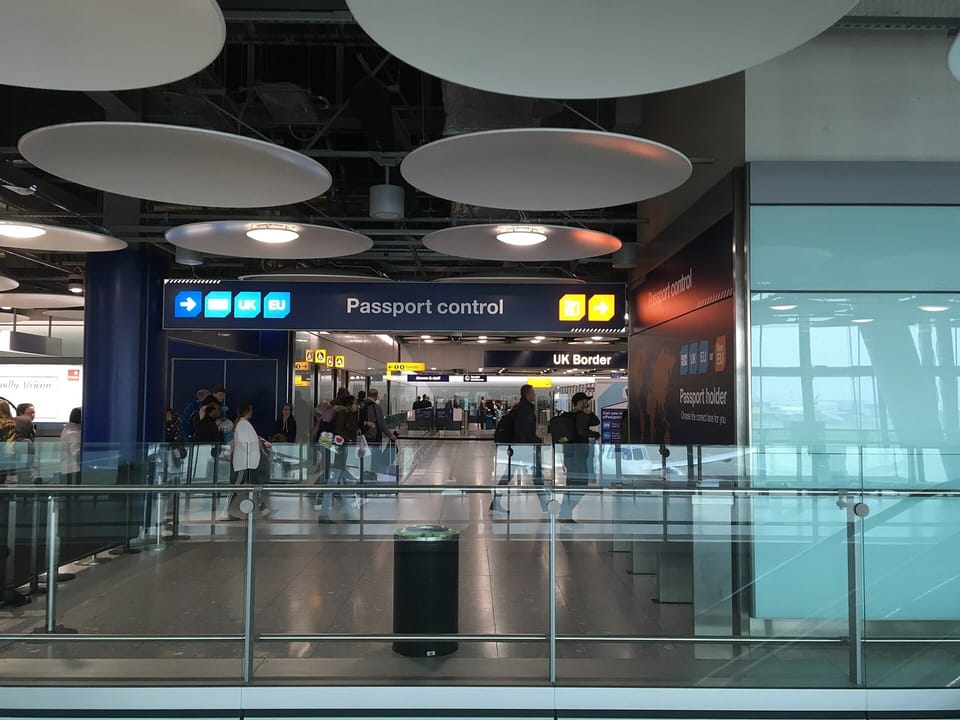
UK ETA in 2026: The £20 Fee, Who Needs It, and How to Apply
A digital travel permission now costs £20 per traveller — including infants — after the fee rose on 8 April 2026. That is the single most important number for anyone planning a trip to the United Kingdom from a visa-exempt country. The UK's Electronic Travel Authorisation (ETA) is valid for two years, covers multiple entries, applies to more than 80 nationalities including every GCC state, and most applications are decided within three working days — often within hours. This guide walks through the fee history, exactly who needs the permit, the step-by-step application, the mistakes that get applications rejected, and what happens at the border after you are approved.
Whether you are a Gulf resident booking a London shopping trip, a Canadian visiting family in Manchester, or a European catching a connecting flight through Heathrow, the ETA rules below decide whether you board your plane at all.
What the UK ETA actually is
The ETA is a pre-travel digital permission required from nationals of countries that do not normally need a UK visa. Instead of checking a traveller's background for the first time at the airport desk, the Home Office screens your passport data against security and immigration databases before you fly. The legal basis is the Nationality and Borders Act 2022, and the model closely mirrors the US ESTA — a light, fast, largely automated check rather than a full visa assessment.
Three things follow from that design. First, an ETA is not a visa: it does not allow you to work long-term, settle, or study beyond short visitor study. Second, it is tied electronically to the specific passport you apply with — renew your passport and your ETA dies with it. Third, it does not guarantee entry; the final decision always rests with the border officer, a point the UK government repeats in every official description of the scheme.
The permission covers short stays for tourism, visiting family and friends, business activities like meetings and conferences, short-term study allowed under visitor rules, certain permitted work categories, and landside transit. For most visitors this means trips of up to six months under standard visitor rules — but the ETA itself is simply your permission to board and seek entry, twice or twenty times, until it expires.
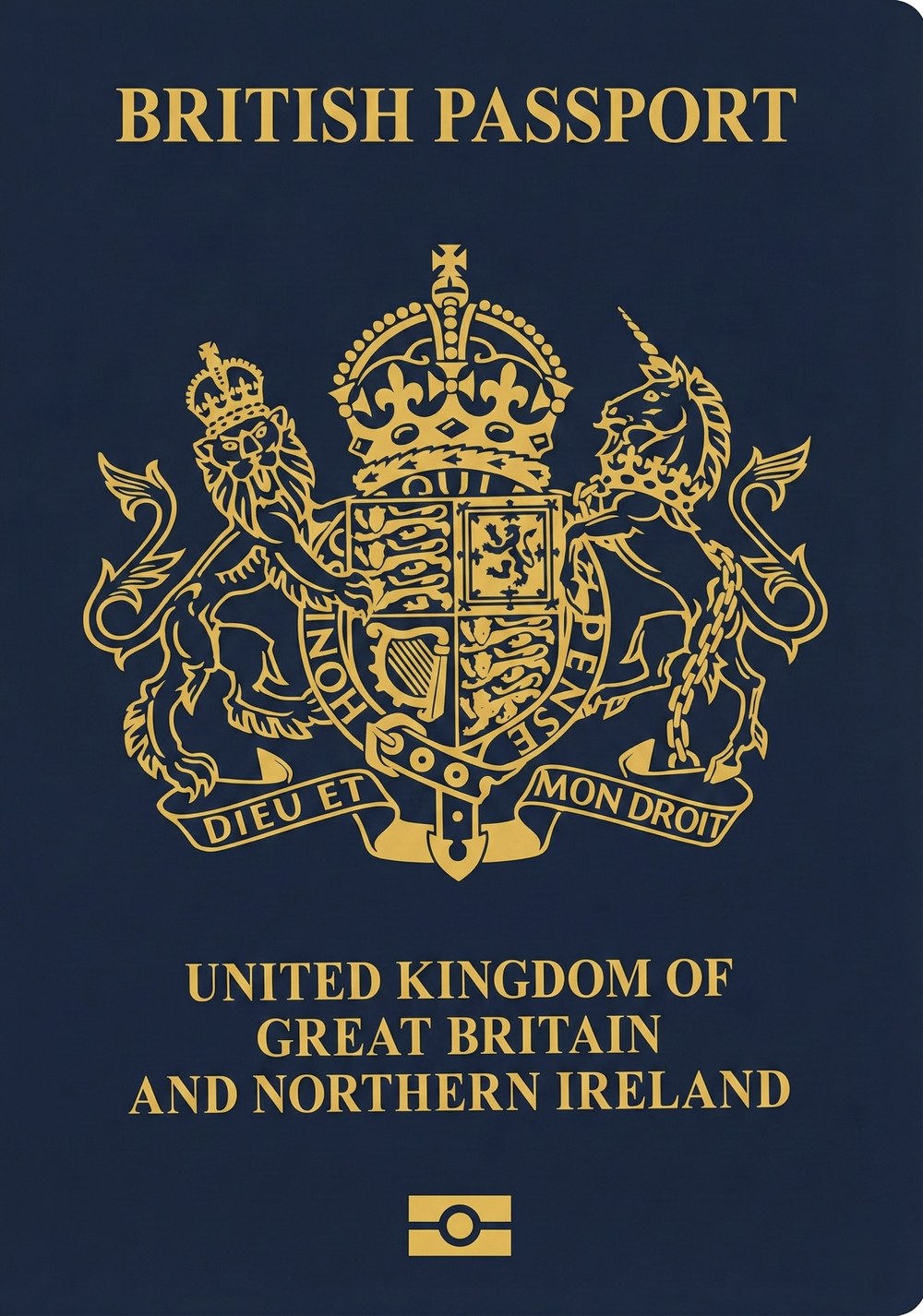
Source: Wikimedia Commons — British Passport file

The fee: how £10 became £20
The price of the ETA has climbed steadily since launch, and the current figure is the one to budget from:
| Effective date | Fee | Notes |
|---|---|---|
| June 2023 (Qatar pilot) | £10 | Initial launch price |
| 9 April 2025 | £16 | First increase |
| 8 April 2026 (current) | £20 | Applies to all new applications |
Payment runs through credit or debit cards, Apple Pay or Google Pay — there is no cash option because the process is entirely digital. Two rules catch families out. The fee is per person, with no family bundle, and it applies to every traveller including babies. A family of five pays £100 (roughly $130) in permissions alone, before a single hotel night. The fee is also non-refundable whether you are approved or refused, which is a strong argument for getting your photos and answers right the first time.
One practical saving tip: card issuers often add foreign-transaction fees for GBP charges. If your card charges per transaction, paying for multiple family ETAs in one sitting where possible — or using a card with no FX fees — quietly saves a few dollars on a family batch.
Who needs an ETA — and the rollout that got there
The scheme arrived in four waves, and the second one put the entire Gulf inside the system:
| Group | Applications opened | Mandatory for travel from |
|---|---|---|
| Qatari citizens | 25 October 2023 | 15 November 2023 |
| Saudi Arabia, UAE, Kuwait, Bahrain, Oman (+ Jordan, later removed) | 1 February 2024 | 22 February 2024 |
| Other visa-exempt nationalities (US, Canada, Australia, Japan, Brazil...) | 27 November 2024 | 8 January 2025 |
| EU and EFTA nationals | 5 March 2025 | 2 April 2025 |
More than 80 nationalities now fall inside the scheme, including all six GCC states, the United States, Canada, Australia, New Zealand, Japan, Brazil, Hong Kong, and — since April 2025 — every EU country except Ireland. You do not need an ETA if you hold a valid UK visa of any type, Irish citizenship, right of abode, or settled or pre-settled status. A quick rule of thumb: if you would previously have entered the UK visa-free with one of the covered passports, and you hold no other UK immigration status, you need an ETA.
Travellers planning wider trips should note the direction of travel globally: the EU has its own authorisation (ETIAS) waiting in the wings for 2027 — our guide to the delayed ETIAS system covers what changed and when it will actually bite.
The countries that were kicked out of the scheme
The list of eligible nationalities is not static — the UK has removed seven nationalities since launch, each time converting visa-free entry back into full visa requirements:
- Jordan — 10 September 2024. Cited at the time as abuse of the system; Jordanian nationals now need a standard visit visa.
- Colombia — 26 November 2024, after a significant rise in unjustified asylum claims.
- Trinidad and Tobago — 13 March 2025, with asylum claims rising roughly nine-fold between 2015–2019 averages and 2024.
- Botswana — 14 October 2025, over travel inconsistent with permitted visitor purposes.
- Nauru — 9 December 2025, after its citizenship-by-investment programme was judged a security risk.
- Nicaragua and Saint Lucia — announced 5 March 2026, with the Home Secretary describing visa-free entry for these nationalities as a "back door" into the UK.
Two lessons travel with this list. First, eligibility can move in both directions, so checking the official page shortly before booking is cheaper than rebooking flights. Second, dual nationals have options: someone holding both a removed nationality and a covered one can apply using the covered passport — provided they declare both nationalities honestly in the application, which brings us to how the process works.
Applying step by step
The application takes about ten minutes when you are prepared:
- Get the official app — "UK ETA" on the App Store or Google Play — or apply through gov.uk. Avoid intermediary sites selling "application services" at inflated prices; the process is designed for direct self-service.
- Photograph your passport's photo page flat, in good light, no glare on the chip area.
- Scan the passport chip by laying the phone on the closed passport, following the app's on-screen guide.
- Take the face scan (a live selfie). Children aged 9 or under are exempt from the face scan — not from the ETA itself.
- Answer the background questions honestly: criminal history, other nationalities, any past involvement in war crimes, terrorism or extremism; under-18s provide a parent's contact details.
- Pay £20 and watch your email — the decision usually arrives within three working days, frequently within hours.
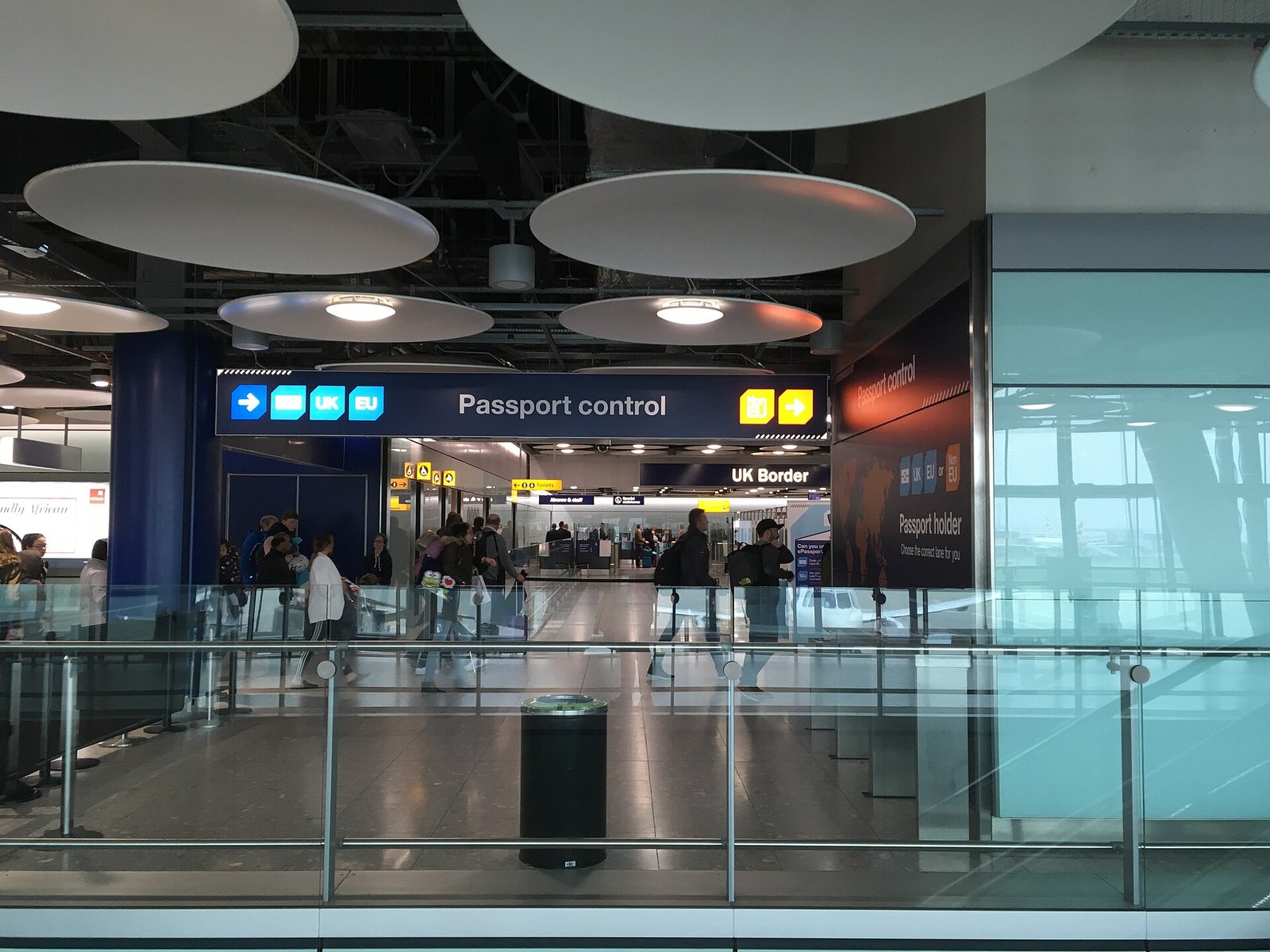
Source: Wikimedia Commons — Passport control, UK Border
Once approved, the ETA lives in the system, linked to your passport number — nothing to print, nothing to show at check-in beyond the passport itself. You can travel on it repeatedly for two years (or until that passport expires). Families should file everyone's applications in one sitting so decisions arrive together, and should remember the sequence problem: a newborn needs a passport first, then an ETA, so start the passport process well before any booking.
After approval: timing, delays, and what "three working days" really means
Most applications clear automatically — the system screens your data against watchlists and either issues or passes the file to a human. The published ceiling is three working days; reality for straightforward applications is same-day. Delays cluster around three causes: a poor-quality passport photo or selfie, any previous UK immigration or travel history (even old refusals), and undeclared second nationalities surfacing in the checks.
If your decision is still pending close to departure, you can check status inside the app, but you cannot board without the approval — airlines face civil penalties for carrying passengers without valid permission, so no carrier will gamble on your pending application. Apply at least a week before flying; two weeks if your history includes anything the system might want a human to review.
Transit through UK airports: the rule most people get wrong
Huge numbers of Gulf-to-America and Europe-to-America routes connect through London, so this section decides real itineraries:
- Landside transit — leaving the international transfer area, passing border control to change airports or take a domestic connection — requires an ETA.
- Airside transit — staying in the international transit area without crossing border control — was intended to require an ETA, but the UK temporarily dropped that requirement after airline and tourism industry pushback, and says the question remains under review.
The practical advice is not to gamble on the exemption: if your connection involves changing airports, collecting bags, or a domestic leg, you need an ETA, full stop. Even for pure airside transit, check the official page in the fortnight before you fly — "temporarily dropped" is not "permanently cancelled", and the review status can change without much warning.
What happens at the border: an ETA is not a hall pass
Approval gets you onto the plane; the border officer still decides whether you enter the UK. Be ready for short, factual questions — purpose of the visit, length of stay, where you are staying, how the trip is funded — and carry evidence: return tickets, accommodation bookings, proof of funds, and your host or hotel address. Consistency matters: your answers should align with what you declared in the application.
Worth knowing in 2026 specifically: press reporting through September has highlighted rising numbers of entry refusals at the UK border even for travellers holding valid ETAs, and a US travel advisory flagged the trend for American visitors. The overwhelming majority of eligible travellers still enter without incident, but the pattern underlines the same rule the government publishes: the ETA is permission to travel, not a guarantee of entry. A tidy file — clear bookings, a sensible trip length, a fixed return — answers 90% of border questions before they are asked.
Common mistakes that cost money
- Blurry passport or selfie photos — the single most common cause of rejections and delays.
- Applying on an old passport, then travelling on a new one — the ETA is dead the moment the passport changes; you apply again, and pay again.
- Hiding a second nationality — undeclared citizenships surface in checks and can turn a simple form into a credibility problem; obtaining an ETA by deception is a criminal offence.
- Booking first, applying last-minute — three working days is the ceiling, not the promise.
- Forgetting the children — every traveller needs an ETA, including infants; only the face scan is waived for children 9 and under.
- Paying an agency to "speed up" approval — there is no fast lane; agencies only retype your form and add their margin.
Refused? Read the reason before you panic
A refusal letter names its cause, and the cause dictates the fix. Administrative refusals — bad photo, incomplete answers, confusion in the form — are usually solved by reapplying correctly (with a new £20 fee, since the first is spent). Substantive refusals — immigration history, unclear purpose — are better answered by applying for a full standard visitor visa, where a human case worker reviews your file in detail instead of an automated screen. And if you believe an automated decision simply got your situation wrong, the refusal message lists the formal route to challenge it. What never works is a louder intermediary promising to overturn the decision for a fee.
ETA versus a standard visitor visa
| Point of comparison | ETA | Standard visitor visa |
|---|---|---|
| Who it is for | Nationals of visa-exempt countries | Nationals who need a visa (most non-GCC Arab nationalities included) |
| Fee | £20 | Substantially higher, set by visa type |
| Validity | 2 years or until passport expiry | Typically 6 months (longer options exist) |
| Entries | Multiple | Multiple for standard visitor visas |
| Decision time | Up to 3 working days, usually hours | Around 3 weeks is common |
| Purpose coverage | Short visits, business, short study, transit | Broader, type-dependent |
| Guarantees entry? | No | No |
If you hold a passport from a country that requires a UK visa, none of this article applies to you — your route is the visa itself, and students have their own track entirely; our UK student visa walkthrough covers CAS letters, financial evidence and timelines. If you are visa-exempt and also planning wider European travel, pair this guide with what travel insurance for the UK actually covers — medical costs abroad are the budget item nobody budgets.
Frequently asked questions
How much does the UK ETA cost in 2026?
The fee is £20 per person, effective 8 April 2026, up from £16 in April 2025 and £10 at launch. It covers the full two-year validity with multiple entries, applies to every traveller including babies, and is non-refundable regardless of the decision. Budget £20 per family member when pricing your trip.
Do GCC citizens need a UK ETA?
Yes. All six Gulf states — Saudi Arabia, the UAE, Kuwait, Qatar, Bahrain and Oman — have been inside the scheme since February 2024, with Qatar first from November 2023. GCC citizens cannot board a UK-bound flight without a valid ETA, even for a two-day visit or a transit that crosses the UK border.
How long does ETA approval take?
The official ceiling is three working days, and most straightforward applications are decided within hours because the screening is automated. Delays usually come from poor photo quality, previous UK immigration history, or undeclared second nationalities. Apply at least a week before departure to stay safe.
Is the UK ETA a visa?
No. It is a pre-travel permission for people who do not need a visa, not a visa itself. It allows short visits — tourism, family, business, permitted short study and transit — but no long-term work or residence. Those need actual visa categories, each with their own process.
Can I work in the UK with an ETA?
Only within the narrow paid activities visitor rules permit — for example, a specific speaking engagement or permitted paid engagements. Ongoing employment, freelancing for UK clients, or any long-term work requires a proper work visa; the ETA covers visits, not jobs.
Do children and babies need their own ETA?
Yes, every traveller needs their own ETA at the full £20 fee, including newborns. Children under 18 supply a parent's contact details, and those aged 9 or under skip only the face scan. Families should apply for everyone in one sitting so approvals land together.
Does an ETA guarantee I will enter the UK?
No. It guarantees you can board; entry always rests with the border officer, who may ask about your purpose, stay length, funds and accommodation. Reporting in 2026 has noted rising refusals at the border even with valid ETAs, so travel with clear bookings and consistent answers.
Do I need an ETA to transit through London?
Landside transit — leaving the international transfer area or changing airports — requires an ETA. Airside transit does not currently require one after the UK temporarily dropped that requirement under industry pressure, but the rule is officially "under review", so check the official page shortly before flying.
Sources
- GOV.UK — Electronic Travel Authorisation (ETA) — official scheme page
- Wikipedia — Electronic Travel Authorisation (United Kingdom) — verified rollout dates, fee history, removed nationalities (updated September 2026)
- GOV.UK — Visitor rules — permitted activities during visits
- European Commission — Smart Borders — the EU-side systems for comparison
Between the £20 fee, the two-year validity and the multiple entries, the ETA is best understood as a small subscription for frictionless UK visits — get the photos right, declare everything, and it stays out of your way for years. Before your next trip planning session, spend ten minutes on Truescho: one platform for destination guides, expert travel consultants when your case has complications, and tools that keep your documents, deadlines and budgets in a single place.