
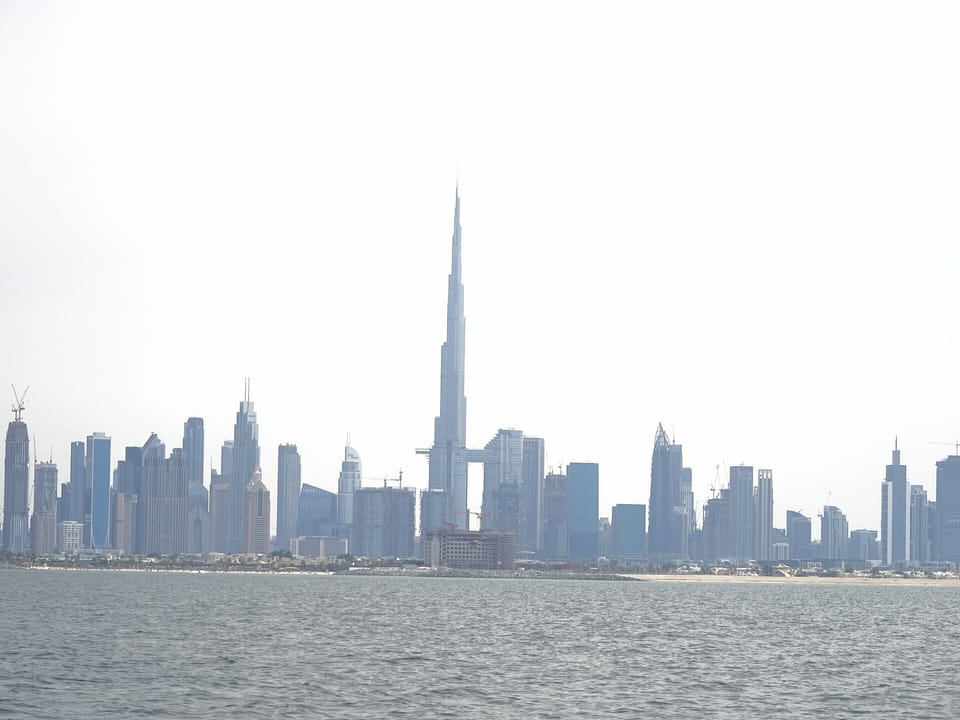
Yes — you can live in Dubai for a full year on your foreign salary, and the entire application takes about 48 hours to process once your file is complete. The UAE remote work visa (officially the Virtual Work residence) grants a one-year, extendable residence permit to people employed by companies outside the UAE, requires proof of at least USD 3,500 in monthly income, costs AED 200 in base visa fees plus add-ons that most guides forget to mention, and even lets you sponsor your family for the same period.
That is the short answer. The long answer — the one that decides whether your application succeeds on the first try or joins the pile of rejected files — is what this guide covers. We pulled the requirements, fees, and process directly from the official GDRFA Dubai service catalog (current as of August 2026), then added the practical layer the government pages never explain: how to actually prove your income, which fees apply to you, and what to do in your first 90 days after approval.
What the remote work visa actually is (and what it is not)
The official service description from the General Directorate of Residency and Foreigners Affairs (GDRFA) Dubai describes the Virtual Work residence as a residence visa without employment: a foreigner participating in remote employment receives a residence permit that entitles them to remain in the country, with a 60-day window from entry to complete the residency formalities.
Three consequences follow from that framing, and misunderstanding them is where most applicants go wrong:
You have no UAE labor relationship. Your contract stays with your foreign employer. You are not entitled to UAE end-of-service benefits, Emirati labor-law protections, or a local sponsor's obligations — and in exchange, no local entity needs to hire you, open a branch, or guarantee you.
You cannot take local employment on this permit. The visa exists precisely for work performed outside the UAE's labor market. If a Dubai company offers you a job mid-year, that is a status-change process, not a formality — and working locally on a remote-work permit is a violation, not a loophole.
It is a full residence permit, not a long tourist visa. You get an Emirates ID, you can open bank accounts, sign a lease, and sponsor dependents. This distinguishes it sharply from the digital-nomad stamps of other countries that grant presence but no residency rights.
Who is it for, honestly? Employees of foreign companies with stable salaries above the threshold, and freelancers with recurring international clients. Who should skip it? People hunting for jobs inside the UAE (use an employment visa), entrepreneurs who want to invoice UAE clients (use a freelance permit — our UAE Freelance Permit 2026 guide covers that track), and anyone whose income arrives in unpredictable lumps.
It also helps to see what the UAE permit offers against the digital-nomad visas it gets lumped with. Most nomad programs grant 6–12 months of presence — the right to sit in the country — with tax-office registration and no path to dependents or local banking depth. The virtual work residence is the reverse: an actual residency with an ID number, family sponsorship, and a renewal track, priced at a fraction of what freelancer licenses or company formation cost. The trade is a real income floor ($3,500/month) and a real insurance obligation. Nomads comparing destinations on headline fees usually miss that the UAE product is a different category of document entirely — closer to a low-cost residency program than a tourist-plus-work hybrid.
A note for Abu Dhabi-focused readers: the service described here runs through GDRFA Dubai's catalog. Abu Dhabi and other emirates operate their own residency channels with comparable remote-work tracks, separately administered and occasionally different in fees. The mechanics in this guide (income proof logic, document quality, post-entry sequence) transfer; the invoice does not — confirm with the authority of the emirate you will actually live in before paying anything.
The five official requirements, verbatim
The GDRFA service catalog lists exactly five requirements. Here they are, with what each means in practice:
- A recent color personal photo with a white background. Simple, yet a known rejection trigger when applicants reuse old photos or phone selfies with grey backgrounds.
- A passport copy valid for at least six months. Renew first, apply second — a passport expiring in five months wastes your entire application cycle.
- Evidence that you work for an entity outside the UAE and that the work is done remotely. An employment contract or employer letter stating your remote arrangement. Freelancers need client contracts and invoices showing continuity.
- Proof of monthly income of no less than USD 3,500 (or the equivalent in foreign currencies). The make-or-break condition — we dedicate the next section to it.
- A valid health insurance document. Coverage must be valid for your residence period. Our Health Insurance for Expats in the UAE 2026 guide breaks down plan tiers and costs before you overpay for a policy that merely checks the box.
Notice what is absent: no university degree requirement, no local sponsor, no business license, no bank balance parked in the UAE. The system filters on exactly two signals — foreign income stability and health coverage — which makes document quality the entire game.
Proving the $3,500: what reviewers actually accept
The official text sets the floor ("no less than 3,500 US dollars or the equivalent") but does not prescribe the document type. In practice, strong applications layer three proofs:
- An employment contract (or client agreements, for freelancers) stating your monthly compensation in USD or a convertible currency.
- Three to six months of payslips showing consistent amounts.
- Bank statements matching those payslips — because a payslip without corresponding deposits reads as unverified income.
The word doing the heavy lifting in the requirement is monthly. A high annual average paid once or twice a year does not satisfy the pattern reviewers want to see: regular, recurring inflows. If your income arrives quarterly, prepare an explanatory letter plus documentation of the recurrence, and expect requests for additional evidence — or better, wait until you have two or three months of regular transfers on record.
Three applicant profiles, three different risk levels:
| Profile | Strong file looks like | Weak point |
|---|---|---|
| Full-time foreign employee | Contract + 6 payslips + matching bank statements | Almost none — the model file |
| Freelancer with recurring clients | Client contracts, repeated invoices, monthly transfers | May face questions on income nature |
| Business partner drawing distributions | Partnership deed + distribution decisions + regular net inflows | "Monthly" pattern must be argued |
One more practical note: if you receive international transfers through online platforms, clean up the pattern before applying. Consistent monthly arrivals with clear sender names make your file readable; a chaotic mix of small transfers does not. And if you eventually plan to run a local business activity, read our UAE Corporate Tax for Freelancers 2026 analysis first — the tax residency and AED 1M revenue trigger discussion there changes the math for remote professionals who later localize.
The real fee structure in 2026
Most articles quote "AED 200" and stop. The official fee table has more moving parts:
| Item | Amount |
|---|---|
| Virtual work visa fee | AED 200 |
| VAT | 5% |
| Knowledge Dirham (applicant inside the country) | AED 10 |
| Innovation Dirham (applicant inside the country) | AED 10 |
| Inside-country processing fee | AED 500 |
| Indicative total, applying inside the UAE | ≈ AED 730 (VAT applied to the visa fee) |
Read the fine print on three points:
The add-ons apply to in-country applicants. The Knowledge Dirham, Innovation Dirham, and AED 500 processing fee are listed for sponsored persons inside the country. Applying from abroad produces a different invoice composition, and the official page notes the total may vary depending on the applicant's circumstances.
The visa fee is not the residency budget. After approval and entry, completing your residency means the medical test, Emirates ID biometrics, and insurance — each with its own cost. Plan the full stack, not the sticker price.
Processing takes 48 hours — after file completion. The catalog's expected completion time is 48 hours, and the service is available digitally 24/7. The clock starts when your five documents are complete and correct, which is why the income-proof section above matters more than any timing trick.
How to apply: digital and in-person routes
The digital path through the GDRFA smart services platform:
- Log in via UAE Pass or your username on the GDRFA website or app.
- Search for the service — "Visa Issuance (Virtual Work)".
- Fill in the application and upload the five required documents.
- Pay the fees online; the invoice reflects the breakdown in the table above.
- Track the application in your account — 48-hour expected completion.
The in-person alternative runs through AMER customer happiness centers: take an automated turn ticket, submit the complete file to the counter, pay there, and receive the same outcome. Digital is faster on average simply because there is no queue.
A small preparation step pays off: install the GDRFA Dubai app and complete your UAE Pass registration the day before you apply. Linking your digital identity the first time takes minutes, and you do not want those minutes to be the reason your session expires mid-application. The official GDRFA Dubai channel walks through the app registration:
After approval: your first 60 and 90 days
Approval is halftime. The residence formalizes in a defined sequence:
- Entry on your issued visa starts the official 60-day window to complete residency requirements.
- Medical test at an approved center — short appointment, results delivered electronically.
- Emirates ID biometrics to register your identity record.
- Emirates ID issuance unlocks the practical expat stack: bank account, lease, telecom contract.
Order matters: the medical typically precedes biometrics, and each step's delay pushes the next. If you plan early travel after arrival, count the 60 days carefully — some steps require your physical presence.

For the settling-in checklist, three items decide your quality of life in the first quarter — and when you start planning Gulf trips later, remember each country runs its own rules for residents: the Saudi exit re-entry visa 2026 guide is written for iqama holders there, while GCC visit-visa rules apply to your UAE residency: connectivity (our Best eSIM for UAE & Dubai 2026 comparison covers instant-activation options that beat airport SIM prices), banking (residents with verified income patterns get smoother onboarding; expect some banks to prefer employees over freelancers), and insurance (do not buy the cheapest box-ticking policy — Dubai healthcare costs make coverage limits a real financial decision).
Family sponsorship and renewal
Buried in the service's terms and conditions are its two most valuable clauses:
One-year, extendable residence. The virtual work residence runs one year from issuance and can be extended — but renewal re-tests the original conditions. Your foreign contract must still exist, your monthly income must still clear the threshold, and your insurance must still be valid. A residence that was easy to earn is easy to lose at renewal if the underlying facts changed.
Family sponsorship for the same period. You can sponsor your family for the duration of your permit — meaning one principal file covers the household, with dependents paying their own processing costs rather than proving independent income. For families comparing destinations, this is the feature that separates the UAE permit from single-person digital nomad visas elsewhere.
Thinking longer term? If your profile grows — higher income, specialized credentials, or an investor track — the UAE Golden Visa 2026 grants 5–10 year residency with broader work rights. The two serve different strategies: the remote work visa is residency for your foreign job; the Golden Visa is residency that outlives any single job.
Seven mistakes that sink applications
- Applying with a passport under six months' validity. Renew first, always.
- A generic contract that never says "remote" or names the employer's country. Ask HR for a letter that states both explicitly.
- Payslips without matching bank statements. Numbers without flows are not proof.
- Lumpy income presented as-is. Either wait for a regular pattern or document the recurrence convincingly.
- Insurance expiring mid-residency. Check the end date the day before you apply.
- An old photo with a non-white background. The cheapest rejection to avoid.
- Ignoring the 60-day post-entry window. Book your medical in week one, not week eight.
Frequently asked questions
Is the threshold exactly $3,500 per month?
Yes, per the current official service catalog: "no less than (3,500) US dollars or the equivalent in foreign currencies" monthly. Verify the live page before paying — any revision appears there first.
Can I apply from inside the UAE?
Yes, and the fee table changes accordingly (inside-country processing adds the AED 500 fee plus the two dirham surcharges). Entry-then-apply also starts your 60-day completion window immediately.
Does this visa allow working for a UAE company?
No. It is explicitly a residence "without employment" in the local market. Local work requires a status change; local invoicing requires a freelance permit or license.
How fast is processing?
48 hours from a complete file, per the published service level — digital channel, 24/7.
Can I sponsor my spouse and children?
Yes, for the same one-year period. Their applications hang off your principal file.
Can I open a UAE bank account?
Generally yes with a valid residence permit and documented income; expect bank-specific policies on freelancer versus employee income.
Do I have to stay in the UAE a minimum number of days?
The service conditions do not set a minimum physical presence. The practical constraint is renewal: keeping your conditions valid while spending most of the year abroad makes the annual cost-benefit worth recalculating each cycle.
Is an agent or lawyer necessary?
No. The process is fully digital with a fixed document list. Middlemen sell file preparation, not access.
Renewal year to year: what changes and what catches people
The renewal is where the visa earns or loses its value. You will re-submit essentially the same file — contract, income proof, insurance — and the review re-tests the same conditions. Three patterns recur among long-term holders:
Income drift. A holder whose salary rose has a trivial renewal. One whose income dipped near the threshold discovers that the floor is applied at renewal, not grandfathered from the original grant. If your income hovers around USD 3,500, time your renewal for a month when bonuses or client payments show the strongest statements.
Insurance gaps. People buy a one-year policy at first application and forget that renewal needs a policy valid at review time. A policy expiring two weeks before your renewal date stalls the file. Calendar both dates together, always.
Family synchronization. Dependents' permits run with yours, but their renewals generate their own invoices. Families who stagger documents (one passport expiring, one insurance renewing) create four small crises a year instead of one annual sweep. Batch everything: passports, insurance, Emirates IDs, and the residence renewal in one administrative week.
Is the renewal automatic in any case? No — unlike tourist extensions that some platforms automate, the virtual work renewal is an application. Treat it with first-application seriousness, minus the first-time uncertainty.
Sources
- GDRFA Dubai — Visa Issuance (Virtual Work) official service page: https://gdrfad.gov.ae/en/services/64154a31-ec6d-11ec-140b-0050569629e8
- UAE Government official portal — Visas and Emirates ID: https://u.ae/en/information-and-services/visas-and-emirates-id
- Internal guides referenced: UAE Freelance Permit 2026, UAE Corporate Tax for Freelancers 2026, Health Insurance for Expats in the UAE 2026, Best eSIM for UAE & Dubai 2026, UAE Golden Visa 2026.
(Fees and conditions verified against the official GDRFA service catalog in August 2026; the official page is the authoritative source for any mid-cycle updates.)