

UAE's Hardest-to-Fill Jobs 2026–2027: Talent-Shortage Roles and the Salaries Employers Are Now Offering
Last updated: October 2026
On October 8, 2026, Gulf News published the recruitment-industry breakdown that UAE hiring managers had been circling all year: the official list of roles employers simply cannot fill fast enough. It lands on top of a data trail — Marsh's global talent survey, the Naukrigulf hiring index, salary projections from Cooper Fitch — that all point the same direction. Demand has narrowed and sharpened, and pay is following the scarcity.
According to Gulf News, the hardest jobs to fill in the UAE right now are AI and machine-learning engineers, cybersecurity specialists, cloud architects, specialist engineers, project and design managers, C-suite executives, and specialized salespeople. Roughly 62% of Middle East employers report talent scarcity versus 54% globally, and pay for hard-to-replace roles is rising faster than the market average.
If you are an engineer, security specialist or senior manager anywhere in the world weighing a UAE move — from the US, UK, Europe, India or the Philippines — this is the layer of data most "move to Dubai" listicles never show you. Below is the fill-difficulty matrix, the salary bands employers are actually advertising, and what both mean for negotiating in 2026 and 2027.
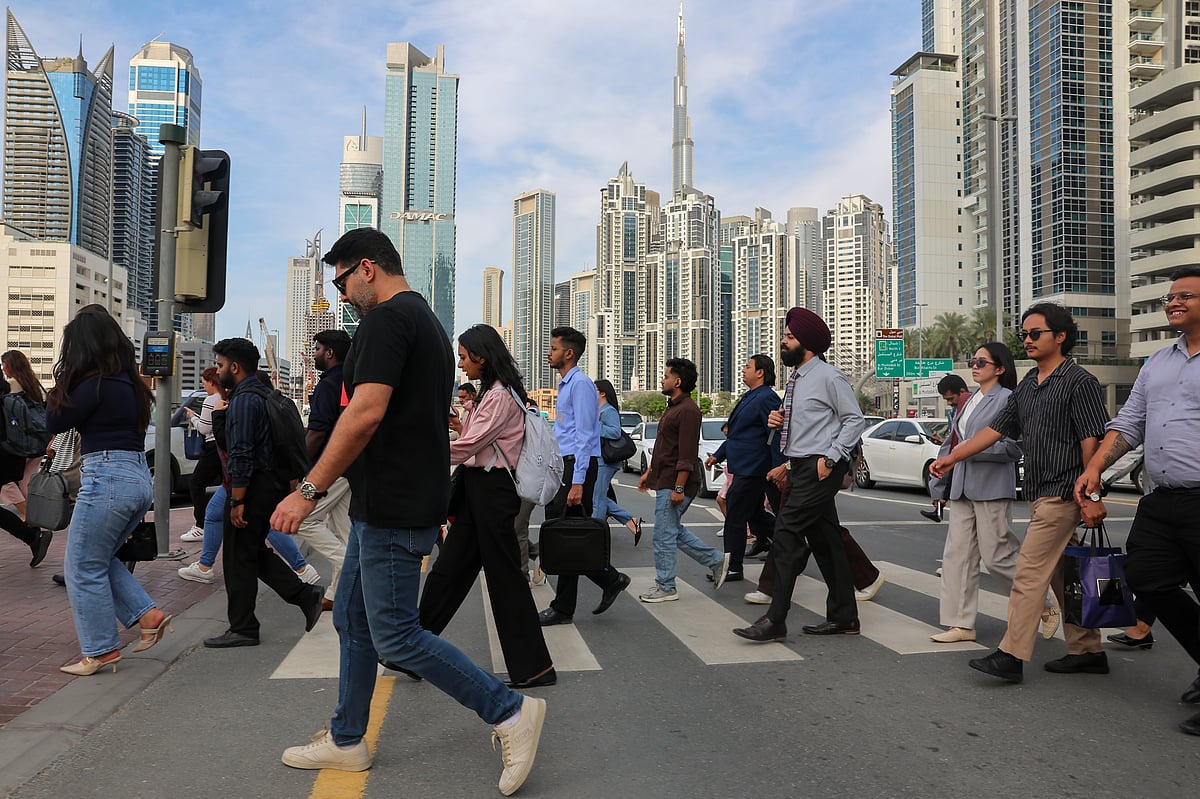
Source: Gulf News, October 8, 2026 report on the UAE job market
The fill-difficulty matrix at a glance
This table cross-references Gulf News' hardest-to-fill list with Naukrigulf index data and Khaleej Times salary reporting — one view no single source currently publishes. Hiring timelines reflect what recruiters told Gulf News: three to four weeks for standard roles, six to eight for specialists, longer for executives.
| Role | Typical time to hire | Posting trend in 2026 | Pay direction |
|---|---|---|---|
| AI / machine-learning engineer | 6–8 weeks | AI, ML and data postings up about 20% | Above-average rises, often above 10% |
| Cloud architect | 6–8 weeks | Inside the +20% tech cluster | Above-average rises |
| DevOps engineer | 6–8 weeks | Inside the +20% tech cluster | Above-average rises |
| Cybersecurity specialist | 6–8 weeks | Up about 20% with security roles | Above-average rises |
| Specialist engineer (sector-specific) | 6–8 weeks | Resilient while general hiring fell | Above-average rises |
| Project / design manager | 6–8 weeks | Resilient | Above-average rises |
| CFO / COO / CEO | Longer than specialist searches | Steady executive demand | Senior bands held nearly flat in postings |
| Specialized sales (technical, sector) | Harder than general sales | General sales down 42%, specialists scarce | Premium over generic sales pay |
| General sales / HR / finance roles | 3–4 weeks | Down 34–42% | Market-average rises at best |

Source: Gulf News, October 8, 2026
A market where employers cannot find people
Start with the scarcity number that frames everything else. Marsh's 2026 global talent trends survey, reported by Khaleej Times, found 62% of Middle East employers struggling to find the talent they need, against a 54% global average. The region is not imagining a skills gap — it measurably has a worse one than the world at large.
The same dataset explains employer behavior you will notice in interviews. Because skilled people are scarce and expensive to replace, retention has jumped up the agenda:
| What employers and employees told Marsh | Figure |
|---|---|
| Middle East employers facing talent scarcity | 62% |
| Global employers facing talent scarcity | 54% |
| HR leaders prioritizing employee experience | 74% |
| Employees who say AI makes them more productive | 83% |
| Employees who fear losing their job to AI | 43% |
| Employees who would trade a 10% raise for AI skills training | 64% |
Read the last two rows together, because they define the 2026–2027 job market in the UAE better than any vacancy count. Nearly half of workers fear automation, most believe AI boosts their output, and almost two-thirds would give up real money for AI skills. That is a workforce asking to be retrained — and employers, short of AI-capable hires externally, are increasingly paying to build the capability internally.
The hardest roles, one by one
AI and machine-learning engineers. The single most contested profile in the country. Postings for AI, machine-learning and data roles rose about 20% even as overall job advertising fell 23% between April and May 2026, per the Naukrigulf index. Khaleej Times reports some UAE firms are now sourcing this talent from Eastern Europe and Africa because local and traditional pipeline supply cannot keep pace. If you have production ML experience — not just model notebooks — you are negotiating from strength.
Cloud architects and DevOps engineers. Khaleej Times' July reporting named cloud architects and DevOps among the most technically difficult roles to fill, alongside AI engineers. Every UAE company mid-way through a digital transformation needs them, and the regional certification pool (AWS, Azure, Google Cloud at architect level) is thin relative to demand.
Cybersecurity specialists. Security sits inside the +20% posting cluster and inside every board's risk register. The gap is especially wide for professionals who can speak to both engineering and compliance — a combination UAE regulators increasingly expect. For a deeper dive on pay and hiring in this specialty, see our Gulf cybersecurity jobs and salaries guide.
Specialist engineers. Sector-specific engineering — energy, infrastructure, advanced manufacturing — keeps appearing on recruiters' hardest-to-fill lists because the skills cannot be improvised. Gulf project pipelines remain heavy, so experienced sector engineers command quick interview loops and, often, counter-offers.
Project and design managers. Program scale in the UAE is enormous, and employers told Gulf News that seasoned project and design managers who can run multi-party delivery without escalation are scarce. The skill premium goes to people with shipped mega-project experience, not just certifications.
C-suite: CFO, COO, CEO. Executive searches take the longest of all — Gulf News' sources flagged extended timelines for top roles. Yet the executive market held firm: postings in the top salary band slipped only 5% while lower bands fell by a fifth or more. Our executive salaries in the Gulf analysis tracks what that resilience means for package negotiations.
Specialized salespeople. The most counterintuitive line on the list. Generic sales postings collapsed 42% in 2026, yet recruiters cannot find salespeople who genuinely understand technical products — enterprise software, engineered systems, specialized services. If you can sell a complex product to a skeptical committee, you are in one of the quietest seller's markets in the region.
One friction item applies across every role: recruiters told Gulf News that AI-generated resume flooding has made screening slower and rougher. Generic, machine-written applications now sink; short, verifiable, metric-heavy applications rise to the top because a human can confirm them in minutes.
What salaries are actually doing in 2026
Now the money question. Precise role-by-role salary tables circulate widely in the Gulf, but the reliable, freely verifiable data points to three facts.
First, the average increase is modest: Cooper Fitch data reported by Khaleej Times puts 2026 salary growth at 1.6% to 4%, after an actual 2.6% rise in 2025. Korn Ferry's separate projection for the UAE is 4.1%, supported by GDP growth of 5.3%.
Second, the average hides a spike. Employers told Cooper Fitch they would raise pay by more than 10% for hard-to-replace roles — precisely the matrix roles above. Overall, 48% of UAE companies plan increases, 37% plan to hold salaries flat, and 15% plan cuts.
Third, according to recruitment coverage of the hardest-to-fill roles, advertised pay for AI, cloud and security specialists is clustering in the upper-mid and senior bands, while junior and generic-role pay stagnates. Treat any single "AI engineer salary: X dirhams" figure you see online with care — those tables are usually gated, unverified or both. The direction is confirmed; the precise number is not.

Source: Khaleej Times, UAE salaries 2026 report
The bands tell a story: climb the ladder
The Naukrigulf index — built on more than 220,000 job postings from over 7,000 companies — breaks the market into salary bands, and the trend by band is the most useful chart in this whole debate:
| Monthly salary band (AED) | Change in job postings | What it signals |
|---|---|---|
| 10,000 and under | −26% | Entry-level and generic roles contracting hardest |
| 11,000–20,000 | −22% | Junior-mid market shrinking fast |
| 21,000–40,000 | −19% | Mid-market softening but active |
| 41,000–80,000 | −11% | Senior professional market holding up |
| 80,000–150,000+ | −5% | Nearly flat — the scarcest, most defended tier |
The pattern is unambiguous: the lower the band, the steeper the fall. Under-10,000 dirham postings dropped 26% while the top band barely moved. Combined with the >10% increases for hard-to-replace specialists, the UAE market is telling every professional the same thing — the premium sits one or two rungs up the skills ladder, and the climb runs through AI, cloud, security or deep sector expertise.
Where the market cooled
Honesty about the weak side matters if you are planning a move. Beyond the band data, sector-level declines in 2026 were steep for generalist roles: sales postings down 42%, human resources down 34%, finance down 34%. Total postings across the index fell 23% between April and May 2026. If your profile is a generalist administrator, unspecialized seller or transactional finance role, competition per opening is significantly tougher than two years ago, and the bargaining math in this article largely does not apply to you yet.
The strategic response is reskilling toward the contested roles — and the 64% statistic says your employer may fund it if you propose a plan rather than wait.
Where UAE firms now hunt for talent
Two quieter shifts reshape your odds of being hired from abroad. First, sourcing geography: Khaleej Times reports UAE technology firms short on AI, cloud and machine-learning talent are deliberately recruiting from Eastern Europe and Africa. For candidates in those regions, and for experienced professionals from South Asia, the UK and the US already working with global platforms, active demand exists — position yourself in the channels recruiters actually watch.
Second, nationality. The Naukrigulf index found 68% of UAE employers have no nationality preference when hiring. Skills and verifiable experience dominate — though recruiters note prior Gulf experience still smooths client-facing and senior appointments, a gap our Dubai jobs without prior Gulf experience guide helps first-timers bridge. And demand is not fading: 80% of surveyed firms plan to maintain or increase hiring in the second half of 2026, while Abu Dhabi recorded a 21% rise in new business licences in the first quarter — fresh companies mean fresh vacancies.
What employers offer beyond salary in 2027
If you interview in the UAE this cycle, expect the conversation to widen beyond pay. Marsh found 74% of HR leaders prioritizing employee experience, and Khaleej Times' 2027 outlook reporting highlights job security, wellbeing support and flexibility — hybrid or flexible hours — as the benefits employers now lead with when salary budgets cannot stretch.
For candidates, that changes negotiation strategy. When the base offer is capped, the movable pieces include training budgets (especially AI upskilling, which employers are unusually willing to fund given the 64% statistic), relocation support — our Gulf relocation allowance guide covers typical packages — flexible working terms, and wellbeing benefits. Scarce-skill candidates can often trade a modest salary concession for a materially better development deal, which compounds over a career faster than a one-off signing bump.

Source: Khaleej Times, UAE jobs 2027 outlook
How to position yourself for a hard-to-fill role
Turn the matrix into a personal plan in four moves:
- Pick your lane from the matrix, not from hype. AI engineer, cloud architect, DevOps, cybersecurity and specialist engineering have the strongest data behind them — rising postings, extended hiring timelines and above-market pay movement all at once.
- Build one verifiable AI capability. With 64% of your competition willing to trade a raise for AI skills, fluency with real tools inside your own function — not a certificate alone — is the cheapest differentiation available.
- Write for a human screener. Short resume, quantified outcomes, technologies named explicitly. The AI-resume flood means verifiability is the new visibility.
- Target the timeline sweet spot. Roles posted six-plus weeks or re-advertised are roles employers have failed to fill — your leverage is highest exactly there, and salary bands one tier up are the most defended in the market.
If one of these roles matches your profile, the fastest next step is practical: browse live listings on Truescho's opportunities board, where Gulf vacancies are filtered by field and updated continuously — seeing which employers are re-advertising tells you where the real shortage sits before you write a word of your application. And if your Gulf move is one part of a bigger family financial picture this autumn, our guides to Medicare Open Enrollment 2027 and Amazon's returns settlement cover two US consumer deadlines worth diarizing.
Frequently asked questions
Which jobs are hardest to fill in the UAE in 2026?
AI and machine-learning engineers, cybersecurity specialists, cloud architects, DevOps engineers, specialist engineers, project and design managers, C-suite executives and specialized salespeople, according to Gulf News' October 8 report. Tech postings in these fields rose about 20% even as total job advertising fell.
How long does it take to hire in the UAE?
Three to four weeks for standard roles, six to eight weeks for specialist positions, and longer for executive searches, recruiters told Gulf News. The flood of AI-generated resumes has stretched screening further, so concise, verifiable applications now move through the pipeline measurably faster.
What is the average salary increase in the UAE for 2026?
Between 1.6% and 4%, according to Cooper Fitch data reported by Khaleej Times, after a 2.6% actual increase in 2025. Korn Ferry separately projects 4.1%. Hard-to-replace specialists — AI, cloud, cybersecurity — can command increases above 10% at offer stage.
How severe is talent scarcity in the Middle East?
62% of Middle East employers report difficulty finding the talent they need, versus 54% globally, in Marsh's 2026 talent trends survey. The squeeze is sharpest in AI, cloud and cybersecurity, where demand keeps outrunning both local supply and traditional hiring pipelines.
Which UAE job sectors saw hiring drop in 2026?
Sales postings fell 42%, human resources fell 34%, and finance fell 34%, per the Naukrigulf hiring index. Overall postings dropped 23% between April and May 2026, while AI, machine-learning, cybersecurity and data roles rose about 20% against the tide, the same index data shows.
Are jobs under AED 10,000 declining?
Yes. Postings paying 10,000 dirhams per month or less fell 26%, and the 11,000–20,000 band fell 22%. Declines shrink steadily up the ladder — the 41,000–80,000 band fell 11% and the 80,000–150,000 band only 5% — marking exactly where employer competition concentrates.
Do UAE employers have nationality preferences?
68% of employers in the Naukrigulf index survey said they have no nationality preference when hiring. Verified skills, certifications and sector experience decide most offers, though prior Gulf-region experience remains a clear advantage for senior and client-facing roles, according to recruiters quoted in the coverage.
Where are UAE firms hiring tech talent from?
Eastern Europe and Africa, Khaleej Times reports, as local supply of AI, cloud and machine-learning specialists falls short. Firms are widening sourcing channels while 80% of surveyed companies plan to maintain or increase hiring through the second half of 2026.
Sources
- Gulf News — "UAE job market 2026: hardest jobs to fill," October 8, 2026 (recruiter interviews, hardest-to-fill roles, hiring timelines)
- Khaleej Times — Marsh Global Talent Trends 2026 coverage, September 28, 2026 (62% scarcity, 74% employee experience, 64% AI-skills trade)
- Khaleej Times — Naukrigulf hiring index coverage, July 6, 2026 (posting trends by sector and salary band, 68% nationality finding)
- Khaleej Times — UAE tech talent shortage coverage, July 5, 2026 (AI/cloud/DevOps shortage, Eastern Europe and Africa sourcing, Abu Dhabi licences)
- Khaleej Times — Cooper Fitch / Korn Ferry UAE salary forecasts, 2026 (1.6–4% increases, 48/37/15 split, above-10% rises for scarce roles)
Note: Gulf News and Khaleej Times figures are attributed by publication and date; salary figures for individual job titles were not independently verifiable and are reported here only as directional findings.