

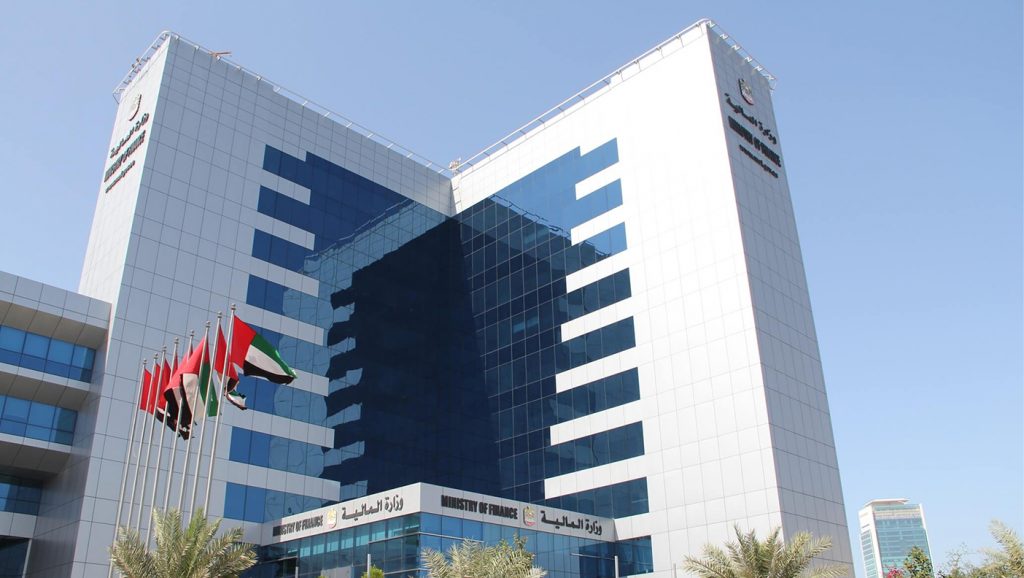
Source: UAE Ministry of Finance
UAE Domestic Minimum Top-Up Tax (DMTT) 2026: Is Your Group in Scope?
Last updated: July 2026
Disclosure: This article contains one affiliate partner link for Airwallex business banking. If you use it, we may earn a commission at no additional cost to you. All legal and tax information below is drawn from official sources and is independent of the affiliate relationship.
The UAE domestic minimum top-up tax (DMTT) has moved from theoretical concern to operational reality. If you are a CFO, tax director, or group founder of a multinational enterprise with any UAE footprint, whether a holding company, a free-zone subsidiary, a mainland operating entity, or a permanent establishment, 2026 is the year when the 15% minimum effective tax rate can bite for the first time. The rules reach entities that today pay 0% in a free zone or 9% under the standard corporate tax regime, and the single most dangerous assumption in the market right now is that free-zone status provides protection. It does not.
This guide provides a precise, practical framework for determining whether your group is in scope, how the tax is calculated, what the safe harbour options are, and the specific deadlines that cannot be missed. It is written for international founders, CFOs, and tax directors who need accurate answers, not academic summaries.
Direct answer: The UAE DMTT applies a 15% minimum effective tax rate (ETR) to the UAE profits of constituent entities belonging to a multinational group whose consolidated global revenue is at least EUR 750 million in at least two of the four preceding financial years. It is effective for financial years starting on or after January 1, 2025, under Cabinet Decision No. 142 of 2024, supplemented by Ministerial Decision No. 88 of 2025. It explicitly catches free-zone entities with 0% rates and mainland entities paying 9%.
What the UAE Domestic Minimum Top-Up Tax Actually Is
The DMTT is the UAE's domestic implementation of the OECD's Pillar Two global minimum tax framework. Under the OECD's "Two-Pillar Solution," approximately 140 jurisdictions in the Inclusive Framework agreed that very large multinational groups should pay an effective tax rate of at least 15% in every country where they operate. The OECD estimates this will generate approximately USD 150 billion per year in additional global tax revenue.
The mechanics are straightforward in principle: where a group's effective tax rate (ETR) in a specific jurisdiction falls below 15%, a "top-up tax" is levied to make up the difference. The question is who collects it. If the UAE did not enact its own domestic top-up tax, the group's parent jurisdiction (for example, the UK, Germany, or France) would collect the top-up under the Income Inclusion Rule (IIR). If neither the UAE nor the parent jurisdiction collected it, other subsidiary jurisdictions could collect under the Undertaxed Profits Rule (UTPR).
The UAE chose to enact a Qualified Domestic Minimum Top-Up Tax (QDMTT), which means the UAE itself collects the top-up rather than allowing the revenue to flow to a foreign treasury. This was a deliberate strategic choice: keep the tax revenue domestically, give multinational groups certainty that they will not face double top-up taxation, and position the UAE as a compliant, transparent jurisdiction in the global tax architecture.
The Legal Framework
Two instruments form the UAE's DMTT regime:
Cabinet Decision No. 142 of 2024 is the primary legislation. It establishes the DMTT, defines its scope, sets the 15% minimum ETR, and prescribes the filing and compliance requirements.
Ministerial Decision No. 88 of 2025, published on April 16, 2025, supplements the Cabinet Decision by incorporating OECD commentary and administrative guidance into the UAE's implementation. It applies retroactively to January 1, 2025, providing clarity on how the rules interact with the OECD's GloBE (Global Anti-Base Erosion) Model Rules.
On August 25, 2025, the OECD granted the UAE DMTT Transitional Qualified Status and listed it in the OECD Central Record. This is a critical milestone. When a jurisdiction's DMTT is "qualified," other countries accept that the UAE has already collected the top-up tax, and no additional foreign top-up applies to UAE profits. Without qualified status, a multinational group could pay the UAE top-up and still face a second top-up claim from its parent jurisdiction. Qualified status eliminates that risk.
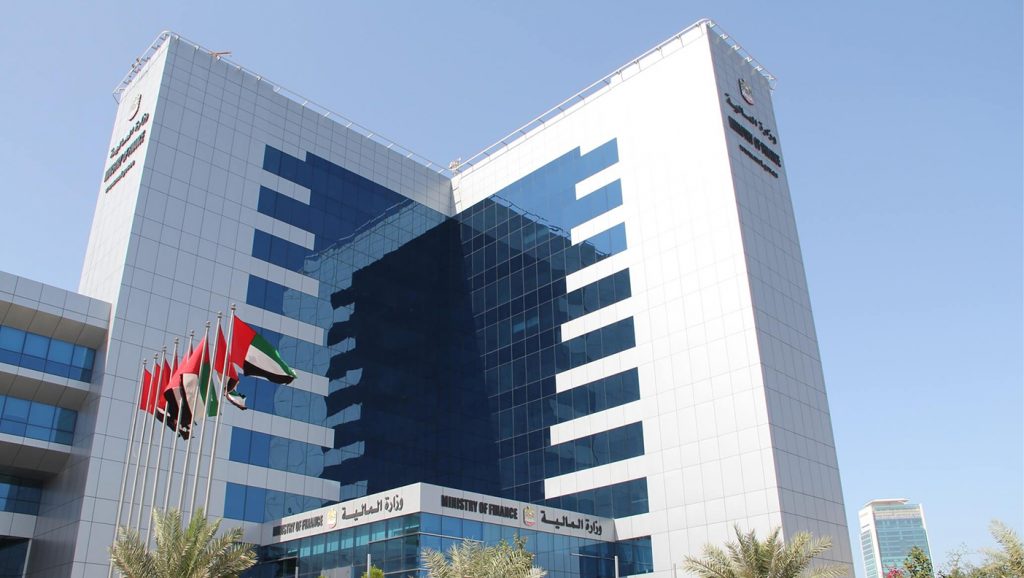
Source: UAE Ministry of Finance
Key Terminology
Three terms you will encounter repeatedly:
- Constituent Entity: Any UAE-resident company, or UAE permanent establishment of a foreign company, that belongs to an in-scope multinational group. This explicitly includes free-zone entities, mainland entities, and permanent establishments.
- Ultimate Parent Entity (UPE): The top company in the group structure whose consolidated financial statements determine whether the EUR 750 million revenue threshold is met.
- GloBE Income: The adjusted profit figure used for Pillar Two calculations, derived from the group's financial statements with specific adjustments prescribed by the OECD model rules.
Why 2026 Is the Critical Compliance Year
The DMTT is effective for financial years beginning on or after January 1, 2025. For a group with a calendar-year accounting period, the first in-scope year is 2025. But 2026 is when active compliance becomes unavoidable, for three reasons.
First, Ministerial Decision 88 of 2025 was published in April 2025 and applies retroactively to January 1, 2025. This removed the last significant uncertainty about how the rules would be applied, meaning there are no remaining excuses for non-compliance based on regulatory ambiguity.
Second, the OECD's grant of Transitional Qualified Status on August 25, 2025 confirmed that the UAE DMTT meets international standards. This gives multinational groups certainty that compliance with the UAE regime protects them from additional foreign top-up taxation. But it also means that the regime is fully operational and enforcement is expected.
Third, for calendar-year groups, 2026 represents the midpoint of the first in-scope year's compliance cycle. Registration, data collection, safe-harbour testing, and filing preparation all need to be underway. The first DMTT return is due 18 months after the end of the first in-scope financial year, which for a December 2025 year-end means a filing deadline of June 2027. Groups that have not started preparing are already behind.
The Global Context: Why the UAE Adopted This Rule
The UAE did not enact the DMTT in isolation. Nearly 140 countries adopted the Pillar Two framework through the OECD Inclusive Framework. Major economies including all EU member states, South Korea, Japan, Canada, Australia, and the United Kingdom have implemented or are implementing minimum tax rules, including the Income Inclusion Rule (IIR) that allows parent-company jurisdictions to collect top-up tax on foreign subsidiaries' profits.
Without its own DMTT, the UAE's position as a low-tax jurisdiction would have become a liability rather than an advantage for large groups. Profits earned in UAE free zones at 0% would have been topped up to 15% by the parent company's home tax authority, with the revenue flowing out of the UAE. By enacting a qualified DMTT, the UAE ensures that any top-up tax stays within its own borders.
This represents a fundamental shift in the UAE's tax identity, from a pure no-tax jurisdiction to a modern tax jurisdiction that complies with global standards while maintaining a competitive position. The burden falls exclusively on the largest multinational groups (those above EUR 750 million in consolidated revenue). Small and medium-sized businesses, independent contractors, and startups remain entirely outside the DMTT's scope.
For the official OECD explanation of how Pillar Two and the 15% global minimum tax work, the video below from the OECD's official tax channel provides the authoritative overview.
Source: OECD Tax (official YouTube channel)
The Four-Question Decision Tree: Is Your Group in Scope?
Instead of navigating dense legal text, work through this four-question sequence. If you answer yes to questions 1 through 3 and no to the exclusions in question 4, your group is almost certainly in scope.
Question 1: Are You Part of a Multinational Group?
You must be a member of a group that operates in more than one jurisdiction and prepares (or would be required to prepare) consolidated financial statements. The definition of "multinational" for Pillar Two purposes requires operations or permanent establishments in at least two jurisdictions. A purely domestic UAE business with no foreign operations, foreign subsidiaries, or foreign permanent establishments is generally outside the scope.
Important nuance: the test is on the group, not on the individual entity. If your UAE entity is part of a group that has operations elsewhere, your UAE entity is a constituent entity regardless of its individual size or profitability.
Question 2: Does the Group Meet the EUR 750 Million Revenue Threshold?
This is the gating threshold. Check the Ultimate Parent Entity's consolidated financial statements. The group is in scope if consolidated global revenue is EUR 750 million or more in at least two of the four financial years immediately preceding the year being tested.
Pay close attention to the "2 of the prior 4" mechanic. A single year of high revenue does not pull a group into scope, and a single down year does not pull a group out. You need to map four years of consolidated revenue to determine whether the threshold is met. This is a group-level test measured on global consolidated revenue, not on the UAE entity's standalone revenue.
Example: If a group had consolidated revenue of EUR 800 million in 2022, EUR 700 million in 2023, EUR 820 million in 2024, and EUR 750 million in 2025, the threshold is met for 2026 testing because EUR 750 million was reached or exceeded in at least two of the four preceding years (2022, 2024, and 2025).
Question 3: Do You Have a UAE Nexus?
You need at least one UAE-resident constituent entity, or a UAE permanent establishment of a foreign group company. This is where the most dangerous myth in the market begins. A UAE free-zone company enjoying 0% qualifying-income treatment under the QFZP regime is still a constituent entity. It is still in scope. It is still tested. The free-zone 0% rate does not create a safe harbor from the DMTT.
This includes:
- Mainland UAE companies paying 9% corporate tax
- Free-zone companies with Qualifying Free Zone Person (QFZP) status paying 0%
- Free-zone companies with non-qualifying income paying 9%
- UAE permanent establishments of foreign companies
- UAE branches of international banks
Question 4: Do Any Exclusions Apply?
Two main carve-outs exist:
Investment Entities: Entities that meet the definition of an investment entity under the GloBE rules are excluded from the scope. This is a technical definition tied to the entity's activities and how it generates income.
Initial Phase of International Activity: A group in the early stages of international expansion may be excluded where no IIR applies to any UAE constituent entity. This broadly covers groups that are newly international and have a limited footprint outside their home country.
Government entities, international organizations, and certain non-profit and pension entities are also outside the scope.
If you clear questions 1 through 3 and no exclusion applies, you must register with the Federal Tax Authority (FTA) via the EmaraTax platform and proceed to effective-tax-rate testing and safe-harbour analysis.
The QFZP Myth: Why Your 0% Free-Zone Rate Is Not Safe
The most damaging misconception in the UAE tax market today is the belief that "my company is in a free zone with 0% tax, therefore I am protected from the DMTT." This is categorically wrong for members of in-scope groups.
Qualifying Free Zone Person (QFZP) status grants an exemption from the standard 9% UAE corporate tax on qualifying income. It does not grant exemption from the Pillar Two minimum tax. In fact, the relationship is precisely the opposite: the lower your effective UAE tax rate, the larger the DMTT top-up.
Think about the math. If your free-zone entity pays 0% and belongs to an in-scope group, the entire 15% minimum must be topped up. If your mainland entity pays 9%, only 6% needs topping up (before substance-based income exclusions). The free-zone entity, with its lower starting rate, actually faces the larger DMTT liability.
This means the free-zone 0% incentive has been transformed from a tax benefit into an operational and regulatory benefit for large groups. The advantages of free-zone status (100% foreign ownership, simplified licensing, customs benefits, industry-specific infrastructure, world-class logistics) remain intact. But the tax advantage is effectively neutralized for any entity that is part of a EUR 750 million+ multinational group.
For groups currently structuring around free-zone tax benefits, this change demands a fundamental rethink of entity placement, holding company location, and group structure. If the tax differential between free-zone and mainland has been eliminated by the DMTT, the decision about where to locate entities should be driven by operational and commercial factors rather than tax rate optimization.
For deeper analysis of how free-zone taxation works and what QFZP status entails, the UAE free zone tax and QFZP exemption guide provides the detailed framework.
A Worked Example: Free-Zone Entity at 0% Tops Up to 15%
Numbers make the concept concrete. Consider a hypothetical scenario:
Horizon Industrial Group, a multinational headquartered in Singapore, has consolidated revenue of EUR 1.2 billion (clearly above the EUR 750 million threshold, met in three of the last four years). One of its subsidiaries, Horizon Trading FZCO, is a DMCC free-zone company in Dubai. In 2025, Horizon Trading FZCO earned EUR 40 million in GloBE income and paid 0% tax as a qualifying free-zone person.
Step-by-step ETR calculation:
- Jurisdictional ETR = Covered taxes paid in the UAE divided by GloBE income in the UAE. With EUR 0 of covered tax on EUR 40 million of income, the UAE ETR is 0%.
- Top-up percentage = 15% minimum minus 0% actual = 15% (before any substance-based income exclusion).
- Top-up tax = approximately 15% x EUR 40 million = EUR 6 million, collected by the UAE under the DMTT.
The "0% free zone" produced a EUR 6 million UAE tax bill because the entity belongs to an in-scope group. Had the UAE not enacted a qualified DMTT, that EUR 6 million would have been collected by Singapore (or another parent jurisdiction) under the IIR. Either way, it would have been collected. The free-zone 0% rate simply determined that the full 15% top-up applied, rather than a partial amount.
The substance-based income exclusion adjustment:
The real calculation is more nuanced. The OECD's GloBE rules include a Substance-based Income Exclusion (SBIE) that reduces the amount of profit subject to the top-up. The SBIE is calculated based on the carrying value of tangible assets (excluding land) and payroll costs in the jurisdiction. This rewards groups that have real economic substance, physical operations, and employees in the UAE, as opposed to purely paper entities.
For Horizon Trading FZCO, if the company has a warehouse worth EUR 5 million and payroll of EUR 3 million, a portion of its EUR 40 million profit would be excluded from the top-up calculation under the SBIE formula. The exact amount depends on a formula prescribed by the OECD rules (5% of tangible assets plus 5% of payroll, transitional rates apply). This could reduce the effective top-up from EUR 6 million to a lower figure.
The key takeaway: a mainland entity paying 9% has a lower top-up percentage (6% rather than 15%) to begin with, and the SBIE further reduces the base. A free-zone entity at 0% faces the full 15% top-up before the SBIE adjustment. This is why free-zone entities are the most heavily impacted by the DMTT.
How the Effective Tax Rate Is Actually Calculated
The Pillar Two ETR calculation follows a specific sequence at the jurisdictional level (meaning all UAE entities of the group are aggregated and tested as a single jurisdiction):
Step 1: Determine GloBE Income. Start with the financial accounting profit of the UAE constituent entities and apply GloBE adjustments. These adjustments include excluding certain dividend income, excluding gains from portfolio shareholdings, and other prescribed modifications.
Step 2: Determine Covered Taxes. Identify the taxes covered under the GloBE rules that are paid on the GloBE income. This includes the UAE 9% corporate tax if applicable, and certain other taxes. For a free-zone entity at 0%, covered taxes are zero.
Step 3: Calculate the Jurisdictional ETR. Divide covered taxes by GloBE income for all UAE entities aggregated together. This produces a single UAE-wide effective rate for the group.
Step 4: Calculate the Top-Up Percentage. If the jurisdictional ETR is below 15%, the top-up percentage is 15% minus the actual ETR. If the ETR is 9%, the top-up is 6%. If the ETR is 0%, the top-up is 15%.
Step 5: Apply the Substance-Based Income Exclusion. Calculate the SBIE based on tangible assets and payroll in the UAE. Deduct the SBIE from the GloBE income to arrive at the excess profit, which is the base for the top-up tax.
Step 6: Calculate the Top-Up Tax. Multiply the top-up percentage by the excess profit (GloBE income minus SBIE).
This jurisdictional blending means that if a group has both a mainland entity paying 9% and a free-zone entity paying 0% in the UAE, their profits and taxes are aggregated. The blended ETR may be somewhere between 0% and 9% depending on the relative sizes of the entities, and the top-up brings the blended rate to 15%.
DMTT vs the Other UAE Tax Regimes: A Clear Disambiguation
The UAE now has several overlapping tax regimes, and confusing them is the most common and most expensive mistake in the market. This table clarifies once and for all.
| Regime | Who It Targets | Headline Rate | Key Threshold | Legal Basis |
|---|---|---|---|---|
| Standard Corporate Tax | Most UAE businesses | 9% | Taxable income above AED 375,000 | Federal Decree-Law No. 47 of 2022 |
| Small Business Relief | Small UAE businesses | 0% (elective) | Revenue at or below AED 3 million | Ministerial Decision 73/2023 |
| Free-Zone (QFZP) | Qualifying free-zone persons | 0% on qualifying income | Substance and qualifying-income tests | CT law free-zone provisions |
| DMTT (Pillar Two) | Members of MNE groups | 15% minimum ETR | EUR 750M consolidated revenue (2 of prior 4 years) | Cabinet Decision 142/2024; Ministerial Decision 88/2025 |
| IIR / UTPR | Not implemented in UAE | N/A | N/A | Not enacted by UAE |
The critical insight: the DMTT sits on top of the other regimes for in-scope groups. A free-zone entity can hold a valid 0% QFZP status under the corporate tax law and still owe DMTT top-up tax. Both rules apply simultaneously. The 0% free-zone rate answers the question "what is your domestic corporate tax liability?" The DMTT answers a different question: "is your group's effective rate in the UAE at least 15%?" For a member of a EUR 750 million+ group, the second question overrides the first.
Importantly, the UAE has chosen to implement only the QDMTT. It has not enacted the Income Inclusion Rule (IIR) or the Undertaxed Profits Rule (UTPR), and it has no controlled foreign company (CFC) regime. This means the UAE does not reach out to tax the foreign profits of UAE-parented groups. Your dealings with the UAE are limited to the domestic top-up tax on UAE profits.
For a comprehensive guide to UAE corporate tax compliance more broadly, the UAE corporate tax compliance guide covers the 9% regime and its interaction with the DMTT. For the interplay between corporate tax and freelancing, see our UAE corporate tax and freelancing guide.
The Transitional CbCR Safe Harbour: Your Best Opportunity for Relief
The Transitional Country-by-Country Reporting (CbCR) Safe Harbour is the most significant relief mechanism available during the early years of Pillar Two implementation. If your group qualifies, the UAE DMTT can be deemed to be zero for the relevant fiscal year, eliminating any top-up tax liability.
How the safe harbour works:
The safe harbour uses data from your existing Country-by-Country Reporting (CbCR) filings. If any one of three tests is met for the UAE jurisdiction in a given year, the top-up tax is deemed zero and no further GloBE computation is required for that jurisdiction.
Test 1: De Minimis Test
The group's UAE revenue must be less than EUR 10 million AND its UAE profit must be less than EUR 200,000 (as reported in the CbCR data). This test is designed to exclude jurisdictions where the group has only a small presence.
Test 2: Simplified ETR Test
The qualifying effective tax rate in the UAE must meet or exceed a benchmark that ramps up over the transitional period:
- 15% for fiscal year 2024
- 16% for fiscal year 2025
- 17% for fiscal year 2026
Test 3: Routine Profits Test
The group's UAE profits must be equal to or less than the Substance-based Income Exclusion (SBIE) amount for the UAE. This effectively means the group's UAE profits are entirely explained by its tangible assets and payroll, with no "excess" profit that would be subject to top-up.
Eligibility window:
The safe harbour applies to fiscal years beginning before January 1, 2027 and not ending after June 30, 2028. After this window, the simplified safe harbour falls away entirely, and full GloBE computations are required regardless of the group's position.
Important: Even if you qualify for the safe harbour and your top-up tax is deemed zero, you must still register for the DMTT and file the Pillar Two information return. The safe harbour zeroes the tax, not the compliance obligations.
The Penalty Relief Window: Act Before December 31, 2026
The UAE authorities have provided a penalty relief window that is both generous and time-limited. No penalties will be imposed for failures related to the DMTT return or the Pillar Two information return for periods beginning on or before December 31, 2026 (and not ending after June 30, 2028), provided the group took reasonable measures to comply.
"Reasonable measures" does not mean "did nothing." You must demonstrate a genuine, documented compliance effort. This means registering on EmaraTax, gathering the necessary financial data, appointing a Tax Agent where required, and making a good-faith effort to assess your DMTT liability.
This penalty relief window is significant because the standard penalties for non-compliance with UAE tax obligations can be substantial. Taking advantage of the relief period gives groups a grace period to build compliance capability without the threat of immediate financial penalties. But the window closes on December 31, 2026, and after that date, full penalties apply.
The practical message: Register now, gather your data, assess your safe harbour eligibility, and file on time. The penalty relief window rewards early movers and punishes procrastinators.
The Compliance Calendar: Critical Dates
| Date | Milestone |
|---|---|
| January 1, 2025 | DMTT effective for financial years starting on or after this date |
| April 16, 2025 | Ministerial Decision 88/2025 published (retroactive to January 1, 2025) |
| August 25, 2025 | OECD grants UAE DMTT Transitional Qualified Status |
| Throughout 2026 | First active compliance year: FTA registration via EmaraTax, data collection, safe-harbour testing |
| December 31, 2026 | Last day of the penalty-relief window for in-scope periods (subject to the June 30, 2028 cap) |
| Before January 1, 2027 | Transitional CbCR Safe Harbour eligibility window for fiscal years beginning |
| June 30, 2028 | Hard deadline: transitional safe harbour ends, full GloBE compliance required |
| 18 months after first year-end | DMTT return filing deadline (15 months for subsequent years) |
Additional operational requirements: UAE entities in the group bear joint and several liability for the DMTT due, meaning the FTA can pursue any UAE entity for the full amount. Records supporting the GloBE computation must be retained for 7 years.
QDMTT vs IIR vs UTPR: Who Gets the Money?
Understanding the interplay between these three mechanisms explains why the UAE enacted the DMTT:
QDMTT (Qualified Domestic Minimum Top-Up Tax): The UAE collects the top-up. This is what Cabinet Decision 142/2024 enacted. The revenue stays in the UAE.
IIR (Income Inclusion Rule): If the UAE did not have a qualified DMTT, the parent company's home jurisdiction would collect the top-up. For example, if a UK-parented group has a UAE subsidiary paying less than 15%, HMRC would collect the difference from the UK parent.
UTPR (Undertaxed Profits Rule): If neither the QDMTT nor the IIR applies, other jurisdictions where the group has subsidiaries can collectively collect the top-up. This is the backstop mechanism.
The logic is clear. The top-up tax will be collected somewhere, by someone, regardless of what the UAE does. By enacting a qualified QDMTT, the UAE ensures that the revenue stays domestic. This is a rational fiscal policy, and it gives multinational groups certainty that they will not face double taxation from multiple jurisdictions claiming the same top-up.
How to Register and File on EmaraTax
Registration runs through the FTA's EmaraTax platform, the same system used for UAE corporate tax and VAT. The practical workflow:
Step 1: Identify UAE Constituent Entities. Map every UAE entity that belongs to the in-scope group, including free-zone entities, mainland entities, and permanent establishments.
Step 2: Designate a Filing Entity. Appoint one UAE constituent entity (or a designated local representative) to handle the group's DMTT registration and filing.
Step 3: Register on EmaraTax. Submit the group's details including UPE information, group structure, and UAE constituent entity list. Registration is a prerequisite for filing, not an optional step.
Step 4: Gather GloBE Data. Collect entity-level financial data for all UAE constituent entities, including covered taxes, GloBE income adjustments, tangible asset values, and payroll costs. This is typically the most time-consuming step and should begin immediately if it has not already.
Step 5: Test Safe Harbour Eligibility. Using CbCR data, test whether the de minimis, simplified ETR, or routine profits test is met for the UAE jurisdiction. If any test passes, the top-up is deemed zero and no further GloBE computation is needed.
Step 6: Prepare and File Returns. If safe harbour does not apply, prepare the full GloBE computation, calculate the top-up tax, and file both the DMTT return and the Pillar Two information return within 18 months of the first relevant year-end (15 months for subsequent years).
Because liability is joint and several across UAE entities, document internal responsibility allocations before filing. A small UAE entity could theoretically be pursued for the entire group's UAE DMTT liability.
Common Mistakes That Cost Groups Millions
Mistake 1: Assuming free-zone 0% survives. It does not, for in-scope group members. Test the group revenue threshold first. If the group is in scope, the free-zone status is irrelevant to the DMTT analysis.
Mistake 2: Misreading the threshold as a single-year test. It is "2 of the prior 4 years." Map four years of consolidated revenue before concluding you are out of scope. A group that had one year below EUR 750 million but three years above is still in scope.
Mistake 3: Treating DMTT as the 9% corporate tax with a higher number. Different law (Cabinet Decision 142/2024 vs Federal Decree-Law 47/2022), different tax base (GloBE income vs taxable income), different return, different deadline. Your 9% corporate tax compliance does not discharge your DMTT obligation.
Mistake 4: Skipping registration because you expect a safe harbour to zero you out. Registration and the information return are mandatory regardless of the safe harbour outcome. The safe harbour zeroes the tax amount, not the filing obligation.
Mistake 5: Underestimating data readiness. GloBE calculations require granular, entity-level financial data reconciled across the entire group. This data may not exist in the format needed and building the data pipeline takes months. Start now.
Mistake 6: Ignoring joint and several liability. A small subsidiary could be held liable for the entire group's UAE DMTT. Intra-group responsibility allocation must be documented contractually to prevent disputes.
Mistake 7: Missing the penalty relief window. Groups that delay registration and filing beyond December 31, 2026 lose the penalty safe harbour. Taking reasonable measures now preserves the protection.
At this scale of international operations, managing multi-currency payments and transfers between entities across jurisdictions becomes as challenging as the tax compliance itself. Many groups use a business multi-currency banking platform like Airwallex to settle inter-entity payments and reduce exchange costs when distributing profits and expenses across countries. (Disclosure: this article includes an affiliate link to Airwallex; we may earn a commission at no additional cost to you.)
Frequently Asked Questions
What is the UAE Domestic Minimum Top-Up Tax (DMTT)?
It is the UAE's implementation of the OECD Pillar Two global minimum tax, enacted under Cabinet Decision No. 142 of 2024. It ensures that large multinational groups operating in the UAE pay an effective tax rate of at least 15% on their UAE profits, by levying a top-up tax where the effective rate falls below 15%.
Is my company subject to the 15% minimum tax even though UAE corporate tax is 9%?
If your company is part of a multinational group with consolidated revenue of EUR 750 million or more in at least two of the four preceding financial years, yes. The DMTT applies regardless of whether your individual entity pays 0% (free zone) or 9% (mainland). The DMTT tops the UAE effective rate up to 15%.
What is the EUR 750 million threshold and how is it calculated?
It is the group's consolidated global revenue, taken from the Ultimate Parent Entity's consolidated financial statements. The group is in scope if revenue reaches EUR 750 million in at least two of the four financial years immediately preceding the year being tested. It is a group-level, global test, not a UAE-specific test.
Are free zone companies (QFZP) exempt from DMTT?
No. A Qualifying Free Zone Person with a valid 0% rate is still a constituent entity. If it belongs to an in-scope group, the free-zone 0% does not provide protection from the DMTT. The lower the starting tax rate, the larger the top-up required to reach 15%.
What is the Transitional CbCR Safe Harbour and when does it expire?
It is a relief mechanism that can deem the UAE top-up tax to be zero if the group passes one of three tests (de minimis, simplified ETR, or routine profits) using country-by-country reporting data. It applies to fiscal years beginning before January 1, 2027 and not ending after June 30, 2028. After that, the safe harbour expires and full GloBE computations are required.
What are the penalties for non-registration under UAE DMTT?
Standard penalties apply for non-compliance. However, a penalty relief window waives penalties for DMTT returns and information returns for periods beginning on or before December 31, 2026, provided the group took reasonable measures to comply. After this window, full penalties apply.
How do I calculate my group's effective tax rate (ETR)?
The jurisdictional ETR is covered taxes paid in the UAE divided by GloBE income in the UAE, aggregated across all UAE constituent entities. If the ETR is below 15%, a top-up brings it to 15%, after applying the substance-based income exclusion based on tangible assets and payroll.
When is the DMTT return due in the UAE?
The DMTT return is due 18 months after the end of the first relevant financial year. For subsequent years, the deadline is 15 months after year-end. Records must be retained for 7 years, and UAE entities bear joint and several liability.
What is the difference between QDMTT, IIR, and UTPR?
QDMTT is the domestic top-up tax collected by the UAE. IIR is collected by the parent company's home jurisdiction. UTPR is a backstop collected by other subsidiary jurisdictions. The UAE has implemented only the QDMTT. If the UAE collects via QDMTT, no other jurisdiction can claim the same top-up.
How can I benefit from the penalty relief window before December 2026?
Register on EmaraTax, appoint a Tax Agent where required, gather your GloBE financial data, assess your safe harbour eligibility, and document your compliance efforts. The penalty relief requires demonstrable reasonable measures, not passive waiting.
Conclusion
The UAE domestic minimum top-up tax is the most significant change to the UAE corporate tax landscape since the introduction of the 9% corporate tax in 2023. It transforms the economics of free-zone operations for large multinational groups and demands a fundamental reassessment of group structure and entity placement. The mechanics are demanding, but the path forward is clear: confirm scope using the 2-of-4-year EUR 750 million test, register on EmaraTax, test for the transitional safe harbour before the June 2028 cliff, and build full GloBE computation capability while the penalty relief window is still open.
The OECD's grant of Transitional Qualified Status means UAE compliance now protects your group from double top-up taxation abroad, a genuine advantage for groups that act in time. The cost of delay is not just potential penalties; it is the loss of the safe harbour window and the penalty relief that rewards early movers.
If your group is approaching the EUR 750 million threshold, the smartest moves are structural: deciding where to hold the parent entity, whether to relocate existing operations into the UAE, and how to staff your Gulf compliance team efficiently. Explore the structuring mechanics in the guide to re-domiciling your company to the UAE, and the staffing options in the employer-of-record guide for the UAE and Saudi Arabia. For broader UAE corporate tax compliance guidance, the compliance guide covers the 9% regime and its interaction with the DMTT. For all Gulf business-setup resources, browse the Truescho opportunities hub.