
Planning to study in Türkiye without YÖS? You are not looking for a loophole — you are looking at an official admission route that thousands of international students use every year. Turkish public universities regularly accept applicants on the strength of a high school GPA, an SAT score, or a recognised national exam, and the deciding factor is simply knowing which university publishes which rule for the current cycle.
The problem is noise. Search results recycle outdated lists, Telegram groups swear by universities that changed policy two years ago, and agencies copy tables nobody verified. This guide is built on one discipline only: every university named below was checked against its own official international students office announcement for the current admission cycle. You will find the verified list, the full table of accepted certificates and their minimum scores, how the application actually works, and the mistakes that sink files before a committee ever reads them.
Why YÖS is not a universal requirement
Start with the rule most applicants misunderstand. The Council of Higher Education of Türkiye (YÖK) does not impose a single national entrance exam on foreign applicants. The Council's official Study in Türkiye portal states it plainly: each university decides which exams it accepts, and explicitly names TR-YÖS, YÖS, the German Abitur, the American SAT, and the International Baccalaureate as examples, with the binding details always published on the official website of each institution. The quota places for international students are announced every year on the Council's website under the self-funded students section.
In practice this splits public universities into three groups:
- Universities that treat TR-YÖS, the central exam run by ÖSYM twice a year, as the main gauge for most programmes, especially medicine and dentistry.
- Universities that offer an explicit alternative: a high school GPA, an SAT score, or a recognised national secondary certificate.
- Universities that evaluate your high school diploma on its own merits, competitively, with no additional exam at all.
Missing an exam date therefore does not close the season. The second and third groups keep the door open, and that is the ground this guide covers.
The verified list: public universities accepting students without YÖS this cycle
Every row below was checked against a live official announcement, not an aggregator. Read the table with one rule in mind: even inside a single university, conditions differ between faculties — medicine, dentistry and pharmacy almost always carry extra restrictions.
| University | What it accepts without YÖS | Medical faculties note | Official source |
|---|---|---|---|
| Karabük University | Direct application on high school diploma GPA through a year-round portal | Medicine and dentistry require TR-YÖS with at least 400 out of 500 | International Students Office FAQ |
| Bülent Ecevit University (Zonguldak) | High school final exam score and secondary education GPA, or a recognised national exam from its approved table | Medicine, dentistry and pharmacy are excluded from the diploma route | Official admission and registration directive |
| Kastamonu University | SAT, or national certificates: Tawjihi, Syrian Baccalaureate, Iraqi, Jordanian and Yemeni secondary exams | Medicine accepts TR-YÖS or SAT only | Official accepted exams table |
| Artvin Çoruh University | File-based evaluation in most programmes, up to 5 programme choices | Per faculty regulations | Official 2026 application announcement |
| Other comparable public universities | Usually SAT, IB or a national certificate | Varies by institution | Always confirm on each university's ISO pages |
The list is deliberately honest about being partial. Dozens of public universities across Anatolia follow the same policy, but any name you add to your own shortlist must come from that university's international office page for your admission cycle, because thresholds move from year to year.
Karabük University: diploma GPA with an always-open portal
Karabük University is the clearest example of an open door. Its International Students Office states that undergraduate applications are submitted online, free of charge, through the university's own application portal, and that the application system is permanently open. Exactly two score types are accepted: your high school diploma grade, or a TR-YÖS result. Nothing else is considered. Medicine and dentistry are the explicit exception — they demand TR-YÖS with a minimum of 400 out of 500.
For diploma-route applicants the practical benefit is rhythm: files are reviewed on a rolling basis rather than in a single seasonal window. The office itself indicates that first-time university applicants are prioritised, with evaluation typically completed within seven to fifteen days, stretching toward a month in peak periods. Once admitted, you download your acceptance letter and move straight to the student visa stage.
Bülent Ecevit University: the GPA route with a competitive twist
Bülent Ecevit University in Zonguldak, on Türkiye's Black Sea coast, codifies the route in its official admission directive. Evaluation runs first through TR-YÖS, then through the high school final examination grade and the secondary education average — meaning your file competes on your diploma without a central exam being imposed. Two protective rules sit in the same directive: students from any single country cannot exceed thirty percent of a programme's international places unless seats go unfilled, and the faculties of medicine, dentistry and pharmacy do not accept the diploma route except through the national exams listed in the directive's approved table.
The university also publishes a complete current-cycle calendar on its international office site: the main application timetable was posted on 22 May, followed by supplementary quota rounds in July, August and September, with final registration for one round extended to 18 September. It is a full, dated picture of how one public university runs an entire admission season.
Kastamonu University: the widest published table of accepted certificates
Kastamonu University publishes the most detailed accepted-exams table you will find on an official Turkish university page, and it deserves a table of its own — not only for its applicants, but because many public universities apply strikingly similar thresholds.
| Certificate or exam | Published minimum | Notes from the official table |
|---|---|---|
| SAT | 500 in Math and 1000 combined Math plus Reading | For medicine, only TR-YÖS or SAT is accepted |
| Palestinian Tawjihi, scientific stream | Average of 70 out of 100 | Scientific stream required |
| Syrian Baccalaureate | 170 out of 240 | In a stream relevant to the target programme |
| Iraqi central secondary exam | 80 percent in the relevant branch | For matching specialisations |
| Jordanian secondary certificate | At least 70 percent in the relevant branch | For matching specialisations |
| Yemeni secondary certificate | At least 70 percent in the relevant branch | For matching specialisations |
| International Baccalaureate | 24 out of 42 | |
| ACT | 21 out of 36 with sub-scores | |
| French Baccalaureate | 10 out of 20 | |
| German Abitur and Austrian Matura | Up to 3.00 on their scales | |
| Chinese Gaokao | 450 out of 750 | |
| Azerbaijan TQDK, Kazakhstan, Kyrgyzstan, Afghanistan exams | Specific thresholds from 180 to 550 | Depends on exam and faculty |
| TÜBİTAK-recognised science olympiad medals | Gold, silver or bronze | A dedicated route for medalists |
Read the pattern rather than the individual numbers: tightly-fought national exams are accepted at high thresholds, international standardised tests at their own benchmarks. And if your certificate is not on Kastamonu's list, that says something about Kastamonu's table, not about every other university. The same institution also publishes a three-round placement calendar for the current cycle with dated results, which we cover in our dedicated guide to Turkish universities application dates.

Source: Kastamonu University international student admission system
Artvin Çoruh University: a short window and five choices
Artvin Çoruh University teaches the other half of the lesson: windows matter. Its official current-cycle announcement opened applications on 29 June and closed them on 5 July at 17:00 sharp, with a maximum of five programme choices from the quota table. First-round results were announced on 17 July, and reserve-list results on 7 August. Miss one week here and the cycle is gone — while another university on this very list would have accepted the same file all year round.
Certificate families: what actually replaces YÖS
Zoom out from individual universities and the alternatives fall into three families:
- American and international tests: SAT, ACT and IB. The strongest family, accepted across most public and private universities, including some medicine programmes.
- Arab national certificates: Tawjihi, the Syrian Baccalaureate, and the Iraqi, Jordanian and Yemeni secondary exams, typically accepted at 70 to 80 percent thresholds with a scientific-stream condition for scientific majors.
- The raw high school GPA: direct competitive evaluation. The fastest route for anyone without an exam score, and the weakest hand in the most competitive programmes.
You can mix families across applications — applying with your GPA to one university and an SAT score to another in the same season is standard practice among well-prepared applicants, and it spreads risk instead of concentrating it on a single result.
Two clarifications save people from chronic confusion. First, published minimums are eligibility floors, not admission guarantees: final placement is competitive, decided by the pool of applicants against the seats of each programme. Second, stream matters: a literary-stream certificate will not enter engineering no matter how high the average, and pretending otherwise ends in an automatic rejection.
The application process, step by step
- Fix your target programme and build a list of around ten public universities teaching it, mixing conditional and no-exam institutions.
- Open the international students office page of each university — search the university name plus International Students Office or ISO — and read the current-cycle announcement, not last year's PDF.
- Record for each: application window, accepted certificates and thresholds, application fee if any, and the document upload method.
- Assemble the core file: valid passport, authenticated secondary certificate with sworn translation, transcript, white-background biometric photo, and any language proficiency proof requested.
- Create an account on each university's portal and enter data that matches your passport and certificate letter by letter — name spelling and date of birth mismatches are the top reason files get flagged.
- Pay any application fee and keep the receipt.
- Monitor your email daily after submitting; deficiency notices land in your inbox, not on your phone.
- On admission: download the acceptance letter, apply for your student visa at the Turkish consulate in your country, and plan travel around the announced registration dates.
Steps five and six are where most files die. Committees report that a large share of applications get suspended for purely formal reasons: a wrong birth date, an unauthorised translation, a blurry scan. None of these say anything about your academic level, and all of them are avoidable in an afternoon of careful checking.
This is also the stage where a fair question appears: could someone run this machine for you? The Truescho Turkish public universities application service handles account creation, translation of your core documents, submission and tracking across multiple universities from one table you approve beforehand — including matching your SAT or YÖS score against each university's conditions before anything is sent. What the service covers is listed in full on its official page: https://truescho.com/en/apply-for-me/turkey-public-universities-application
Mistakes that sink applications before review
- Trusting a Facebook list from two years ago: a university that accepted GPAs in one cycle can require TR-YÖS in the next.
- Applying to medicine through the GPA route at a university that excludes medicine explicitly — an automatic rejection regardless of a 97 percent average.
- Submitting a translation that is not sworn, or authentication missing a step required by that specific announcement.
- Spelling your name differently across the portal, your passport and your certificate.
- Missing a one-week application window because a calendar was never checked — one university on this list closes in seven days.
- Assuming admission secures dormitory housing: university housing is a separate application with its own dates.
- Ignoring stream conditions, or the cap on programme choices at universities like Artvin Çoruh, where wasting all five choices on variations of one major is a self-inflicted wound.
- Forgetting that some universities recalculate your average their own way, which can drop you below a threshold you believed you cleared.
Should you sit YÖS anyway? A practical read
An honest answer depends on your target programme. If you are aiming at medicine, dentistry or pharmacy, TR-YÖS remains the main highway: thresholds are published and visibly high — Karabük's 400 out of 500 for medicine is a representative bar. For engineering, sciences, management or humanities, the GPA-plus-SAT combination covers most needs and saves months of preparation.
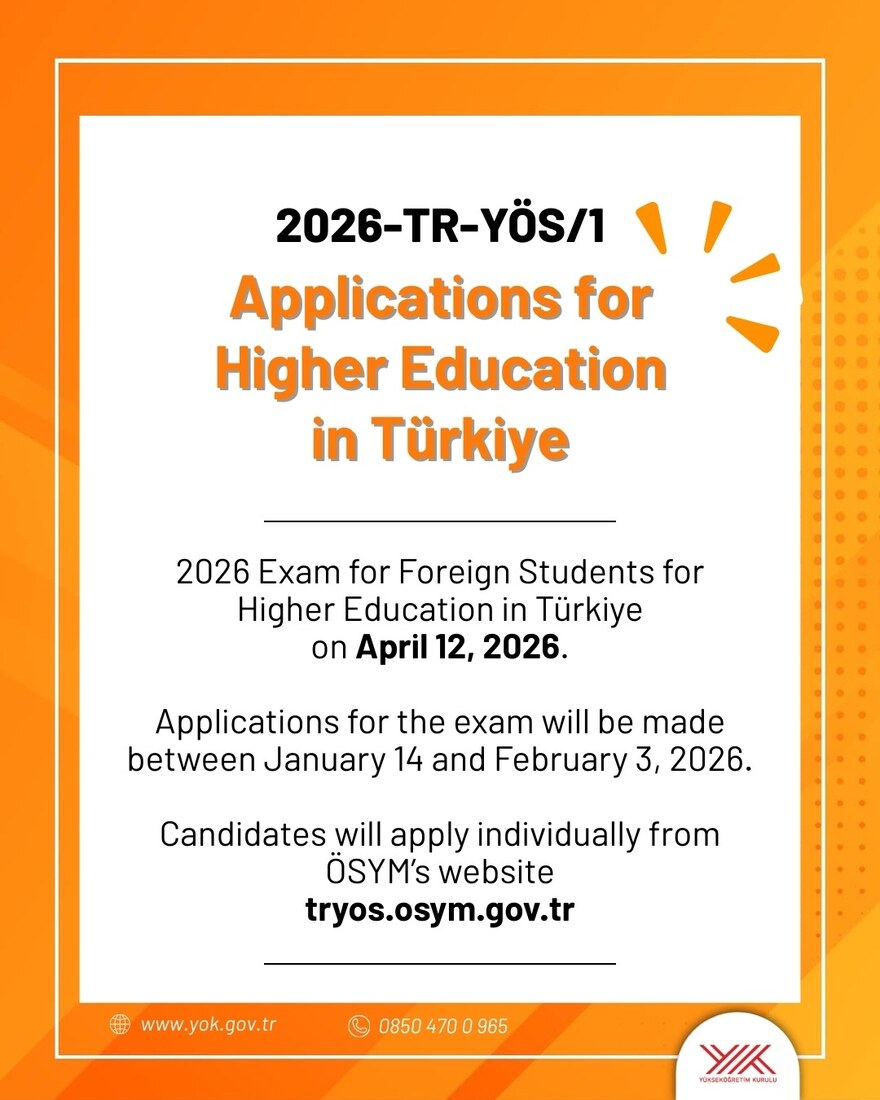
The official 2026 calendar helps you decide like an adult rather than by anxiety. The second 2026 session of TR-YÖS was held on 11 October 2026 with results due on 5 November, while the first session opened for registration on 14 January and closed on 3 February 2026. If a medical faculty is the goal, the exam deserves serious preparation time starting now. If not, the no-YÖS route is faster by a full admission cycle.
Source: Study in Türkiye, the Council of Higher Education portal
One more consideration: TR-YÖS scores do not expire as fast as people fear, and universities typically publish how many cycles a result remains valid. Sitting the exam after securing a seat through the GPA route keeps a transfer or graduate-school upgrade open later.
A real-world story: from Sanaa to a public campus with one transcript
Ahmad, 19, finished secondary school in Yemen with an 88 percent scientific-stream average and no exam score of any kind. He began where everyone begins: contradictory lists and promises of guaranteed admission. He chose a different discipline — official sources only — and built a table of twelve universities. Four required TR-YÖS. Three accepted his GPA directly. Five listed the Yemeni secondary certificate at a 70 percent threshold, which he cleared comfortably.
He applied to eight universities over three weeks. Two rejections arrived for full quotas. Five acceptances followed, the best of them a computer engineering place at a public university with a reasonable tuition band. The mistake that nearly cost him everything was laughably small: he entered his birth date as day-month while his certificate carried month-day, and his file hung for two weeks until an email exchange fixed it. His summary for friends back home: read the university's own announcement, not what other people say about it.
After admission: from acceptance letter to residence card
Acceptance is the beginning of the paperwork, not the end. The sequence published by university international offices runs like this:
- Download the acceptance letter immediately — it is the basis of your student visa application at the Turkish consulate.
- Apply for the visa early; appointment queues in some countries run weeks long, and registration dates do not move for consulates.
- Some nationalities enter Türkiye visa-free for 30, 60 or 90 days under tourism agreements; for them, arrival and direct registration followed by an in-country status regularisation is the documented route, exactly as each university's letter spells out.
- After completing university registration, apply for the student residence permit from inside Türkiye — and note that at least one university on our list requires the residence application within ten days of registration, a deadline worth tattooing on your calendar. The full document walkthrough is in our guide to the student residence permit in Türkiye.
- Open a Turkish bank account, activate student health insurance, and complete course registration.
The order is not decorative. Skipping the residence-permit deadline after registration pushes you into a legal grey zone that is expensive to exit. For a wider view of the funded alternative, our Türkiye Bursları scholarship guide covers the fully-funded route that runs parallel to all of this.
Frequently asked questions about public universities without YÖS
Are public universities that accept students without YÖS recognised outside Türkiye?
Yes. They are state institutions under the Council of Higher Education. Degree recognition in your home country follows your country's equivalence rules, not the exam you were admitted with.
Does the no-exam route mean lower quality?
No. Entrance-exam policy is an administrative choice tied to demand. Karabük University, for instance, participates in European student exchange networks and holds accredited engineering programmes while keeping the diploma route open.
Can I study medicine without YÖS at all?
The door is narrow but not sealed: some public universities accept SAT for medicine at high thresholds, and Kastamonu's published table is a documented example. Beyond such exceptions, medical faculties remain TR-YÖS territory.
What is the difference between YÖS and TR-YÖS?
TR-YÖS is the central exam ÖSYM runs twice a year in six languages including Arabic. YÖS is the generic name for exams organised by individual universities for their own international admissions, always detailed on those universities' websites.
When do application windows usually open?
They scatter across the calendar: Karabük's system is permanently open, Kastamonu ran its first round from 1 to 14 June, Artvin Çoruh opened 29 June to 5 July, and Bülent Ecevit published its main calendar on 22 May with supplementary rounds into September. Our Turkish universities application dates guide assembles the full timeline.
Do I need an agency to guarantee admission?
No such guarantee exists. Public universities receive your file directly through their portals, free or for a nominal fee. If you want help, choose a service that executes in your name and documents every step — not a promise of an outcome nobody controls.
Can I apply with more than one certificate?
Yes, and portals usually let you update your file before the window closes. Applying with your GPA to open-route universities and with SAT elsewhere in the same season is the standard risk-spreading play.
Conclusion
Studying at a Turkish public university without YÖS is not a myth or a loophole — it is a documented route verified in current-cycle announcements: Karabük with its permanent diploma portal, Bülent Ecevit with competitive GPA evaluation, Kastamonu with the widest table of Arab and international certificates, Artvin Çoruh with its short, sharp window. The golden rule never changes: your source is the university's own international office page, and your binding document is the announcement of your own admission cycle.
Want someone to run this step for you? The Qaddimli team reviews your file, matches your certificate against each university's conditions, applies on your behalf to the public universities you choose and follows through until the admission letter arrives: https://truescho.com/en/apply-for-me/turkey-public-universities-application
Sources
- Study in Türkiye, official Council of Higher Education portal: https://studyinturkiye.gov.tr/StudyinTurkey/StudyinTurkeyTRYOS
- Karabük University International Students Office, application FAQ: https://iso.karabuk.edu.tr/icerikGoster.aspx?K=S&id=63&BA=index.aspx
- Kastamonu University, accepted international exams: https://iso.kastamonu.edu.tr/index.php/yerlestirme/kabul-edilen-uluslararasi-sinavlar
- Kastamonu University, current placement calendar: https://iso.kastamonu.edu.tr/index.php/basvuru/akademik-takvim
- Bülent Ecevit University, admission and registration directive: https://iso.beun.edu.tr/onlisanslisans-basvuru-ve-kayit-kabul-yonergesi.html
- Artvin Çoruh University, current-cycle application announcement: https://iso.artvin.edu.tr/tr/duyuru/2026-2027-egitim-ogretim-yili-uluslararasi-yabanci-uyruklu-ogrenci-basvurulari
- ÖSYM TR-YÖS application portal: https://tryos.osym.gov.tr/