
Student Residence Permit Turkey 2026: The Complete e-Ikamet Walkthrough
Last updated: October 2026
The student residence permit in Turkey (öğrenci ikamet izni) is the document that legalizes your stay for the duration of your studies, and every first-time application runs through the government's e-İkamet system at e-ikamet.goc.gov.tr. The single most important rule: a new arrival must lodge the application before the legal entry period stamped at the airport runs out — the countdown starts at passport control, not on your first day of classes. This guide covers the whole path: timing, the four portal doors, the application steps, documents, fees, appointment day, rejection reasons, and the wait for your card.
Every autumn, thousands of international students land in Istanbul, Ankara, Izmir and dozens of smaller university cities with an acceptance letter in one hand and a misunderstanding in the other: that the residence permit is something to arrange "once settled". Then week three arrives, the 30-day entry stamp is half spent, and the appointment calendar shows nothing inside the remaining window. None of this is drama — it is arithmetic, and it is avoidable. The students who move in week one finish the process calmly; the students who wait spend a month learning Turkish bureaucracy at its least forgiving. Below is the calm version.
The Timing Rule That Decides Everything
Your obligation as a new student arriving in Turkey is simple to state and unforgiving to miss: apply for your first student residence permit through e-İkamet as early as possible after arrival, and before your visa or legal entry period expires. File lodged in time, your stay remains lawful while the application is processed — even if the appointment falls after the stamp expires. File lodged late, you are in overstay territory: fines, and potential entry bans that can affect future visits no matter how genuine your student status is.
The practical rule we give every incoming student: make week one your permit week, not your settling-in week. Housing, SIM cards and campus errands can wait a few days; the legal window cannot. And if you are reading this before flying, you hold the best possible position — bring paper copies of every document from home, because obtaining or translating a missing paper inside Turkey eats days you do not have.
Two related windows for context: renewals run on a different official track — the extension window opens 60 days before your current permit expires — and type changes (tourist to student, for example) have their own door in the system. This guide is about the first-time student permit; our renewal walkthrough covers the extension track separately.
Understanding e-İkamet: Four Doors, Pick the Right One
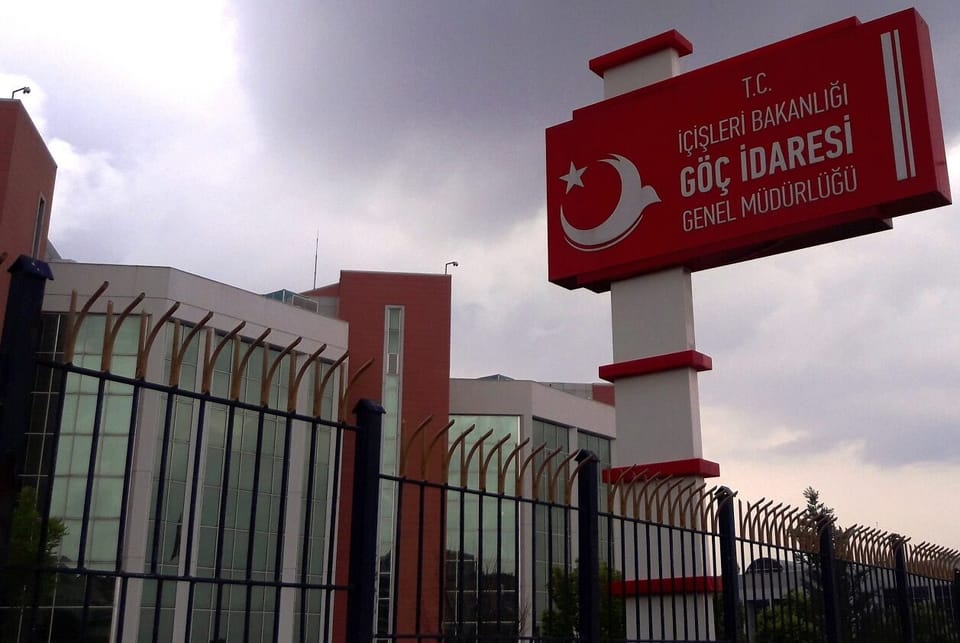
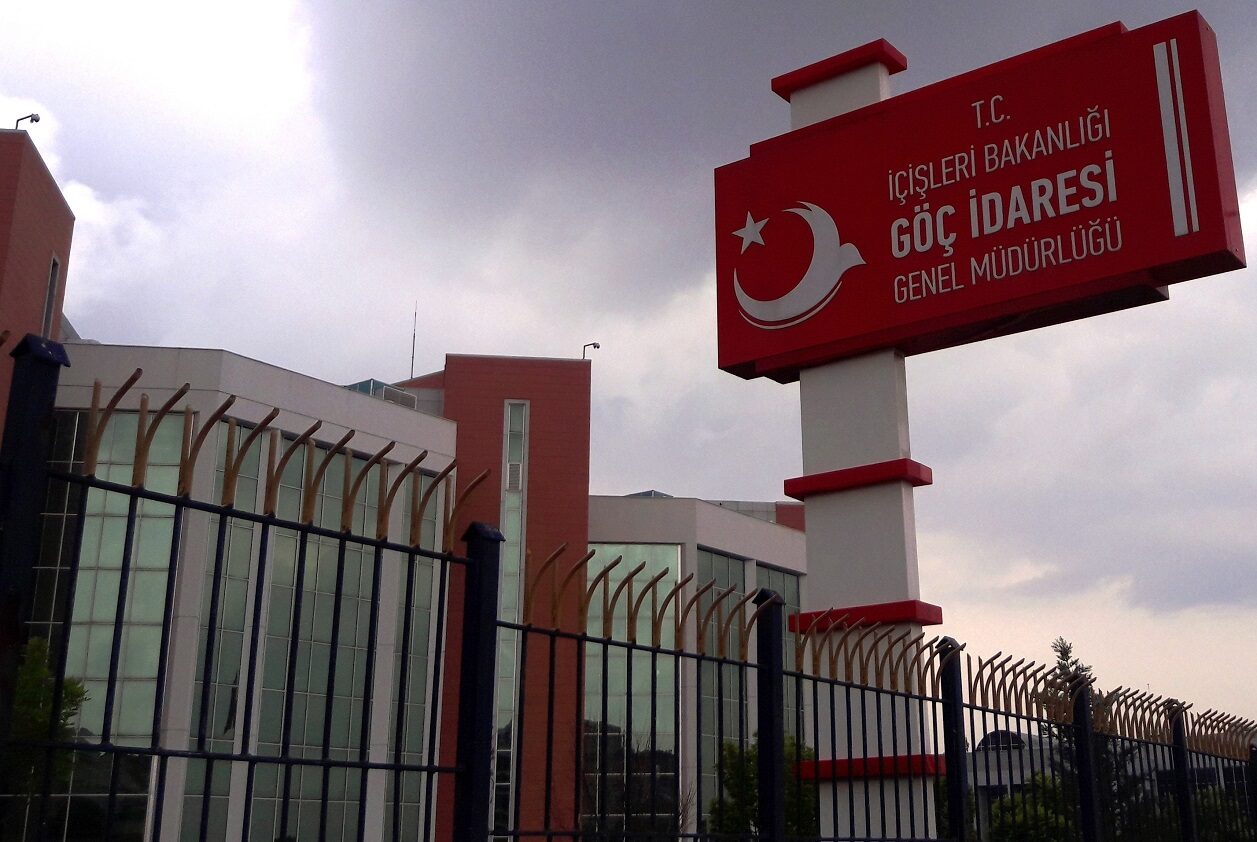
The e-İkamet portal, run by the Directorate General of Migration Management (Göç İdaresi), greets you in several languages — Turkish, English, Arabic and Russian among them — with four doors on its home page:
- First-time application (İLK KEZ İKAMET İZNİ BAŞVURUSU) — the door for new arrivals applying for their first permit. This is yours.
- Extension application (UZATMA BAŞVURUSU) — for renewing an existing permit.
- Transition application (GEÇİŞ BAŞVURUSU) — for switching between permit types.
- Application status (BAŞVURU DURUMU) — to track your file after lodging.
The portal also publishes a required-documents page (İstenen Belgeler) with sample forms for the three application types, and officially recommends the latest versions of mainstream browsers. The first classic mistake happens right here: a first-time applicant entering the extension door and completing half a form before the system demands an existing permit number. Read the door, then click.
The Application, Step by Step
Step 1: Start the first-time application and create your session
Enter through the first-time door. The system asks for core identifiers — passport number, nationality, entry details — that link your file to state records. Enter everything exactly as printed in your passport, in Latin characters. A single character mismatch (Muhammad vs Muhammed) is enough to freeze a file for correction later.
Step 2: Complete the application form
The form covers your personal data, your entry status, your university, programme and its duration, your Turkish address, and your health insurance details. Universities are selected from an approved list inside the system, usually under their official Turkish names — find your university's exact listing before your session. For the address: enter where you actually live. Local police verification of the address is a standard part of the process, and a mismatch between the declared and actual address is one of the known rejection causes.
Step 3: Choose your requested permit duration
Student permits are generally issued for one year, renewable, and may be shortened to match your programme or insurance coverage. Request a duration that both your student certificate and your insurance policy fully cover — a one-year request backed by six months of insurance ends with the system asking you to upload a policy for the full period.
Step 4: Book your appointment
After the form, the system shows available appointment slots at the migration management office for your province. In autumn-heavy provinces like Istanbul, slots space out; this is where the week-one start pays its dividend, since early applicants find slots inside their legal window. Save the appointment number and PDF immediately.
Step 5: Assemble the document file
The heart of the application — the full list follows in the next section. Order the folder to mirror the system's document list, originals behind copies.
Step 6: Attend the appointment and lodge the file
Arrive at your provincial migration office fifteen minutes early with the ordered folder, originals and copies. The appointment is shorter than folklore suggests: document check against the form, biometric fingerprints and photo, signature on the record. Afterwards you receive a lodgement receipt proving your application is in process — photograph it and keep paper copies; it is your official paper until the card arrives.
Source: Wikimedia Commons - Göç İdaresi building photo

If the form itself feels heavy for a first-timer, this is exactly the step Truescho built its Turkey residence file preparation service around: a document list customized to your nationality and permit type, review of every document with corrections before the appointment, full completion and pre-submission review of the e-İkamet application, and an instructions sheet for appointment day.
The Document File, Complete
The standard student file, aligned with what the migration directorate's system and pages request:
- Passport, valid, with copies of the document and the latest entry stamp; validity should comfortably exceed the permit duration requested.
- Biometric photos meeting Turkey's official specifications — not generic studio portraits.
- Student certificate from your university proving active enrolment; universities typically issue it within days when requested, so request early.
- Health insurance meeting the minimum coverage the migration directorate requires, valid for the requested duration.
- Address proof: a notarized rental contract, a landlord commitment document (taahhütname), or official university housing documentation.
- The application form printed from the system.
- Fee payment receipt.
The address document deserves the longest look, because it generates the most questions. University housing is the simplest path — official housing documentation usually suffices. A private flat needs a notarized contract, generally accompanied by the landlord's commitment form. Staying with a relative or friend means each directorate has a commitment template under which the host pledges accommodation with proof of their own tenure or ownership; your university's international office knows the exact template used in your province — they process them daily. And on translations: documents issued in neither Turkish nor English need sworn translation inside Turkey, which can take a week of its own — one more argument for starting in week one.
On insurance specifically: the directorate accepts policies from licensed Turkish companies meeting the minimum standard for residence applications, and a policy missing that conformity is rejected regardless of price. Our dedicated health insurance for students in Turkey guide covers the policy classes, the practical options students choose, and the public-system possibilities that open after a year of residence — read it before buying anything, because the cheapest policy on the market is often the one the directorate will not accept, and the difference is only visible in the fine print of the conformity clause. For the renewal track that follows your first year, the student residence permit renewal guide walks the 60-day extension window, documents and common traps.
Fees: What You Pay and Where to Verify It
Residence permit fees generally consist of the card document fee, and the amounts are set annually under Turkey's revaluation rules — they change year to year, which is why no article number survives contact with the following January. For orientation only: the 2026 card document fee appeared in the tables in the region of 964 lira — verify the exact figure before paying. Two reliable verification points exist: the e-İkamet system itself, which displays your exact final amount during the application before the payment screen, and the official migration directorate announcements. Payment follows the system's instructions through bank or post channels, and the receipt joins your appointment file.
One money-saving check most applicants never make: some nationalities are exempt from residence fees under reciprocity agreements between Turkey and their countries. The exemption lists sit with the migration directorate — ask before paying anything. And a warning that never ages: do not pay anyone outside the official channels for "faster appointments". Appointments are booked exclusively through the free system.
Appointment Day: What Actually Happens
Expect thirty to sixty minutes. An officer checks your paper file against the form, takes biometrics, and may ask simple questions in Turkish or English — what you study, where, where you live. Short, honest answers matching your file are all that is needed; interpreters are rarely necessary.

Source: Wikimedia Commons - Göç İdaresi photo

Three practical rules: order the folder exactly like the system's document list before leaving home; bring an original plus a copy of everything; and if a document is flagged as missing, note it calmly — some directorates allow later upload through the system rather than rejecting outright. Arguing at the counter has never once added a document to a file.
The Seven Common Rejection Reasons — and Their Cheap Preventions
| Rejection cause | Prevention |
|---|---|
| Insurance below the required minimum or expiring mid-permit | A licensed policy meeting the residence minimum, covering the full requested duration |
| Undocumented address, or declared address differing from actual residence | Notarized contract or housing document, and living where you say you live |
| Passport nearing expiry or data mismatches | Passport validity beyond the permit period; entries matching the passport exactly |
| Photos not meeting biometric specifications | A studio that knows Turkey's official photo specs |
| A requested document never uploaded | A folder checked item by item against the system list before the appointment |
| Requested duration exceeding programme or insurance coverage | Align the requested duration with student certificate and policy |
| Missing the appointment without cancelling | Attend, or cancel through the system the moment you know you cannot |
If a rejection does land, the letter states the reason, and each rejection carries its own objection or re-application route per the letter and the system. The one absolute rule: never re-apply with the same deficiencies twice.
Life While You Wait: The Grey Period, Managed
Between lodgement and card delivery — weeks to months depending on province and season — your status is covered inside Turkey by the lodgement receipt, provided your application was timely. Three rules govern the grey period. First, the receipt covers domestic legality, not travel: before any flight out of Turkey during the wait, verify the current re-entry rules for applicants awaiting cards, because returning may be treated as a new entry that disturbs a pending file. Second, check your registered email weekly: the directorate can request an additional document with a deadline of days, and ignoring such requests converts a pending file into a refused one. Third, keep your postal address accurate — the finished card arrives by Turkish post to your registered address, and an ambiguous address means a lost card and a re-issue cycle.
Meanwhile, ordinary life proceeds: university registration completes with the lodgement receipt, phone lines and transport cards open with passport plus receipt, and student bank accounts open on enrolment documents at several banks.
Frequently Asked Questions
Can I work on a student residence permit in Turkey?
The student permit itself is not a work permit. Undergraduate students may work limited hours from their second year with an official work permit issued under Ministry of Labour rules; graduate students have broader arrangements regulated separately. Always confirm the current rule for your situation before accepting work — unauthorized employment endangers the permit directly.
What if my entry stamp expires before my appointment date?
The lodgement of a timely application is what protects your status, and in busy seasons appointments can fall after the stamp's expiry. The correct response is to take the earliest available slot and keep the application lodged — transparency with the system ages far better than a gap discovered later. This is precisely why starting in week one matters: early applicants get slots inside the window.
Can I travel outside Turkey while my application is pending?
The safe default is no, or at least not before verifying the current rules on exiting and re-entering with a pending application. The lodgement receipt is primarily a domestic-status document. Rules have shifted over the years and vary by situation — check the official guidance for your exact status before booking flights.
How long is the student permit valid, and how do I renew it?
Student permits are typically issued for one year and renewed annually while enrolment continues, through the extension door of e-İkamet within the 60-day window before expiry. Our separate renewal guide walks the extension track in full.
Does a student permit let me bring my family?
Family residence permits have their own independent conditions and apply to a defined circle of relatives; their relationship to a student's status is governed by current directorate rules. Never assume automatic family rights — check the official family permit conditions before planning a move.
What is the difference between the lodgement receipt and the residence card?
The lodgement receipt is the interim document proving your application is in process and covering your domestic status until the decision. The residence card (İkamet İzni Kartı) is the final document that arrives by post after approval and becomes your standing proof for every official interaction.
Want someone to handle this step for you? Truescho's residence file service prepares a nationality-specific document list, reviews and corrects every document before the appointment, completes and audits the full e-İkamet application with you, and hands you an appointment-day instructions sheet — the full service is 75 EUR, with a compliant health insurance policy issuable within 48 hours if your file needs it.