
A high school certificate from Jordan, a medical degree from Egypt, a bachelor's from Syria — and then a decision to move to Türkiye for study, work, or the next academic step. In almost every one of those journeys, the paperwork stops at a single checkpoint called denklik, the Turkish word for equivalency. Without it, some universities will not finalize your enrollment, employers in the public sector will not process your file, professional associations will not register you, and graduate programs may ask questions you were not prepared for.
The process confuses people for one simple reason: Türkiye splits equivalency between two entirely different institutions depending on the level of the credential, and mixing them up costs applicants months. This guide walks through the whole system as it stands in 2026: who is responsible for what, the documents involved, the official fees by the numbers, the authentication rules for each Arab country (and beyond), the special track for medicine and other regulated professions, and the rejection reasons that sink most files — with the fixes for each one.
Who Evaluates Your Credential? The Fundamental MEB vs YÖK Split
The first mistake most applicants make is assuming equivalency is one office. It is not. Türkiye assigns the task to two institutions by level:
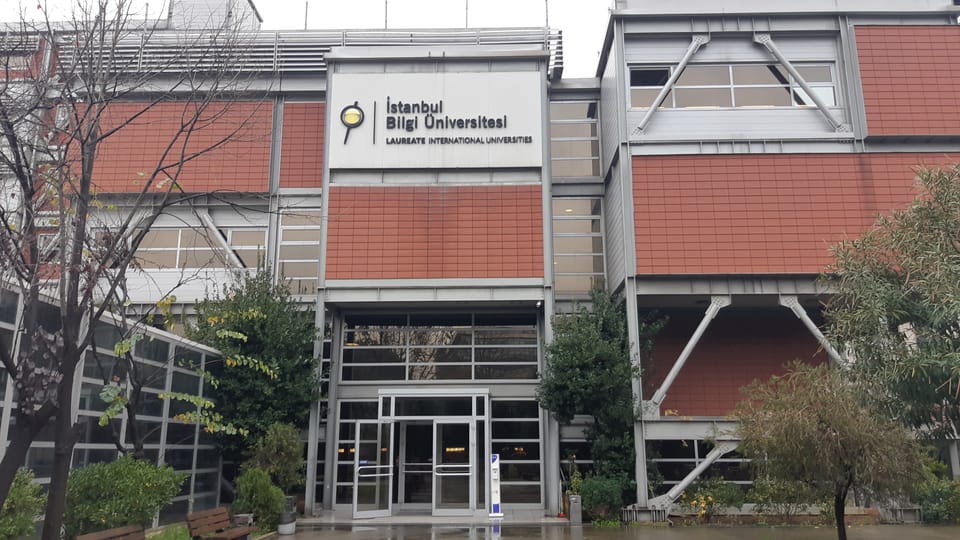
- The Ministry of National Education (MEB), through its Board of Education and Discipline (Talim ve Terbiye Kurulu), handles school-level credentials: primary, intermediate, and high school diplomas earned outside Türkiye.
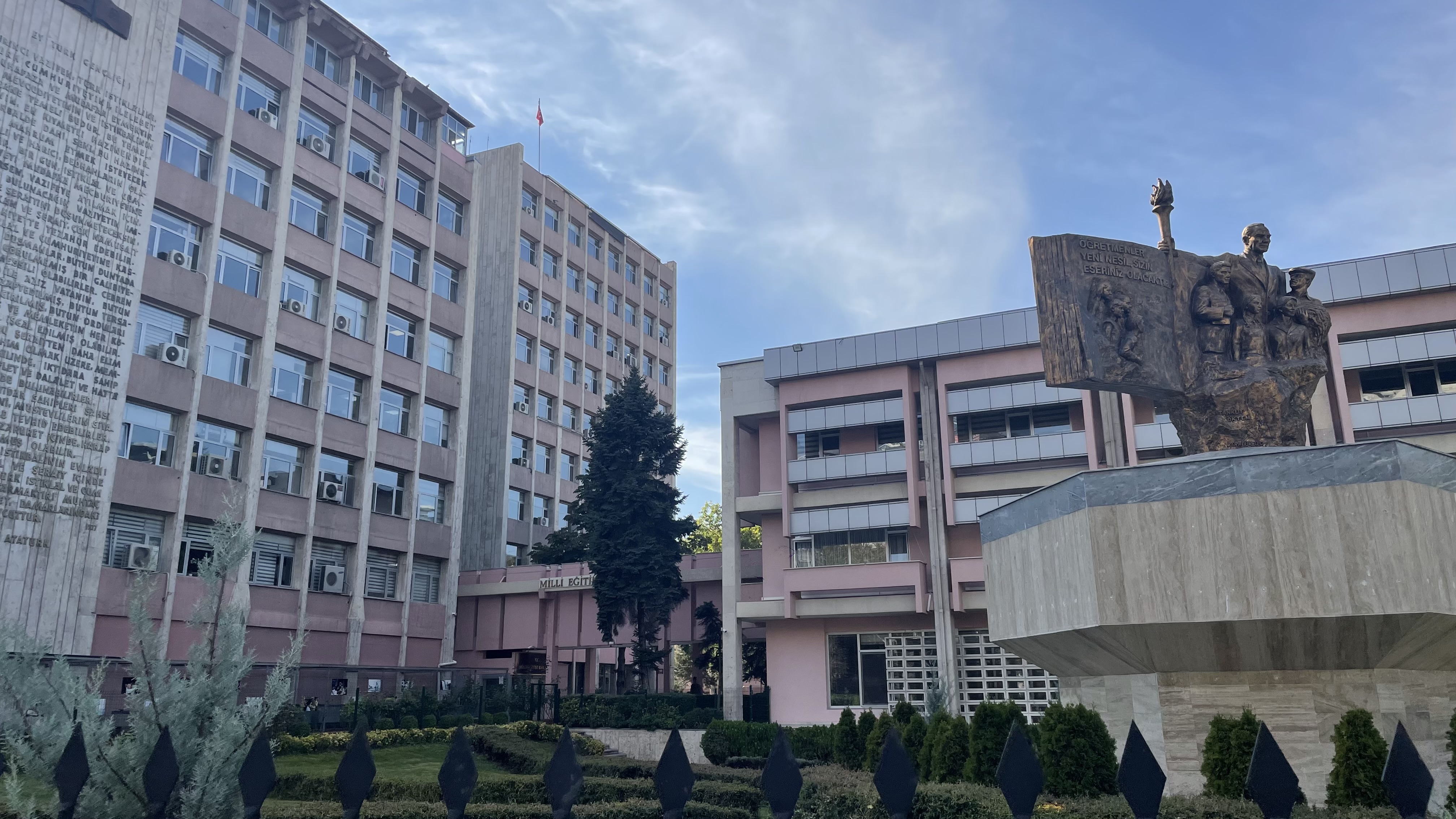
- The Council of Higher Education (YÖK), through its Recognition and Equivalency Department, handles university credentials: associate degrees (ön lisans), bachelor's degrees, and master's degrees earned outside Türkiye.
There is no crossover between the two. An applicant who sends a high school diploma file to YÖK will be told the request is outside its remit, and the reverse holds as well. One exception deserves special attention: doctoral equivalency belongs to neither of the above — it is handled by the Interuniversity Council (Üniversitelerarası Kurul), so doctoral graduates start at a third door entirely.
Why does this distinction matter so much? Because fees, timelines, and procedures differ radically between the two tracks, as the comparison table below shows with the official 2026 figures for both.
Side-by-Side Comparison: MEB for High School, YÖK for University Degrees
| Item | High school (MEB — e-Denklik) | University (YÖK — denklik.yok.gov.tr) |
|---|---|---|
| Responsible body | Ministry of National Education — Board of Education | Council of Higher Education — Recognition and Equivalency Department |
| Application | e-Denklik online system; login requires an e-Devlet government account | Documents uploaded first via denklik.webfarm.yok.gov.tr, then an in-person appointment |
| 2026 fee | No application fee appears in the official equivalency directive or guide | 1,250 Turkish lira per equivalency or re-examination request |
| Additional fees | — | 300 lira for a "procedures ongoing" certificate or other petitions |
| Processing time | Maximum 5 business days from the appointment date (per the directive) | Varies by country, program, correspondence, and advisory commissions |
| Application centers | 227 centers: 146 inside Türkiye, 81 abroad | The department in Ankara (online submission + appointment) |
| Interface language | 7 languages including Arabic | Turkish / English / Arabic |
The table hides a paradox most applicants discover too late: the high school equivalency track through e-Denklik is currently free of charge — the 2025 directive governing equivalency centers and the official equivalency guide contain no application fee provisions — while the university track at YÖK carries a fixed annual fee set by the Council's executive board. For 2026 that fee was fixed at 1,250 lira, valid from January 1 through December 31, 2026. If anyone asks you for other amounts "on behalf of school equivalency," verify before paying: the official YÖK fee is deposited exclusively into the department's account at Ziraat Bankasi, with the purpose of the payment written into the transfer description, and mismatched payments are the applicant's responsibility to resolve.
The High School Track: e-Denklik Step by Step
The e-Denklik system replaced what used to be a long paper exchange with a mostly digital workflow:
- Sign in through e-Devlet. Registration uses the Turkish government gateway account; this is a hard requirement.
- Choose an equivalency center. The system lets you pick the most convenient of 227 centers — 146 inside Türkiye and 81 abroad — which means a student living abroad can often complete the process without traveling.
- Fill in the electronic application and upload the required documents: the diploma or final transcript, together with identity details.
- Attend your appointment at the chosen center, where staff check originals against copies and validate translations.
- Receive the outcome within a maximum of 5 business days from the appointment, as the directive in force obliges centers to conclude files.
A practical document checklist for the high school file: the certified original diploma or final transcript with a copy; grade records for the study years if the center requests them; your passport or ID (with translation if not in Turkish or English); sworn Turkish translation of every document not in Turkish or English; the pre-authentication required for your country (apostille or consular chain, explained below); and a recent photo with accurate contact details in the online form.
Two more things worth knowing. The system interface runs in seven languages including Arabic, so language alone is no reason to hire an intermediary. And if the board finds that a country's grading system cannot be mapped directly onto the Turkish one, the applicant can be routed to an electronic level-determination exam (STS) run through the ministry's e-exam platform — a possibility, not a certainty, but one you should not be surprised by.
The University Track: YÖK From First Upload to Final Decision
For university graduates the anatomy of the process differs in the details:
- Initial online submission: copies of documents go up through the department's dedicated portal before anything happens in person.
- Fee payment: 1,250 lira for 2026 into the department's Ziraat Bankasi account (number 5386419-5057), purpose written in the description field, receipt attached to the file.
- The in-person appointment: originals are inspected by department staff and returned to you on the spot; keep the submission receipt.
- Verification correspondence: the department writes to your university and to official bodies in the country of graduation. This is the longest and least predictable stage.
- The decision: equivalency is granted, or you are given 30 days to complete a missing document, after which the file is returned by operation of the rules.
The document set expected for a university file: the original degree certificate (associate, bachelor's, or master's) with certified copies; the complete transcript for all years of study, certified by the university; sworn Turkish translation where the documents are not in Turkish or English; passport copy plus proof of any name change (a marriage certificate or equivalent official record); the fee receipt; language proof where the rule applies (next paragraph); the pharmacy internship certificate for pharmacy graduates; and proof of payment of any verification fees your university charges, notably for graduates of Egyptian universities as explained below.
One rule catches more Arab applicants than any other: the language requirement. If the language of instruction of your degree was one of the languages tested by the council's exams (English, German, French and similar), you must submit proof of at least 60 out of 100 on the accepted language exam or an equivalent, and this proof must reach the department within two years of your application date — otherwise the application is rejected outright. This is the moment where assembling a complete, properly translated, properly authenticated file becomes the hardest step of the whole journey, and exactly where applicants with packed schedules tend to stall. If you are still at the admissions stage rather than the equivalency stage, Truescho's university admission service prepares the full Turkish admission file — document translation, submission to your chosen university, and follow-up through the initial acceptance — and you can review the details on the Turkey university admission service page.
Authentication Before Equivalency: The Apostille Rule That Decides Everything
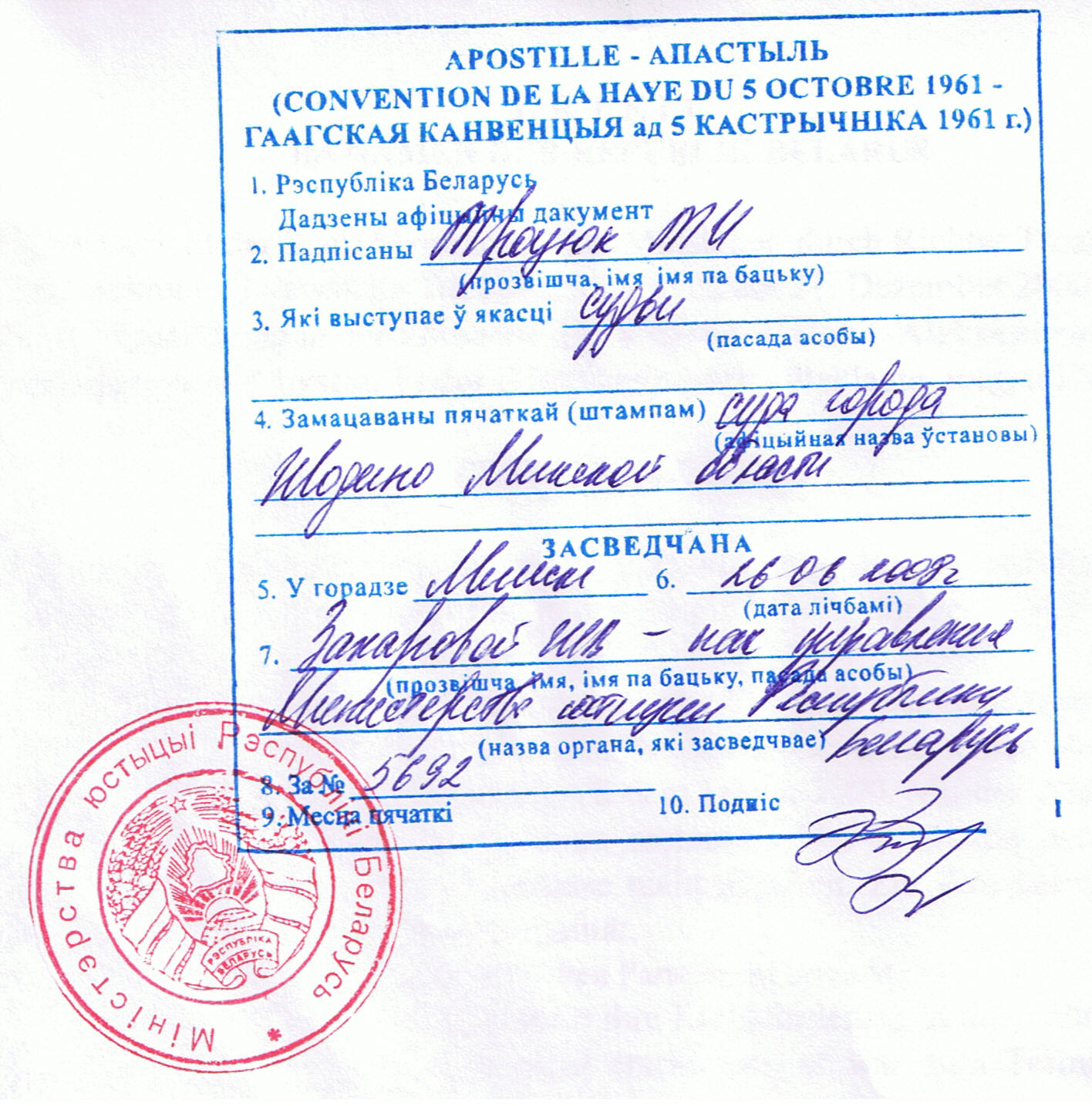
Before your documents reach either MEB or YÖK, they must clear authentication, and this is where the single most useful rule in the entire process lives. Türkiye is a party to the 1961 Hague Apostille Convention. That means a document issued in a fellow member state needs exactly one apostille from the designated authority in the issuing country to become valid in Türkiye. A document from a non-member state needs the full traditional chain: authentication by the education and foreign authorities in your country, then the Turkish embassy or consulate, then sworn translation inside Türkiye.
The status of Arab countries under the convention, as it stands in the official Hague Conference status table as of late October 2026:
| Country | Apostille status | What it means for your documents |
|---|---|---|
| Bahrain | Party since end of 2013 | One apostille from Bahrain suffices |
| Oman | Party since January 2012 | One apostille from Oman suffices |
| Morocco | Party since August 2016 | One apostille from Morocco suffices |
| Tunisia | Party since March 2018 | One apostille from Tunisia suffices |
| Saudi Arabia | Party since December 2022 | One apostille from Saudi Arabia suffices |
| Algeria | Party — convention in force since July 9, 2026 | Fresh accession: the consular chain is no longer required after this date |
| Egypt, Jordan, Qatar, UAE, Kuwait, Lebanon, Iraq, Libya, Syria, Yemen, Sudan | Not parties | Full chain: home-country ministries, then Turkish representation, then sworn translation in Türkiye |
Algeria's accession deserves a highlight: it entered into force on July 9, 2026, which means any guidance still telling Algerian graduates to run the consular chain is out of date. Everything written before mid-2026 on Algerian authentication should be re-checked against the current table.
Two official country-specific notes complete the picture. Ukraine graduates need an apostille on the diploma and transcript processed through the Ukrainian Ministry of Justice for the verification correspondence to proceed at all. Bulgaria graduates need the Bulgarian Ministry of Education apostille on the originals and on the sworn translations made in Bulgaria. The YÖK department publishes similar notes for a handful of other countries, so read its country notes before assembling your file.
A word on translation sequencing, the silent killer of otherwise complete files: translate after authenticating, not before. The correct order is to authenticate the original document in its country, then have it translated by a sworn translator in Türkiye, then authenticate the translation if the receiving office asks for it. Translate an unauthenticated copy and you will do the whole translation again.
Regulated Professions: Why a Physician's File Weighs Twice as Much
Medicine, dentistry, pharmacy, and school teaching sit in Türkiye's regulated category, where paper equivalency alone is never the whole story:
- Human medicine graduates must pass the STS level-determination exam for medicine, administered by the Turkish measurement center ÖSYM specifically for foreign-earned medical degrees.
- Dentistry and pharmacy have their parallel STS exams, with pharmacy sessions scheduled across the year.
- Teaching graduates follow the corresponding STS track when equivalency is sought for professional practice.
The 2026 official exam calendar lists these sessions concretely: first-period medicine results were announced on April 15, 2026, and a pharmacy exam session follows on November 7, 2026. The practical meaning for an Arab physician: your timeline must absorb exam preparation, the exam date itself, and the results wait on top of the paperwork equivalency track. And pharmacists carry one extra condition even after passing — a one-month internship at a pharmacy registered with the Turkish Pharmacists' Association.
Rejection Reasons and How to Disarm Each One
Files are rarely rejected randomly. Five failure modes account for most of the casualties:
- Incomplete authentication before submission: a diploma without apostille where one was possible, or without the consular chain where it was required. Fix: the table above, before you spend a single lira.
- The language rule: failing to submit the 60-point proof within two years when the instruction language of your degree is an ÖSYM-tested language. Fix: book the language exam before or immediately after filing.
- Missing documents after filing: you get exactly 30 days to complete the file. Fix: originals, copies, and translations in one folder before the appointment.
- A university that does not answer verification letters: an officially documented scenario for Egypt, where some universities charge a verification fee and simply do not reply until it is paid. Fix: pay your university's verification fee, keep the receipt, and send proof of payment to the department.
- Filing at the wrong institution: a high school file at YÖK or a doctorate at either. Fix: the comparison table.
One more quirk, this one in the applicant's favor: foreign nationals applying to a Turkish master's or PhD program in non-clinical fields do not need full bachelor's equivalency at all — a recognition letter from the department covers the application. Turkish citizens have no such shortcut; their foreign degrees always go through full equivalency.
What the Certificate Actually Unlocks
An equivalency certificate is not a trophy; it is an operating key for three specific doors. Public-sector employment: government bodies require credentials recognized as equivalent to Turkish degrees. Professional licensure: the medical, pharmacy, engineering and teaching chambers register members on the basis of equivalency or recognized credentials. Graduate study and career progression: universities and employers treat the foreign degree as its Turkish equivalent once equivalency is granted. Meanwhile, the private non-regulated sector often hires on the strength of the foreign degree alone, so applicants targeting only private-sector work can occasionally skip the process — a calculation worth making before you spend months on it.
For those planning further study after equivalency, sequence the two processes in parallel rather than in series: some universities accept proof that equivalency is underway at enrollment, others demand the final certificate, and the gap between the two requirements can stretch across an entire admission cycle.
Frequently Asked Questions
How long does university equivalency take in Türkiye?
There is no single published duration. The department's own steps are fast; the delay lives in how quickly your university and the authorities in the country of graduation answer verification letters and whether advisory commissions get involved. Practically, plan for a range of a month to several months depending on the country.
Is high school equivalency mandatory for university admission?
It depends on the university and program: some require it before final enrollment or for visa purposes, others accept the original diploma plus translation at the application stage. Check your university's published conditions well before enrollment week.
Can I start equivalency from outside Türkiye?
For school credentials, yes — 81 overseas centers accept applications. For university credentials the process starts online but includes an in-person appointment.
What is the difference between recognition and equivalency?
Recognition acknowledges that a credential comes from an accredited institution; equivalency rules that it matches the corresponding Turkish level. Equivalency is what opens licensure, public employment, and graduate study.
Will my application be rejected if my university is not recognized?
Yes — verification against the issuing institution and its standing is part of the process, and a credential from an unrecognized institution fails it. That makes checking institutional standing part of choosing where to study, not a problem to discover after graduation.
Does a master's applicant need bachelor's equivalency?
Foreign applicants in non-clinical fields can use the recognition letter instead. Turkish citizens, and anyone entering clinical health fields, need the full process.
I paid the fee but withdrew before the appointment — is there a refund?
The published rule attaches the fee to the procedure, not the outcome, so uncompleted or rejected applications do not receive refunds. Do not pay until your file is complete.
Sources
- YÖK Recognition and Equivalency Department — 2026 fees and rules: https://denklik.yok.gov.tr/tr/page/663
- MEB e-Denklik portal (school equivalency): https://edenklik.meb.gov.tr/
- Equivalency centers directive, September 24, 2025: https://ttkb.meb.gov.tr/meb_iys_dosyalar/2025_09/25100332_denklik_yonerge.pdf
- Official MEB equivalency guide (education systems of 196 countries with document samples): https://ttkb.meb.gov.tr/dosyalar/denklik/Denklik_Kilavuzu.pdf
- ÖSYM official exam calendar 2026 (STS exams for regulated professions): https://www.osym.gov.tr/Sayfa/SinavTakvimi
- Hague Apostille Convention status table: https://www.hcch.net/en/instruments/conventions/status-table/?cid=41
- Related Truescho guides: Turkish universities application dates 2026-2027 and student residence permit in Türkiye 2026.
Want someone to handle this step for you? Truescho's team prepares the complete Turkish university admission file — translation, submission, and follow-up to initial acceptance — on the Turkey university admission service page.