
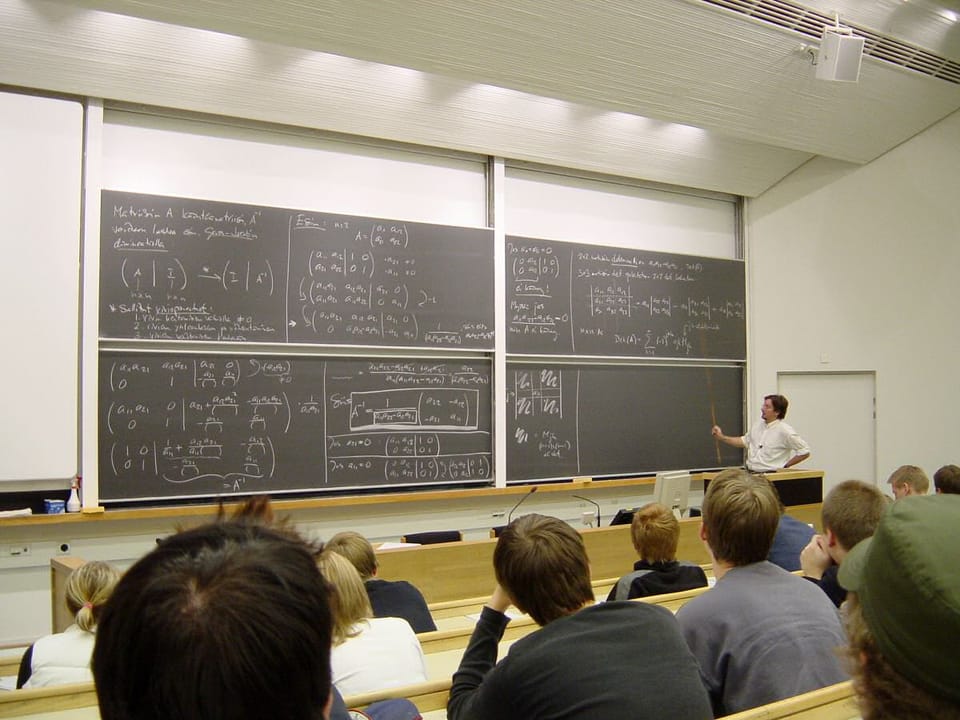
For years, applying to a Turkish public university meant collecting a small archive of private exams: one university wanted its own YÖS, another wanted SAT, a third accepted something else entirely. That era is ending. Since the 2024-2025 academic year, Turkish public universities are required to consider the results of a single national exam — TR-YÖS, the unified foreign student exam administered by ÖSYM, the same Turkish measurement center that runs the country's university entrance system. One exam, two sessions a year, recognized across the public university landscape, and scored with a formula that rewards preparation over luck.
This guide assembles everything an international applicant — and specifically a candidate from the Arab region — needs to plan an attempt: how the exam is built and scored, the official 2026 calendar as published by ÖSYM (and what it tells us about 2027), the fee tiers by exam-center country, the full list of Arab exam centers with their codes, and the mistakes that eliminate applications before a single question is answered.
What TR-YÖS Is and Why It Changed Everything
TR-YÖS stands for "Türkiye Yükseköğretim Sınavları – Yabancı Uyruklu Öğrenci Sınavı": the Turkish higher education exam for foreign nationals. Before it existed, each public university set its own admission rules for international students. Some ran their own exams, others outsourced to private testing companies, and a applicant targeting five universities could easily face five different tests, five fees, and five sets of rules about what counted.
The unified exam collapsed that maze into one instrument. From the 2024-2025 academic year onward, public universities in Türkiye are obliged to take TR-YÖS results into account in their international admissions. Universities may still add their own criteria on top — a language certificate, an interview, a grade average threshold — but the exam score is now the common currency across the public system. For an applicant, the practical consequence is enormous: prepare once, pay once, and apply everywhere.
The exam is run by ÖSYM (Ölçme, Seçme ve Yerleştirme Merkezi), the Turkish centralized measurement and selection center, through its dedicated portal at tryos.osym.gov.tr. Everything in this guide — calendar, fees, centers, scoring — comes from that portal and from the official ÖSYM exam calendar; where 2027 figures have not yet been published, that is said plainly rather than guessed.
How the Exam Is Built: Two Sections, 80 Questions, 100 Minutes
TR-YÖS is deliberately compact. The structure as published in the official guides:
- Duration: 100 minutes total.
- Basic Mathematics: 40 questions covering the fundamentals — arithmetic, algebra, geometry, basic data interpretation — at a high-school level of difficulty.
- Numerical Aptitude (Mantıksal/figür akıl yürütme): 40 questions testing reasoning with figures, patterns, and logic rather than curriculum knowledge.
- Languages: the booklet is offered in six languages, including Arabic and English alongside Turkish, so no candidate is tested on language comprehension they were never taught in.
No literature, no history, no biology. The exam measures mathematical reasoning and logical aptitude, which is precisely why focused preparation produces results quickly compared with knowledge-heavy exams.
How Scoring Works: The Formula That Punishes Guessing
The scoring rules are published, and knowing them changes test-taking strategy:
- Raw score = number of correct answers minus one quarter of the number of wrong answers. Blank answers count zero. Random guessing has a negative expected value, so a guess is only rational when you can eliminate at least two options.
- Standardization: raw scores are converted to standard scores with a mean of 50 and a standard deviation of 10, so your position relative to other candidates in that session is what matters, not the raw count.
- Section weights: numerical aptitude carries a weight of 0.45 and basic mathematics 0.55 in the final weighted score. Read that again — mathematics is the heavier section, and mastery of it is worth more than half of your result.
- Final scale: the weighted score maps onto a scale of 100 to 500 points.
- Validity: the result is valid for two years, so a strong score from one session can serve two admission cycles.
- Minimum threshold: to receive a weighted score at all, you need a raw score of at least 0.5 in at least one of the two sections. A nearly blank paper produces no result whatsoever.
The Official 2026 Calendar: Both Sessions, Every Deadline
ÖSYM publishes the exam calendar annually, and the 2026 entries for TR-YÖS are concrete. They matter to 2027 applicants for one reason: the pattern. Here is the full official 2026 schedule:
| Milestone | 2026 First session (TR-YÖS/1) | 2026 Second session (TR-YÖS/2) |
|---|---|---|
| Application window | January 14, 11:50 → February 3, 23:59 | July 9, 10:00 → August 3, 23:59 |
| Late application window | February 9-11 | August 7-11 |
| Fee payment deadline (session 2) | — | August 4 |
| Exam date | April 12, 2026 | October 11, 2026 |
| Results announced | May 7, 2026 | November 5, 2026 |
Two observations an applicant should draw from this table. First, the first session's application window sits squarely in the January-February stretch — which is exactly when 2027 applicants should be watching the ÖSYM calendar for the next announcement, since the 2027 dates had not been published at the time of writing. Second, the October session delivers results in early November, leaving enough time to complete university applications for the following autumn — but only if documents, translations, and equivalency files are ready in parallel rather than in sequence.
The exam start time for the October 2026 session was 11:15 Turkish time. For candidates in Morocco that translated to 09:15 local time — a detail that matters when you plan travel to the center and sleep the night before. Check the start time for your own session and convert it to your own time zone before booking anything.
Fees for 2026: Three Tiers Depending on Where You Sit the Exam
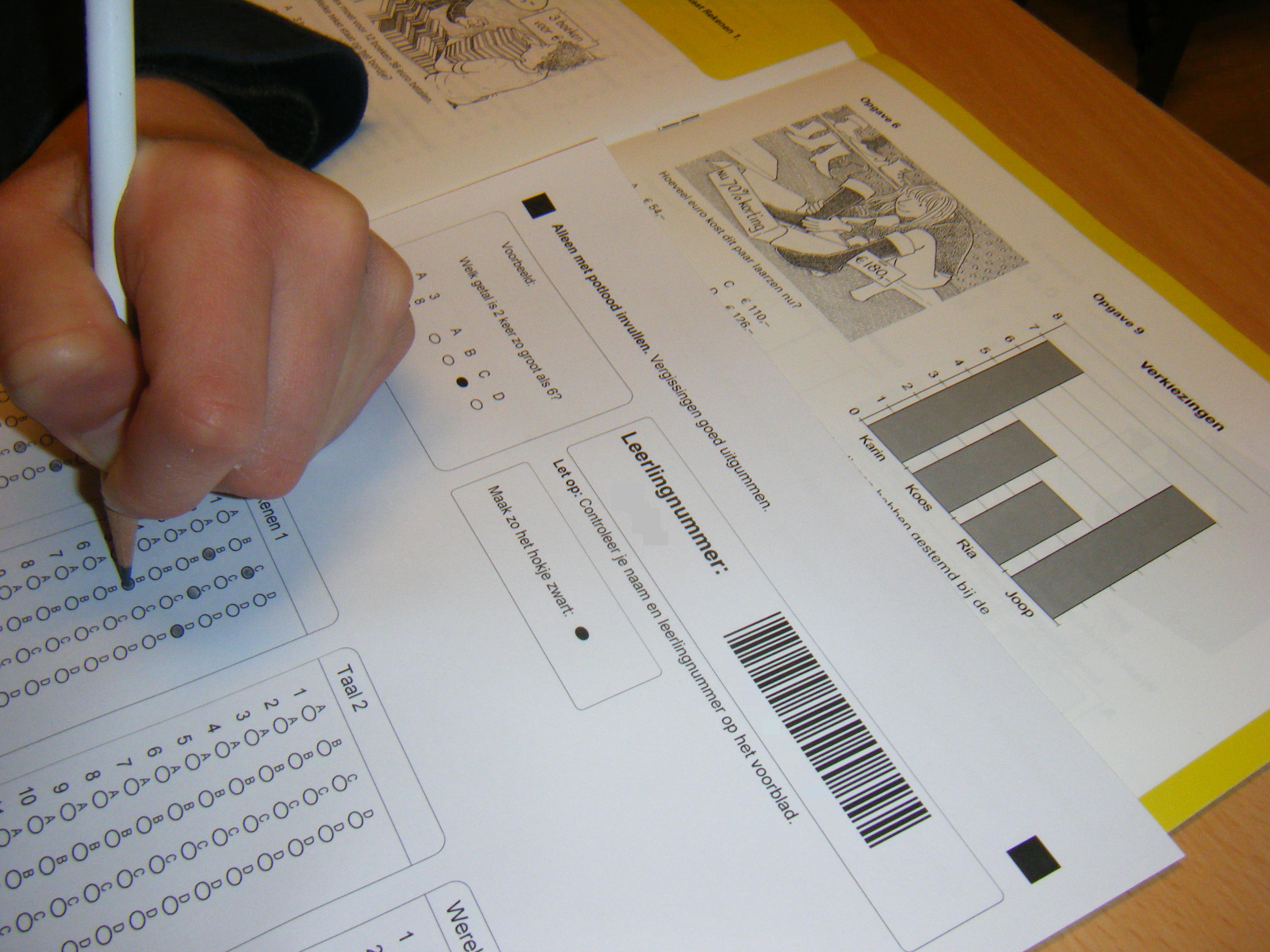
The fee is fixed per exam-center country, not per nationality — a candidate sitting the exam in Cairo pays the Egypt-center fee regardless of passport. The 2026 amounts published by ÖSYM group the Arab-region centers into three tiers:
| Fee tier | Amount (Turkish lira) | Example countries in the Arab region |
|---|---|---|
| Tier 1 | 3,700 TRY | Egypt, Saudi Arabia, Qatar, Libya, Iraq |
| Tier 2 | 1,650 TRY | Algeria, Jordan, Morocco, Syria, Tunisia |
| Tier 3 | 1,150 TRY | Sudan, Somalia, Mauritania, Chad, Djibouti |
Payment is card-only through the ÖSYM system. Candidates paying from outside Türkiye can pay in US dollars or euros at the Central Bank of Türkiye exchange rate of the payment day — useful when your local card does not handle lira transactions.
One structural detail saves real money: during registration you list up to five preferred exam centers, but the fee is charged according to your first preference only, and the preference list locks permanently once payment is made. Choose the first preference with the fee tier in mind, because after payment there is no reordering.
Exam Centers Across the Arab Region: The Full List with Codes
The 2026 guide lists the active centers and their application codes. For candidates in the Arab region:
| Country | City | Code |
|---|---|---|
| Egypt | Cairo | 917 |
| Saudi Arabia | Jeddah | 904 |
| Saudi Arabia | Riyadh | 979 |
| Jordan | Amman | 919 |
| Qatar | Doha | 970 |
| Iraq | Baghdad | 944 |
| Iraq | Erbil | 987 |
| Iraq | Kirkuk | 945 |
| Libya | Tripoli | 908 |
| Algeria | Algiers | 905 |
| Tunisia | Tunis | 903 |
| Morocco | Rabat | 937 |
| Syria | Damascus | 932 |
| Syria | Aleppo | 887 |
| Syria | Azaz | 889 |
| Syria | Al-Bab | 888 |
| Sudan | Khartoum | 901 |
| Mauritania | Nouakchott | 973 |
| Djibouti | Djibouti | 982 |
| Chad | N'Djamena | 907 |
Two rules govern the foreign centers. A center abroad only opens if at least 15 candidates register for it — so a thinly attended center can be merged or cancelled, and candidates are redirected to their next preference. And codes can change between sessions; always copy the code from the current session's guide on the ÖSYM portal rather than from an old blog post, including this one.
Who Can Apply: The Eligibility Rules
The exam is open to foreign nationals holding, or expecting to hold before enrollment, a secondary-school certificate that grants university entrance rights in the country where it was issued. The formal conditions published with the exam:
- Foreign nationality (Turkish citizens and Turkish citizens by birth who later renounced citizenship need to check the current year's notes, because the rules treat them separately and strictly).
- A secondary education certificate completed abroad or at a school in Türkiye, provided it grants access to higher education.
- Final-year students may apply; the certificate is presented at enrollment, not at application.
None of this requires residence in Türkiye, a Turkish visa at application stage, or knowledge of Turkish. The whole process — registration, payment, exam, results — runs online and through the foreign centers.
Applying Step by Step: From Portal to Exam Hall
- Watch the calendar. The application link on tryos.osym.gov.tr activates only during the official window; there is no rolling admission.
- Create or log in to your ÖSYM candidate account and open the TR-YÖS application screen.
- Enter personal data exactly as in your passport. A single letter mismatch between the application and the passport carried into the exam hall can invalidate the entry.
- Select up to five exam centers in order of preference. The fee follows the first preference, and the list locks after payment.
- Pay by card. From abroad, the system offers USD or EUR at the day's central bank rate. Keep the receipt; screenshot the success screen.
- Download the exam entrance document when the portal publishes it in the days before the session. It shows your assigned center and the reporting time.
- Sit the exam with your passport. The only accepted identification is the passport used in the application — not a national ID, not a residence permit, not a photocopy.
The step where applications die most often is the third: data entry. Exam security staff compare the document to the person and to the register; discrepancies are resolved against the passport spelling, and if the application says "Mohammed" while the passport says "Muhammed," you want the application to match the passport.
For applicants who want professional handling of the full public-university file — exam registration apart, the university choices, translations, tracking and the visa file — Truescho's public universities application service manages submission to multiple universities with tracking through the decision, and details and pricing are on the Turkey public universities application service page.
An Eight-Week Preparation Plan Built on the Official Weights
The section weights (0.55 mathematics, 0.45 aptitude) should dictate where preparation hours go. A realistic plan for a student balancing school and preparation:
| Weeks | Focus | What it produces |
|---|---|---|
| 1-2 | Arithmetic and algebra fundamentals, diagnostic test | A baseline raw score and a list of weak topics |
| 3-4 | Geometry and data interpretation; first aptitude sets | Comfort with the math syllabus and figure logic basics |
| 5-6 | Timed mixed sections, full-length mock exams | Speed under the 100-minute constraint |
| 7 | Review of wrong answers from all mocks; formula sheet distilled | Elimination of recurring error patterns |
| 8 | Two final full simulations at exam start time; logistics | Stability and a fixed exam-day routine |
Two preparation truths specific to this exam. First, the aptitude section is learnable: figure-series and logic-puzzle techniques improve fast with repetition, so candidates who leave it untouched "because you can't study for aptitude" surrender cheap points. Second, the quarter-penalty makes disciplined skipping a scoring skill: knowing which questions to abandon is worth as much as solving one more problem. For a broader comparison of this exam against SAT and other admission routes, see the guide to YÖS vs SAT vs GRE admission tests.
After the Results: What a Score Actually Buys
A TR-YÖS result is a currency, and universities set their own exchange rate. Some weigh the exam heavily; others balance it against the high school grade average; a few impose minimums on both. The result reaches universities through your applications, not automatically — after results are announced, you apply to each university with your score, certificate, and supporting documents.
Three practical notes for the application season:
- Score thresholds vary more than applicants expect between universities and faculties; medicine and engineering at top public universities sit far above the score needed for humanities at the same institutions.
- The two-year validity means a May result can serve that autumn's applications and the next cycle too — but check each university's rules, because some insist the score be from the current or previous year.
- Admission to a Turkish program usually requires proof of Turkish, or enrollment in a university language preparatory year; English-taught programs ask for English proof instead. The exam itself tests neither.
And the process does not end at admission: enrollment at a public university for many faculties runs smoother when the secondary-school certificate is already recognized in Türkiye. That is a separate procedure with its own institutions and fees — the complete walkthrough is in the guide to Turkey diploma equivalency (denklik), worth reading before enrollment week rather than during it. For funding questions on top, the overview of scholarships in Turkey covers the main routes.
On Exam Day: Rules That Are Enforced Strictly
The exam-day regulations follow ÖSYM's standard security discipline:
- Arrive at the reporting time printed on the entrance document, not at the exam start time; late arrivals past the stated threshold are not admitted.
- Bring the passport used in the application — the original, valid, physically present.
- Permitted: pencils, erasers, a small water bottle per the session's rules. Prohibited: phones, smartwatches, any electronics; the standard practice is collecting them at the door, and violations annul the paper.
- The booklet and answer sheet stay in the hall; nothing is copied or carried out.
- Photography or discussing live content after the session can trigger ÖSYM's cancellation procedures.
Candidates sitting the exam in a foreign center should add local realities to these rules: travel time to the center city, hotel proximity, and the possibility that the center is merged with another if registration falls below the 15-candidate threshold.
Application Mistakes That End Files Before They Start
The recurring failures, in rough order of frequency:
- Name mismatch between application and passport. Fix: type from the passport, letter by letter, including hyphens and apostrophes.
- Wrong first-choice center. The fee follows it and the list locks after payment. Fix: decide the fee-versus-travel trade-off before paying, not after.
- Missing the payment deadline after entering the application. An unpaid application is not an application. Fix: pay the same day you register.
- Assuming old centers and codes still exist. Centers open and close between sessions. Fix: current guide, current codes.
- Planning only the first session and treating the second as backup — then discovering the second session's results arrive after some universities' deadlines. Fix: map your target universities' deadlines against both result dates before choosing a session.
Frequently Asked Questions
When will the 2027 TR-YÖS dates be announced?
ÖSYM publishes the calendar on its official portal, and the 2027 dates had not been announced at the time of writing. Judging by the 2026 pattern — first-session applications in January-February, exam in April — the equivalent 2027 window should be watched for from late 2026 onward. Rely on the portal, not on predictions.
Is TR-YÖS required for private universities in Türkiye?
No. Private (foundation) universities set their own rules, and many admit international students on high school grades, interviews, or other exams without TR-YÖS. The unified exam is the public universities' common instrument.
Can I take the exam in Arabic?
Yes — the booklet is offered in six languages including Arabic, at every center including those in Türkiye.
How many times can I sit the exam?
Twice a year, every year, with the better score usable within its two-year validity. There is no limit on attempts.
What score do I need?
There is no universal passing mark. The scale runs 100-500, and each university and faculty sets its own working thresholds, which move with the applicant pool. Aim for the highest standard-score conversion, not a rumored "safe number."
Is the result valid abroad?
TR-YÖS is designed for Turkish higher education. Some universities outside Türkiye have informally accepted it, but no international recognition is promised — treat it as a Türkiye-specific instrument.
Do I need to know Turkish to apply or sit the exam?
No. The application portal has an English interface, the exam exists in six languages, and Turkish-taught programs handle language through their preparatory years.
Can final-year high school students apply?
Yes. The certificate is presented at enrollment; application and exam can happen in the final school year.
What happens if my chosen foreign center does not open?
Centers abroad need at least 15 registered candidates. Below that, candidates are moved to their next preference, and ÖSYM's published procedures govern refunds or reassignment if no alternative exists.
Sources
- ÖSYM TR-YÖS official portal (application, guides, current fees and centers): https://tryos.osym.gov.tr/
- ÖSYM official exam calendar: https://www.osym.gov.tr/Sayfa/SinavTakvimi
- TR-YÖS 2026/2 candidate guide (structure, scoring, session rules): published through the ÖSYM portal
- Related Truescho guides: YÖS vs SAT vs GRE, applying to Turkish public universities, and diploma equivalency in Türkiye.
Want a team to run the public-university application file for you — choices, documents, translations, submission and follow-up? See the Turkey public universities application service.