
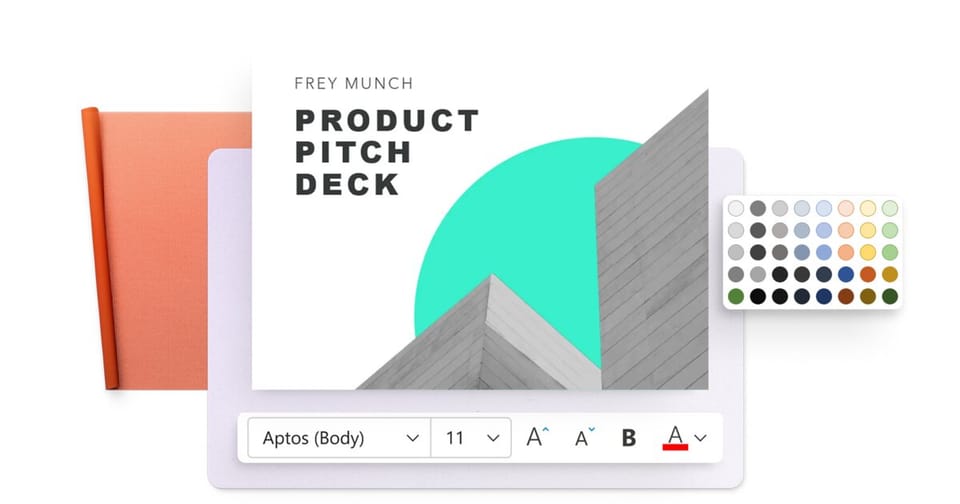
Forty-five minutes to an hour and a half. That is the length of the room you will stand in when you defend your master's thesis, according to the typical session length reported by universities and defense guides alike — roughly 15 to 25 minutes of presenting, followed by questions that can stretch to 90 minutes on their own. Two or three years of work will be judged in less time than a football match, and the committee's verdict will arrive in one of four official outcomes: accepted, accepted with minor revisions, major revisions, or — rarely — rejected.
The master's thesis defense is not an exam you can cram for the night before. It is a performance with a known structure, predictable question patterns, and a preparation window that starts the day your defense date is announced. Universities publish real guidelines for this — EMUNI University's official defense preparation guide, HBKU's library guide on thesis defenses, and Southern University and A&M College's official oral defense question list all exist publicly, yet most candidates prepare blind.
This guide walks the full journey in numbered stages, from the moment the date is announced to the minute you leave the room. You will get a 15-slide presentation structure with suggested timing for every part, 20 real committee questions grouped into five themes with guidance on how to answer each one, opening and closing scripts in both English and Arabic, and a checklist for defense day itself.
What Happens in a Master's Thesis Defense
Before preparing anything, you need an accurate picture of the event. A master's thesis defense — called a viva voce at some universities — is a formal, public or semi-public session in which you present your completed research to a committee and answer its questions.
The committee is usually made up of three professors, one of whom is typically your own supervisor, with the others acting as internal and external examiners. This structure is described in HBKU's official library guide on thesis defenses, which also lists the four possible outcomes mentioned above. The key insight candidates miss is that outright rejection is rare: the overwhelming majority of defenses end in acceptance with some level of requested revisions. EMUNI's official guidance adds a calming fact — post-defense revisions are a normal, expected part of the process, and universities commonly allow up to three months to complete them. A request to rework a chapter is not a failure; it is the system working as designed.
Timing varies by institution, but the practical ranges are well documented. The presentation itself usually runs 15 to 25 minutes; EMUNI's official guide plans for a 20-to-25-minute talk, while HBKU's guide cites 15 to 25 minutes as typical. The full session — presentation plus discussion — usually lands between 45 minutes and an hour and a half, and English-language presentation guides report question sessions that run as long as 90 minutes. Plan your material for the short end of the range and your stamina for the long end.
If you have never seen a real defense, watch one before you rehearse your own. Texas A&M University has published a full seminar on its official channel titled "The Perfect Defense: The Oral Defense of a Dissertation," and the College of Engineering at the University of Baghdad has published a complete recording of a real master's defense session in Arabic. Twenty minutes spent watching how candidates actually stand, pace, and handle questions will teach you more than any written description.
Stage 1: Lock the Logistics Before You Touch a Slide
The date is announced. Your first week should not be about slides — it should be about removing every avoidable risk from the day. Work through this sequence:
- Read your university's defense regulations in full. Every university publishes rules on session length, who may attend, how many copies of the thesis you must submit, and the deadline for delivering copies to the committee before the defense. Missing a document deadline can postpone your defense by months.
- Confirm the format details now, not later. How long is your talk — 15 minutes or 25? Will you present in Arabic, English, or a mix? Is the session public? Can you use your own laptop? Email the graduate school or your supervisor and get the answers in writing.
- Submit the required thesis copies on schedule. Committees read your thesis before the session. The defense conversation is shaped by what they read, so late copies mean a rushed, irritated committee.
- Learn who is on your committee and what they publish. Each examiner will probe from their own expertise. A statistician will press your methods; a domain specialist will press your literature. Read at least one recent paper by each member — it is the highest-yield preparation hour available.
- Build your preparation calendar backward from the date. Reserve the final three days for full rehearsals, the middle weeks for slide building and question drills, and this first week for logistics only.
At this stage it also helps to revisit the foundation the committee will interrogate: your research problem, questions, and objectives. If your proposal-stage work needs a refresher — or you are defending a thesis built on a proposal you want to re-examine — our template for a master's research proposal walks through the problem, questions, and objectives structure that committees expect you to defend fluently — our master's research proposal template breaks that structure down section by section.
Stage 2: The 15-Slide Deck and Its Timing
Your presentation is not your thesis compressed. It is an argument that your research deserves the degree, delivered in about 25 minutes. English presentation guides converge on a simple rule of thumb — one slide per minute — which puts the typical defense deck at 15 to 20 slides; Arab-market guides similarly cite 10 to 20 slides. We will build exactly 15.
The timing below follows the official distribution in EMUNI University's defense preparation guide for a 20-to-25-minute presentation: about 2 minutes for objectives, 4 for literature and framework, 4 for methodology, 8 for results, and 4 for conclusions and recommendations, with the remaining minutes for opening and framing.
| # | Slide | What goes on it | Minutes |
|---|---|---|---|
| 1 | Title | Your name, thesis title, supervisor, university, defense date | 1.0 |
| 2 | Roadmap | The 4 parts of the talk: problem, method, findings, recommendations | 1.0 |
| 3 | Research problem | The real-world problem and the gap in existing knowledge | 1.0 |
| 4 | Questions and objectives | Research questions, matched to objectives | 2.0 |
| 5 | Literature review | Only the studies that shape your gap — 6 to 8 maximum | 2.0 |
| 6 | Theoretical framework | The theory or model your analysis leans on | 2.0 |
| 7 | Methodology: design | Design choice and why it beats the alternatives | 2.0 |
| 8 | Methodology: data | Sample, instruments, procedures, ethics approval | 2.0 |
| 9 | Findings 1 | Descriptive results, one clear chart | 3.0 |
| 10 | Findings 2 | Hypothesis tests or theme analysis | 3.0 |
| 11 | Findings 3 | The finding you most want remembered | 2.0 |
| 12 | Discussion | Your results against the literature you showed in slide 5 | 1.0 |
| 13 | Conclusions | Answer to each research question, your contribution | 1.5 |
| 14 | Recommendations | Practical recommendations, limitations, future work | 1.0 |
| 15 | Thank you | Acknowledgments and an invitation for questions | 0.5 |
| — | Total | 25.0 |
Three design rules from official university guidance will save you: put keywords on slides, not paragraphs; prefer charts over tables everywhere the data allows; and keep backup slides after slide 15 with the detailed tables you expect to be asked about — you present 15, you carry 20. For deeper slide-craft principles, our guide to professional presentation design rules covers contrast, font sizing, and chart readability.
If designing the deck is the step that would eat your preparation weeks, Truescho's presentation design service builds a professional defense deck from your approved content: a €49 package covering 15 slides within 3 days, or €89 for 30 slides within 5 days, delivered as PPTX and PDF with two free revisions, contact with the designer within 24 hours, and your approval of the first 3 slides before the full design proceeds. The service is design-only — your research content stays entirely yours.
For ready-made visual starting points, Slidesgo publishes a dedicated gallery of thesis defense templates you can browse for layout inspiration.

Image: Slidesgo
Stage 3: Rehearse Like It Is the Real Room
A deck is not a presentation until it survives out loud, on time, in front of people. Official defense guidance is blunt about this: examiners consistently prefer a candidate who explains clearly over one who recites memorized text. Rehearsal is how you become the explainer.
- Rehearse with a timer from day one. The table above gives each slide its minutes. If slide 10 keeps running to 6 minutes, cut content — not pace. Running over your allotted time is the most common, and most preventable, defense-day error.
- Run a full mock defense. Ask your supervisor, colleagues, or friends to play the committee: 25 minutes of presentation, then a full question session of 30 to 90 minutes. Simulate the worst version — interruptions, follow-ups, and one question you cannot answer.
- Drill the 20 questions below in writing, then aloud. Written answers organize your thinking; spoken answers expose what you actually recall under pressure.
- Prepare your "I don't know" protocol. Committees test the edges of your knowledge deliberately. Rehearse a graceful response: acknowledge the limit, reason aloud about what you do know, and offer to follow up. Never bluff.
- Record yourself once. Watch for the three classic tells: reading from slides, speaking too fast, and apologizing ("sorry, this is a bit unclear" — if it is unclear, fix it before the defense).
Texas A&M's official seminar on the oral defense walks through exactly this preparation cycle, from anticipating questions to controlling the room.

Image: Texas A&M University
The 20 Questions Committees Actually Ask
Southern University and A&M College's graduate school publishes an official list of common oral defense questions — one example is the classic "If you were to do it all over again, what changes would you make?" Combined with patterns reported in university guides and defense literature, committee questions fall reliably into five themes. Below are 20 of them, each with a strategy for answering.
Theme 1: The problem and the objectives
- "Summarize your thesis in one sentence." Have this memorized cold. Answer with problem, method, and key finding in a single breath — it frames everything that follows.
- "Why did you choose this topic, and why does it matter now?" Anchor your answer in the gap, not your personal interest. Show the problem existed, was under-studied, and has current weight.
- "What gap in the literature does your work fill?" Name 2 or 3 specific studies, state what they left unanswered, and show your question sits exactly in that space.
- "How did your research questions evolve from your objectives?" Walk the logical chain: broad objective, focused question, measurable result. Admit honestly if a question shifted mid-study and why.
Theme 2: Theory and literature
- "Which theoretical framework did you use, and why that one?" Name the framework, one sentence on what it explains, and one sentence on why the alternative fails your data.
- "Which scholars most influenced your work — and where do you disagree with them?" Committees love this question because it separates consumers of literature from thinkers. Have one respectful, well-argued disagreement ready.
- "What research appeared after you finished your review, and does it change anything?" Show you followed the field past your deadline. Even one recent paper, handled well, signals a living scholar.
- "How did you decide which sources were credible enough to build on?" Describe your inclusion criteria — peer review, recency, methodology quality. If your field uses specific citation conventions, be ready to defend them; our practical examples of APA 7 citations cover the rules committees most often probe.
Theme 3: Methodology
- "Why this research design and not the obvious alternative?" Never defend your design in isolation. Compare it against one rejected alternative and say what each would have answered better or worse.
- "How did you select your sample, and how representative is it?" State the sampling method, the size, and its honest limits. Claiming perfect representativeness invites destruction; naming boundaries invites respect.
- "What are the limitations of your methodology?" Volunteer the real ones before the committee extracts them. Pair each limitation with its mitigation and its impact on your conclusions.
- "How did you establish the reliability and validity of your instruments?" Cite the concrete procedure: pilot testing, reliability coefficients, triangulation, member checking — whatever you actually did, with numbers where possible.
- (Qualitative studies) "How did you keep your own bias out of the interpretation?" Explain coding procedures, independent second coders or peer debriefing, and audit trails. If you are preparing for this variant, the University of Baghdad's published defense recording shows real Arabic-language exchanges on exactly this theme.
Theme 4: Results
- "What is your single most important finding?" Choose one and defend the choice. Committees use this to see whether you can prioritize — answering "they are all important" fails.
- "Did any result surprise you or contradict your hypothesis?" A surprise handled well is a strength: it shows you reported what the data said rather than what you hoped.
- "Your finding differs from Study X — how do you explain that?" Return to differences in sample, context, or measurement. Never dismiss the other study; reconcile with it.
- "Which of your findings generalize beyond your sample, and which do not?" Draw the boundary yourself, precisely. Over-claiming generalizability is among the fastest ways to lose a committee's trust.
Theme 5: Contribution and application
- "What is your contribution — to theory, and to practice?" Give two distinct answers. The theoretical contribution modifies what we know; the practical one tells a specific actor what to do differently.
- "If you were to do it all over again, what changes would you make?" — the verbatim official question from SUBR's list. Answer with genuine redesigns, not fake humility. This question rewards self-awareness, not confession.
- "What is the next study, and who should run it?" Show your thesis is a link in a chain, not a dead end. Sketch the follow-up question and the data it would need.
Notice what runs through all 20: committees are not testing whether you know everything. They are testing whether you understand your own study deeply enough to defend its boundaries honestly.
Stage 4: Defense Day — Scripts, Timing, and Checklist
The day itself rewards routine over heroics. Start with a morning review of your one-page summary — problem, questions, method, three key numbers — then run the room checklist below.
Opening script (English). Walk to the lectern, greet the room, and begin:
"Good morning, respected members of the committee. My name is (state your full name), and it is an honor to present today the defense of my master's thesis, titled (state the exact thesis title). I would like to thank my supervisor, Dr. (name), for the guidance that shaped this work, and the honored members of the committee for the time and care they have given to reviewing it. In the next twenty-five minutes, I will present the research problem, the methodology, and the main findings, together with my conclusions and recommendations. I welcome your questions at the end. I will now begin with the problem that motivated this study."
Opening script (Arabic).
"صباح الخير سادة أعضاء اللجنة الموقرين. اسمي (اذكر اسمك الكامل)، ويسعدني أن أقف أمامكم اليوم لعرض رسالتي للماجستير بعنوان (اذكر عنوان الرسالة كما هو مسجل). أتقدم بخالص الشكر لمشرفي الدكتور (الاسم) على ما قدمه من توجيه طوال مراحل هذا العمل، ولأعضاء اللجنة الكرام على وقتهم ومراجعتهم الدقيقة. سأعرض خلال الخمس والعشرين دقيقة القادمة مشكلة البحث ومنهجيته وأبرز نتائجه، ثم خلاصتي وتوصياتي، وبعدها أرحب بأسئلتكم وملاحظاتكم القيمة. وسأبدأ بالمشكلة التي انطلقت منها هذه الدراسة."
Closing script (English). Use it after the question session ends and the chair invites final words:
"Thank you, respected members of the committee, for your attentive listening and for the valuable comments and questions you have raised. I acknowledge the points that require revision, and I commit to addressing them fully within the period the committee determines. I am grateful to my supervisor, to the university, and to everyone who contributed to completing this research. Thank you all."
Closing script (Arabic).
"شكراً لكم سادة أعضاء اللجنة الموقرين على إصغائكم وتوجيهاتكم، وعلى ما أثرتموه من أسئلة وملاحظات قيّمة. أقرّ بما تضمنته ملاحظاتكم من نقاط تحتاج إلى تعديل، وسأعمل على تنفيذها كاملة خلال المدة التي تحددها اللجنة. أتوجه بالشكر لمشرفي وللجامعة ولكل من ساهم في إنجاز هذا العمل. شكراً لكم جميعاً."
Adapt the small details — session length, names, the exact title — to your case, and rehearse both scripts aloud until they sound like you rather than a template. Examiners consistently prefer clear, natural explanation over memorized recitation, and that preference starts with your first thirty seconds.
The defense-day checklist:
- Presentation file on a USB stick, in the cloud, and emailed to yourself — three copies, three locations
- A PDF export of the deck in case PowerPoint fails on the room's machine
- Your own laptop, its charger, and a video adapter for the room's projector
- Printed thesis copies: one for each committee member plus a spare, delivered before the deadline
- A printed one-page summary of problem, questions, method, and key numbers for your own hands
- Backup slides appended after slide 15, with the detailed tables you expect to be asked about
- A glass of water within reach
- Arrival 30 minutes early to test the projector, clicker, and sound
- Phone silenced — not on vibrate, silenced
- The morning review: one calm pass through your one-page summary, no new material
- Professional attire consistent with your university's norms
- Your printed copy of the 20 questions above, reviewed one last time with breakfast
If the committee requests revisions — and most do — remember EMUNI's guidance: revisions are a normal stage of the process, commonly allowed up to three months, not a verdict against you.
Want someone to handle this step for you?
If slide design is the one step you would rather delegate while you drill the questions, Truescho's presentation design service turns your approved defense content into a polished deck from €49. The service covers design only — your research, results, and answers remain entirely your work.
Frequently Asked Questions
How long is a master's thesis defense presentation?
The presentation itself typically runs 15 to 25 minutes: EMUNI's official guide plans for 20 to 25 minutes, and HBKU's library guide cites 15 to 25 minutes as typical. Build your deck to finish at the bottom of your allotted range so questions can stretch the session without pressure.
How long does a master's thesis defense take in total?
Expect the full session — presentation plus questions — to last between 45 minutes and an hour and a half. English-language defense guides report question sessions alone running up to 90 minutes, so prepare stamina, not just slides.
How long should a master's thesis presentation be in slides?
Follow the one-slide-per-minute rule: a 15-to-20 slide deck for a typical defense, with Arab-market guides citing 10 to 20 slides. Present your core 15 and keep additional detail in backup slides you can pull up when asked.
How do you prepare for thesis defense questions?
Study your committee members' own research, drill a written bank of expected questions grouped by theme — problem, theory, methodology, results, contribution — and run a full mock defense with colleagues simulating a 30-to-90-minute question session, including at least one question you cannot answer.
How do you study for a thesis defense?
Reread your own methodology chapter first, because committees probe methods hardest, then re-memorize your key numbers, sample details, and statistical choices. Finish with a morning-of review of a one-page summary — no new material on defense day.
What questions are asked about qualitative research in a defense?
Expect probes on interviewer bias, coding procedures, saturation, triangulation, and why qualitative depth mattered more than statistical breadth for your question. Have concrete procedures ready — second coders, member checking, audit trails — rather than general assurances of rigor.
What questions are asked about quantitative research in a defense?
Expect probes on sampling and representativeness, instrument reliability and validity, statistical test selection, effect sizes versus significance, and whether your findings generalize beyond the sample. Pair every number with the procedure that produced it.
Can you fail a master's thesis defense?
Outright failure is rare. University guidance such as HBKU's library guide describes four official outcomes — acceptance, minor revisions, major revisions, or rejection — and rejection is uncommon. Most defenses end in acceptance with revisions, commonly allowed up to three months to complete.
Sources
- EMUNI University — Preparing for a Master Thesis Defense (official PDF): https://www.emuni.si/wp-content/uploads/2019/11/EMUNI_Preparing_for_Masters_Thesis_Defense.pdf
- HBKU Library — Thesis Defense university guide: https://hbku-qa.libguides.com/c.php?g=717272&p=5285683
- Southern University and A&M College — Dissertation/Thesis Oral Defense Questions (official PDF): https://www.subr.edu/assets/subr/GradSchool/OralDefenseQuestions20130218.pdf
- Texas A&M University — The Perfect Defense: The Oral Defense of a Dissertation: https://www.youtube.com/watch?v=edQv9OKvfdU
- University of Baghdad, Al-Khwarizmi College of Engineering — full master's defense session recording: https://www.youtube.com/watch?v=4qZaZnll50w
- Slidesgo — Thesis Defense templates: https://slidesgo.com/thesis-defense
- Microsoft Create — Thesis format template: https://create.microsoft.com/en-us/template/thesis-format-(10-pages)-1598f8d7-f58a-40b3-b8a4-c688737022d5