
Thailand Ends 60-Day Visa-Free Stays: 30 Days From 15 September
Last updated: September 2026
Thailand has cancelled the 60-day visa exemption that applied to citizens of 93 countries since July 2024 and replaced it with a 30-day exemption covering about 60 countries and territories, under a royal decree published in the Royal Gazette on 31 August 2026 and effective 15 September 2026. China, Russia, India, the United Kingdom, the United States, the entire European Union, Japan, and every GCC state keep visa-free access — at half the previous duration.
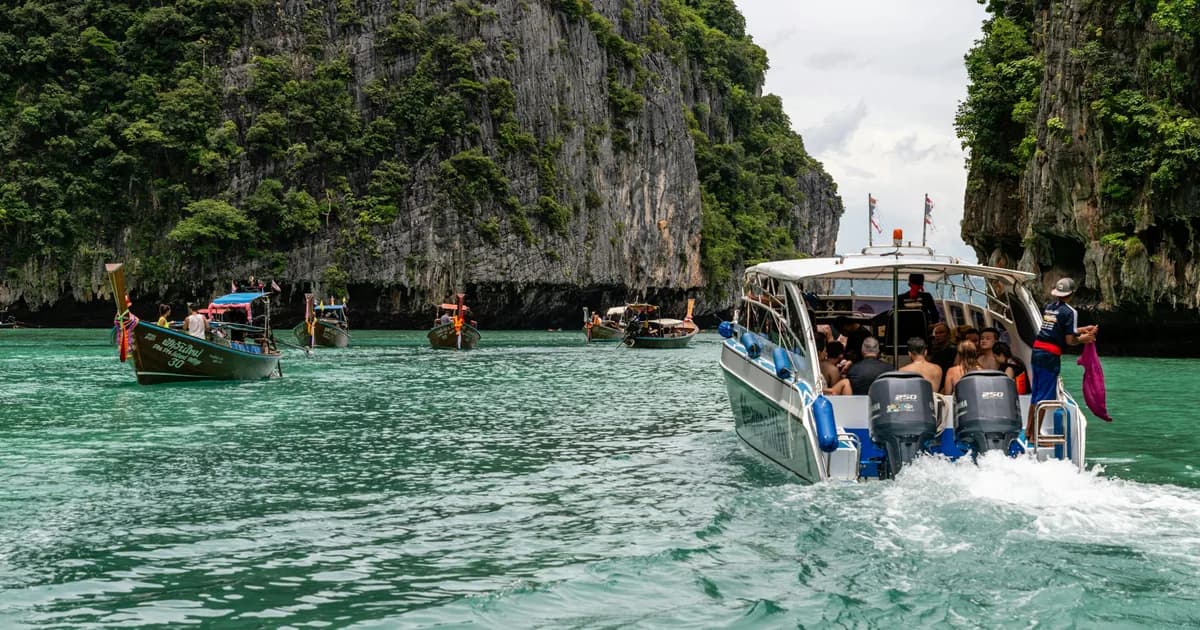
Source: tdac.info — Thailand Halves Visa-Free Stays
Two numbers tell the whole story. In July 2024, Bangkok bet big on long-stay tourism and doubled its exemption window to 60 days for 93 nationalities. Fifteen months later, the same government walked the policy halfway back: a shorter list of countries, a 30-day ceiling, a visa-on-arrival program slashed from dozens of nationalities to just three, and a renewed emphasis on cracking down on tourists who quietly turned holiday status into semi-permanent residence.
The New Rules at a Glance
| Rule | Before 15 Sep 2026 | After 15 Sep 2026 |
|---|---|---|
| Core exemption | 60 days, 93 nationalities | 30 days, ~60 nationalities |
| China, Russia | 60 days | 30 days (bilateral, 90-day cap per 180 days) |
| South Korea, Brazil, Argentina, Chile, Peru | 60 days | 90 days (bilateral agreements) |
| Seychelles, Mauritius | 60 days | 15 days |
| Visa on arrival | Extended list | 3 nationalities only: Azerbaijan, Belarus, Serbia (15 days, 2,000 THB) |
| Legal basis | Cabinet announcement, Jul 2024 | Royal Gazette Vol. 143, Special Issue 207 Ngor, 31 Aug 2026 |

Source: Wikimedia Commons — Suvarnabhumi Airport Terminal C — CC BY 4.0
.jpg?ref=blogs.truescho.com)
Who Keeps Visa-Free Access — and Who Lost It
The new 30-day list still covers an enormous share of world travel: all European Union and EFTA citizens, the United Kingdom, the United States, Canada, Australia, New Zealand, Japan, China, Russia, India, Turkey, Israel, Kazakhstan, Georgia, Hong Kong, Macau, ASEAN neighbours (Cambodia and Myanmar drop to 14 days), Ukraine, South Africa, Taiwan, Fiji, the Maldives, and Mongolia — plus all six Gulf Cooperation Council states and Jordan.
The quiet losers are the nationalities that enjoyed the 60-day window without making the new list. Egypt is the clearest example: Egyptians travelled to Thailand visa-free for 60 days under the old scheme, but they appear on none of the new exemption tiers. The realistic route now is the official e-visa portal (thaievisa.go.th), which typically issues 60-day tourist e-visas, or a consulate application.
For Gulf readers, the direction of travel is striking when compared with the region's own visa expansion — the UAE's five-year multiple-entry tourist visa grows more generous just as Thailand narrows its own offer.
Why Thailand Reversed a 15-Month-Old Policy
The timing of the reversal tells its own story. When the 60-day exemption launched in July 2024, it was sold as a magnet for long-stay tourism and remote work. Fifteen months later, three problems had stacked up. First, thousands of visitors converted a tourist exemption into quasi-permanent residence through repeat extensions and border runs. Second, local frustration grew over pressure on short-term rental markets in Bangkok and Chiang Mai. Third, the government wanted to demonstrate discipline ahead of the coming high season, alongside security concerns about individuals abusing the extended window — a point raised in Thai coverage when the decree landed.
The formula Bangkok chose is telling: the door stays open to almost everyone, but the doorway just got narrower. Short-break tourists — the two-week crowd — will never notice the difference; 30 days comfortably covers them. The message is aimed squarely at people who built an entire lifestyle on the exemption: move onto the proper track instead. Thailand already has one for almost everyone: a 60-day tourist e-visa, the long-term Destination Thailand Visa (DTV) for remote workers and flexible-business types with qualifying foreign income, or a student visa for anyone enrolling at an accredited institution.
The Long-Stay Route That Still Exists
For digital nomads and remote employees, the DTV remains the headline alternative to the old 60-day loophole. It grants a five-year visa with extended-stay privileges for eligible applicants who can document remote work or soft-power activities such as cooking classes, martial arts training, or medical treatment — categories Thailand formalized precisely to move long-stayers out of the tourist line. The requirements are financial rather than employer-based, which suits freelancers and independent professionals from emerging markets particularly well.
The lesson across both tracks is the same one immigration systems worldwide are converging on: short visits are getting friction-free treatment, while anything resembling residence demands paperwork. Thailand has simply joined the queue — earlier than most.
What the Headlines Missed
Extensions are still possible. A traveller who enters on the 30-day exemption can apply at a Thai immigration office for one 30-day extension at the standard fee of 1,900 THB. That keeps the practical visa-free ceiling at 60 days — but only if you handle the paperwork inside the country, not at the border.
Land-border runs are capped. Visa-exempt entrants arriving overland can cross into Thailand no more than twice per calendar year under the exemption, with exceptions only for Brunei, Indonesia, Malaysia, and Singapore passport holders. The classic "border bounce" to reset a stay is effectively over for most nationalities.
The digital arrival card is a separate, mandatory step. Every arriving traveller — exempt or visa-holding — must complete the Thailand Digital Arrival Card (TDAC) online within 72 hours before arrival. Skipping it causes delays at immigration regardless of visa status.

Source: Wikimedia Commons — Wat Phra Kaew — CC BY 4.0

Students Are Outside This Policy — Here's Why
Nothing in the royal decree touches Thailand's student visa track. International students accepted by accredited Thai institutions continue to apply for the Non-Immigrant ED visa through embassies and the official e-visa portal, and their stays remain renewable for the duration of their programs. The decree regulates the tourist exemption, not education categories.
The only student-adjacent effect is family logistics: a spouse or parent visiting a student in Bangkok from an exempt country now gets 30 days rather than 60 per entry, making extension planning part of the visit. Students weighing Thailand against other Asian destinations can compare outcomes in Truescho's international opportunities database, and convert their grades with the free GPA calculator before applying.
A Practical Checklist Before You Book
- Confirm your tier. If your nationality is on the 30-day list, you need only a passport valid beyond six months and proof of onward travel.
- Not on the list? Start an e-visa application early at thaievisa.go.th; the standard tourist e-visa grants 60 days.
- File the TDAC within 72 hours of departure, in both directions.
- Staying longer than 30 days? Budget time for the 1,900-THB extension at an immigration office, or secure a 60-day tourist visa before you fly.
- Overland traveller? Count on two exempt border crossings per calendar year — no more.
The travelers who will feel this change least are the ones who read the rules before departure rather than at the arrivals hall.
Frequently Asked Questions
How long can I stay in Thailand without a visa now?
The standard visa-free stay is 30 days for citizens of roughly 60 countries and territories, effective 15 September 2026. It replaces the 60-day exemption that had applied to 93 nationalities since July 2024.
Which countries get 90 days in Thailand instead of 30?
South Korea, Brazil, Argentina, Chile, and Peru retain visa-free stays of up to 90 days under bilateral agreements with Thailand, unaffected by the new 30-day ceiling.
Can the 30-day stay be extended?
Yes. Entrants on the visa exemption can apply once for a 30-day extension at a Thai immigration office for the standard 1,900-THB fee, keeping the practical maximum at 60 days without a pre-arranged visa.
What changed for visa on arrival in Thailand?
The visa-on-arrival list was cut to just three nationalities — Azerbaijan, Belarus, and Serbia — each receiving 15 days at a cost of 2,000 THB. All other former VOA nationalities must now arrange an e-visa or embassy visa.
Does the new rule affect student visas for Thailand?
No. The Non-Immigrant ED student visa remains a separate track processed through embassies and the official e-visa portal, with renewable stays for the duration of study. Only the tourist exemption changed.
Is the decree final or can it still change?
It was published in the Royal Gazette and took effect on 15 September 2026, so it is binding now. That said, Thailand has adjusted its exemption policy twice in two years — the 2024 expansion and the 2026 cutback — so rechecking the lists before every trip is a smart habit.
What is the alternative for staying longer than 60 days?
Three main routes exist: the electronic tourist visa (60 days, extendable), the Destination Thailand Visa (DTV) for remote workers with qualifying foreign income, and the student visa for enrolled students. Each carries its own financial and documentary requirements on the official portal.
What is the difference between extending and doing a border run?
Extension happens inside Thailand at an immigration office (+30 days for 1,900 THB) and preserves continuous stay. A border run consumes a new exempt entry — capped at two land crossings per calendar year, while re-entering by air still grants a fresh 30 days each time.
Sources
- tdac.info — Thailand Halves Visa-Free Stays to 30 Days From 15 September — Royal Gazette details and the new country lists
- Wikipedia — Visa policy of Thailand — updated exemption tiers, VOA list, and bilateral caps
- Official Thai e-Visa portal — e-visa applications
Plan Your Next Move With Truescho
From short trips to full degree programs across Asia, Truescho brings scholarships, destination guides, and planning tools into one place. Get started free →