
3 ===
Last updated: September 2026
On July 30, 2026, Saudi Arabia stopped issuing work visas to Nepali migrants in five job categories that require skill certificates. The Kathmandu Post reported the trigger: Nepal had sealed a testing center in Kathmandu operating without a legal permit, and the whole skill-verification pipeline for Nepali workers froze with it. Thousands of workers were caught mid-process, agencies halted files, and a diplomatic note went to Riyadh.
The SVP International exam is booked through the official portal svp-international.pacc.sa, the international gateway of Saudi Arabia's PACC professional accreditation platform. The standard fee is $50, but Pakistan raised its fee to $85, about PKR 23,500 to 24,500, effective September 9, 2026, per the official NAVTTC page. Testing covers 160+ countries, and results link automatically to your visa file.
That Kathmandu collapse is the sharpest illustration of why this exam now sits at the center of every skilled worker's Saudi journey. Book it correctly, at a genuine center, and the certificate flows to your visa application within days. Book it wrong, or in a country where the system has broken down, and you can lose months. This guide walks through what PACC actually is, the current fees with dates, the exact booking steps, and where testing stands country by country.

Source: SVP International portal
Kathmandu, Summer 2026: How a Testing System Collapsed in Six Weeks
The Nepal timeline is documented link by link, and it deserves reading in full because every date carries a lesson for applicants everywhere.
On June 16, 2026, the Kathmandu Post reported that Saudi Arabia's new skill-test rule was adding hurdles for Nepali workers heading to the Kingdom. Three days later, on June 17, the same paper reported the program had been suspended for Nepali workers after protests, with recruitment agencies accused of vandalizing a training center connected to the scheme. The New Arab confirmed on June 19 that the suspension followed backlash over the fees involved.
Nepal's government then moved officially. On June 27, nepalnews reported, Kathmandu formally urged Riyadh to pause the whole verification process for migrant workers. On July 23, the Kathmandu Post reported Nepal was still protesting as Saudi Arabia pressed ahead with the mandatory test.
The decisive turn came in late July. Around July 22, Nepali authorities sealed the Industrial Training Institute in Basundhara, Kathmandu, for operating without a legal permit. On July 30, Saudi Arabia halted visas for Nepali workers in five skill-certificate categories, including loading and unloading goods, porter work, hand-cart operation, and construction jobs. By August 8, Nepali recruitment agencies had stopped processing files entirely, and the Post reported growing concern across the foreign-employment sector.
The scale explains the alarm. The Kathmandu Post notes Saudi Arabia took in roughly 77,000 Nepali workers in the previous year, under a bilateral labor agreement signed in January 2026. As of September 24, 2026, the exam is effectively unavailable in Nepal, which is why you will find no Nepal booking steps in this guide. If you are in Nepal, follow the Foreign Employment Department and your ministry's announcements, and do not pay any agent who claims to book the test for you right now.
Three Lessons From Nepal for Every Applicant
First, the exam only works through legitimate, accredited centers. The Kathmandu institute was sealed precisely because it lacked a legal permit, and the visa pipeline broke the moment it closed. If a center or agent is not traceable to the official portal, walk away.
Second, fees are set and visible on official channels. Nepal's documented test fee was $50, about NPR 7,500, while the Kathmandu Post found one agency charging workers NPR 10,000 all-in. When an intermediary's price drifts far from the official number, that gap is your warning sign.
Third, the system rewards preparation because attempts are strictly capped. You get a maximum of three attempts, and per both the official NAVTTC guidance and the Kathmandu Post's reporting, failing the third bars you from traveling for that profession. That is a career-level consequence for one bad exam day.
What PACC Actually Is
PACC is the Professional Accreditation platform on the pacc.sa domain, the verification arm of Saudi Arabia's Ministry of Human Resources and Social Development, operated by Takamol Holding. It runs two main tracks: the SVP skill-verification test examined here, and QVP for verifying educational qualifications. An official Saudi explainer credits the platform with coverage of 160+ countries, 1000+ professions, and 150+ test centers, with verification completed within a maximum of 21 days.
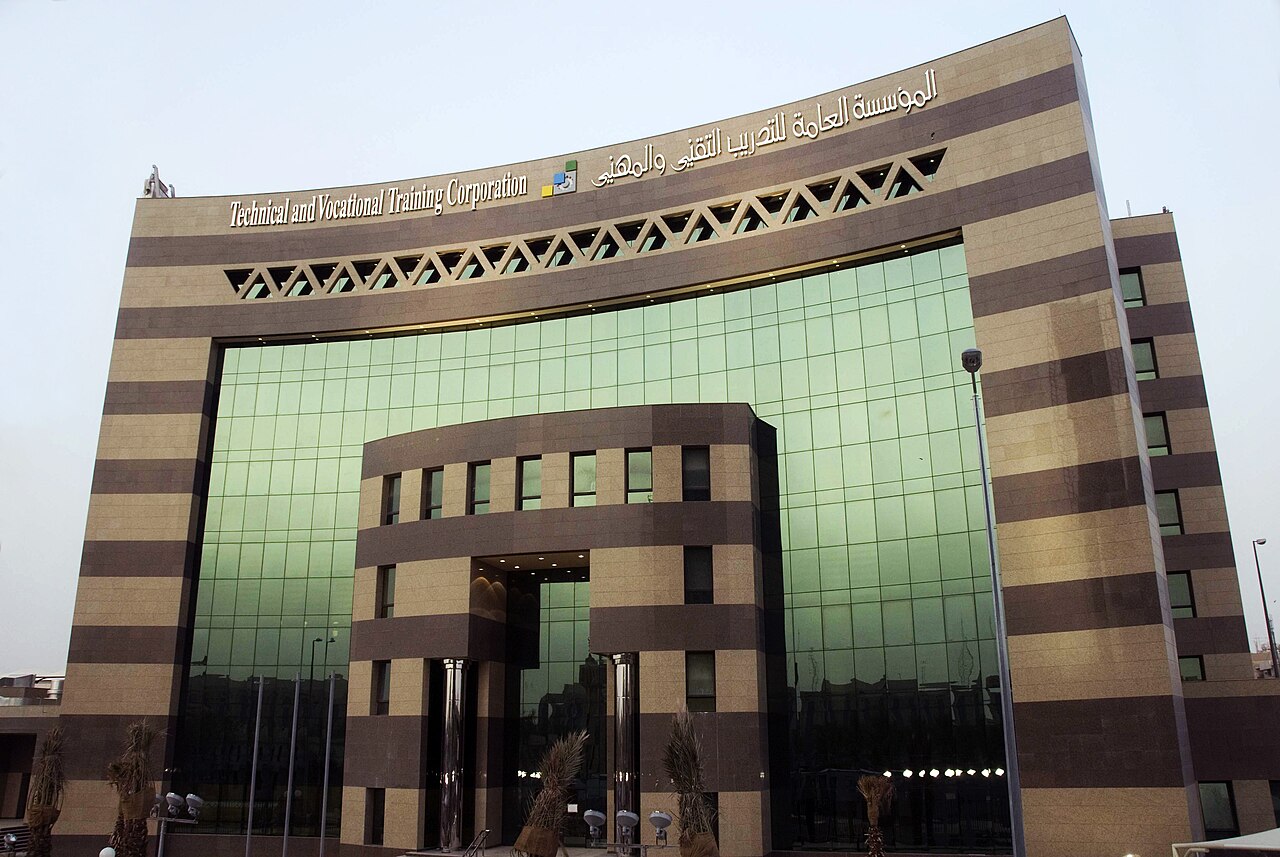
The gateways matter because they are easy to confuse. International candidates book through the SVP International PACC gateway at svp-international.pacc.sa. Domestic candidates inside the Kingdom use svp-local.pacc.sa, and qualification verification runs on qvp.pacc.sa. The Technical and Vocational Training Corporation, TVTC, is the institution behind the program, but do not route international bookings through TVTC portals; the international gateway is the documented path. The same underlying platform even powers Bahrain's occupational licensing and Oman's skills assessment portals, which tells you how deep the Takamol infrastructure runs in the region.
The program itself launched on July 1, 2021, with Pakistan as the first country to sign an implementation agreement with Takamol, per ARY News. Saudi state news agency SPA reported in January 2025 that professional verification coverage had been completed across 160 countries. For the broader policy picture, our existing guide to the Saudi Skill Verification Program covers how SVP fits into the Kingdom's labor reforms, including the Nitaqat 2.0 and Qiwa contract compliance regime and the stricter enforcement climate that has accompanied measures like the 100,000-riyal fines for illegal workers.
Source: Wikimedia Commons
SVP Fees in 2026: The Numbers With Their Dates
Fees have moved in 2026, and presenting a single number without its date is how applicants get misled. Here is every documented fee, with its source and effective date.
| Fee item | Amount | Local equivalent | Status and source |
|---|---|---|---|
| Standard international SVP test | $50 | — | Official standard rate per the Saudi platform explainer |
| Prior experience route, RPL | $50 additional | — | For proving experience instead of testing, same explainer |
| Test inside Saudi Arabia | SAR 540.5 | — | Domestic rate via svp-local |
| Pakistan, through early 2026 | $50 | ~PKR 14,100 | ARY News and Pakistan Observer, January 16, 2026 |
| Pakistan, from Sep 9, 2026 | $85 | ~PKR 23,500-24,500 | Official NAVTTC takamol page, paid online |
| Nepal test fee | $50 | ~NPR 7,500 | Kathmandu Post; testing currently unavailable |
| Nepal agency all-in charge | — | NPR 10,000 | Sai Vision agency, per Kathmandu Post |
The Pakistan increase is the one that needs the most care. The official NAVTTC page states $85, roughly PKR 23,500 to 24,500, effective September 9, 2026, paid online through the portal. What no source confirms is whether $85 applies worldwide or only in Pakistan; the standard rate documented elsewhere remains $50. Treat the portal's payment page as the truth at the moment you pay, not any article, including this one.
Payment is by Visa or Mastercard online. Fees are non-refundable, and every retake requires a fresh fee, up to the three-attempt limit.
How to Book the SVP Test From Abroad, Step by Step
Booking the SVP International PACC exam is entirely online through the portal at svp-international.pacc.sa, and the process documented on the official NAVTTC page and the Saudi platform explainer runs in eight steps.
- Register at svp-international.pacc.sa using your passport details. Your passport is your identity anchor for the whole process.
- Choose your profession from the Saudi Standard Classification of Occupations. Choose carefully: the system does not allow you to change the profession after selection.
- Pay the fee online with Visa or Mastercard. The fee is non-refundable from the moment of payment.
- Select your test city, profession, and date. The system automatically assigns the test center based on city, profession, date, and available capacity.
- Download your appointment card and roll number slip from the portal. This slip is your entry document on exam day.
- Attend the center with your original documents. In Pakistan, the documented requirement is your passport and CNIC digital card only.
- Sit the exam, a maximum of 120 minutes combining theoretical and practical sections. Reporting from Nepal put the full session at around three hours.
- Receive your result, typically within 24 hours, though outcomes can be immediate or take up to five days. The digital certificate is then sent automatically to the Ministry of Foreign Affairs system for visa linking.
The test is offered in nine languages: Arabic, English, Hindi, Urdu, Tagalog, Sinhala, Tamil, Bengali, and Nepali. The profession lock in step 2 deserves emphasis because it is the most common self-inflicted error: applicants pick a category loosely related to their trade, fail the practical, and cannot switch without starting over.
Countries and Test Centers: Where You Can Actually Sit the Exam
The platform claims 160+ countries, and Saudi state media confirmed the 160-country rollout in January 2025. Beyond that headline, verified detail is uneven, so here is the honest country-by-country picture.
| Country | Status | What is documented |
|---|---|---|
| Pakistan | Active, largest documented network | 108 professions, 62 accredited centers, 24 cities, 80% pass rate |
| India | Active | Recruitment guides list Mumbai, Delhi, Hyderabad, Lucknow, Kochi |
| Bangladesh | Active | Named a principal testing country by the Saudi platform explainer |
| Sri Lanka | Active | Named a principal testing country by the same explainer |
| Nepal | Halted | Visas paused in 5 categories; agencies not processing as of Sep 24, 2026 |
Pakistan is the deepest market, and its official numbers are worth studying even if you test elsewhere, because they reveal how mature the system is at its best. The NAVTTC page lists 108 approved professions: 28 mechanic trades, 26 construction and civil trades, 10 electrical, 9 driving, 7 cooking, 6 automotive, 5 electronics, 5 cleaning, 4 storage, 3 beauty, 2 sales, and 1 in health, safety, and environment.
Testing runs through 62 accredited centers, 44 currently active, across 24 cities, including Islamabad, Karachi, Lahore, Rawalpindi, Faisalabad, Multan, Peshawar, Quetta, Gujranwala, Sargodha, Sahiwal, Sheikhupura, Haripur, Dina, Skardu, and Swat and Lower Dir. Named centers include the NAVTTC Center of Excellence in Islamabad's H-9/4 sector, the Memon Institute in Karachi, Discon Technical Institute in Lahore, and GTTTC in Peshawar. The overall pass rate stood at 80 percent through June 30, 2026, and NAVTTC's helpline is 0800-88866, Monday to Friday, 8am to 4pm.

Source: NAVTTC
India's testing cities come from recruitment guides rather than an official list, so verify your nearest center inside the portal at booking time. For Bangladesh and Sri Lanka, the Saudi explainer names both as principal testing countries without publishing center-level detail; the portal's city selector is the authoritative source. And wherever you are, remember the certificate is only half the journey; employers must also hold a valid quota, as we explained in our guide to Saudi work visa quotas for new businesses.
Exam Day, Results, and What Happens After You Pass
Exam day at an SVP International PACC center is deliberately practical. The 120-minute format splits between a theoretical section and hands-on assessment against the Saudi standard for your trade, in your chosen test language. Bring your originals, especially the passport and, in Pakistan, the CNIC digital card; the roll number slip alone is not enough.
Results arrive fast, usually within 24 hours. Once you pass, the system handles the most important step automatically: your digital certificate is transmitted to the Ministry of Foreign Affairs for linking to your visa application. You do not carry paperwork to an embassy; the verification travels with your file. Employers and officials can later validate it through the certificate verification portal on the PACC domain, which is why genuine certificates are hard to fake and fake claims are easy to catch.
Fail, and you may retake, paying the fee again, up to three attempts in total. Fail the third and you are barred from traveling for that profession, a rule confirmed on the official NAVTTC page and reflected in the Kathmandu Post's reporting. That cap is the strongest argument for preparing seriously for attempt one, since the stakes compound with each retry.
While you wait for results, it is a good moment to line up the next step: Truescho lists verified Saudi and international openings daily, and pairing a fresh SVP certificate with live opportunities on Truescho puts you ahead of applicants still figuring out the exam.
FAQ: SVP International and PACC
What is PACC Saudi Arabia and what does it do?
PACC is the Professional Accreditation platform on pacc.sa, the verification arm of the Ministry of Human Resources and Social Development, operated by Takamol Holding. It runs the SVP skill test and QVP qualification verification across 160+ countries, 1000+ professions, and 150+ test centers, completing verification within 21 days.
How do I book the SVP test from outside Saudi Arabia?
Register at svp-international.pacc.sa with your passport details, select your profession from the Saudi classification, pay online by Visa or Mastercard, choose your city and date, and download the roll number slip. The system assigns the test center automatically. International bookings run through this portal, not TVTC gateways.
What is the SVP test fee in 2026?
The standard documented fee is $50, with an additional $50 for the prior-experience route. Pakistan's fee rose to $85, about PKR 23,500-24,500, effective September 9, 2026, per the official NAVTTC page. It is unclear whether $85 applies worldwide or only in Pakistan, so confirm at payment.
Is the SVP test mandatory for a Saudi work visa?
For regulated skilled professions, yes; the certificate links automatically to the Ministry of Foreign Affairs visa system after you pass. Saudi Arabia halted visas in five Nepali categories in July 2026 precisely because certified testing was unavailable there. Verify whether your specific trade falls under SVP before booking.
Which countries have SVP or PACC test centers?
More than 160 countries per the platform and Saudi state media. Pakistan has the most documented network: 62 accredited centers across 24 cities. Bangladesh and Sri Lanka are principal testing countries, recruitment guides list Indian cities including Mumbai, Delhi, and Hyderabad, and Nepal is currently halted.
How many attempts are allowed in the Saudi skill verification test?
A maximum of three attempts, each requiring a new fee payment. Fail the third attempt and you are barred from traveling to Saudi Arabia for that profession, per the official NAVTTC page and Kathmandu Post reporting. Prepare thoroughly for the first attempt.
What documents do I need for the SVP exam?
Your original passport, plus in Pakistan the CNIC digital card, along with the roll number slip downloaded from the portal. The documented Pakistan requirement is passport and CNIC only, but carry originals of anything you used at registration, such as experience letters for the RPL route.
How long is the SVP exam and when do results come?
The exam runs a maximum of 120 minutes, split between theoretical and practical sections, though Nepal reporting described sessions of around three hours. Results typically arrive within 24 hours, ranging from immediate to five days, and the digital certificate flows automatically to MOFA.
Is the SVP test available in Nepal right now?
No. As of September 24, 2026, testing is effectively unavailable after Nepal sealed an unpermitted Kathmandu center in July 2026 and Saudi Arabia responded by halting visas in five Nepali categories. Nepali agencies stopped processing on August 8. Follow official Nepali government announcements for reopening news.
How do I verify an SVP certificate online?
Through the certificate verification portal on the PACC domain, linked from svp-international.pacc.sa. Because certificates are issued digitally and transmitted to the Ministry of Foreign Affairs automatically, employers and officials can validate a certificate number directly, making forged certificates straightforward to detect.
Back to Kathmandu
The story that opened this guide is still unfinished. Nepal's workers remain in limbo between a sealed testing center, five suspended visa categories, and a diplomatic process between two governments that traded roughly 77,000 workers a year. The Kathmandu Post's August 8 reporting showed agencies halting files and families absorbing the delay.
For everyone else, Nepal stands as the clearest possible warning of the two rules that govern this whole system. Book only through svp-international.pacc.sa at accredited centers, and pay only the fee the portal charges. The skill-verification program works, quickly and in nine languages, when its infrastructure is intact; your job as an applicant is simply not to be standing on the broken piece.
Sources
- NAVTTC — official Takamol SVP Pakistan page with current fees
- Kathmandu Post — Saudi Arabia halts visas for Nepali workers needing skill certificates
- ARY News — Saudi skill verification certificate fee and steps
- Pakistan Observer — Skill certificate fee in Pakistan revealed
- SVP International — official booking portal
Your Next Saudi Move Starts Here
From skill tests to visa quotas to live Gulf listings, truescho.com keeps the whole journey in one place.
Browse Opportunities Free →