

Before you book the flight and sign a lease, one practical question will shape your finances for every year you study abroad: how many hours are you legally allowed to work while studying? The limits differ sharply between countries — Australia allows 48 hours per fortnight while your course is in session, Canada caps off-campus work at 24 hours per week, and Germany counts days instead of hours: 140 full working days a year. This guide, updated on 23 August 2026, gathers the official limits in six countries with their government sources, and explains what each number means for your decision.
Working during your studies is not a luxury; for most international students it is the difference between a balanced budget and a monthly shortfall. But exceeding the permitted limit can threaten your residence status itself — so know the official number before you count on the income.
The Master Table: Six Official Limits at a Glance
| Country | Official limit while studying | Key note |
|---|---|---|
| Australia | 48 hours per fortnight | Applies to the student and accompanying family members |
| Canada | 24 hours per week off-campus | On-campus work has no weekly cap |
| United Kingdom | 20 hours per week in term-time (degree level) | 10 hours for below-degree programs |
| Germany | 140 full days or 280 half days per year | Werkstudent status commonly up to 20 hours weekly |
| France | 964 hours per year | Roughly 60% of the annual legal working time |
| United States | 20 hours per week on-campus | Off-campus work requires CPT or OPT authorization |
Australia: 48 Hours per Fortnight
The official Student visa (subclass 500) page states that you can "work up to 48 hours a fortnight when your course of study or training is in session," and that the same rule applies to accompanying family members. During officially scheduled program breaks, the cap lifts and full-time work is permitted.
What the number means for your budget: 48 hours a fortnight is effectively the equivalent of three working days spread across two weeks at part-time wages — typically enough to cover shared rent and daily expenses in the major Australian cities when planned carefully. For the full financial and lifestyle picture, see our study in Australia guide.
Canada: 24 Hours per Week Off-Campus
After a transitional period, Canada's rule settled at a maximum of 24 hours of work per week off-campus while classes are in session, with no equivalent weekly cap for on-campus employment. The week is measured against your academic schedule rather than the plain calendar, so always check the conditions attached to your own study permit.
In practice: 24 weekly hours at provincial minimum wages generally covers food and transport for a single student living on a disciplined budget — especially if you add on-campus work, which sits outside the cap. Prepare properly with our complete study in Canada guide.
United Kingdom: 20 Hours and a Graduate-Route Change
UK Student visa rules set a ceiling of 20 hours of work per week during term-time for students on degree-level courses and above, and 10 hours for below-degree programs, with full-time work permitted during official vacations. The rules — stated explicitly on the official government page — prohibit self-employment and paid professional sport.
The development that matters this year: the official page confirms the Graduate route grants two years of post-study work if you apply by 31 December 2026, dropping to 18 months for applications from 1 January 2027 (three years for PhD holders). If staying on after graduation is part of your plan, your application date just became a pillar of the financial plan. More in our study in the UK guide.
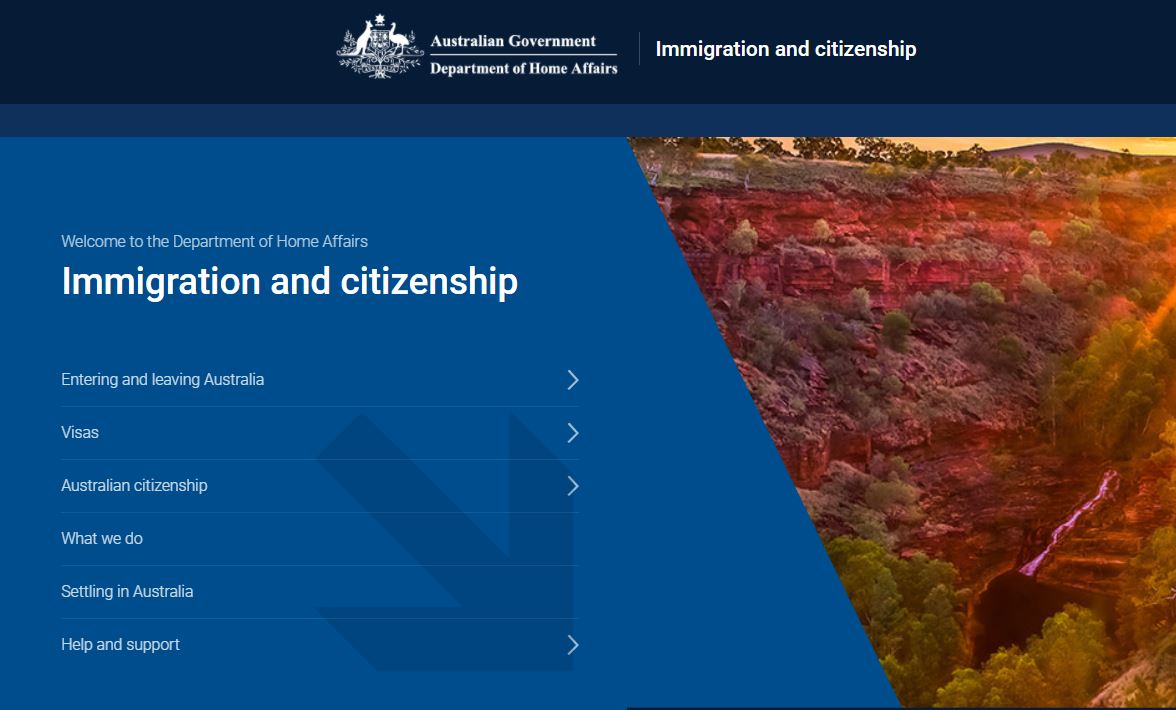
Source: immi.homeaffairs.gov.au — Student visa 500
Germany: 140 Days, Not 20 Hours
Germany counts differently: an international student may work 140 full days or 280 half days within the year, according to the officially published rules for international students. In common practice, students work under the Werkstudent (working student) status up to 20 hours a week during the semester while keeping their student insurance advantages, then intensify work during semester breaks.
For your German budget, note that the day-based cap gives you seasonal flexibility that hourly countries do not: work heavily during the breaks, ease off during exams. Our Germany funding and scholarships roundup collects the financing options.
France: 964 Hours a Year
France uses an annual allowance: an international student holding the student residence card may work up to 964 hours per year — approximately 60% of the annual legal working time, as published by the official French bodies receiving international students. The figure averages out near 20 hours a week spread evenly, with room to distribute differently across summer months.
One practical point: student wages in France are tied to the legal minimum wage, so estimating monthly income is straightforward — multiply your planned hours by the statutory hourly rate. If you are comparing France with its neighbors, our study in France guide breaks down costs and funding.
United States: 20 On-Campus Hours Only
The American model is the tightest: an F-1 student may work up to 20 hours per week on campus while school is in session, and full-time during the annual vacation. Any off-campus work requires prior authorization through defined channels: Curricular Practical Training (CPT) tied to your study program, or Optional Practical Training (OPT) after graduation.
The planning takeaway: do not build a US budget around guaranteed work income; treat on-campus work as a supplement, not a pillar. Full application and funding details live in our study in the USA guide.

Source: Photo by Wide Awake! on Wikimedia Commons (CC BY 4.0)
.jpg?ref=blogs.truescho.com)
What This Means for You: A Decision Plan Before Choosing a Country
- Calculate your available hours, then the expected income at each country's statutory hourly wage — not at the wage you hope for.
- Compare weekly caps with annual allowances: hourly systems (UK, Canada, US) demand consistency; day- and year-based systems (Germany, France) give seasonal flexibility.
- Check each country's vacation rule before assuming full-time summer work.
- Review family-member rules if you are traveling with dependents — Australia's cap, for example, explicitly covers accompanying family.
- Pin down the post-study route early: the UK Graduate route change (31 December 2026) is a live example of how these rules move.
How to Track Your Hours So You Never Overrun
Staying inside the official limit starts with measuring it, and the students who get into trouble are usually the ones who never knew their running balance. Here is a simple three-layer system:
- One fixed weekly log: a single note or spreadsheet row for every shift the moment it ends — date, employer, hours. Logging two weeks late loses half its accuracy.
- The right average for each system: Australia counts fortnights (you cannot work 40 hours one week and zero the next and call it balanced); Germany asks you to watch your spent days across the year; France tracks your cumulative total against the 964 hours. Each system has its own odometer.
- A quarterly reconciliation with payslips: the payslip is the official reference in any dispute, so compare your log against what was actually paid and correct gaps immediately. If an employer overbooks you — a longer shift than agreed, for example — document the communication in writing; an email showing you asked for the correction is your line of defense.
A fourth layer for the well-organized: some students manage work and study budgets together in one system like the one in our free student toolkit guide, linking available work hours to the exam calendar before each term starts — a ten-minute decision that saves a whole semester of pressure.
A Note on Taxes and Insurance
Student income in most of these countries is subject to tax and insurance deductions, and the treatment varies widely by volume and framework: Germany's Werkstudent status, for example, preserves your exemption from full social-insurance contributions below a certain hours threshold, while in Canada and the UK you can claim back part of the withheld tax at the end of the fiscal year if your income crosses the exempt threshold under each country's rules. The practical rule: ask your university's international office about the "tax framework for student work" in your first week of working, and build your budget on the net figure on the payslip — never the gross.
Common Mistakes That Threaten Your Status
- Exceeding the cap for one week "to compensate": systems track averages, and repeated breaches trigger review.
- Mixing up on- and off-campus work in the US: off-campus work without CPT authorization is a direct violation.
- Assuming every vacation means full-time work: verify against the official academic calendar; only scheduled program breaks count in Australia, for instance.
- Self-employment in the UK: explicitly prohibited on a Student visa, however small the gig.
- Never re-reading your study permit: rules move — Canada adjusted its cap in November 2024 — and tracking the current version is your responsibility.
Frequently Asked Questions
Can I work full-time during vacations?
In the UK, yes during official vacations; in Australia, during scheduled program breaks; in the US, during the annual vacation. Always check your own permit's wording, because details vary by program.
What happens if I exceed the allowed hours?
Consequences range from a warning and adjusted hours to visa cancellation in repeated cases, and a violation record can affect future visa applications. The safe rule: never approach the cap without documented hours.
Does the limit include paid internships?
Usually yes if paid — paid hours count toward the cap — while unpaid mandatory placements tied to your program receive special treatment in Australia and Germany. Ask your international student office in writing.
Can my spouse or dependents work?
In Australia, the 48-hour-per-fortnight rule covers family members of master's and doctoral students, as the official page states. Dependent rules vary widely between countries and study levels — check each case individually.
Which country allows the highest expected part-time income?
It depends on statutory hourly wages multiplied by your hours: Canada (24 hours) and Australia (an average of 24 hours weekly) permit more hours than the UK and US (20), while Australian and US hourly wages are typically higher. Run the numbers yourself with official figures before comparing.
Start Your Journey with Truescho
Combine the work plan with a funding plan: browse the open opportunities on Truescho for scholarships that finance your degree so work income is a boost rather than a lifeline, and continue with our guides to studying in Canada and studying in the UK.
Sources
- Australia — official Student visa 500 page: immi.homeaffairs.gov.au
- United Kingdom — Student visa work conditions: gov.uk/student-visa/work
- Canada — Working while studying (IRCC): canada.ca
- Germany — Working alongside studies: make-it-in-germany.com
- France — Working while studying: campusfrance.org
- United States — On-campus employment for F-1 students: studyinthestates.dhs.gov