
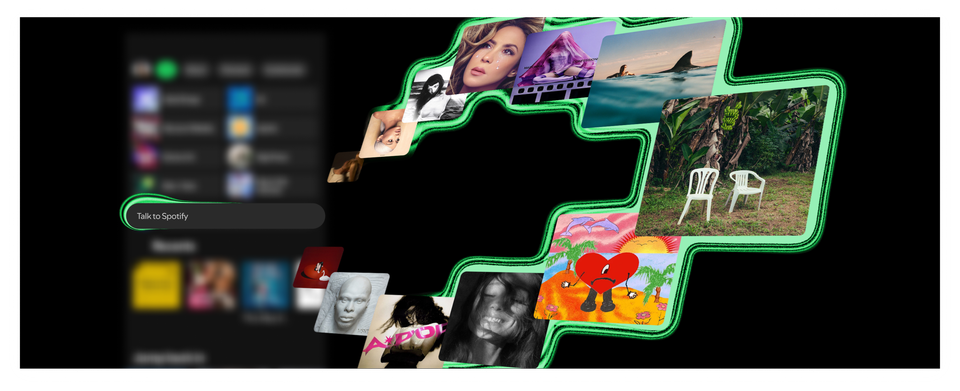
Spotify Launches Talk to Spotify: AI-Powered Conversational Music Discovery 2026
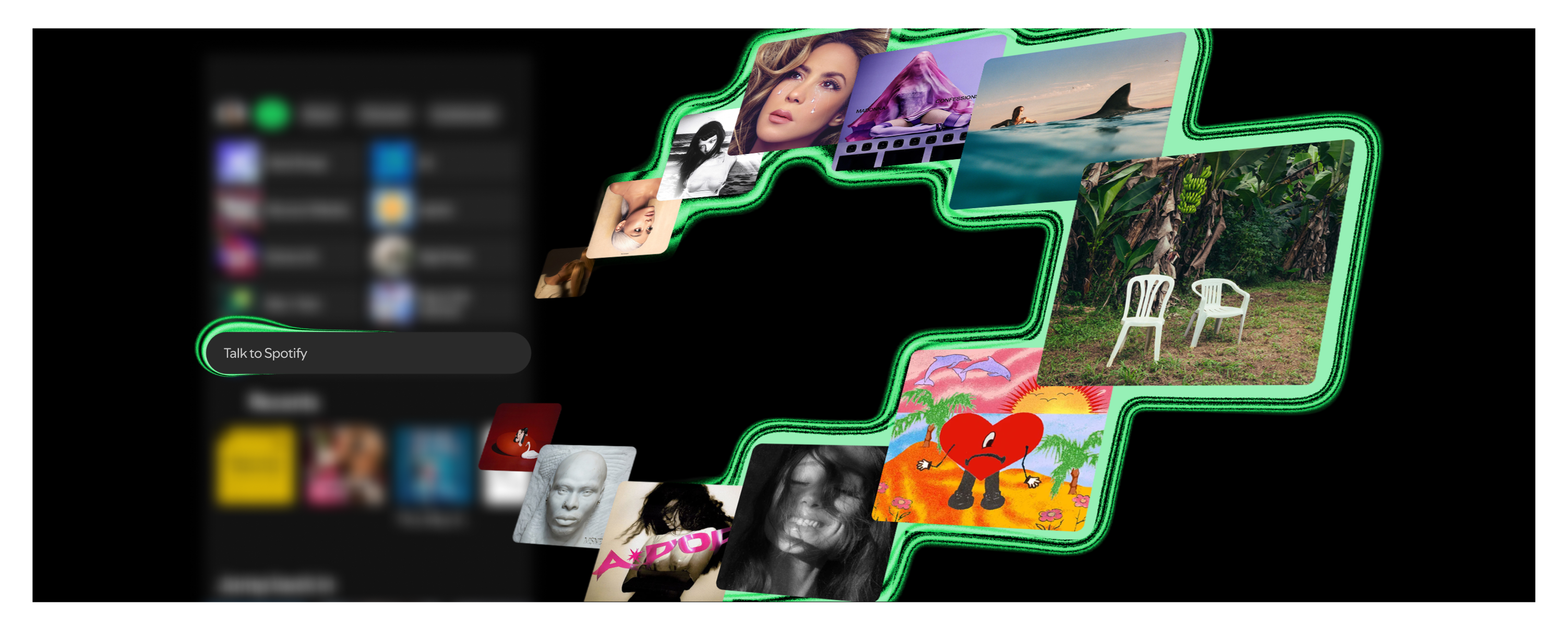
On July 14, 2026, Spotify announced something that fundamentally changes how we interact with music streaming. The feature is called "Talk to Spotify", and it brings AI-powered conversation to the world's largest audio platform. Instead of scrolling through menus or typing keyword searches, eligible Premium users can now simply talk to Spotify — by typing or speaking — to discover music, podcasts, audiobooks, and understand what they're listening to in ways never before possible.
This is not a minor update. It represents the biggest shift in Spotify's user interaction model since the launch of Discover Weekly. The era of conversational music discovery has officially arrived.
What Is Talk to Spotify?
Talk to Spotify is a new beta feature that integrates generative AI with Spotify's massive audio catalog and its industry-leading recommendation engine. As Spotify describes it in their official announcement: "Spotify has always been built around your taste. Now, we're making it easier to shape what you hear, understand what's playing, and explore your listening — just by asking."
The feature is currently available to eligible Premium subscribers and appears in two key areas of the mobile app: the Home screen and the Now Playing view. Users can interact with it through two input methods:
- Text input — type your request as if you were messaging a friend who happens to know everything about music.
- Voice input — speak naturally to Spotify, and the AI processes your request and responds accordingly.
What makes this different from a simple voice command system is the depth of understanding. You're not limited to "play" or "pause." You can have multi-turn conversations about what you want to hear, why you want to hear it, and what else might suit your mood.
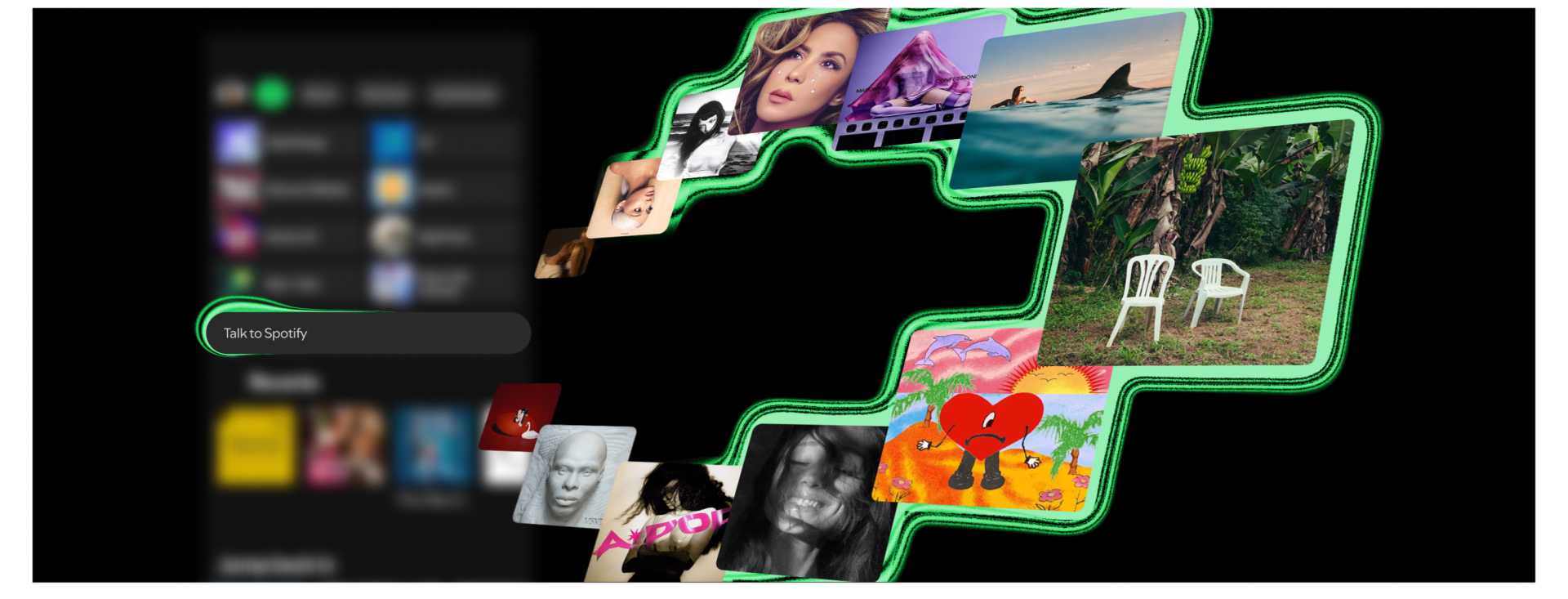
How Does Talk to Spotify Work?
The technology behind Talk to Spotify represents a convergence of two powerful capabilities that Spotify has been building for years.
Layer 1: Large Language Models (LLMs). Spotify employs advanced natural language processing to understand what you're asking for. When you say "play something bittersweet for a rainy Sunday," the AI parses the emotional context, the temporal reference, and the musical characteristics you're describing. It doesn't just match keywords — it understands intent.
Layer 2: Spotify's Recommendation Engine. This is where Spotify's advantage becomes decisive. Unlike general-purpose AI assistants that have shallow music knowledge, Spotify has over a decade of listening data from more than 600 million users. Its recommendation algorithms power Discover Weekly, Release Radar, Daily Mixes, and your personalized Wrapped experience. Talk to Spotify taps directly into this engine.
When you make a request, the system works in real-time: your conversational input is interpreted by the language model, which then queries Spotify's recommendation system with highly specific parameters. The result is delivered back to you as a playable action — a song, a playlist, a podcast episode, or an informational response about what's playing.
Key Features of Talk to Spotify
Natural Language Discovery
The traditional search box is dead. Instead of remembering exact song titles or artist names, you can describe what you want in your own words:
- "Play something that feels like a road trip through the desert"
- "I need focus music with no lyrics but more energy than lo-fi"
- "What did I listen to most last summer?"
The AI understands these layered, descriptive requests and serves up results that actually match your intent.
Real-Time Information About What's Playing
Ever wondered about the story behind a song? With Talk to Spotify, you can ask directly while listening: "Who produced this track?" or "What other songs sample this one?" or "Tell me about this artist's early work." The AI draws from Spotify's extensive metadata and the broader web to give you instant context.
Multi-Turn Conversations
Unlike single-command voice assistants, Talk to Spotify supports follow-up questions and refinements. You might start with "Play some jazz," then add "actually, something more modern," then "any of these from female artists?" — and the system tracks the conversation context to narrow down exactly what you want.
Cross-Format Discovery
Talk to Spotify isn't limited to music. You can ask it to find podcasts on any topic, recommend audiobooks based on your interests, or even suggest a mix of formats: "Give me a podcast episode about space exploration followed by some ambient music to chill to." The AI handles cross-format requests seamlessly.
Deep Personalization
Every conversation you have with Spotify teaches it more about your tastes. The system continuously refines its understanding of your preferences based on what you ask for, what you accept, what you skip, and how you refine your requests. Over time, Talk to Spotify becomes uniquely tuned to your musical personality.
How to Activate Talk to Spotify
Getting started with Talk to Spotify is straightforward:
- Confirm your Premium subscription — the feature is exclusive to Premium users. If you're on the Free tier, you'll need to upgrade.
- Update your Spotify app — make sure you're running the latest version of Spotify on iOS or Android.
- Look for the new conversation icon — eligible users will see a new icon in the Home screen and the Now Playing view that opens the Talk to Spotify interface.
- Start with a simple request — try something like "What should I listen to right now?" to get a feel for how the AI responds.
- Gradually explore more complex queries — as you get comfortable, experiment with mood-based requests, contextual questions, and multi-turn conversations.
Important note: Because this is a beta feature, Spotify is rolling it out gradually. Not all Premium users will see it immediately. If you don't have access yet, it should appear in an upcoming app update.
Availability and Global Rollout
Talk to Spotify launched on July 14, 2026, with the announcement posted on Spotify's official newsroom at 13:00 UTC. The initial rollout focuses on mobile platforms (iOS and Android), with the feature appearing in Home and Now Playing views.
Spotify has indicated that this is a phased beta, meaning the company will gather user feedback, refine the AI's responses, and expand availability over time. Historically, Spotify's major feature rollouts reach all eligible users within weeks to months of the initial launch.
For users in the Middle East, North Africa, and other non-English-speaking regions, the feature's initial language capabilities may be focused on English, with broader language support expected in subsequent updates. Given Spotify's massive user base in the MENA region and the rapid growth of Arabic-language podcasts and music on the platform, expanded language support is a priority.
Comparison With Other AI Assistants
| Feature | Talk to Spotify | Apple Music Voice | ChatGPT | Google Assistant |
|---|---|---|---|---|
| Music database depth | 100M+ songs | 100M+ songs | Limited | Via YouTube Music |
| Conversational depth | Multi-turn, context-aware | Single command | Multi-turn, general | Multi-turn, general |
| Music-specific knowledge | Deep metadata + listening history | Moderate | General knowledge | Moderate |
| Personalization based on taste | Extremely deep | Moderate | None | Moderate |
| Cross-format (music + podcasts + audiobooks) | Yes | Limited | N/A | Partial |
| Voice + text input | Yes | Voice only | Text (voice on mobile) | Both |
The key differentiator is specialization. Talk to Spotify isn't trying to be a general-purpose assistant. It's a dedicated music expert that lives inside the app you already use to listen, powered by the richest listening dataset on the planet.
What This Means for Music Lovers
The implications of Talk to Spotify extend far beyond convenience. This feature changes the fundamental relationship between listeners and music.
For casual listeners: Discovery becomes effortless. No more scrolling through endless playlists hoping to find something you like. Just describe what you're in the mood for, and Spotify delivers.
For music enthusiasts: Deep dives into artists, genres, and eras become conversational. You can explore connections between artists, understand musical lineages, and discover hidden gems through natural dialogue with an AI that actually understands music theory and history.
For podcast and audiobook fans: Cross-format discovery means you might ask Spotify to find a podcast about a topic you just heard mentioned in a song, or request an audiobook that matches the mood of your current favorite playlist.
For independent artists: Conversational discovery could democratize reach. When a user asks for "something that sounds like a mix of jazz and electronic music from independent artists," the AI can surface tracks that traditional algorithmic playlists might overlook. This levels the playing field for emerging musicians.
Limitations and Considerations
As with any beta feature, Talk to Spotify has limitations worth noting:
Beta Status: The feature is still in development. Expect occasional misunderstandings, imperfect recommendations, and rough edges. Spotify will refine the experience based on user feedback over the coming months.
Premium-Only Access: Free-tier users are excluded. This reinforces the value proposition of Premium subscription but limits the feature's reach significantly.
Language and Regional Availability: The initial launch may not support all languages equally. Users who primarily speak languages other than English might need to wait for updates to get the full experience in their native language.
Privacy Implications: Conversational AI generates new types of data — your questions, your voice patterns, your expressed preferences. Spotify has stated its commitment to privacy standards, but users should review the updated privacy terms and understand what data is collected and how it's used.
AI Accuracy: No AI is perfect. Musical recommendations are inherently subjective, and what the AI considers a great match might not always align with your taste. The system improves with use, but initial sessions may require some patience.
Data and Battery Usage: Real-time AI processing requires internet connectivity and may consume more data than traditional app usage. Voice input, in particular, involves streaming audio to Spotify's servers for processing.
Frequently Asked Questions
Is Talk to Spotify available for free users?
No. Talk to Spotify is currently a Premium-exclusive feature. Free-tier Spotify users do not have access to the conversational AI interface. You need an active Premium subscription to use it.
Can I use Talk to Spotify in languages other than English?
At launch, the feature's primary language support is English. Spotify typically expands language capabilities in subsequent updates. Given the platform's global user base, additional language support — including Arabic, Spanish, Japanese, and others — is expected to roll out progressively.
How is Talk to Spotify different from Spotify Voice?
Previous voice features on Spotify were limited to basic commands like "play," "pause," "skip," or "play [artist name]." Talk to Spotify is a full conversational AI that understands complex, multi-layered requests, supports follow-up questions, provides information about what's playing, and can create custom playlists based on your described preferences.
Does Talk to Spotify work on desktop?
The initial launch focuses on mobile (iOS and Android), where the feature appears in the Home screen and Now Playing view. Desktop and other platform support has not been announced yet but may come in future updates.
Is my conversation data private?
Spotify processes conversational queries through its servers to generate responses. The company states it adheres to its privacy policy and data protection standards. Users should review Spotify's privacy policy for details on how conversational data is stored, used, and protected.
Conclusion
Spotify's launch of Talk to Spotify on July 14, 2026, marks a turning point in how we discover and interact with audio content. By combining the conversational power of modern AI with its unparalleled music recommendation engine, Spotify has created something that no general-purpose assistant can match: a deeply knowledgeable, highly personalized music companion that lives inside the app where you already spend your listening hours.
The beta label means the feature will continue to evolve. But the direction is clear. The future of music discovery isn't scrolling through menus or typing keywords — it's having a conversation with an AI that understands what you love and helps you find more of it.
For the hundreds of millions of Spotify users worldwide, and particularly for music lovers in emerging markets where streaming is still growing rapidly, Talk to Spotify isn't just a new feature. It's a glimpse into the future of how we'll all interact with audio. And that future sounds remarkably good.