
Setting Up a Business in Qatar for Foreign Investors 2026
When David Chen, a Singapore-based logistics entrepreneur, decided to expand into the Middle East in early 2025, he narrowed his choices to Dubai and Doha. Dubai was the obvious pick — everyone goes there. But after running the numbers, David chose Qatar. His reasoning: lower setup costs, 100% foreign ownership in his sector since the 2019 investment law, a corporate tax rate of just 10%, and a domestic market turbocharged by post-World Cup infrastructure spending. His Qatar-registered LLC was operational in 18 days, with a total setup cost under $8,000. Twelve months later, his company handles freight forwarding contracts worth $2.3 million annually.
💬 Disclosure: Some links in this article are affiliate links. We may earn a small commission when you complete a purchase at no extra cost to you. This helps us keep our content free, and it does not affect the integrity of our recommendations.
If you are considering Qatar as a business base, this guide walks you through every step, every fee, and every decision point — with 2026 figures, not outdated estimates from 2022 blog posts.
Can a Foreigner Own 100% of a Company in Qatar?
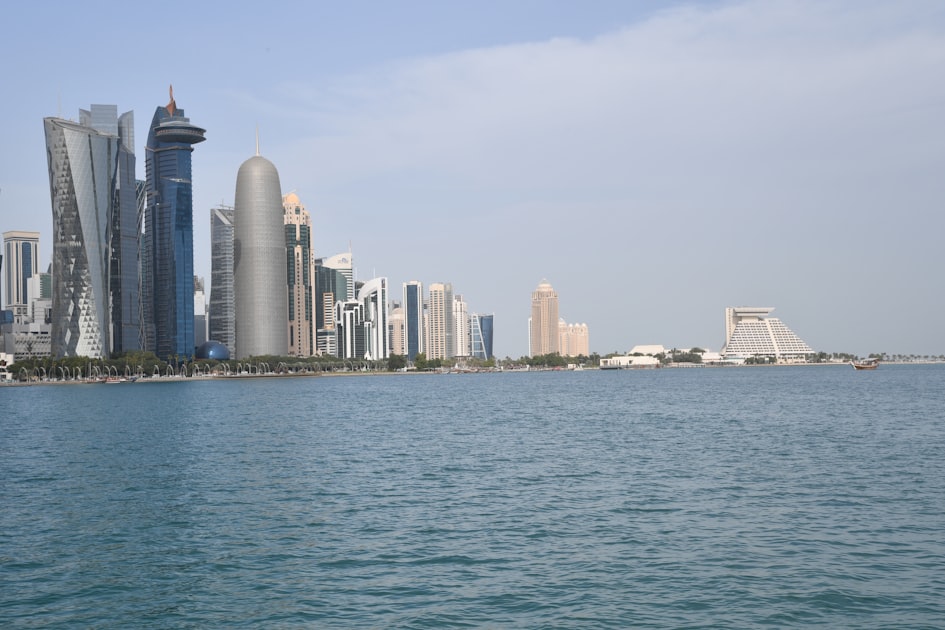
Source: Unsplash
Yes. Since Law No. 1 of 2019 on the Regulation of Non-Qatari Capital Investment, foreign investors can own 100% of businesses in nearly all sectors — without a local sponsor or Qatari partner. This was the single biggest catalyst for foreign direct investment in Qatar's history. Before 2019, most mainland companies required a local sponsor holding at least 51%.
There are still a few sectors where 100% foreign ownership is restricted or requires special approval (banking, insurance, commercial agency, and certain defense-related activities). For everything else — consulting, trading, technology, manufacturing, logistics, healthcare, education, hospitality — you can hold the entire company yourself.
Step 1: Choose Your Business Structure
The legal form you select affects everything: capital requirements, liability, taxation, and your ability to sponsor employee visas.
Limited Liability Company (LLC / WLL) — The most popular choice for foreign investors. Requires a minimum of one shareholder and one director. No minimum capital is mandated by law for most activities, but in practice, the Ministry of Commerce and Industry (MOCI) expects to see QAR 50,000–200,000 in proposed capital depending on your activity. Personal liability is limited to your share capital.
Single Person Company (SPC) — A variant of the LLC for solo founders. One person owns 100% of shares. Maximum capital is capped at QAR 2 million. Useful if you are the only investor and want corporate liability protection without partners.
Branch Office — If your foreign company already exists and you want a Qatar presence without creating a new legal entity, you can register a branch. This requires a contract with a Qatari government entity or a large local company, or approval from the investment licensing authority. Branches are taxed at 10% on Qatar-sourced income.
Free Zone Company — Companies registered in the Qatar Financial Centre (QFC) or Qatar Science and Technology Park (QSTP) operate under their own legal frameworks. These are not technically LLCs under the Commercial Companies Law — they follow specialized regulations. We compare the zones in detail below.
Step 2: Reserve Your Trade Name
MOCI's online portal allows you to reserve a commercial registration name. You can submit up to four preferred names ranked by priority. Names must not violate public morals, conflict with existing trademarks, or include country/region names without permission.
Cost: QAR 200–500 (approximately $55–$137)
Time: 1–2 business days
Where: MOCI Online Services
Step 3: Obtain Initial Approval and Investment License
For foreign investors, you need an investment license from MOCI under the Foreign Capital Investment Law. This is the document that legally permits a non-Qatari to own and operate a business.
You will need:
- Passport copy of the shareholder(s) and manager
- Proposed business activity description
- Company name reservation certificate
- Bank reference letter (sometimes requested)
- Power of attorney if applying through a representative
Cost: QAR 2,500 (approximately $687) for the investment license
Time: 3–7 business days
Step 4: Draft and Notarize the Articles of Association
The Articles of Association (AoA) is your company's constitutional document. It must be drafted in Arabic and notarized by a Qatari notary public. Most foreign investors hire a local law firm or business setup consultancy for this step — errors here cause cascading delays.
The AoA specifies: share capital, ownership percentages, management structure, profit distribution, and dissolution terms. If you are setting up an SPC, the document is simpler.
Cost: QAR 3,000–6,000 ($823–$1,647) including legal drafting and notary fees
Time: 3–5 business days
Step 5: Open a Bank Account and Deposit Capital
Once the AoA is notarized, you can open a corporate bank account at a Qatari bank (Qatar National Bank, Commercial Bank, Doha Bank, and Mashreq are the most common choices). You will deposit your share capital into this account and obtain a capital deposit certificate. For multi-currency business banking beyond your Qatari account, Airwallex offers business accounts with lower international transfer fees than traditional banks.
Important: The bank will conduct its own KYC/AML checks. If you are from a FATF-listed jurisdiction, expect additional documentation requests and a longer timeline.
Minimum deposit: Varies by activity; realistically QAR 50,000–200,000 ($13,700–$54,800)
Time: 5–10 business days
Step 6: Obtain the Commercial Registration (CR)
The Commercial Registration is the official record of your company in Qatar's commercial registry. This is your company's birth certificate.
With your notarized AoA, investment license, trade name reservation, and bank capital certificate, you submit the CR application through MOCI's portal.
Cost: QAR 1,000–2,000 ($274–$548)
Time: 2–5 business days
Step 7: Get Trade Licenses and Municipality Permits
After receiving your CR, you need a trade license from the Ministry of Municipality. The specific licenses depend on your activity:
- General trading license
- Industrial license (for manufacturing)
- Professional services license
- Healthcare facility permit (from the Ministry of Public Health)
- Food safety permit (from the Ministry of Public Health)
Cost: QAR 1,000–5,000 ($274–$1,370) depending on activity
Time: 5–15 business days
Step 8: Register for Tax and Social Security
If your annual taxable income exceeds QAR 100,000 ($27,400), you must register for corporate income tax at the General Tax Authority (GTA). The rate is 10% on taxable profits. Qatar has no personal income tax, no VAT (as of 2026, though introduction is being discussed at the GCC level), and no withholding tax on dividends for most investors.
If you have Qatari or GCC employees, you must register with the General Retirement and Social Insurance Authority. Non-GCC employees are covered under the labor law's end-of-service gratuity system instead.
Qatar Mainland vs. Free Zones: Which Should You Choose?
This is the decision that will shape your entire business operation in Qatar. Three main options exist:
Qatar Mainland (MOCI-Registered)
Best for companies that need to trade within the Qatari domestic market, bid on government tenders, or operate physical retail locations. Mainland companies can conduct business anywhere in Qatar without restriction.
Advantages: Full domestic market access, government tender eligibility, no restrictions on business activities, straightforward visa sponsorship for employees.
Considerations: Subject to the Commercial Companies Law, corporate tax of 10%, and standard labor law requirements.
Qatar Financial Centre (QFC)
The QFC operates under its own legal, regulatory, and tax framework — entirely separate from the Qatar mainland. It was designed for financial services, professional services, and corporate headquarters.
Advantages: 10% corporate tax on profits (same as mainland, but calculated differently), no restrictions on foreign ownership, English common law legal framework, ability to operate in both QFC and domestic markets (with dual licensing), exemption from certain customs duties.
Considerations: Limited to eligible activities (finance, consulting, legal, IT services, holding companies). Trading companies and retail are generally not eligible. Annual regulatory fees apply.
QFC Fee Structure (2026):
| Fee Type | Amount (USD) |
|----------|-------------|
| Application fee | $5,000 |
| Annual authorization fee | $5,000–$15,000 (by activity) |
| Supervisory fee | 0.25% of revenue (capped) |
Qatar Science and Technology Park (QSTP)
QSTP is a free zone within Education City focused on technology, research, and innovation companies. Operated under Qatar Foundation.
Advantages: 100% foreign ownership, tax holidays available, access to research facilities at Qatar Foundation universities, mentoring and incubation support, customs duty exemptions on equipment.
Considerations: Must demonstrate a genuine technology or research component. Pure trading or service companies without an R&D element are unlikely to qualify.
Quick Comparison Table
| Feature | Mainland (MOCI) | QFC | QSTP |
|---|---|---|---|
| Foreign ownership | 100% (most sectors) | 100% | 100% |
| Legal framework | Qatar Commercial Companies Law | English common law | Qatar Foundation regulations |
| Corporate tax | 10% above QAR 100k | 10% | Tax holidays available |
| Domestic trading | Yes | Limited (dual license needed) | No |
| Setup cost | $5,000–$10,000 | $10,000–$20,000 | $3,000–$8,000 |
| Best for | Trading, retail, services, construction | Finance, professional services, HQs | Tech, R&D, innovation |
What Does It Actually Cost to Set Up a Business in Qatar in 2026?
Based on real 2025–2026 registrations, here is a granular cost breakdown for a standard foreign-owned LLC on the mainland:
| Expense Item | Cost (QAR) | Cost (USD) |
|---|---|---|
| Trade name reservation | 200–500 | $55–$137 |
| Investment license | 2,500 | $687 |
| Articles of Association (legal + notary) | 3,000–6,000 | $823–$1,647 |
| Commercial Registration | 1,000–2,000 | $274–$548 |
| Municipality trade license | 1,000–5,000 | $274–$1,370 |
| Corporate bank account opening | 0–1,000 | $0–$274 |
| Government fee for company establishment | 2,500–5,000 | $687–$1,370 |
| Translation and attestation of documents | 1,000–2,000 | $274–$548 |
| Business setup consultant (optional but recommended) | 5,000–15,000 | $1,370–$4,110 |
| Total (DIY) | 11,200–22,500 | $3,074–$6,171 |
| Total (with consultant) | 16,200–37,500 | $4,444–$10,288 |
These figures reflect mainland LLC registrations. QFC setups cost roughly 60–80% more due to application and annual regulatory fees.
How Long Does the Full Process Take?
A straightforward LLC registration, assuming all documents are prepared and there are no complications:
| Step | Duration |
|---|---|
| Name reservation | 1–2 days |
| Investment license | 3–7 days |
| AoA drafting and notarization | 3–5 days |
| Bank account and capital deposit | 5–10 days |
| Commercial Registration | 2–5 days |
| Trade license and permits | 5–15 days |
| Tax registration | 1–3 days |
| Total (parallel processing) | 15–25 days |
| Total (sequential) | 20–47 days |
Experienced setup consultants can overlap several steps, bringing the total closer to the 15-day mark. Doing it yourself without Arabic-language support typically pushes the timeline to 4–6 weeks.
Common Mistakes That Cost Foreign Investors Time and Money
1. Choosing the wrong business activity code. Qatar's activity classification system is granular. Selecting "general trading" when you actually need "specialized trading" can block your ability to import specific product categories. Review the activity list carefully and consult MOCI if uncertain.
2. Underestimating bank compliance. Qatari banks are thorough with AML checks, especially for investors from high-risk jurisdictions. Prepare certified bank statements from the last 12 months, source-of-funds documentation, and professional references — before you start the incorporation process.
3. Skipping Arabic translations. Every government submission requires Arabic. Many documents from abroad (incorporation certificates, board resolutions, bank letters) must be attested by the Qatar Chamber and the Ministry of Foreign Affairs. Budget 10–15 days for this.
4. Not understanding the labor law obligations. Qatar's labor law was significantly reformed between 2020 and 2024. The kafala (sponsorship) system has been largely dismantled — workers can change jobs without employer permission. However, you still must provide end-of-service gratuity, health insurance, and safe housing (for blue-collar workers) or a housing allowance (for white-collar staff).
5. Ignoring the tax treaty network. Qatar has signed double taxation agreements with over 85 countries, including the United States, United Kingdom, Singapore, France, Germany, India, and China. These treaties can significantly reduce your tax burden on cross-border transactions. If your home country has a DTA with Qatar, structure your investment to take advantage of it.
Tax Obligations for Qatar Businesses
Qatar's tax regime is one of the most favorable in the world for foreign investors:
- Corporate income tax: 10% on taxable profits exceeding QAR 100,000 annually
- Personal income tax: None
- VAT: Not yet introduced (expected to align with GCC framework at 5% when implemented)
- Withholding tax on dividends: 0% (most cases)
- Withholding tax on royalties: 5% (reduced by many tax treaties)
- Customs duties: Generally 5%, with exemptions for free zone companies
- Social insurance: 5% of gross salary for Qatari/GCC employees only
If your business operates in the QFC, tax is calculated on a different basis (closer to international accounting standards) but the headline rate remains 10%.
What Is KDIPA and Can It Benefit You?
The Qatar Investment Promotion Law (administered by KDIPA — the Investment Promotion Department) offers additional incentives for qualifying foreign investments in priority sectors:
- Up to 100% exemption from customs duties on imported equipment and machinery
- Exemption from corporate income tax for up to 10 years (in specific zones/sectors)
- Subsidized industrial land allocation
- Access to one-window government services
Priority sectors include manufacturing, agriculture, healthcare, education, IT and digital services, tourism, logistics, and mining. If your business falls into one of these categories, applying for KDIPA incentives should be part of your setup strategy from day one.
If you are navigating the legal requirements, sector-specific regulations, or KDIPA application process, working with professionals who understand Qatar's regulatory landscape makes a measurable difference. Truescho (truescho.com) connects investors with vetted business consultants who handle everything from activity selection to full incorporation — explore consultant services here.
Frequently Asked Questions
Do I need a Qatari partner to start a business?
No. Since 2019, foreign investors can own 100% of a company in nearly all sectors. The local sponsor requirement has been eliminated for most activities. Only a handful of sectors (commercial agency, banking, insurance) still have ownership restrictions.
Can I get a residency visa through my business?
Yes. As an owner or partner of a registered Qatari company, you can sponsor your own residency permit. The number of visas you can sponsor for employees depends on your office size, business activity, and CR scope.
Is Qatar introducing VAT in 2026?
Qatar has not yet implemented VAT. The GCC framework agreement calls for 5% VAT, and Qatar has been preparing its infrastructure, but no official implementation date has been announced as of mid-2026. Businesses should prepare for it within the next 12–24 months.
What is the minimum capital for a Qatar LLC?
There is no statutory minimum capital for most LLC activities under the current law. However, MOCI reviews proposed capital against the business plan, and banks require a deposit to open the corporate account. In practice, QAR 50,000–200,000 ($13,700–$54,800) is the realistic range.
Can I run my Qatar business remotely?
You must appoint a manager who resides in Qatar. This can be yourself (with a residency permit) or a designated individual with a QAR 10,000 minimum monthly salary threshold for visa eligibility. Many foreign investors appoint a local general manager while directing strategy from abroad.
Your Qatar Business Setup Checklist
Before you begin the incorporation process, make sure you have:
- [ ] Valid passport (minimum 6 months validity) for all shareholders and the appointed manager
- [ ] Clear business activity description (check MOCI's approved activities list)
- [ ] Proposed company name (with 2–3 alternatives)
- [ ] Bank reference letter from your home country
- [ ] Proof of address (utility bill or lease agreement)
- [ ] Educational qualifications for the company manager (attested and apostilled)
- [ ] Business plan or activity description in Arabic (or ready for translation)
- [ ] Budget of $5,000–$10,000 for government fees and professional services
- [ ] Timeline expectation of 3–6 weeks from start to finish
- [ ] Decision on mainland vs. QFC vs. QSTP
Qatar has positioned itself as one of the most accessible business destinations in the Gulf — the doors are open, the taxes are low, and the regulatory environment has been steadily modernized. Whether you are entering logistics, tech, professional services, or trading, the pathway is clear. The investors who succeed are the ones who prepare their documents, choose the right legal structure, and partner with people who understand the system. For those looking to navigate this process with expert guidance, Truescho's consultant network can help you move from plan to registered company — efficiently and correctly the first time.
Sources:
- Qatar Ministry of Commerce and Industry
- Qatar Financial Centre Authority
- Qatar General Tax Authority
- Invest Qatar
- Qatar Science and Technology Park