
How to Send Money to Syria in 2026: Legal Channels, Real Costs, and What the Caesar Repeal Changed
You are in Berlin, or Stockholm, or Toronto. Your family in Homs needs help with winter costs, or you are settling an obligation, or supporting a relative's medical bills. The question is the same one diaspora families have asked for a decade: what is the best way to actually get money into Syria — and after everything that changed in Washington between 2025 and 2026, is it finally easier?
The short answer: the legal fog has lifted dramatically, but the corridor itself is still rebuilding. New channels are switching on, old channels are re-validating their Syria services month by month, and costs still vary more than they should. This guide by the Truescho editorial team walks through what changed in the law, which channels exist right now, what they realistically cost, and how to avoid the classic mistakes — with every fact dated and sourced, because in this corridor a six-month-old claim is already stale.
Source: SANA
What actually changed in Washington — three dates that matter
If you sent money to Syria before 2025, you did it through a maze: broad US sanctions, the Caesar Act's deterrent effect on banks, and a terror designation that made most institutions refuse anything with "Syria" in the address. Three changes dismantled that maze, step by step:
1 July 2025 — comprehensive sanctions lifted. An executive order signed on 30 June 2025 took effect the next day, removing most US sanctions on Syria. Crowell & Moring's sanctions practice summarized it plainly in July 2025: "U.S. Lifts Most Sanctions on Syria."
18 December 2025 — the Caesar Act repealed. The FY2026 National Defense Authorization Act (S.1071) included a permanent repeal of the Caesar Syria Civilian Protection Act. It passed the House on 11 December and the Senate on 17 December 2025, and was signed into law on 18 December 2025 — confirmed by the White House's own signing record, C-SPAN, Reuters, and PBS, which described the repeal as permanent.
24 August 2026 — Syria off the state sponsors of terrorism list. After the mandatory 45-day congressional notification, Secretary of State Marco Rubio completed Syria's removal from the SST list — a designation that had stood for roughly 47 years, since December 1979. The Treasury delisted the governing authorities the same day, per reporting by Al Jazeera, Al Arabiya, and VOA.
For someone sending money, the cumulative effect is this: the legal architecture that made banks worldwide treat Syria transfers as radioactive is gone. What remains is the slower work of banks and providers updating their own policies, one compliance department at a time.
One point of discipline: we are not lawyers, and nothing here is legal advice. For the authoritative text of what US rules permit, the Treasury's Office of Foreign Assets Control publishes its Syria sanctions FAQs at ofac.treasury.gov/faqs/topic/1571 — that page is the primary source; our job is only to summarize what changed and when.
The channels people actually use in 2026
Here is the honest map of the corridor as of September 2026. Availability claims in this market age in weeks, so treat every row as "status at time of writing — verify today."
| Channel | How it works | Typical cost range | Speed | Status (Sept 2026) |
|---|---|---|---|---|
| Exchange-office transfers | Syrian exchange companies with partner offices abroad; sender deposits cash or bank transfer, recipient collects new SYP | ~1–3% plus FX margin | Hours to 1 day | Long-established backbone of the corridor |
| Specialist online remittance services | App or web transfer to cash pickup or wallet in Syria | ~2–5% plus FX margin | Minutes to hours | Re-expanding through 2026; coverage varies by sender country |
| Western Union / MoneyGram | Global networks re-validating Syria service | Not reliably published | — | Unconfirmed for direct service — check the provider's official page today |
| Bank SWIFT transfer | International wire to a Syrian bank account | ~$25–50 fixed plus correspondent fees | 2–7 days | Reopening as correspondent relationships rebuild |
| Hand-carried cash | You exchange USD/EUR on arrival | 0% transfer cost; FX spread on exchange | Instant | Still the benchmark for reliability |
One more dimension the table compresses: speed versus certainty trade differently by use case. For a recurring family support transfer, a slightly slower channel with a clean payout record beats a faster one with opaque margins — the ten minutes saved are worthless next to a week of refund emails. For a genuine emergency (medical deposit, travel deadline), the calculus flips: the fastest licensed channel wins even at a visibly higher fee, which is exactly the scenario where having tested a second provider in advance pays for itself. Most experienced senders in this corridor end up with one primary channel and one tested backup, chosen precisely so they never have to make this trade under pressure.
Three honest notes on that table:
- Western Union and MoneyGram. We could not independently confirm stable direct service to Syria at the time of writing: the official pages we tried were unreachable during research, and community reports during 2026 flip-flopped repeatedly on MoneyGram specifically. Rather than repeat a claim we cannot stand behind, we say it plainly: the status is unconfirmed. Before planning around either network, check their official Syria pages on the day you send.
- Cost ranges are industry-typical, not quotes. The percentages above reflect how these channel types price transfers across comparable corridors. The only number that matters is the one your provider shows you at the moment of sending — in new SYP — before you confirm.
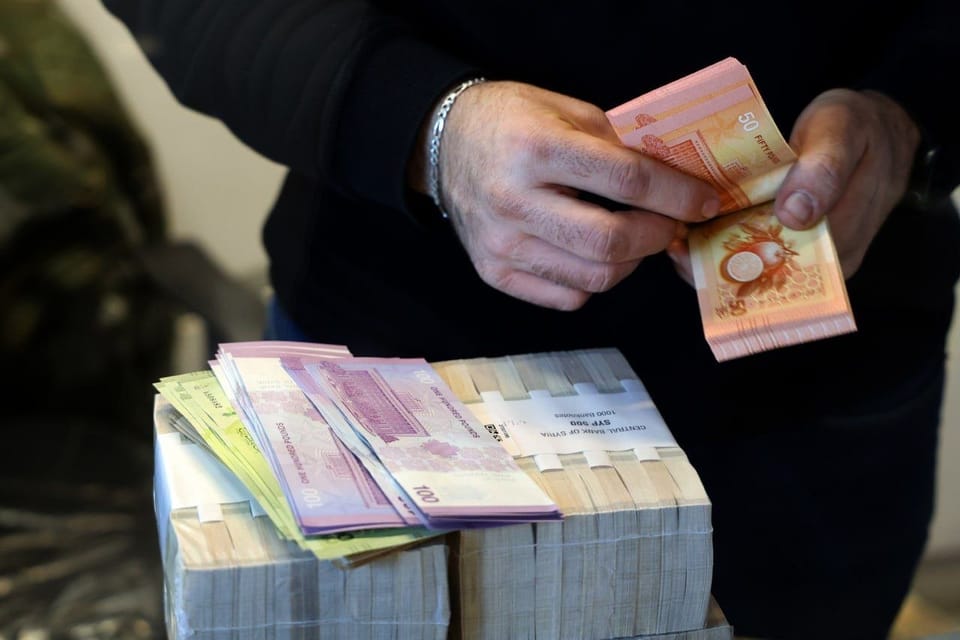
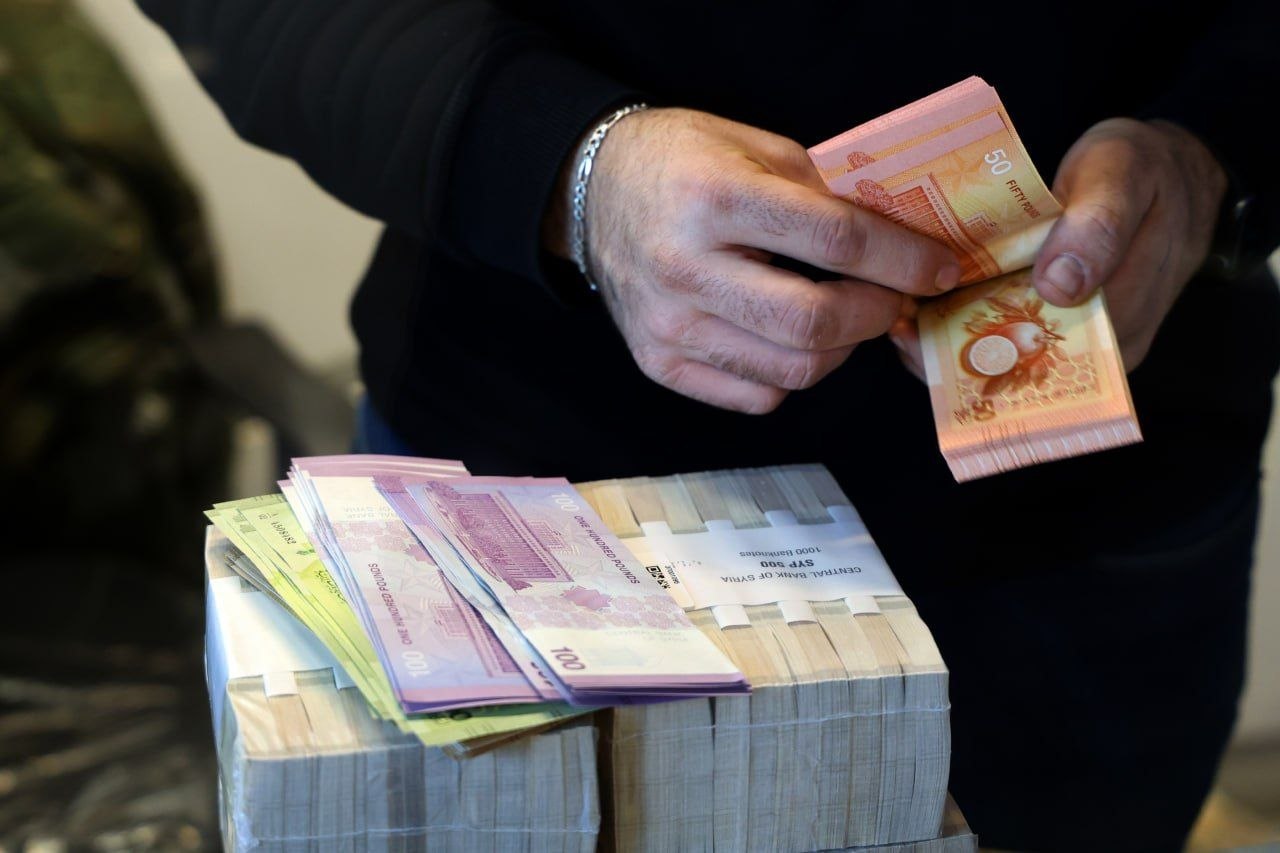
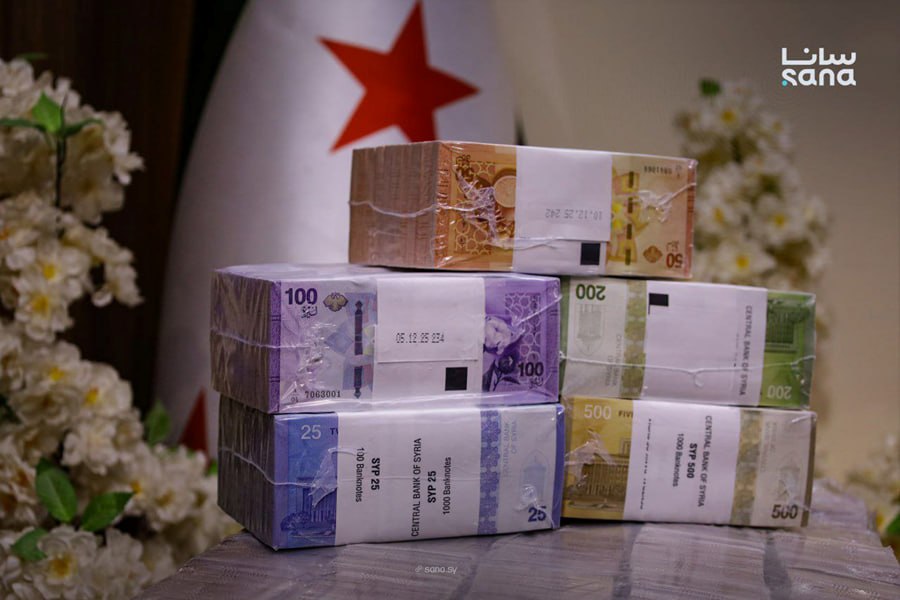
- The currency changed under everyone's feet. Since 1 January 2026, recipients are paid in the new pound: 100 old SYP = 1 new SYP, and the old notes stopped being legal tender on 1 April 2026. If your provider quotes the payout in old-style figures, divide by 100. We explain the whole redenomination — and why so many sites still show numbers 100x too big — in Old vs New Syrian Pound: What the 100:1 Redenomination Means.
What the money looks like on arrival
Ask two questions before confirming any transfer:
- What is the payout figure, in new SYP? At the time of writing, the parallel-market dollar rate was around 131.50 buy / 132.00 sell per dollar in new SYP (observed 1 September 2026 on sypnow.com/en — equivalent to 13,150/13,200 in old SYP). If a provider's implied rate is far off the day's market number, the difference is your real cost, whatever the advertised fee says. And if you are weighing transfers against simply carrying cash on your next visit, our pillar guide Money in Syria in 2026 covers the on-the-ground half of that decision.
- Cash pickup or account/wallet? Pickup points are dense in Syrian cities — the exchange sector counted over a thousand licensed outlets heading into the 2026 currency transition, per SANA. Account and wallet payouts depend on the recipient's arrangements and are improving as banks reconnect.
A worked example, using the observed rate purely as illustration: 100 USD ≈ 13,200 new SYP (≈ 1,320,000 old SYP). If a service advertises "zero fees" but pays out 12,500 new SYP for your 100 dollars, the hidden margin cost you the difference — about 5.3% — which is more than many explicit fees. Always compare the payout, not the headline fee.
If you track this corridor regularly — many diaspora families send monthly — our team's tool SYPNow shows the daily market buy/sell in new SYP and converts between old and new pounds, which makes checking a quoted payout a ten-second job. SYPNow is built by the same team behind this site, so we use it ourselves.
Source: SANA
Choosing a channel: five questions that beat any advert
- What is the exact payout in new SYP, after everything? The only number that matters. If the provider quotes you dollars, convert against the day's market rate — our team's daily dollar buy/sell tracker for Syria shows the reference numbers the payout should sit near.
- Where does the recipient collect, and until when? A pickup point near your family beats a slightly better rate across town.
- Is the provider licensed on both ends? In the sender country, check the regulator's public register; in Syria, licensed exchange companies are the safe side of the market.
- What happens if it fails? Ask about the refund path before sending, not after. Established exchange houses and licensed specialists have clear procedures; informal brokers have excuses.
- Have you tested it small? On any channel you have not used since the 2026 changes, send a small amount first. In a corridor that is being rebuilt in real time, a 20-dollar test is the cheapest insurance available.
Mistakes and red flags specific to this corridor
- The rate that sounds too good. Anyone beating the market mid-rate by several percent is pricing in a risk they are not telling you about. Compare the quoted payout against the day's market buy/sell before believing generosity.
- Gift-card and crypto-to-strangers schemes. Social-marketplace "agents" who take your bank transfer and promise payout in Syria, unlicensed and unaccountable, are the corridor's oldest scam shape wearing new clothes.
- Old-pound quoting. A payout quoted as "1,320,000" needs the "old SYP" label; the same money is 13,200 new SYP. Reputable providers label it; sloppy ones do not.
- Stale advice. A forum post from early 2026 about what works is a historical document. In this corridor, verify current status on the provider's own official page on the day you send.
Reporting and taxes — the part that is yours to check
Some sender countries require declaring larger cash movements or gift amounts above thresholds to tax authorities; Germany, Sweden, Canada and others each have their own rules. That is a matter between you and your local regulations — it does not affect the legality of the transfer itself under the changed US framework, but ignoring your home country's declaration rules can create problems unrelated to Syria. Check your local requirements; we do not give legal or tax advice.
Costs, worked through three examples
The table above gives ranges; here is how they translate into decisions. Each example uses the observed 1 September 2026 market reference (~131.50/132.00 new SYP per dollar, sypnow.com/en) purely for illustration — your day's rate will differ.
Example 1 — 200 EUR to Damascus, weekly support. An exchange-office transfer at ~2% total cost plus a fair FX margin should land the equivalent of roughly 195–198 EUR in value. If a quoted payout implies you sent 185 EUR's worth, you are paying a hidden ~7% — worth ten minutes of shopping around, every week, forever.
Example 2 — 1,000 USD one-off, medical bill. A SWIFT transfer's fixed fee ($25–50) is proportionally trivial at this size (~2.5–5%), and the recipient's bank credits new SYP directly — but only if their bank's correspondent chain is live again. Confirm the chain end-to-end before choosing SWIFT for anything urgent; two to seven days is normal, and a stuck mid-chain transfer is the corridor's classic slow-motion problem. If your family does not yet have a Syrian bank account ready to receive, the setup process is its own project — see How to Open a Bank Account in Syria in 2026.
Example 3 — 50 EUR, first test on a new app. Send it. A 1.50 EUR fee is irrelevant; the questions it answers — does the payout arrive, in how many minutes, in new SYP, at a labeled rate, with a receipt — are worth far more than the fee on your first real transfer later. In a corridor that was rebuilt this year, testing small is not paranoia; it is procedure.
If a transfer goes wrong
Even on good channels, failures happen — pickup lapsed, name mismatch, system outage mid-chain. The recovery sequence that works: keep the reference number and receipt; open the dispute with the provider first (licensed exchange houses and apps have defined refund paths); and only if the provider stalls, escalate to the payments regulator in your sender country — most publish complaint channels that providers must answer. What rarely works: arguing with the pickup point, which usually cannot fix a sender-side problem. And the step that prevents most failures: the recipient's name must match their ID exactly as the provider requires, and someone must collect within the stated window.
Receiving side: what your family should have ready
The smoother half of any transfer is prepared in advance. The recipient needs government ID matching the transfer name exactly, the reference code, the pickup location's hours — and one 2026-specific habit: confirming the payout figure in new SYP before leaving the counter, and refusing any attempt to hand over old-series notes, which have not been money since 1 April 2026. If the payout lands in a family member's digital wallet instead of cash — an increasingly common route as services like Paymera grow — the same new-SYP discipline applies; we profiled that landscape in Paymera in Syria in 2026.
Frequently Asked Questions
Is it legal to send money to Syria in 2026?
The sweeping US sanctions that criminalized most Syria transactions were lifted effective 1 July 2025, the Caesar Act was repealed on 18 December 2025, and Syria was removed from the state sponsors of terrorism list on 24 August 2026. For the authoritative current text of US rules, read OFAC's Syria FAQs at ofac.treasury.gov/faqs/topic/1571. This is a summary of published rules, not legal advice.
Did the Caesar Act repeal change personal transfers?
Practically, yes. The Caesar Act's sanctions exposure was the main reason many banks and transfer services refused Syria-bound transactions even when individuals themselves were not sanctioned targets. Its permanent repeal in the FY2026 NDAA (signed 18 December 2025) removed that deterrent layer, which is why the corridor has been reopening through 2026.
Does Western Union work in Syria now?
We could not independently confirm stable direct Western Union service to Syria at the time of writing, and the same applies to MoneyGram — whose Syria status reportedly changed more than once during 2026. Check the provider's official page on the day you plan to send; if it is not clearly enabled there, treat any third-party claim as unconfirmed.
What is the cheapest way to send money to Syria?
There is no single answer, because the real cost is the gap between the mid-market rate and your payout. As a pattern, exchange-office transfers run roughly 1–3% plus FX margin and specialist apps 2–5% plus margin, while SWIFT transfers add fixed fees of roughly $25–50. Compare final payouts in new SYP across two or three channels before sending.
How long does a transfer to Syria take?
Cash-pickup channels range from minutes to a day; SWIFT bank transfers typically take two to seven days as correspondent relationships continue to rebuild through 2026. Hand-carried cash remains instant.
Will my family receive old or new Syrian pounds?
New pounds. Old notes ceased to be legal tender on 1 April 2026, and by May 2026 the Central Bank reported that 56% of old currency had already been replaced — a share that kept rising through June. Payouts today are in new SYP: 100 old SYP = 1 new SYP.
Sources
- SANA — 56% of old currency replaced (May 2026)
- SANA — Central Bank dismisses counterfeit-currency rumors (15 January 2026)
- OFAC — Syria sanctions FAQs, topic 1571
- White House signing record for S.1071 (FY2026 NDAA, 18 December 2025); C-SPAN and Reuters coverage of the Caesar repeal; PBS ("permanent repeal"); Crowell & Moring sanctions analysis (July 2025) — "U.S. Lifts Most Sanctions on Syria."
- Al Jazeera, Al Arabiya, SCMP and VOA (late August 2026) — Syria removed from the state sponsors of terrorism list, 24 August 2026.
- Rate context: sypnow.com/en, observed 1 September 2026 (parallel market, new SYP).