

Saudi White Land Tax 2026: New Tiers, Vacant Property Fees, and the Deed-Registration Block After 60,000 Landowners Were Billed
Last updated: October 2026
The Saudi white land tax 2026 is the annual fee regime that the Ministry of Municipalities and Housing now levies on developed-planning, undeveloped land inside designated urban boundaries, starting at plots of 5,000 square meters and above. The reformed system replaces the old flat 2.5% charge with five escalating tiers reaching up to 10% per year, adds a separate vacant property fee capped at 5% of fair rental value, and — following two Cabinet decisions in August and September 2026 — blocks the registration of any disposition on affected land until all outstanding fees are paid.
On the first Thursday of January 2026, the first invoices of the reformed system reached roughly 60,000 landowners across the Kingdom, as tracked by the regional business publication AGBI. Those invoices were the first operational test of the biggest shift in Saudi land policy since the original White Land law of 2016. Two Cabinet decisions since — on 27 August and 30 September 2026 — then changed the enforcement picture entirely: no deed registration, transferring ownership or not, on land subject to the system until its fees are settled.
This guide assembles what owners, buyers, and investors need in one place: the new fee tiers, the vacant property fee, a timeline of every decision, the 60-day appeal route, and what official statistics already show about the market impact.
What counts as white land, and why Saudi Arabia taxes it
White land is land that is planned and serviced inside the urban boundary — connected to roads, electricity, and water — but remains undeveloped: no standing building, no active project. The system does not punish ownership itself; it prices the holding pattern. Land that sits idle while cities face housing and commercial supply gaps now carries an annual cost that compounds until development becomes cheaper than waiting.
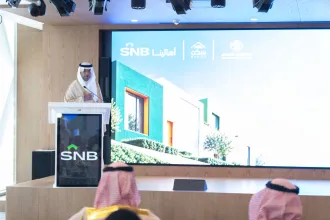
Source: Al Arabiya official YouTube channel
The economics are straightforward. Major Saudi cities contain millions of serviced square meters with no use, while demand for housing and commercial space keeps rising. The "White Land and Vacant Property Fees" system — approved by the Cabinet on 29 April 2025 (1 Dhu al-Qi'dah 1446H) and published in the official Umm al-Qura gazette on 12 May 2025 — consists of fifteen articles defining the fees, the thresholds, the submission mechanics, and the appeal process, as published by the Ministry of Municipalities and Housing.
Source: Ministry of Municipalities and Housing (momah.gov.sa)
The Ministry's stated objectives: increase real estate supply and rebalance the market, improve the efficiency of unused assets, curb hoarding, and support urban sustainability — with fee and fine revenues earmarked for housing projects and a unified property database to keep the process transparent.
The new fee structure: five tiers replace the flat 2.5%
The original 2016 regime imposed a single flat 2.5% annual fee on white land in designated areas. The reformed system replaces it with five escalating tiers that begin at the old rate and climb to a ceiling of 10% per year, assigned by the development priority of the zone where the land sits, as reported by Enterprise in its coverage of the rollout.
| Element | Old system (2016) | New system (2025/2026) |
|---|---|---|
| Fee type | Single flat rate | Five escalating tiers |
| Minimum | 2.5% per year | Starts at the 2.5% level |
| Maximum | 2.5% | Up to 10% per year |
| Tier basis | None | Development priority of the zone |
| Vacant properties | Not covered | Covered by a separate fee |
| First invoices | — | 1 January 2026 |
To make the stakes concrete: land with an assessed value of one million riyals in a lowest-tier zone carries roughly 25,000 riyals per year, while the same land in a maximum-priority zone could reach 100,000 riyals per year. That spread is precisely the mechanism pushing owners in high-priority zones toward one of two options: build, or pay for the privilege of waiting.
Rollout began in late 2025, with the first invoices issued Thursday 1 January 2026 for plots above 5,000 square meters inside designated urban development zones — including in Riyadh. Owners had three routes: object to the inclusion or the valuation, request an extension, or commit to a development schedule that stops the invoice cycle.
How the fee is calculated: three worked examples
Because the fee is a percentage of an assessed value, the arithmetic is simple — but the inputs are where owners get surprised. The valuation used is the official assessed value stated in the inclusion notice, not the owner's asking price and not the last transaction on the street. Three examples cover most real situations:
| Scenario | Assessed value | Tier applied | Annual fee |
|---|---|---|---|
| Plot inside a low-priority zone | SAR 1,000,000 | 2.5% | SAR 25,000 |
| Same plot in a maximum-priority zone | SAR 1,000,000 | 10% | SAR 100,000 |
| Portfolio of three adjacent plots held by one owner (combined above 5,000 m²) | SAR 3,600,000 | zone tier applies | tier × 3,600,000 |
The third example matters most: the threshold applies to aggregated contiguous plots under one owner, which closes the door on paper subdivisions done purely to escape the fee. When the inclusion notice arrives, the first thing to check is the recorded area and the aggregation logic — area errors are the most common and the most fixable, but only within the appeal window.
One more input owners often misread: the tier follows the zone's priority, not the land's condition. Two identical plots facing each other across a road can sit in different zones with different tiers. The zone boundary line — not the neighborhood name — decides the rate.
The vacant property fee: the system's second face from 2026
The widest-reaching addition in the reform pulled completed but unused buildings into scope. Rather than targeting only empty land, the system now covers vacant properties under executive regulations adopted by the Ministry of Municipalities and Housing in May 2026, as covered by Enterprise.
The core rules as set out in the regulations:
- Definition of vacancy: a property unused for six months — consecutive or cumulative — within the reference year.
- Fee cap: no more than 5% of the property's value, assessed on its fair rental value using market rents from comparable properties.
- Payment window: up to six months from the invoice date.
- Target zones: areas with high vacancy rates and high housing costs, designated by the Ministry.
- Exemptions: cases beyond the owner's control are carved out, with an accompanying objection mechanism.
The essential distinction between the two fees deserves emphasis: the white land fee penalizes failure to develop, while the vacant property fee penalizes failure to use. The first speaks to whoever owns land with no building; the second speaks to whoever owns a building with no activity. An investor holding a closed institutional property is now in the second conversation, not the first.
Full timeline: from the 2016 law to the September 2026 decisions
| Date | Milestone | Effect |
|---|---|---|
| 2016 | Original White Land law | Flat 2.5% fee |
| 29 April 2025 | Cabinet approves the reformed system | Basis of "White Land and Vacant Property Fees" |
| 12 May 2025 | Publication in Umm al-Qura gazette | 90-day deadline for white land regulations; one year for vacant property regulations |
| Late 2025 | Rollout begins | Database and zone preparation |
| 1 January 2026 | First invoices | ~60,000 landowners targeted |
| May 2026 | Vacant property regulations adopted | 5% cap, six-month vacancy definition |
| 27 August 2026 | First Cabinet decision | No registration of ownership-transferring dispositions before payment |
| 30 September 2026 | Second Cabinet decision | Extended to non-transferring dispositions as well |
This sequence explains why the answer to "can I still dispose of my land?" differs between someone who asked in July 2026 and someone asking today.

Source: Saudi Press Agency (spa.gov.sa)
The August and September decisions: no sale of land with unpaid fees
The decision published by the Saudi Press Agency on 27 August 2026 stated that no disposition transferring ownership of land subject to the system will be registered before outstanding fees are paid. The 30 September 2026 decision then added the complementary rule: registration of non-transferring dispositions — mortgages and other property rights — is likewise restricted to land whose fees are settled.
Municipal and Housing Minister Majed Al-Hogail commented on the first decision by noting that it closes off the option of selling land covered by the system before settling what it owes, as referenced in Enterprise's coverage.
What this means for each party in practice:
- For sellers: unpaid fees are no longer a theoretical liability; they are a hard block on any transaction. Settlement is now a precondition for completing a sale.
- For buyers: checking a plot's status under the fee system is now part of standard due diligence — land with unsettled fees cannot transfer ownership in the first place.
- For the market: moving the settlement burden to the point of sale pushes pricing of affected land to reflect its tax reality, not ignore it.
For readers tracking the broader ownership picture, our guide on foreign property ownership in Saudi Arabia covers the rules and restrictions from the legal side that complete this picture.
A worked scenario: the deal that stopped at the registration gate
Consider a situation that pulls the threads together. An owner in Riyadh inherited an 8,000-square-meter plot inside a development zone, received the system's invoice in January 2026, and set it aside awaiting "clarity." In the third quarter, he agreed on an attractive sale to an investor and both went to register the contract — where the new rule stopped them: no registration before payment of all fees accrued over the entire period.
The buyer walked. Nobody buys what cannot be transferred. The owner recalculated: roughly two years of fees at a tier above the old flat rate, against a deal that would have closed in a week. He settled, registered, and sold — after paying for the wait twice: once to the system and once in the discount his next buyer negotiated once the fee history surfaced.
The scenario is illustrative, but it is now literally how the two decisions are designed to operate. Anyone planning to sell in 2027 should get the tax position in order now, not at the first offer.
What happens if you don't pay: fines, accrual, and the registration freeze
The enforcement stack has three layers, and they compound rather than substitute. A fine of up to the amount of the fee itself may be imposed — and the law states expressly that the fine does not extinguish the fee; the two accumulate together. The fee persists year after year as long as the land remains within scope and undeveloped. And since August 2026, the registration freeze means the liability is no longer portable: it stays attached to the land at the notary gate regardless of how eager a buyer might be.
There is also a responsibility rule that closes the agency loophole: the owner is responsible for the fee and the fine unless paid by someone acting on his behalf. Arrangements built on the idea that a proxy signature moves the obligation do not survive contact with this clause.
Who is covered: thresholds and exclusions in numbers
The inclusion boundaries as set by the system and its regulations:
- Area: land or aggregated contiguous plots under one owner totaling at least 5,000 square meters — aggregation prevents evasion through paper subdivision.
- Location: inside the zones designated by the Ministry; serviced, planned, high-demand areas.
- Status: undeveloped (white land), or unused (property vacant six months within the reference year).
On the frequently asked question of agricultural land: the system targets planned, serviced urban zones, and the Ministry draws the inclusion maps — agricultural land outside the urban boundary is not subject to the fee unless it enters a subsequently announced zone. The authoritative reference is always the official inclusion notice, not circulated interpretations.
For readers comparing tax climates across the Gulf, our earlier Qatar VAT implementation guide 2026 walks through another GCC state's move toward broad-based taxation on transactions.
The owner's decision map: six situations and the right move in each
| Your situation | The right move | Deadline |
|---|---|---|
| Invoice received, inclusion or valuation in doubt | File an objection through official channels | Within 60 days of notice |
| Invoice correct, cash flow tight | Request extension or installment plan | Before the payment window closes |
| You intend to develop | Commit to a documented development schedule that halts repeat invoices | Per the approved form |
| You hold a completed but closed property | Operate or lease it before six months of vacancy accrue | Within the reference year |
| You want to sell | Settle fees first, then register the disposition | Before any registration |
| You are buying | Verify the plot's system status as a due-diligence item | Before the final contract |
Appealing within 60 days: the route step by step
The objection route is not decorative; many first-wave invoices were amended or cancelled through it. The path:
- Review the notice: check the recorded area, the zone, and the applied tier — area and aggregation errors are the most common.
- Assemble documents: the deed, the plot plan, and evidence of actual status (exempt agricultural use, existing development, or a notification defect).
- File through the official channel stated in the notice within 60 days of its date — the window is strict.
- Track the outcome: an inclusion or valuation decision that survives objection preserves the next procedural step.
- If developing is your plan: submit the development schedule commitment instead of the objection when the invoice is correct — the system treats a developer differently from a holder.
For business owners weighing alternatives inside the Kingdom, Saudi Special Economic Zones and their tax incentives in 2026 describe a completely different track: exemptions and advantages instead of fees, for qualifying activities.
Has the fee actually moved prices? The official numbers
The question that separates a theoretical regime from a working one. Official data cited in Enterprise's coverage gives an initial answer:
| Indicator (Real Estate Price Index — General Authority for Statistics) | Reading | Meaning |
|---|---|---|
| Q4 2025 | -0.7% year on year | First annual decline in five years |
| Q1 2026 | -1.6% year on year | Continued decline led by residential |
Two forces explain the number together: white land entering development widens future supply, and hoarding exiting pricing calculations lowers price floors. In Madinah alone, roughly 19 million square meters of white land were announced as covered by development in late-September 2026 coverage — incoming supply on the scale of an entire residential city.
For the residential buyer, the fee is a medium-term rebalancing in their favor. For the hoarding owner, it is a bill that escalates annually. For the developer, it is an opening: land enters the market, and competition re-ranks on quality rather than possession of location.
The next phase analysts are watching is geographic expansion: the first wave covered limited zones, and every new zone announcement brings a new cohort of owners into the invoice cycle. Anyone holding land at the edge of an existing zone should assume expansion arrives before a courtesy letter does.
How to verify a plot's status before any transaction
The two registration decisions turned tax-status checks from prudent practice into a closing condition. The correct order for buyer and seller alike:
- Request the latest inclusion notice from the seller: it states the area, zone, applied tier, and outstanding balance. A seller who "doesn't know" about any notice is either uninformed or not disclosing — both are negotiating signals.
- Match the area against the deed: the deed area is the reference; any gap against the inclusion notice is the first objection item.
- Check the zone before the price: land at a zone boundary can carry a different tier than the plot across the road. The boundary strip changes the entire return calculation.
- Make settlement a contract condition: after August 2026 this is not legal over-caution; it mirrors the registration mechanics themselves. Specify who bears any fees arising from the pre-transfer period.
- Document full-period payment: proof of payment covering the entire covered period, not just the latest invoice — fees accrue and the registration block covers the whole outstanding amount.
The small investor's new math
The fee did not change who owns Saudi land; it changed the return equation on holding it.
First — carrying cost is now annual and public: land that once "slept for free" carries 2.5% to 10% of assessed value per year depending on its zone tier. Waiting is no longer free, and longer horizons multiply the cumulative cost.
Second — exit liquidity has a new variable: buyers now ask about a plot's system status before its price, because transferability is conditional on settlement. Clean assets gained a liquidity premium; fee-laden land pays a double discount — in price and in closing speed.
Third — alternatives outside the zones deserve a fresh look: land outside announced zones — including agricultural land far from urbanization — carries none of these charges and is now the fair benchmark for risk-adjusted comparisons. The comparison is no longer "two plots, two prices" but "two plots, two regulatory loads."
The investment summary: a top tier is not a permanent penalty; it is a price signal from the state that the zone is wanted for development now. Whoever builds there recovers the burden through an income-producing project; whoever waits pays for the wait annually. That is the system's core, stated without inflation: redirecting capital from waiting to producing.
FAQ: Saudi white land tax 2026
How much is the white land fee in 2026?
The reformed system uses five escalating annual tiers that start at the old 2.5% level and reach up to 10%, assigned by the development priority of the zone. The exact figure for any plot is set by its inclusion notice, not by estimate.
How is the white land fee calculated on my plot?
Take the tier stated in your inclusion notice and multiply it by the official assessed value of the land. A plot assessed at one million riyals pays 25,000 riyals per year at a 2.5% tier, and 100,000 riyals at a 10% tier. The assessed value in the notice is the basis — not the negotiated market price.
Which land is subject to the white land fee?
Planned, serviced, undeveloped land inside designated urban zones, at 5,000 square meters or more for a single owner including aggregated contiguous plots. Completed properties unused for six months within the reference year fall under the separate vacant property fee capped at 5% of fair rental value.
Is agricultural land subject to the white land fee?
Not while it remains outside the urban zones announced by the Ministry; the system targets serviced, planned urban land. The decisive references are the announced zone maps and the inclusion notice itself — no notice, no inclusion until a new announcement changes that.
How do I appeal a white land fee invoice?
File an objection against the inclusion or valuation decision through the official channels stated in the notice within 60 days of the notification date, attaching the deed and evidence of the land's actual status. The statutory objection covers both decision types: inclusion itself and the assessed value.
Can I sell land with unpaid white land fees?
Not since the Cabinet decisions of 27 August and 30 September 2026: no ownership-transferring disposition — and no non-transferring disposition — will be registered on land subject to the system before its outstanding fees are settled. Prior settlement is now a precondition for any transaction.
What happens if I don't pay the white land fee?
A fine of up to the fee amount applies and does not extinguish the fee — the burden roughly doubles — while the fee keeps accruing and no disposition on the land can be registered until settlement. The owner bears the fee and fine unless paid by someone acting on his behalf.
Where do white land fee revenues go?
The system earmarks fee and fine revenues for housing projects, per the Ministry's publication. The intent is to redirect this money into housing supply rather than leaving it locked in unused land — a redistribution within the real estate sector rather than general revenue collection.
When did the first white land fee invoices come out?
The system was approved on 29 April 2025 and published on 12 May 2025; rollout began in late 2025, and the first invoices were issued on Thursday 1 January 2026, reaching an estimated 60,000 landowners in the first wave.
What is the difference between the white land fee and the vacant property fee?
The white land fee applies to undeveloped land inside urban zones at tiers up to 10% per year; the vacant property fee applies to completed buildings unused for six months within the reference year, capped at 5% of fair rental value. The first penalizes leaving land undeveloped; the second penalizes leaving a building unused.
Sources
- Ministry of Municipalities and Housing — White Land and Vacant Property Fees system (node 14971, English) — official system page with dates and articles
- Ministry of Municipalities and Housing — Arabic version — official Arabic page
- Saudi Press Agency — decision tying deed registration to fee settlement — official August 2026 report
- Enterprise AM — coverage of the white land fee tiers, first invoices, and vacant property executive regulations (May 2026, August 2026)
- AGBI — tracking of the first invoices reaching ~60,000 landowners (January 2026)
- General Authority for Statistics — Real Estate Price Index for Q4 2025 and Q1 2026 (as cited by Enterprise)
The complete picture is now on the table: a system that knows its boundaries, decisions that close its exits, and a market reordering itself by numbers rather than impressions. If your land or property is inside the circle, this year's golden rule is simple: open the inclusion notice today, not at the first sale offer. And for anyone planning a business or investment move in the region, the Truescho opportunities platform tracks qualifying programs and pathways with updated data each application season.