
Saudi Special Economic Zones in 2026: Tax Incentives, Licensing Rules and What Foreign Investors Actually Get
Last updated: October 2026
Saudi Arabia now operates four special economic zones, and 2026 was the year their rulebooks finally became real. The detailed implementing regulations for all four zones were issued in January 2026. Then, in September 2026, the Zakat, Tax and Customs Authority (ZATCA) published a procedural guide clarifying how tax and customs treatment actually works inside them. For foreign investors, this sequence matters: the zones have moved from an announced concept to an operating licensing regime with written rules and an execution manual from the tax authority itself.
The Direct Answer: What Are Saudi Arabia's Special Economic Zones?
Saudi special economic zones are four licensed zones supervised by the Economic Cities and Special Zones Authority (ECZA): King Abdullah Economic City in Makkah Province, Ras Al-Khair in the Eastern Province, Jazan in the southwest, and the Cloud Computing zone in Riyadh. Licensed entities inside them qualify for tax and customs incentives covering withholding tax, value-added tax, corporate income tax, and customs duty deferral, under regulations issued in January 2026 and a ZATCA procedural guide issued in September 2026.
Why International Investors Are Paying Attention Now
Three dates in 2026 changed the practical picture:
| Date | What happened | Why it matters |
|---|---|---|
| January 2026 | Implementing regulations issued for all four zones (Jazan, Cloud Computing, King Abdullah Economic City, Ras Al-Khair) — as reported by Argaam on January 17, 2026 | The zones moved from a general framework to operational rulebooks |
| January 16, 2026 | The King Abdullah Economic City regulation explicitly exempts the licensed entity from withholding tax — per Saudi newspaper Maaal | First explicit tax detail published in a Saudi zone regulation |
| September 9, 2026 | ZATCA issued a procedural guide clarifying tax and customs treatment inside the zones — as tracked by KPMG | The application ambiguity that confused companies since 2023 is being resolved by the collecting authority itself |
If you deferred an investment decision waiting for rule clarity, 2026 delivered it: written regulations, specific tax provisions, and an execution guide from the authority that collects the taxes.
There is also a structural reason to care. The zones are a core Saudi tool for attracting export-oriented manufacturing and advanced technology, part of the Vision 2030 program to diversify beyond oil. Companies that understand the rules now are ahead of those who will wait two more years for the information to settle.
The Four Zones: Locations and Target Sectors
The four zones are not interchangeable copies. Each has a defined location and officially targeted sectors, and licenses are granted to projects that fit those sectors. The table below reflects the authority's official site (ecza.gov.sa):
| Zone | Location | Officially targeted sectors |
|---|---|---|
| King Abdullah Economic City | Makkah Province (west) | Automotive manufacturing (including the King Salman Automotive Cluster), pharmaceuticals and medical technology, fast-moving consumer goods, IT hardware manufacturing — plus King Abdullah Port |
| Ras Al-Khair | Eastern Province | Shipbuilding and drilling platforms, maritime services, heavy and mining industries |
| Jazan | Jazan Province (southwest) | Food industries, metal conversion, logistics services |
| Cloud Computing | Riyadh | Cloud computing services and digital transformation support |
Two observations stand out.
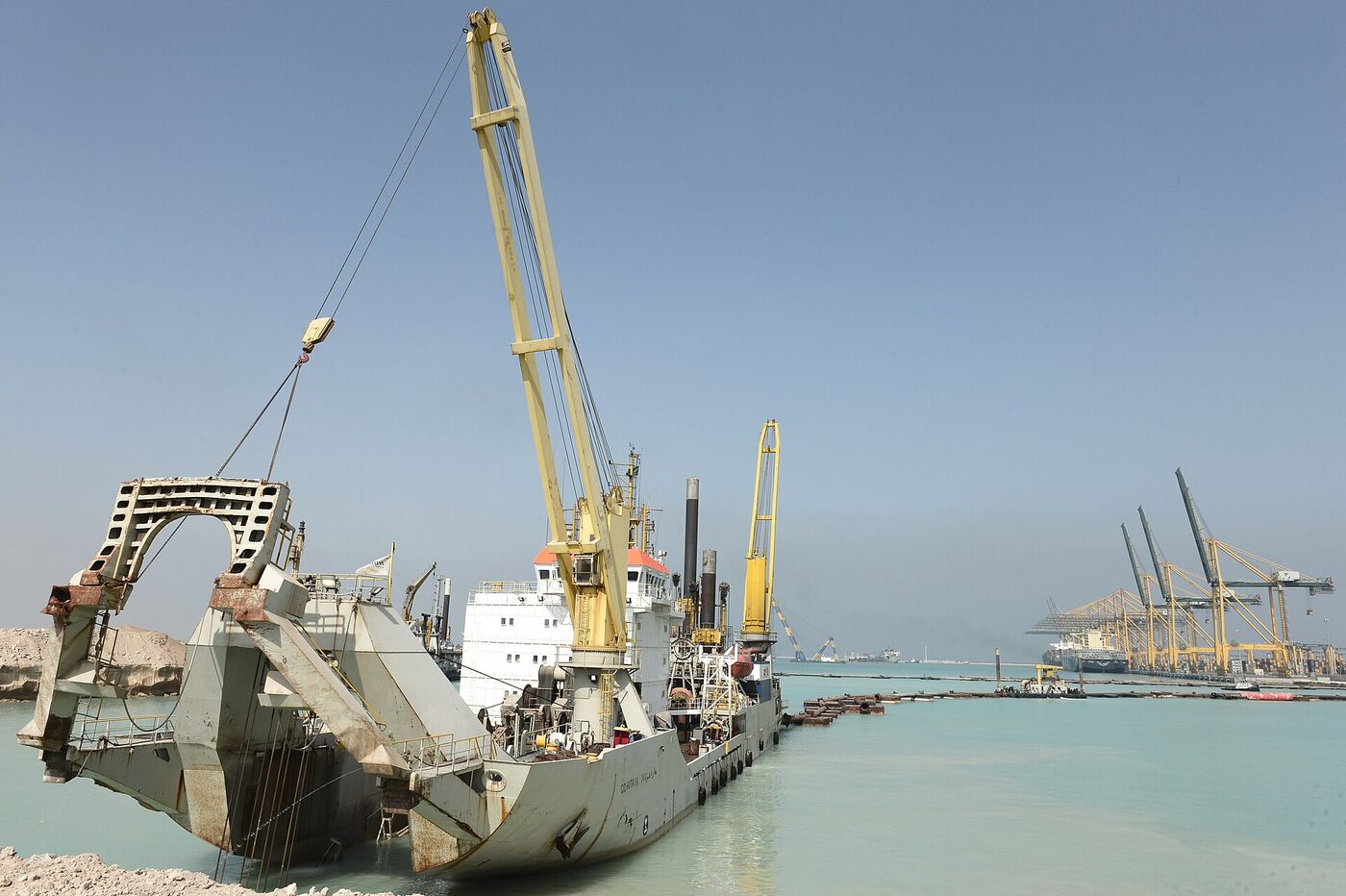
Source: Wikimedia Commons — photo by HUTA Group — CC BY-SA 4.0
First, the geography is deliberate. The four zones are distributed across the west, the east, the south, and the center of the Kingdom, so they do not compete for the same sites. Each serves a different trade corridor: King Abdullah Economic City on the Red Sea toward the Suez route, Ras Al-Khair on the Arabian Gulf, and Jazan near the Bab Al-Mandab Strait toward Africa.
Second, your sector effectively chooses your zone. Food processing points to Jazan. Cloud services point to the Riyadh zone. Heavy maritime activity points to Ras Al-Khair. Applying to a zone whose target sectors do not cover your activity will fail on sector-fit grounds before anything else is reviewed.
A signal worth noting from the authority's own site: on April 1, 2026, it announced that the Ras Al-Khair maritime zone received its first wave of international investors — evidence that the program has moved from marketing to operation.
Who Grants the Licenses? Meet the Supervising Authority
The supervising body is the Economic Cities and Special Zones Authority (ECZA). Its earliest form dates to a royal order on February 24, 2010, which established the "Economic Cities Authority" in Rabigh. It was reorganized and renamed under a royal order on November 16, 2020, and its headquarters moved to Riyadh in 2023. Its board is chaired by the Minister of Investment.
Why does this matter to you as a foreign investor? Because the licensing window is single: there is no parallel route through another ministry for activities inside the zones. The authority evaluates sector fit, financial capacity, and investment plan — and it is the first point of contact before you commit money to a site or warehouse.
Its September 2026 activity alone signals continuity: a cooperation agreement with Takamol Holding signed at the LEAP conference on September 1, and participation in China's CIFIT investment fair in Xiamen on September 10. Attracting investors to these zones is a sustained national priority, not a seasonal campaign.
Tax and Customs Incentives: What Is Confirmed as of October 2026?
This is where precision matters, because much of the content circulating online mixes official announcements with speculation. The authority's official site lists five incentive categories for licensed entities:
- Withholding tax — the King Abdullah Economic City regulation explicitly exempts the licensed entity from it, as reported by Maaal on January 16, 2026.
- Value-added tax — Saudi newspaper Al Mal reported in January 2026 that goods and services exported through the economic zone are exempt from VAT, subject to two conditions reported by Akhbaar 24 when the details first emerged: the goods must be declared for actual export outside the Kingdom through the zone, and the transaction must follow the prescribed customs procedures.
- Corporate income tax — preferential treatment for licensed activities inside the zones, per each zone's regulations.
- Customs duty deferral — on intermediate inputs, under the published rules.
- Workforce flexibility — employment and localization rules more flexible than the general labor market.
The decisive new development: on September 9, 2026, ZATCA issued a procedural guide clarifying tax and customs treatment in the special economic zones, as tracked by KPMG in its tax alert of the same date. Practically, this guide is the document that answers implementation questions: how an invoice is recorded, when an exemption applies, and how goods entering and leaving a zone are treated. Alvarez & Marsal separately tracked, on July 28, 2026, updates to bonded zones and customs procedures that affect how goods are handled inside these areas.
Professional notice: this article explains the published framework, not your specific tax position. Before any commitment, review the regulations for your specific zone and the ZATCA procedural guide, or engage a licensed tax advisor — the differences between the four zones' regulations are real, not cosmetic.
Inside vs. Outside the Zones: The Comparison Table
To understand the magnitude of the effect, compare the general tax system outside the zones with the special treatment inside them:
| Item | Outside the zones (general system) | Inside special economic zones (licensed entity) |
|---|---|---|
| Corporate income tax | 20% on taxable profit (non-GCC share); Zakat at 2.5% on an adjusted base for Saudi/GCC shareholders | Preferential treatment per each zone's regulations, within the announced incentive categories |
| Withholding tax | 5% to 20% depending on payment type (dividends, interest, royalties, services) | The King Abdullah Economic City regulation exempts the licensed entity; verify your own zone's regulation |
| Value-added tax | 15% on goods and services | Exemption for goods and services exported through the zone, subject to actual export plus customs procedures |
| Customs duties | Up to 25% depending on the commodity, on imports for domestic consumption | Duty deferral under the announced rules |
| Workforce | Standard Nitaqat localization requirements | Announced flexibility in workforce requirements |
Source for the statutory rates: Saudi income tax law and the VAT agreement, via the Zakat, Tax and Customs Authority.
Note that the exemptions are not blanket exemptions. Every incentive carries a condition: the VAT exemption is tied to actual export through the zone; customs duty deferral is deferral, not abolition; income tax treatment follows each zone's own regulation. Anyone reading "a zone exempt from all taxes" somewhere is reading abbreviated marketing, not a regulation.
Licensing Requirements and Documentation
The authority has defined five evaluation criteria for any license application inside the zones:
- Sector fit — the activity must fall within the zone's designated sectors, or add a sector serving national development objectives.
- Financial capacity — proof of capital, an investment plan, and a feasibility study.
- Environmental compliance — an environmental impact assessment and adherence to national sustainability standards.
- Job creation and knowledge transfer — the project's contribution to employment or training.
- Technology and innovation — preference for projects bringing new technologies or advanced manufacturing.
In practice, these criteria translate into an application file that typically includes:
- Commercial registration or proof of legal entity
- A detailed feasibility study with project numbers
- A time-phased investment plan with financial commitments
- Documents proving financial soundness (bank statements or a bank letter)
- A preliminary environmental impact assessment
- A staffing and training plan
- A technical description of the activity and its technologies
Meeting all five criteria is what "licensed entity" means in the regulations — and without the license, none of the incentives above applies. The incentive attaches to the licensed entity inside the zone, not to the geographic zone itself.
If you are assembling an investment file and need to match it with other opportunities across the Gulf, browse the open opportunities on Truescho, where funding and partnership listings are updated continuously.
Special Economic Zone vs. Free Zone: The Difference That Trips People Up
A question that recurs from investors accustomed to the free-zone model in neighboring countries — and conflating the two causes real planning errors.
A traditional free zone in the region is treated for customs purposes as if it were outside the state's borders: goods enter without duties and remain there as long as they stay inside the perimeter. The Saudi special economic zones chose a different model: the zone remains inside the Kingdom's customs territory, but licensed entities in it receive special tax and customs treatment — from tax exemptions to duty deferral — rather than full customs separation.
| Comparison point | Free zone (traditional model) | Saudi special economic zone |
|---|---|---|
| Customs position | Outside the customs territory | Inside the customs territory with special treatment |
| Basis for benefiting | Geographic location within the perimeter | License to the entity under the zone's regulation |
| Incentives | Generally perimeter-wide | Tied to the licensed entity's conditions and sector |
| Supervision | Various free-zone authorities | Economic Cities and Special Zones Authority + ZATCA for tax treatment |
The practical consequence: do not transplant your assumptions from a free-zone experience in another country into Saudi Arabia. Read your own zone's regulation — all four were issued in January 2026 — and ask about the tax treatment of your specific activity, not of the zone in general.
The Full Regulatory Timeline: From Idea to Operation
Whoever holds this sequence today has decision-making capacity that scattered news reading does not provide:
| Period | Milestone |
|---|---|
| February 24, 2010 | Royal order establishing the Economic Cities Authority (the original nucleus) in Rabigh |
| November 16, 2020 | Royal order reorganizing and renaming it: Economic Cities and Special Zones Authority |
| 2023 | Launch of the four special economic zones, with the first details of VAT treatment for goods exported through them under actual-export conditions |
| January 2026 | Implementing regulations issued for all four zones; the King Abdullah Economic City regulation exempts licensed entities from withholding tax |
| April 1, 2026 | Ras Al-Khair receives its first wave of international investors (authority announcement) |
| July 28, 2026 | Customs updates to bonded zones and procedures (tracked by Alvarez & Marsal) |
| September 9, 2026 | ZATCA issues the procedural guide for tax and customs treatment in the zones (tracked by KPMG) |
The direction is clear: every few months adds a regulatory layer that reduces ambiguity and increases predictability. One more piece of context: an August 2025 analysis in International Tax Review observed that Economic Substance Regulations and the Pillar Two global minimum tax are converging across the GCC — which means compliance for large companies inside these zones will remain a living file, not a fixed rule set.
Case Study: A Food Logistics Company Choosing Between Jazan and the Outside
Let us make this concrete. Consider a mid-sized food processing and packaging company, owned by investors from two Arab countries, evaluating three options: the Jazan special economic zone, expanding from its current site outside any zone, or a free zone in a neighboring country.
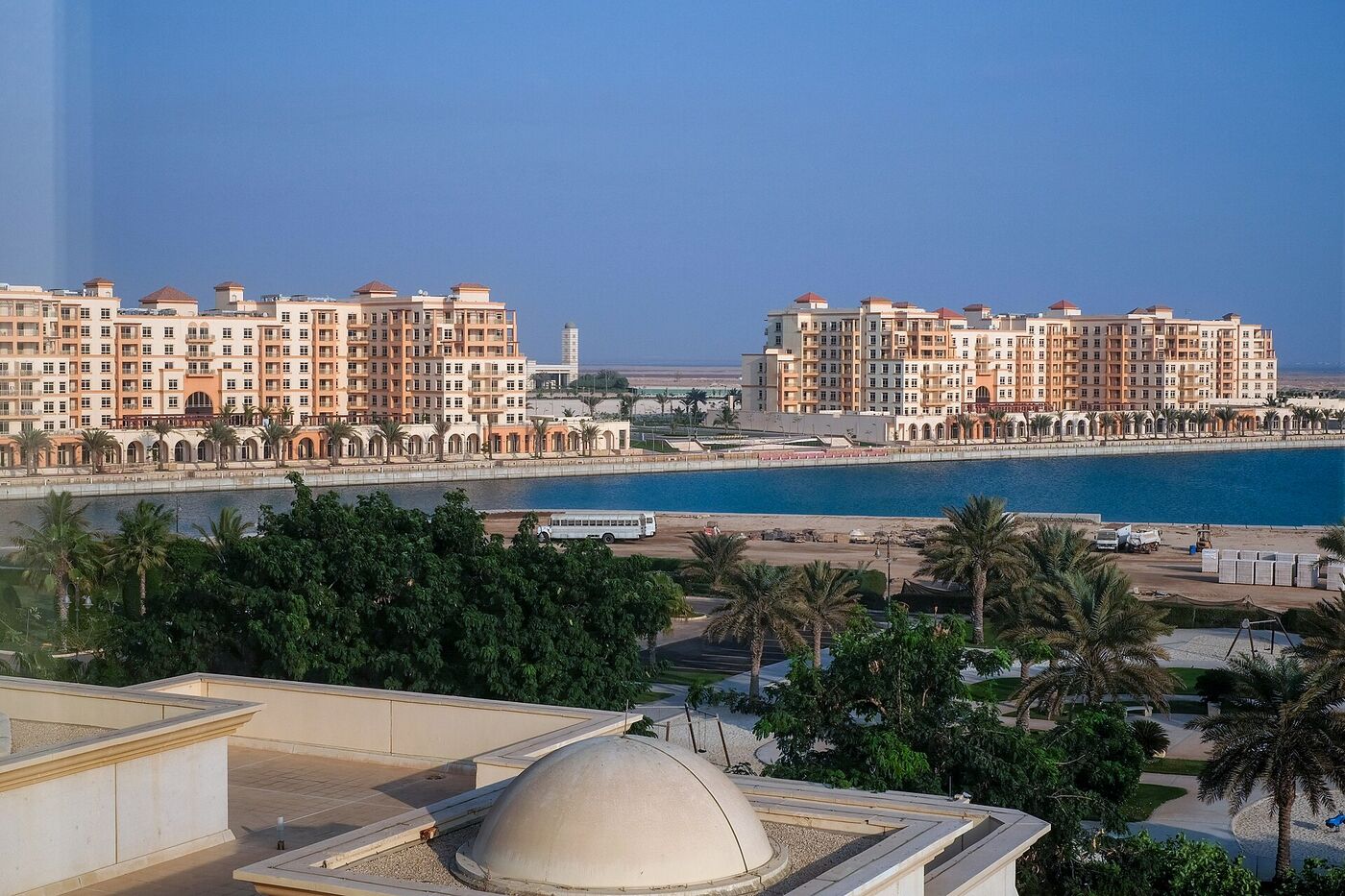
Source: Wikimedia Commons — photo by Mrcosch — CC BY-SA 4.0
The sector criterion settles the first option immediately: food industries are an officially targeted sector for Jazan, giving the application a strong foundation at evaluation. By contrast, a site outside the zones means full exposure to the general system: 20% income tax on non-GCC partners' share, 15% VAT on domestic sales, and full customs duties on packaging equipment imports.
The calculation such an owner balances:
- Exempting exports from VAT when goods leave through the zone directly improves export price competitiveness — an advantage that shows up immediately in quotes to foreign buyers.
- Customs duty deferral improves cash flow on imported production lines.
- Workforce flexibility reduces operating cost in the first establishment years.
- On the other side: obligations to prove feasibility, employment, and environmental assessment, plus documented customs procedures for every export shipment.
The rule this example yields: the zone lowers the cost of exporting and capital operations, in exchange for higher compliance and documentation obligations. A company established to serve only the Saudi domestic market may not benefit from the export exemption at all — a fundamental difference many overlook.
A Selection Method: Four Questions Before Any Application
Before contacting the authority or commissioning a feasibility study, answer these four questions in writing. They are a practical filter that saves months of hesitation.
Question one: what share of your projected revenue comes from exports outside the Kingdom?
If it is under roughly a quarter, the VAT export exemption will not move your numbers much, and the real remaining advantages are customs deferral and workforce flexibility. Weigh whether those alone justify the procedural obligations. If your model is export-first — manufacturing for export or cloud services sold outside the Kingdom — the calculation tilts clearly toward the zone.
Question two: is your sector explicitly listed in the target zone's regulation?
Review the sector table above, then read your zone's regulation line by line. If your activity sits between two sectors (logistics serving food manufacturing, say), prepare your file to explain precisely where it falls — sector fit is the first of the five evaluation criteria and the fastest to fail.
Question three: what is your actual capacity for the non-tax obligations?
A license is not a form to fill in: a numbered feasibility study, an environmental impact assessment, a staffing and training plan. If your team is small and cannot produce these documents at quality, start preparing months before applying — weak files are rejected on first reading and rarely get a second one.
Question four: what is your fallback if the application is refused or delayed?
Always compare against a realistic baseline: establishing in the general market outside the zones. Compute the net difference between the two models — income tax, VAT, and customs in the general system versus zone incentives and obligations — and write the numbers down. That comparative file will also feed the feasibility study the application requires.
An investor who answers all four questions with numbers arrives at the first authority meeting with half the decision already made.
Common Mistakes Before Applying
Mistake one: reading one zone's incentives and applying them to another. The January 2026 regulations were issued separately per zone. An exemption stated in the King Abdullah Economic City regulation does not automatically appear in the Jazan, Ras Al-Khair, or Cloud Computing regulations.
Mistake two: believing that renting a warehouse inside a zone grants the incentives. The incentives attach to the licensed entity under the authority's five criteria, not to the geographic location alone.
Mistake three: preparing a boilerplate feasibility study with no numbers. The financial-capacity criterion demands an investment plan and a genuine, numbered feasibility study; a generic file built from ready-made templates fails on first reading.
Mistake four: ignoring the environmental assessment until after provisional licensing. Environmental compliance is an independent criterion, and some industrial activities need a completed impact assessment before actual operations begin.
Mistake five: building the entire financial model on the assumption that everything is "exempt." The exemptions are conditional (actual export, documented customs procedures, specifically licensed activities). Build your model on the conservative scenario, then add incentive effects gradually.
Frequently Asked Questions
What are Saudi Arabia's special economic zones?
Four zones supervised by the Economic Cities and Special Zones Authority: King Abdullah Economic City in Makkah Province (automotive, pharmaceuticals, FMCG), Ras Al-Khair in the Eastern Province (shipbuilding and maritime services), Jazan (food industries, metal conversion, logistics), and the Cloud Computing zone in Riyadh. Their implementing regulations were issued in January 2026.
What tax incentives do Saudi SEZs offer in 2026?
Five announced categories: special withholding tax treatment (the King Abdullah Economic City regulation exempts licensed entities), VAT exemption for goods and services exported through the zone under actual-export conditions, preferential corporate income tax per each zone's regulation, customs duty deferral, and workforce flexibility. Implementation details are consolidated in the ZATCA procedural guide issued September 2026.
How many special economic zones does Saudi Arabia have?
Four operating zones: King Abdullah Economic City, Ras Al-Khair, Jazan, and the Cloud Computing zone in Riyadh — all supervised by the Economic Cities and Special Zones Authority, with detailed regulations issued in January 2026.
What is the difference between a Saudi SEZ and a free zone?
A traditional free zone is treated as outside the state's customs borders, while a Saudi special economic zone sits inside the Kingdom's customs territory and grants licensed entities special tax and customs treatment under each zone's regulation. The basis for benefiting in the Saudi model is the license and the sector, not geographic location alone.
Can foreign companies invest in Saudi special economic zones?
Yes — the zones were designed primarily to attract foreign investment and advanced technology, and the licensing criteria concern sector fit, financial capacity, and compliance, not the owner's nationality. The authority announced in April 2026 that Ras Al-Khair received its first wave of international investors. Check your zone's regulation for permitted activities.
Is VAT charged inside Saudi special economic zones?
Not as a blanket exemption. Goods and services exported through the zone to outside the Kingdom are exempt under conditions: actual declared export following customs procedures. Internal transactions and sales for domestic consumption follow the treatment set out in the regulations and the ZATCA procedural guide — so separate exported sales from domestic sales in your accounting.
How do I get licensed in a Saudi special economic zone?
Through the Economic Cities and Special Zones Authority (ECZA), the single licensing and supervisory body and the investor's first point of contact. Tax and customs treatment falls to ZATCA, which issued a unified procedural guide in September 2026 explaining how the rules apply inside the zones.
Which sectors are allowed in each Saudi SEZ?
King Abdullah Economic City: automotive, pharmaceuticals and medical technology, FMCG, IT manufacturing. Ras Al-Khair: shipbuilding, drilling platforms, maritime services, heavy industry. Jazan: food industries, metal conversion, logistics. Cloud Computing zone: cloud services and digital transformation support. Applications outside these sectors fail on sector-fit grounds.
What to Do Next: Your Concrete Steps
- Locate your sector in the four-zone table above — it nominates your zone automatically.
- Download your zone's regulation from the Economic Cities and Special Zones Authority site and read the licensed-activity texts, not summaries of them.
- Request the ZATCA procedural guide for tax and customs treatment (issued September 2026) and ask your advisor about its effect on your financial model.
- Prepare the application file against the five criteria, starting with the feasibility study — it is the longest item in the file.
- Always weigh the option against the general market outside the zones — purely domestic activities may not benefit from export exemptions at all.
And because expansion decisions never separate from their financing, follow the Truescho opportunities feed for updates, use the consulting services when building your file, and check the rankings if your decisions involve research partnerships or talent hiring.
Sources
- Economic Cities and Special Zones Authority — official site: the four zones, sectors, incentive categories, licensing criteria, and 2026 news
- Zakat, Tax and Customs Authority — regulations — statutory rates: income tax, Zakat, VAT, withholding tax, customs duties
- Wikipedia: Economic Cities and Special Zones Authority — 2010 establishment and 2020 reorganization history
- Argaam (January 17, 2026) — implementing regulations for the four zones
- Maaal (January 16, 2026) — withholding tax exemption for licensed entities in King Abdullah Economic City
- Al Mal (January 9, 2026) — VAT exemption for exports through the zone
- KPMG (September 9, 2026) — ZATCA procedural guide for special economic zones
- Alvarez & Marsal (July 28, 2026) — updates to bonded zones and customs procedures
- International Tax Review (August 2025) — ESR and Pillar Two convergence across the GCC
Start Your Journey with Truescho
Whether you are evaluating an investment or planning to establish your activity in the Gulf, truescho.com brings opportunities, tools, and consulting together in one place.
Get Started Free →