
April 2026 is the month enterprise software pricing broke with its per-seat habits — and the two biggest CRM vendors broke in opposite directions. On April 2, HubSpot announced that its Breeze Customer Agent would be billed at $0.50 per resolved conversation, down from $1.00 per conversation, effective twelve days later, on April 14 — a model in which you pay only when the AI actually finishes a job. That same month, Salesforce's Agentforce pricing page re-framed its famous $2-per-conversation rate as belonging to "existing Conversations customers," steering every new buyer toward Flex Credits at $500 per 100,000 credits. And on April 27, SaaStr published the statistic that named the year's problem: one company now pays Salesforce 83% more than last year, in an article that named "the AI agent seat problem."
This guide is the neutral map through that flip. Every figure below comes from the official Salesforce and HubSpot pricing pages as checked on October 9, 2026, cross-referenced with dated trade reporting. We reproduce the full rate tables, walk through three sample invoices at 3, 10 and 50 seats, explain why bills climb even as AI gets "cheaper," and close with structural moves that lower invoices without switching vendors. There are no affiliate links in this piece and no brand endorsement: both platforms start at $0, and the correct first step for almost every team is free.
The April 2026 pricing flip, month by month
The fastest way to understand 2026 software budgets is a timeline, because no single vendor made one decision — the industry made several in sequence.
- October 2, 2025. SaaStr publishes "The Great SaaS Price Surge of 2025," documenting the increase wave that set the stage.
- January 29, 2026. CFO Dive covers the Zylo study "SaaS bills climb as AI shakes up pricing" — the first hard evidence that AI attach rates, not seats, were driving invoices upward.
- April 2, 2026. HubSpot announces Breeze outcome pricing: Customer Agent moves from $1.00 per conversation to $0.50 per resolved conversation, and the Prospecting Agent to $1 per qualified lead (MarTech, CMSWire, CX Today). Effective April 14, per SaaStr.
- April 26, 2026. The Information reports that Atlassian and HubSpot are dropping fixed AI fees — the seat-plus-flat-AI bundle starts dying.
- April 27, 2026. SaaStr documents paying Salesforce 83% more than last year and names the AI agent seat problem.
- June 6, 2026. HubSpot shares drop 19% in a single day as analysts question what seat-based models are worth in an AI world (Webcoda).
- June 24, 2026. Adobe postpones a major annual increase — which SaaStr calls the first crack in B2B pricing power since 2022.
- August 6, 2026. Investor's Business Daily reports software stocks sliding on AI pricing jitters, naming Datadog and HubSpot.
- October 7, 2026. CX Today reports HubSpot laying off 660 employees as it reshapes around AI.
Two facts give the flip its shape. HubSpot claims its Customer Agent already resolves 65% of conversations and speeds resolution by 39% across roughly 8,000 customers, per MarTech quoting the company on April 2 — which is why it can afford outcome pricing. And HubSpot's Chief Customer Officer Jon Dick distilled the philosophy in one line: "You pay when it works, full stop." Salesforce, meanwhile, kept per-seat economics but moved AI consumption to metered credits — same destination, opposite road.
For a CFO, the two models create opposite forecasting problems. Metered credits turn AI spend into a utility bill: predictable per action, variable in total, and dangerous when an agent loop or a support spike multiplies consumption — hence the digital wallet and its alerts. Outcome pricing turns AI spend into a commission plan: the total still moves with volume, but the unit economics are knowable in advance, which is far easier to model against revenue. Neither model is free of surprises; they simply surprise you in different quarters. Budget owners should decide which kind of surprise their organization can absorb before choosing a philosophy, because migrating between models mid-contract is exactly the kind of re-platforming vendors price aggressively.
What Agentforce costs in 2026: editions, Flex credits and the retired $2 conversation
Salesforce's AI pricing now has two layers: what your humans cost and what your agents consume. The Agentforce layer, per the official pricing page checked October 9, 2026:
| Agentforce item | Official price | What it means in practice |
|---|---|---|
| Foundations | $0 | Includes Agentforce Builder and Prompt Builder — you can build agents before paying anything |
| Flex Credits | $500 per 100,000 credits (€500 / £400 / AU$700 / ¥60,000) | A standard action costs 20 credits (about $0.10); a voice action costs 30 (about $0.15) |
| Conversations | $2 per conversation | Labeled for existing Conversations customers only — no longer sold to new buyers |
| Agentforce add-on (Sales, Service, Field) | $125 per user/month | The per-seat AI attach rate that drives the "83% more" story |
| Agentforce Industries add-on | $150 per user/month | Verticalized agents at a premium |
| Max Editions | From $550 (includes 2.75M credits/year) | Bundle play: highest per-seat price, credits included |
| Agentforce user license | $5 per user/month | Lightweight license for agent supervision |
| Help Agent resolutions | $2 per resolution | Salesforce's own per-outcome rate, for comparison shoppers |
The credits math is simpler than it looks: $500 buys 100,000 credits; at 20 credits per standard action that is 5,000 actions per pack, or roughly $0.10 an action; at 30 credits, about 3,333 voice actions. Salesforce's own worked examples on the pricing page run from $10 per month for an internal IT Q&A agent up to $1,800 per month for case management serving 100 users — a 180x range that tells you consumption modeling matters more than headline rates. Two contract mechanics deserve bold ink: unused credits do not roll over, and the purchase models are Pre-Purchase, Pre-Commit (listed as arriving "later this year") and PayGo.
Source: Salesforce
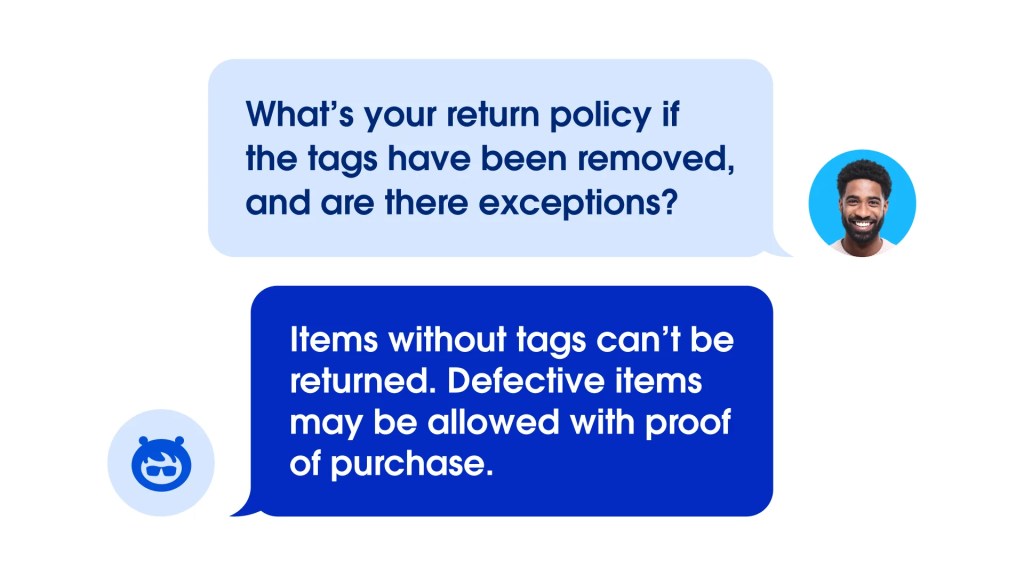
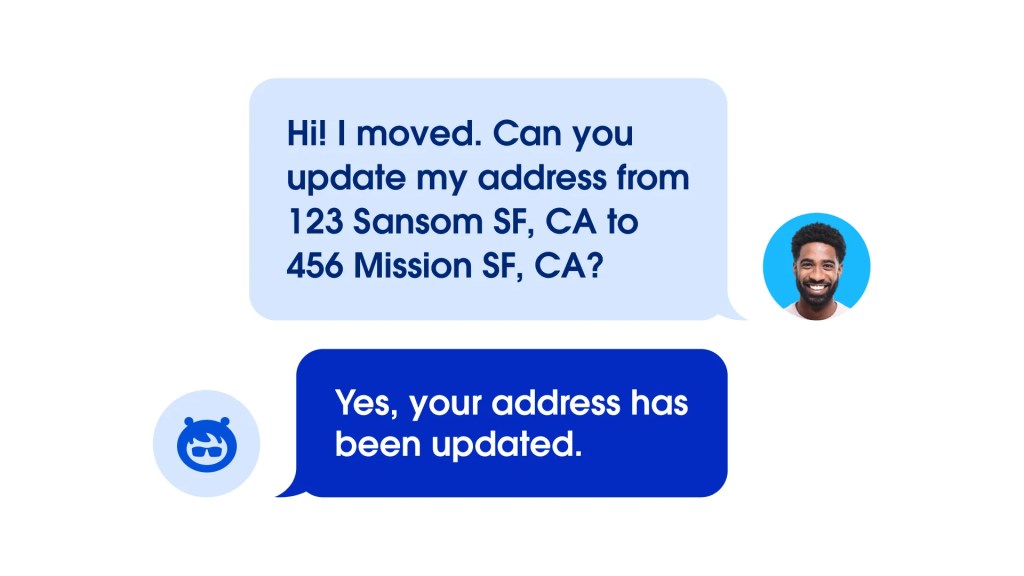
Under the Flex model, an agent that answers a customer question from the knowledge base consumes credits per action rather than per conversation:
Source: Salesforce
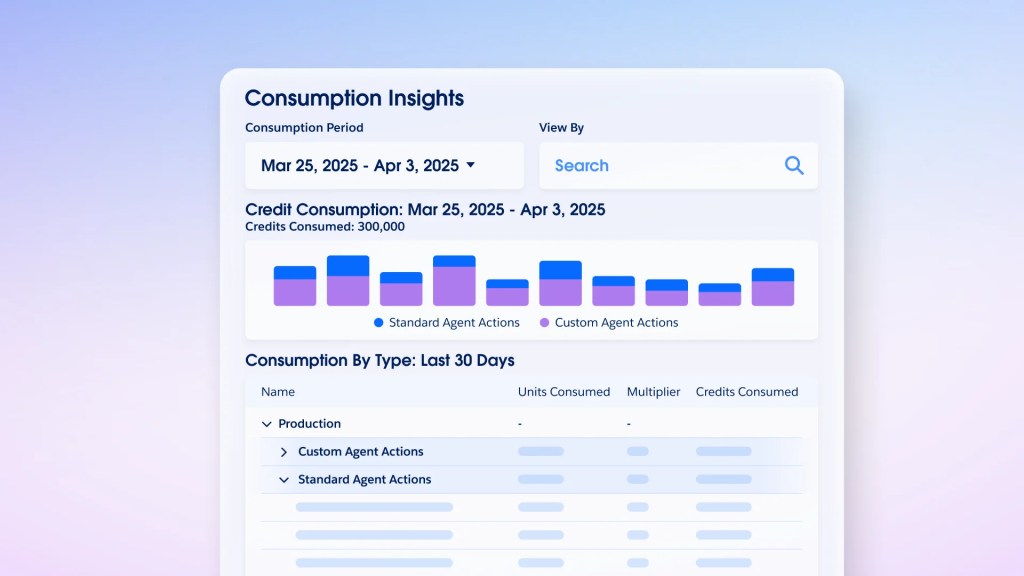
Consumption is tracked in a digital wallet, which is where finance teams should live during any pilot:
Source: Salesforce
The seats layer is the new Sales Cloud edition ladder, per the official Sales Cloud pricing page checked October 9, 2026:
| Sales Cloud edition | Price per user/month |
|---|---|
| Free | $0 |
| Starter Suite | $25 |
| Pro Suite | $100 |
| Core | $195 |
| Advanced | $395 |
| Max | $550 |
For scale, Salesforce showcased the model on-stage at Dreamforce with staffing giant Adecco, whose deployment handles two million service calls with AI agents resolving 30% of them:
https://www.youtube.com/watch?v=HLgADym2BY8
What HubSpot costs in 2026: seats, hubs and paying only when Breeze works
HubSpot's published pricing remains more granular and more self-serve. All figures per the official pricing pages checked October 9, 2026, annual-billing rates shown with monthly-billing rates in parentheses where published:
| Tier | Sales / Service Hub (per seat/month) | Marketing Hub | One-time onboarding | Notes |
|---|---|---|---|---|
| Free | $0 (up to 2 users) | $0 | — | Genuinely functional free CRM |
| Starter | $7 ($20 billed monthly) | $7 per seat/month | — | CRM Platform bundle offer: $7/seat with 1,000 contacts and up to 65% off for new customers |
| Professional | $90 ($100 billed monthly) | $800 per month | $1,500 | Credit allowances scale 500 → 3,000 across paid tiers |
| Enterprise | $150 | $3,600 per month | $3,500 | Top credit allowance 5,000 |
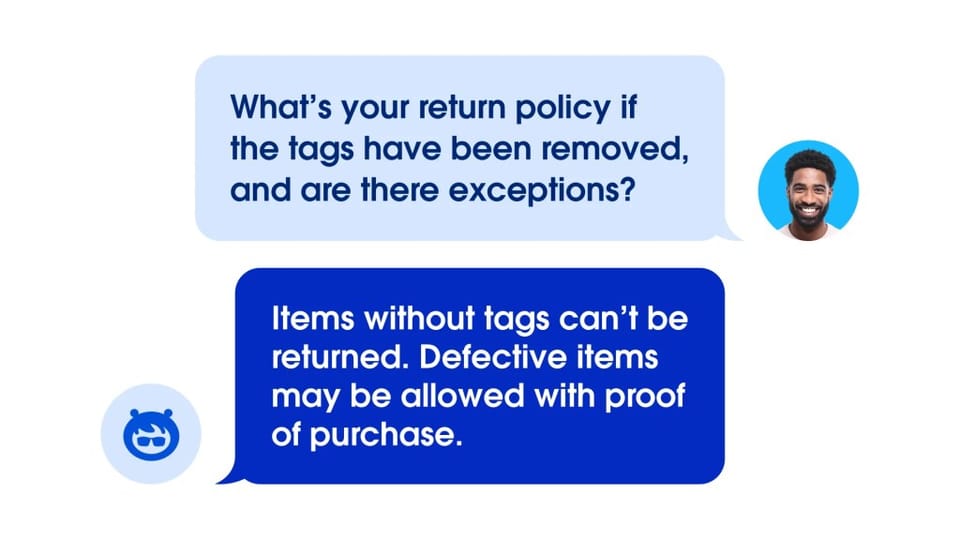
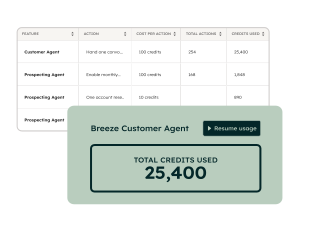
The AI layer is where April changed everything. Breeze Customer Agent is now billed from $1.00 per conversation down to $0.50 per resolved conversation, and the Prospecting Agent at $1 per qualified lead — announced April 2 and effective April 14, 2026, per MarTech, CMSWire and CX Today, with SaaStr confirming the effective date. Set that against Salesforce's documented $2 per Help Agent resolution and the sticker rates differ by a factor of four — though what each vendor counts as "resolved" differs too, so compare definitions, not just decimals.
Source: HubSpot
For small teams, HubSpot's own channel shows how little it takes to put a working agent in front of customers — a WhatsApp chatbot built in half an hour on free-tier tooling:
https://www.youtube.com/watch?v=sgpNrQZqUW4
Note what the April event actually was: a change of model — from flat AI fees to per-outcome charges — not a simple rate adjustment, and the seat tiers themselves carried the published rates shown above at the time of the switch. The Information's April 26 reporting on HubSpot and Atlassian dropping fixed AI fees is the most accurate description of what changed.
Three sample invoices: teams of 3, 10 and 50
List prices only become real as invoices. Below are three illustrative builds using exclusively the documented rates above, annual billing, excluding tax, negotiated discounts and promotions. AI volumes are clearly labeled assumptions — substitute your own ticket counts.
| Scenario | Salesforce (list build) | HubSpot (list build) |
|---|---|---|
| 3 seats, no AI | Starter Suite: $25 × 3 = $75/month ($900/year). Step-up Pro Suite: $300/month | Sales Hub Starter: $7 × 3 = $21/month. Pro tier: $90 × 3 = $270/month + $1,500 onboarding |
| 10 seats + service AI | Pro Suite $1,000/month + one 100k Flex pack ($500 ≈ 5,000 standard actions) = $1,500/month. Adding the $125/user Agentforce Service add-on for all 10 reps adds $1,250/month | Service Hub Pro $900/month + $1,500 onboarding (one-time) + Customer Agent at $0.50 × 1,000 resolved conversations = $1,400/month steady-state |
| 50 seats + voice AI | Core $195 × 50 = $9,750/month + one 100k Flex pack ($500 ≈ 3,333 voice actions) = $10,250/month. Max alternative: $550 × 50 = $27,500/month including 2.75M credits/year | Enterprise $150 × 50 = $7,500/month + $3,500 onboarding (one-time), plus per-resolution AI. Pro alternative: $90 × 50 = $4,500/month + $1,500 onboarding |
Three lessons fall out of the arithmetic. At three seats, HubSpot's Starter tier is dramatically cheaper on seats — $21 versus $75 a month — and its free tier already covers two users, while Salesforce lists a Free edition of Sales Cloud below Starter Suite. At ten seats, the platforms converge only if you attach Salesforce's per-user AI add-on, which is precisely the line item behind SaaStr's 83% headline; skip the add-on and buy Flex credits instead, and Salesforce's $1,500 matches HubSpot's $1,400 almost exactly. At fifty seats, the base-seat gap widens again in HubSpot's favor ($7,500 versus $9,750 on the mid tiers), but Salesforce's bundled Max edition — 2.75 million credits a year included — can flip the comparison for heavy agent consumption. The cheapest invoice belongs to whoever models their ticket volume first. For options beyond these two vendors, our comparison of the best CRM software for small business widens the field.
Four variables will move these totals more than any vendor choice. Billing cadence: HubSpot's Starter jumps from $7 to $20 per seat on monthly billing and Professional from $90 to $100 — nearly a 3x difference at the bottom tier for the same software. Onboarding fees: $1,500 or $3,500 one-time, negotiable, trivial to amortize over three years but painful over one. Credit burn: a defect that makes an agent retry actions can quietly consume a 100k-credit pack, which is why the no-rollover rule deserves a place in your risk register. And bundle eligibility: HubSpot's CRM Platform offer — $7 per seat with 1,000 contacts and up to 65% off for new customers — changes the math for first-time buyers specifically, while Salesforce's Max edition bundles credits most efficiently only under sustained heavy usage.
Why bills climb while AI gets cheaper: the seat problem
If AI agents cost $0.10 an action, why are SaaS bills rising? Because the industry's revenue architecture is still per-seat, and AI is being attached to it as a second seat bill. The Zylo study covered by CFO Dive on January 29, 2026 found bills climbing as AI repriced contracts; SaaStr's April 27 piece put a number on the archetype — 83% higher year over year — and named the mechanism: the AI agent seat problem, where every human seat gets an AI add-on seat (Salesforce's is $125 per user per month) plus a consumption meter on top.
The market has started pricing in the tension. HubSpot lost 19% of its value in one day on June 6, 2026, with Webcoda's analysis centering on what seat models are worth when software labor approaches zero marginal cost. Adobe postponing a major annual increase on June 24 — the first crack in B2B pricing power since 2022, per SaaStr — suggested buyers finally have leverage if they coordinate. And on August 6, Investor's Business Daily reported software stocks sliding broadly on AI pricing jitters, naming Datadog and HubSpot. For a budget owner, the translation is simple: vendors are experimenting on your invoice, and multi-year lock-ins signed in 2026 are bets on experiments.
This squeeze is not limited to CRM — the same quarter produced our documentation of QuickBooks price increases, and regulators began scrutinizing AI attach economics, as in our piece on the Microsoft 365 Copilot probe. Meanwhile, the cheapest AI remains the kind your team already knows how to use: Coursera for Business pricing puts GenAI skilling at $399 per seat per year — a training line that competes directly with AI tool lines in the same budget.
Keeping the bill flat without switching vendors
Nothing below requires changing platforms. All of it requires acting before renewal.
Start at $0 on purpose. Salesforce Foundations includes Agentforce Builder and Prompt Builder at no cost, and HubSpot's free tier covers two full users — run a one-quarter pilot on free tiers, measure deflection and resolution quality, and only then price the paid build. Size credit purchases to one pay period of realistic consumption, because unused Agentforce Flex Credits do not roll over — over-pre-purchasing is a donation. Use the "later this year" Pre-Commit option as a negotiation lever now: vendors designing a commit program mid-year are unusually receptive to design input from customers who promise volume. Treat HubSpot's onboarding fees — $1,500 at Professional, $3,500 at Enterprise — as negotiable one-time items, and quote the competing platform's invoice during the conversation.
A workable sequence looks like this. Month one: stand up a free tier, wire it to one real queue — a support inbox or a chat channel — and log outcomes manually. Month two: enable the cheapest paid tier for the pilot team only, buy the smallest credit pack or set a resolution cap, and measure cost per resolved issue against your fully loaded human cost per issue. Month three: take the measured numbers to both vendors' account teams in the same week, make clear the comparison is live, and sign the shortest term the winner offers. Teams that sequence pilots this way negotiate with evidence instead of list prices — and evidence is the only thing pricing pages cannot argue with.
Before any renewal, send the vendor five questions in writing: How many credits did we actually consume, month by month? What percentage expired unused? What is our effective per-outcome rate today? What would the same volume cost under each purchase model? And what is the contract language if a model is retired — as Salesforce's Conversations was — while we are mid-term? The team that asks those questions in October signs a very different paper than the team that asks nothing until the auto-renewal notice arrives. And for owners weighing where freed-up budget should go — growth spend versus returns — our analysis of Aramco's dividend and buyback case covers the income side of that capital-allocation question.
FAQ: Agentforce and Breeze pricing
Is Agentforce still $2 per conversation in 2026?
Only for existing Conversations customers. As of the official pricing page checked October 9, 2026, the $2 rate is labeled for current Conversations subscribers; new buyers are directed to Flex Credits at $500 per 100,000 credits.
How do Agentforce Flex Credits work, and what do 100,000 credits cost?
100,000 credits cost $500. A standard action consumes 20 credits (about $0.10 each action), a voice action 30 (about $0.15). So one pack covers roughly 5,000 standard actions or about 3,333 voice actions — and unused credits do not roll over.
What did HubSpot change about Breeze AI pricing in April 2026?
Announced April 2 and effective April 14, 2026: the Breeze Customer Agent moved from $1.00 per conversation to $0.50 per resolved conversation, and the Prospecting Agent to $1 per qualified lead — outcome-based charges replacing flat AI fees, per MarTech, CMSWire, CX Today and SaaStr.
How much is HubSpot Sales Hub Professional per seat after the changes?
$90 per seat per month billed annually, or $100 billed monthly, plus a one-time $1,500 onboarding fee — per the official pricing page checked October 9, 2026. The April changes affected AI consumption charges, not these seat rates.
Salesforce versus HubSpot: what does a 10-person team actually pay in 2026?
On list prices, roughly $1,500 per month on Salesforce (Pro Suite plus one Flex pack) versus roughly $1,400 steady-state on HubSpot (Service Hub Pro plus 1,000 AI resolutions) — see the sample-invoice table above for the full arithmetic and assumptions.
Why are SaaS bills climbing even as vendors add AI?
Because AI is attached as per-seat add-ons plus consumption meters: the Zylo study covered by CFO Dive (January 29, 2026) documented bills rising as AI reshaped pricing, and SaaStr (April 27, 2026) profiled a company paying Salesforce 83% more than last year via the AI agent seat problem.
What is outcome-based, per-resolution AI pricing?
Charging only when the AI produces a defined result — HubSpot's $0.50 per resolved conversation or $1 per qualified lead. HubSpot's CCO Jon Dick framed it as "You pay when it works, full stop."
Do unused Agentforce Flex Credits roll over?
No. Unused credits do not roll over, which is why sizing purchases to one pay period of realistic consumption — and treating the upcoming Pre-Commit option as a negotiation lever — matters more than volume discounts on credits.
Conclusion
The April 2026 flip left buyers with two different pricing philosophies sold in the same quarter. Salesforce kept seats at the center and metered AI around them: free Foundations to build, Flex Credits at $500 per 100,000 to run, $125 per user per month to attach agents to every rep, and a retired $2 conversation preserved only for incumbents. HubSpot moved the AI charge to outcomes — $0.50 per resolved conversation, $1 per qualified lead — while keeping familiar seat tiers from $7 to $150 and free tiers that cost nothing to test. Neither model is categorically cheaper; the invoice depends on seat count and resolution volume, which is why the three sample invoices above are the honest unit of comparison.
The structural playbook is vendor-neutral: pilot on the $0 tiers, model one pay period of consumption before buying credits, refuse auto-renewal without month-by-month usage data, and negotiate the onboarding fees and the coming Pre-Commit window. Vendors are repricing in real time — Adobe blinking in June and software stocks sliding in August prove the leverage is real. The teams that treat 2026 as a negotiation, not a price tag, will end the year with flatter software bills and better-trained agents than the teams that simply signed what the renewal notice suggested.
Sources
- Salesforce Agentforce pricing (official) — checked October 9, 2026
- Salesforce Sales Cloud pricing (official) — checked October 9, 2026
- HubSpot pricing (official) — checked October 9, 2026
- Salesforce official YouTube channel
- HubSpot official YouTube channel
- News reporting referenced with dates: SaaStr (October 2, 2025; April 14, 2026; April 27, 2026; June 24, 2026); CFO Dive on the Zylo study (January 29, 2026); MarTech, CMSWire and CX Today (April 2, 2026); The Information (April 26, 2026); Webcoda (June 6, 2026); Investor's Business Daily (August 6, 2026); CX Today (October 7, 2026).