
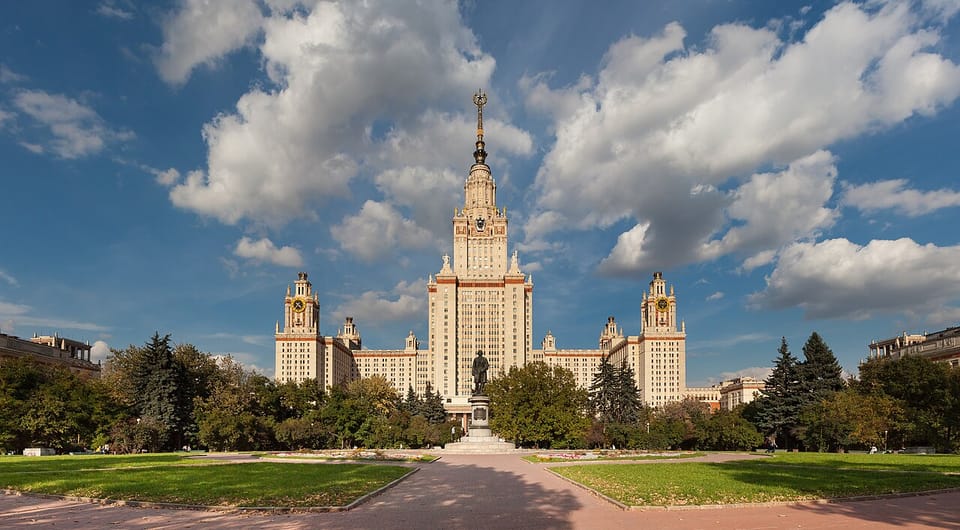
When an Arabic-speaking student asks "how many levels does Russian have?", the answers collide: five, six, nine, plus strange names that might be a language or a certificate. The truth is simpler than the noise: Russian runs on a single official six-step ladder, certified by one state examination — TORFL, written ТРКИ in Russian — and it is the ladder every Russian institution reads your language file through: universities, the interior ministry, employers. Not understanding this ladder costs students years in the wrong courses and money in the wrong exams; understanding it shortens the road from day one.
This guide builds the ladder step by step: what each level means, its equivalent in the familiar European framework, and what it unlocks specifically — university admission, work, a citizenship file. Then it explains the TORFL exam with its five sections and certificate mechanics, answers the most practical question (where to start from zero, and how to know your level before paying for any course), and closes with a working plan. Because comparing ladders is the fastest way to understand one, we set it beside other language ladders we have documented, like the German levels from A1 to C2.
The Russian Ladder: Six Steps From First Letters to Full Mastery
The Russian system for foreigners rests on six graduated state certificates, each with a name, a code, and a CEFR equivalent:
| Level | Official code | CEFR equivalent | What it means practically |
|---|---|---|---|
| Elementary | TEU (ТЭУ) | A1 | You understand very simple everyday phrases and introduce yourself with rehearsed sentences |
| Basic | TBU (ТБУ) | A2 | You handle routine situations and exchange direct information about your life |
| First Certificate | TORFL-I | B1 | You follow main points on familiar topics and produce connected text; the university gateway |
| Second Certificate | TORFL-II | B2 | You discuss complex topics in detail and read specialist texts |
| Third Certificate | TORFL-III | C1 | You use the language with high academic and professional flexibility, catching implied meaning |
| Fourth Certificate | TORFL-IV | C2 | Mastery approaching an educated native speaker across situations |
The steps are not theoretical decoration; every Russian institution demands a specific one, and moving between steps is a full learning phase, not one casual course. The fastest mental rule: the first two are for daily-life use, the third and fourth for academic and professional achievement, the fifth and sixth for rare mastery.
And because numbers alone do not make decisions, look at the question from the practical side: what do you want Russian for? The answer alone sets your target step — which is exactly the next section.
What Institutions Require: A Requirements Map by Goal
For university study in Russian-taught programs: the common rule on admission pages is that Russian-taught degrees require the First Certificate TORFL-I (B1) — the level the preparatory year is built to deliver, as we will see. Graduate and advanced specialist programs often raise the bar to TORFL-II (B2); verify your specific program, not the general rule.
For the Russian citizenship file: the official route requires proof of language at the Basic level — the second step of the ladder — far lighter than the university bar, because that test targets daily-life and administrative language rather than academic Russian.
For work: no single legal ceiling exists, but the market reads certificates by job logic: services and logistics commonly accept A2 to B1, roles with regular written communication lean toward B2, and teaching, translation, and academic work live in C1 territory and above. Medical specialists face the richest language demand of all: medical programs are taught in Russian at depth, with a clinical vocabulary layer no level can skip.
For daily life and integration: Basic A2 over-delivers on its official status here; its holder arranges housing, transport, and basic paperwork alone, while someone below it stays dependent on translators for the simplest errands.
Do not read the map rigidly: institutions update requirements, and some universities add a specialist test on top of the language level for competitive majors. The rule that protects you in every case: open the admission page of your exact program at your exact university, read the written language requirement, and match it against the ladder table above. Ten minutes of official reading saves a whole semester of misjudgment.
Source: Wikimedia Commons — language textbooks

The TORFL Exam: Structure, Sections, and How the Certificate Works
TORFL is the unified state test measuring Russian for foreigners, administered by institutions officially accredited by the Russian state — their number is limited to thirteen per the available documentation — most of them major Russian universities and their language institutes. The exam measures five skills in five sections: writing, vocabulary and grammar, reading, listening, and speaking. The sections spread across two days — one for writing, grammar, and reading; one for listening and speaking — because the mental load does not fit a single sitting.
Passing and certification follow the administering institution's rules: clear every section at a set minimum, and the official certificate is issued, signed and stamped. Official processing usually completes within ten working days, and some major institutions publish faster service — certain universities are known for next-day issuance for their own successful candidates.
A detail people miss: TORFL is not one exam in ten shapes but a family of exams, each level with its own profile. The First Certificate is not a "harder Basic" — it measures qualitatively different skills, which is why registering above your true level wastes the fee and stays on the record. The gap between paper level and real level is exactly what a placement test exposes, later in this guide.
Because the five sections run across two days, plan the logistics as carefully as the studying: sleep before day one, which carries the heaviest written load; skip the last-minute cramming; wear what survives long sittings; and bring exactly the documents the institution's rules allow, with an ID matching your registration data to the letter. Small details like these have dropped strong candidates in every season. In speaking specifically, the examiner wants living language, not recited lists: answer in full sentences, ask for repetition in simple Russian if needed — asking for clarification is itself a communication skill — and never go silent hunting for the perfect word; a simple correct sentence now beats an elegant one that never arrives.
The Preparatory Year: The Fastest Road From Zero to B1
How does a student who cannot read one Cyrillic letter reach studying medicine or engineering in Russian? The institutional answer is the preparatory year, which we documented in full in our guide to the preparatory year in Russia. The program is an intensive university year exceeding 2,000 study hours, more than half of it Russian from zero, the rest your specialist subjects — mathematics, chemistry, physics, or humanities depending on your track.
The institutional numbers explain the intensity: the Ural Federal University program runs about 2,160 hours a year at 28 weekly contact hours; the Far Eastern Federal University runs 26 to 36 weekly hours in groups of 6 to 14 students. The most storied programs carry decades of scale — the RUDN preparatory faculty has operated since 1960 and receives more than 1,200 students a year from 167 countries, while St. Petersburg Polytechnic's program has graduated more than 15,000 students since 1965.
The model harvest is not "improved language" but a precise target: TORFL-I (B1) plus a specialist foundation that opens Russian-taught admission. This is why program directors repeat one piece of advice that smart students internalize: the stronger your base before the preparatory year, the higher you exit it — the group moves at one pace, and your personal edge is built before travel. The year's structure rewards gradualists too: the first semester weighs language more heavily, then specialist subjects take over — so a student who started parallel study at home begins mid-group instead of at its floor.
CEFR Versus the Russian Ladder: How to Translate Between Systems
The question that confuses holders of other language certificates: does my German or English certificate advance my Russian file? The doubled answer: culturally yes — understanding how ladders work transfers — but formally no. Russian needs Russian proof, and the European framework remains a translation tool, not an exemption tool.
The practical translation follows the table above, with limits: equivalence indicates functional proximity, not identical tests. A student holding German B1 knows what B1 means generally — independent use — but will find Russian slower to reach that rung for structural reasons in the language itself, which is the next section's subject. The framework's great gift stays constant across languages: one shared vocabulary for describing your level to any institution in the world. Writing "TORFL-I (B1)" on a CV speaks to the Russian admissions reader and the international one at once, which alone justifies understanding the table before any practical step.
The Cyrillic Alphabet and the Case System: The Two Real Beginner Obstacles
Russian is rated relatively hard for Arabic speakers for precise, nameable reasons, and naming the obstacle early shortens the road. Obstacle one: the Cyrillic alphabet — around thirty-three letters, some looking Latin while sounding different (the trap), some with no lookalike at all. The good news is its length: two weeks of daily practice unlocks reading fluency, and most learners read comfortably before the first month ends.
Obstacle two carries a longer shadow: the case system. A Russian noun changes form by its sentence function across six cases, dragging adjectives and numbers with it — add three genders, plural patterns, and no articles, and guessing becomes impossible. This system is the real distance between A1 and B1, and it is why the preparatory year's hourly intensity is rational: cases are not memorized but built through practice across thousands of sentences.
Here lies a secret the impatient miss: whoever masters cases early advances in every skill simultaneously, because reading, listening, writing, and speaking all pass through them. Whoever neglects them accumulates a deferred bill that arrives in a single month at the next level. Give a third of your first study time to grammar and case practice, and do not flatter yourself with long vocabulary lists hanging off broken sentences.
What the Path Costs: A State Scholarship Covers the Year; Centers Set the Exam Fees
Any talk of levels and exams stays incomplete without cost, and the Russian route holds a rare pleasant surprise: the Russian government scholarship for international students covers a wide range of programs that include the preparatory year itself — meaning a scholarship student studies the intensive language year free within the package, as we detailed in the preparatory guide. That alone flips the economics for Russian-taught applicants.
Outside the state umbrella, cost assembles from three lines. Learning cost: courses in your country or a self-funded preparatory year, with a large spread in both money and time. TORFL exam fees: set by each accredited institution in its own published table, varying between institutions and levels — confirm your center's table before registering, exactly as with language exams everywhere else. And the third line, the cost of wasted time from choosing the wrong level: re-sitting an exam or repeating a level you already know costs more than any single fee.
The economic golden rule: never compare course prices alone; compare the cost of reaching a defined level. A cheaper course that moves slowly can be more expensive than a pricier one that lands you at your target in half the time — and for a student, time is not just money but an application window that closes.
Placement: Know Your Level Before You Pay for Anything
Before registering for any course or exam, you need one honest answer: where do I stand on the ladder right now? Three tools exist, and the wise use them together:
- The Council of Europe's official self-assessment grid: a task-based chart describing what you can actually do — not what you wish — per skill, and a tool we have linked across our language guides because it is shared by all of them.
- Diagnostic placement tests from language programs: most Russian-for-foreigners programs begin with a placement test before enrollment, and its result beats any self-impression because it measures with questions, not vibes.
- Trial TORFL models at your presumed level: take one under real timing; clearing most of it means you are ready to register, and failing it means the model itself just drew your next study plan.
The rule that protects your money and calendar: pay no state exam fee until a timed trial model says you are ready. A placement test is not a certificate and never substitutes for one — it is the compass you buy the right course with; the certificate comes later, from TORFL alone. And when you read your result, avoid the common flattening error: reading stronger than speaking does not make you "partially B1"; it makes you a learner with uneven skills, like most learners. TORFL requires clearing all five sections, not their average — so patch the weak skill before registering.
From Zero to Certificate: A Working Plan
Assemble everything above into one executable plan:
- Fix your end goal first — admission, work file, citizenship — and write down the exact level it demands.
- Take the Cyrillic alphabet early, even with basic rules only; decoding letters before travel saves whole months inside the program.
- Sit a diagnostic placement test and locate your true starting point, without cosmetics.
- Choose your learning route now: either a full institutional program — a preparatory year inside Russia — or a gradual build from your country combining regular lessons with real speaking practice.
- Track progress with trial TORFL models every eight weeks; log the score; adjust the plan on evidence, not mood.
- At readiness, register with an accredited institution, sit the exam, then plan the next jump if your goal sits higher.
Because plans stay ink without a weekly rhythm, here is a proven distribution for a serious learner before B1: a third of your time on grammar and cases, a third on vocabulary-in-context with daily listening, a third on production — short written sentences and real conversation however shaky. Re-balance every eight weeks on the evidence of a trial model, not on feelings, because feelings always flatter their owner. For the very start — the hardest meter of the road, especially with no Russian background at all — organized support in the first months outperforms its price: Truescho's online Russian from zero and TORFL preparation runs individual packages of 8 or 16 sixty-minute sessions that begin with the alphabet and the case system, and the larger package ends with a trial mock test before your official exam.
Five Mistakes That Delay Arabic-Speaking Students on the Russian Path
Mistake one: postponing the alphabet until arrival. The student who starts the preparatory year letter-blind spends the first month racing a group that started ahead, while the classmate who decoded Cyrillic at home rides the wave from day one. Mistake two: memorizing isolated vocabulary — a thousand-word list without cases produces broken sentences the speaker understands and the Russian listener does not; words belong inside working sentences.
Mistake three: neglecting listening during the first months on the theory that "grammar comes first." The Russian ear is built by daily exposure from week one, and six months of neglect surfaces exactly in the listening exam, at double the speed of classroom audio. Mistake four: jumping a level the moment its paper is passed — every level assumes hundreds of hours of consolidation, and a paper pass without practice is exposed immediately at the next level.
Mistake five, the most expensive: building the plan on scattered certificates from unaccredited sources and discovering the gap at the university gate. One accredited institution gives you one certificate accepted everywhere; everything else is a learning tool, not an official document. Return always to the equivalence table at the top of this guide: six levels, one state exam, one clear route that tolerates no parallel improvisations.
Frequently Asked Questions
How many levels does the Russian language have?
Six official graduated levels from Elementary to the Fourth Certificate, equivalent to A1 through C2, certified by the TORFL state exam.
What is the TORFL exam?
The unified Russian state test of Russian for foreigners, with five sections — writing, vocabulary and grammar, reading, listening, and speaking — spread over two days.
What level do Russian universities require?
Russian-taught programs commonly require the First Certificate TORFL-I (B1); graduate and specialist programs often raise it to TORFL-II (B2) — always check your program's page.
Can I study Russian in my country before traveling?
Yes, and it is recommended: mastering the alphabet and basic grammar before the preparatory year raises your exit level from it.
How long does Russian take from zero to B1?
The intensive preparatory year exceeds 2,000 study hours to prepare TORFL-I; part-time study at home takes longer in proportion to your weekly hours and consistency.
Does the TORFL certificate expire?
It is a permanent record of achievement, though some institutions may prefer a recent certificate as internal policy — verify your target institution's rule.
Where can I find a trial exam model?
On accredited institutions' pages and official language program sites; diagnostic placement tests also serve before paying for any official exam.
Is Russian harder than other languages?
Its family differs from Arabic and English, but the two main obstacles are specific — the alphabet and the case system — and both yield to regular practice; thousands of Arab students clear them every year.
What is the difference between the preparatory year certificate and TORFL?
The first proves you completed a specific university's program with its language and specialist subjects; the second is a standalone state standard of your level, more widely accepted across institutions.
Want someone to carry this step for you? Start Russian from zero with a teacher who knows Arabic and takes you up to a mock of the official exam — Truescho's online Russian course.
Sources:
- TORFL — Test of Russian as a Foreign Language, system overview
- Council of Europe self-assessment grid
- Official Russian education portal for international students