
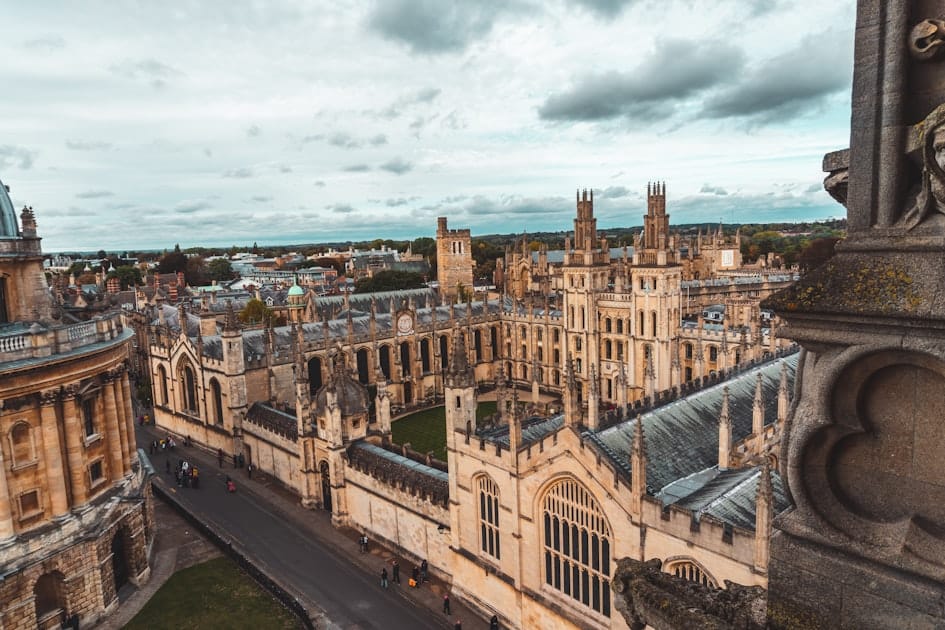
Rhodes Scholarship 2027: Oxford Funding, Eligibility and Course Planning Guide
Last updated: July 2026
Rhodes Scholarship 2027 is not a scholarship to treat casually. The official rules are clear, the competition is serious, and the timeline rewards applicants who start before the final month. This guide uses the competitor topic only as a signal, then rebuilds the application plan from official sources and practical applicant questions.
Quick answer: first confirm eligibility, then map the deadline sequence, then build evidence for your academic strength and public contribution. If this opportunity is not an exact fit, use Truescho opportunities to compare alternatives instead of forcing a weak application.
What is Rhodes Scholarship 2027?
Rhodes Scholarship 2027 is a verified international opportunity with official rules, not just a social media announcement. Its value comes from the combination of funding, institutional reputation and a selection process that looks for evidence. A strong applicant does not simply say they are motivated; they proves readiness through marks, references, projects, leadership and a realistic study plan.
The practical question is not only "is this funded?" It is "can I meet the rules, documents and dates without improvising?" That shift changes the whole application. Instead of collecting inspirational phrases, you collect proof: transcripts, research output, school nomination, course match, referee availability and a concise story of impact.

Source: Rhodes Trust
Who should apply?
A final-year or recent graduate with strong academics, public-minded leadership, service evidence and a realistic Oxford postgraduate course plan. If that sentence does not describe you, do not panic. It simply means this may be a later-cycle target or a useful benchmark for another scholarship. The most expensive mistake is spending weeks on a famous opportunity while ignoring a better-fit scholarship with a cleaner eligibility match.
A strong applicant starts with the official eligibility page, not with the benefits list. Benefits attract attention; eligibility decides whether the application will be read. If a rule cannot be fixed, choose a different opportunity. If a rule can be improved, such as research evidence, a referee letter or a program match, start working on it immediately.
Fast decision table
| Item | Details |
|---|---|
| Opportunity type | Competitive international scholarship |
| Level | Postgraduate research or professional graduate study |
| Core deadline | Varies by constituency |
| Funding | Full or major funding according to the official program page |
| Best-fit applicant | A final-year or recent graduate with strong academics, public-minded leadership, service evidence and a realistic Oxford postgraduate course plan. |
| Official source | Official page |
Use this table before drafting anything. If two or more cells are uncertain, spend one focused session reading the official source and contacting the relevant office or school adviser. Do not write a polished essay for an opportunity whose basic timeline or applicant category is still unclear.
Funding and benefits
- Oxford course fees for eligible full-time postgraduate study routes.
- A published 2025/26 stipend of GBP 20,400 per year, paid as GBP 1,700 per month.
- Oxford application fee, student visa fee and International Health Surcharge coverage.
- Two economy flights plus a settling-in allowance when scholars arrive in Oxford.
Funding language needs careful reading. A phrase like "fully funded" can still have limits: dependents may not be covered, some costs may be paid later, and degree duration can affect support. Serious applicants create a small budget beside the official benefits. That makes the final application more credible and prevents surprises after selection.
Consider Priya, a final-year student from Pune who kept losing time on broad scholarship lists. Her mentor asked her to create a funding grid: tuition, living costs, health insurance, flights, application fees and renewal conditions. The grid showed which opportunities were truly viable. Her essays improved because she was no longer writing as if all scholarships were the same.
Timeline and action plan
| Date | What it means |
|---|---|
| June 1, 2026 | Applications open globally for the 2027 cohort; the United States opens on July 1. |
| July to October 2026 | Deadlines vary by Rhodes constituency and must be checked on the official portal. |
| Late 2026 | Shortlisting and interviews take place by constituency. |
| October 2027 | Selected scholars begin study at the University of Oxford. |
Treat the official deadline as the last gate, not the working date. Your real deadline is earlier: the day by which your referee, school, supervisor or admissions office must act. Build the plan backwards. Reserve the final week only for checking uploads, filenames, signatures, links and time zones.
Step-by-step application workflow
- Save the official page, the application page and the deadline table in one document.
- Convert each eligibility condition into a yes/no checklist with proof beside it.
- Choose the academic program, research field or applicant category before writing the personal statement.
- Contact the school counsellor, supervisor or referee early with a one-page summary of your goals.
- Draft the application around evidence: marks, research, leadership, service, publications, projects or measurable outcomes.
- Check every file name, upload field and date two days before submission.
For broader planning, compare this opportunity with Truescho scholarship listings, use the GPA calculator when a program needs a converted average, and check university rankings if you are comparing multiple destinations.
How to write a stronger application narrative
The best applications connect a real past pattern with a credible future plan. Do not write, "I want to become a leader." Show where leadership already happened. Do not write, "I love research." Show a thesis, dataset, lab role, conference poster or supervisor feedback. Committees read thousands of claims; evidence gives them a reason to keep reading.
Use a simple structure: problem, action, result, lesson, next step. If the result has a number, use it. If it does not, use a verifiable outcome: a published report, a trained group, a community program, a supervisor recommendation or a prototype. Strong writing is not inflated; it is specific.
A realistic applicant story
Daniel, a public-health graduate from Lagos, almost submitted a generic essay about wanting to study abroad. During a review, he realized his strongest evidence was a vaccination-awareness project that reached 1,200 households through student volunteers. He rebuilt the essay around that project, the data gaps he noticed and the graduate training he needed next.
That kind of narrative does not guarantee selection, but it gives the committee something concrete to evaluate. It shows judgment, initiative and a reason the scholarship matters now. For prestigious awards, clarity is often more persuasive than dramatic language.
Common mistakes to avoid
- Relying on a competitor post instead of the official source.
- Starting the essay before confirming eligibility and deadlines.
- Asking for references with no context or too little time.
- Choosing a famous course without explaining academic fit.
- Using the same motivation letter for every scholarship.
- Ignoring hidden time costs such as nomination, translations or supervisor contact.
If you are building a 2027 funding plan, create a portfolio of options. A smart list includes one ambitious award, two strong-fit scholarships and two backups with different deadlines. Truescho can help you keep that search broad while you prepare the strongest target.
A 30-day plan before the deadline
Treat the final month as a managed project, not a writing sprint. During the first seven days, do not rush into the essay. Read the official page, list every eligibility rule and write the proof you have beside each rule. This step feels slow, but it prevents the classic mistake of producing a polished application that fails a basic requirement.
In week two, handle anything that depends on another person: school nomination, supervisor confirmation, referee letters, stamped transcripts or official translations. Send each person a short brief with the scholarship name, deadline, official link, your current CV and three points you hope they can confirm. A good recommendation rarely appears from a vague request.
In week three, build the main narrative. Start with evidence before style. Write three short stories: one that proves academic readiness, one that proves initiative or service, and one that explains why the program fits the next step. Then connect them to the scholarship purpose. This produces a clearer essay than starting with a dramatic opening sentence.
In week four, reduce risk. Edit for clarity, remove inflated claims, check every date and ask one reader to identify confusion. Open the application portal before the final day, even if your file is not perfect yet, so you can see file-size limits, required fields and upload formats. Many avoidable failures happen in the portal, not in the essay.
Documents to prepare early
| Item | Details |
|---|---|
| Eligibility proof | Passport status, current study level, graduation year or enrolment evidence. |
| Academic proof | Transcript, grading scale, class rank if available and awards that explain performance. |
| Impact proof | Research, leadership, service, project results or measurable outcomes linked to the scholarship purpose. |
| External support | School nomination, referee letter, supervisor note or professional reference where required. |
| Final review | Name consistency, file format, deadline time zone and official-link verification. |
This table does not replace the official instructions. It is a planning tool. Every scholarship has one or two documents that carry unusual weight: a school nomination, a constituency choice, a research evidence template or a course match. Attach each document to a purpose. Ask yourself which rule it proves and which part of your story it strengthens.
How to decide whether this opportunity deserves your time
Fame is not the same as fit. Score the opportunity from 1 to 5 on eligibility, competitiveness and personal fit. If eligibility is below 4, do not proceed unless the gap can be fixed quickly. If personal fit is below 3, you may be chasing prestige instead of a scholarship that advances your actual plan.
For example, a research scholarship needs evidence of research potential. If you have no thesis, project, lab role or supervisor feedback, a leadership or undergraduate award may be a stronger target now. But if you do have a strong thesis or field project, turning it into a one-page research summary may be the best use of your next week.
A short message template for a referee or school
Keep the request clear. Write: "I am applying for Rhodes Scholarship 2027. The deadline is ... and I need a nomination or reference by .... I have attached a one-page CV, a short goal statement and the official scholarship link." This helps the referee write about real evidence instead of producing a generic character note.
If the referee does not respond within three working days, send a polite reminder. If there is still no answer after a week, activate a backup. For school-nominated awards, speak to the counsellor months ahead because the school may need an internal process before choosing its single nominee.
What if you discover you are not eligible?
Do not submit a non-compliant application hoping the committee will be flexible. Use the time on a better-fit opportunity. Search Truescho opportunities by level, country and deadline. If the problem is GPA, look for scholarships that weigh research or service strongly. If the problem is language, look for programs that accept previous English-medium study or later test submission.
Most importantly, keep the learning. Every official scholarship page teaches you vocabulary: eligibility, nomination, fee offset, stipend, constituency, research period, tenure. After reading several official pages carefully, you will recognize better-fit opportunities faster and stop being distracted by vague "fully funded" headlines.
A 90-day preparation plan
If the deadline is far enough away, the best plan starts 90 days before submission. During the first month, focus on evidence instead of prose. Collect transcripts, project links, activity records, recommendation contacts, research summaries and any official document that proves your claims. Name files clearly so you do not waste time during upload week.
From day 31 to day 60, turn evidence into a narrative. Choose three ideas you want the reader to remember: academic readiness, real-world initiative and fit with the program. Do not try to include every activity. A strong application feels curated. If you have twelve activities, select the three that explain your direction and let the CV carry the rest.
During the final month, test the file with two readers: one who understands scholarships and one who does not know your story well. The first reader can catch weak evidence. The second reader can catch confusion. If the second reader cannot explain why you fit the scholarship after two minutes, the issue is usually structure, not intelligence.
How Truescho fits into the preparation process
Use Truescho as a tracking board, not just a link list. Build a table with ambitious awards, strong-fit scholarships and backup options. Add the deadline, level, country, language rule and the document most likely to slow you down. This keeps your strategy broad while you work deeply on the strongest application.
When comparing destinations, use the platform's opportunity search, GPA tools and university pages to avoid guessing. A better application explains why the academic environment fits the applicant's plan. That is easier when you compare programs, deadlines and support services with real information instead of relying on reputation alone.
Honesty as an application strategy
Honesty is not only an ethical rule; it is practical. Do not inflate participant numbers, claim full ownership of a team project or promise world-changing outcomes in one year. State what you actually did, show the evidence and explain the next step. Experienced readers can quickly spot dramatic claims that have no support.
If you have a weakness, such as a study gap or a lower semester, do not make the whole essay about it. Give brief context if relevant, then focus on recovery and stronger recent evidence. A credible file does not reveal every private detail; it makes sure every important claim can be defended if the committee asks.
Other 2027 routes before choosing a path
If Rhodes is not the right stage for you, review the Lester B. Pearson Scholarship 2027 for undergraduate applicants or the University of Sydney RTP and USYDIS 2027 for research students. Stage fit matters more than name recognition.
Why this guide is stronger than a short competitor notice
Competitor pages are useful for discovery, but they often stop at the headline, deadline and headline benefits. This guide adds the applicant's operational layer: what to verify, how to sequence the documents, what to prove in the essay and how to avoid submitting a famous but weak application.
It also separates official facts from interpretation. If a blog post and an official page disagree, use the official page. If a rule is ambiguous, ask the institution or scholarship administrator. Your goal is not to win an argument with a blog; your goal is to submit a compliant, persuasive application.
Final checklist
| Check | Why it matters |
|---|---|
| Eligibility copied from the official page | Prevents avoidable administrative rejection |
| Deadline converted to your local time | Avoids time-zone mistakes |
| Program or category confirmed | Keeps the essay focused |
| Referees briefed early | Produces stronger letters |
| Evidence attached to each claim | Makes the story credible |
| Backup scholarships identified | Reduces pressure and improves strategy |
Frequently asked questions
Is the Rhodes Scholarship 2027 open?
Yes. The Rhodes Trust announced that applications for the 2027 cohort are open, with the United States opening on July 1, 2026. Exact closing dates depend on the applicant's constituency.
What does the Rhodes Scholarship cover?
The scholarship covers Oxford course fees and provides an annual stipend. The published 2025/26 stipend is GBP 20,400, or GBP 1,700 per month, plus visa-related support and economy flights.
Can Rhodes fund a full DPhil?
Rhodes can support DPhil routes, but applicants must understand the conditions of tenure. DPhil study often lasts beyond the funded period, so long-term funding planning is part of a serious application.
Do I apply to Oxford or Rhodes first?
Applicants apply to the Rhodes Scholarship first. After selection, successful candidates apply to their Oxford postgraduate course with support from the Rhodes Trust team.
Why does the constituency matter?
The Rhodes Scholarship is administered by geographical constituencies. Deadlines, eligibility details and document rules can vary, so applicants must use the official constituency information before submitting.
What makes a stronger Rhodes application?
A stronger application connects academic excellence with service, leadership and a credible Oxford course choice. It also explains why the chosen degree is necessary for the applicant's public-impact plan.
Conclusion
Rhodes Scholarship 2027 can be a life-changing opportunity, but only for applicants who treat it as a structured project. Confirm fit, build evidence, respect the timeline and keep backup options open. Use Truescho opportunities to compare scholarships, and consider Truescho consultants if you need an external review before submission.
Sources
- Rhodes Trust scholarship page — Official funding, value and 2027 cohort information.
- Rhodes Trust application overview — Official process and eligibility-check flow.
- Conditions of Tenure — Degree combinations and funding duration.
- Oxford graduate course finder — Definitive source for Oxford graduate courses.