
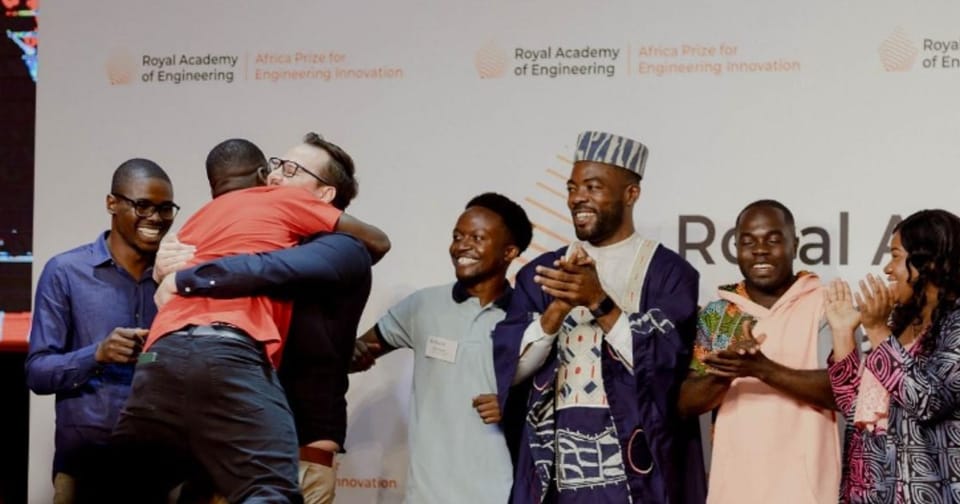
Africa Prize for Engineering Innovation 2027: Eligibility, £85,000 Prizes and Application Guide
The Africa Prize for Engineering Innovation 2027 supports founders who are turning engineering solutions into scalable businesses with social or environmental value in Sub-Saharan Africa. Run by the UK's Royal Academy of Engineering, it combines an eight-month commercialisation programme with engineering mentorship, expert networks and £85,000 in total prize money.
Stage 1 closes on 8 September 2026 at 16:00 UTC+1. An idea alone is not enough: hardware applicants need a working prototype and route to production, while software applicants need a functional MVP and evidence of user or customer interest.
Key facts
| Item | Official detail |
|---|---|
| Organiser | Royal Academy of Engineering |
| Applicant age | 18 or older; no maximum age |
| Region | Eligible Sub-Saharan African countries |
| Stage 1 opening | 13 July 2026 |
| Stage 1 deadline | 8 September 2026 at 16:00 UTC+1 |
| Shortlist | Up to 16 innovators |
| Support period | Eight months in 2027 |
| Total prizes | £85,000 |
| Fee or equity | No fee and no equity taken |

Source: the official Africa Prize website.
Prize breakdown
The £85,000 total is not a grant paid to every participant:
| Award | Amount |
|---|---|
| Africa Prize winner | £50,000 |
| Three runners-up | £10,000 each |
| Public-vote One-to-Watch award | £5,000 |
Shortlisted innovators receive the business and engineering support programme. The Academy covers reasonable participation costs for programme activities, including necessary travel for in-person sessions. Limited internet-connectivity support may also be available.
Applicant eligibility
The lead applicant must:
- Be at least 18 years old by the deadline.
- Be a citizen of an eligible Sub-Saharan African country and normally resident there.
- Have a high level of English, because the application and programme operate in English.
- Apply individually or as the lead member of a team.
- Own at least 50% of the venture at application if co-founders are based outside Sub-Saharan Africa.
- Be able to join the eight-month hybrid programme and travel when required.
An engineering degree is not required, but the innovation itself must be engineering-led. Temporary residence outside Africa for study or work can be considered if the applicant explains the situation and the venture remains based in an eligible country.
Are applicants from Arab countries eligible?
Eligibility is not open to every Arab country. The Academy's Sub-Saharan list includes Arab countries such as Sudan, Mauritania, Somalia, Djibouti and Comoros. Egypt, Morocco, Algeria, Tunisia and Libya are not on the eligible-country list for this competition.
Always check the official eligibility page because the citizenship and normal-residence tests apply to the lead applicant.
Innovation requirements
The innovation must:
- Be based in an eligible Sub-Saharan African country.
- Have moved beyond the idea stage and reached early commercialisation.
- Be scalable and deliver social or environmental benefit in the region.
- Have an ambitious but realistic commercial plan.
- Have a clear and lawful intellectual-property position.
Hardware
Hardware entries should have a working prototype, an advanced design moving towards production, manufacturing costs and timing, and evidence of customer or beneficiary interest. Photos and videos must be authentic.
Software or applications
Software entries should have a functional MVP, genuine screenshots or a demo video, and traction evidence such as active users, pilots, customer discussions or data supporting revenue assumptions.
Military innovations, idea-stage concepts and projects focused only on economic profit without social or environmental value are not eligible. Restrictions also apply to previous Africa Prize participants and certain alumni of other Academy programmes.
What shortlisted innovators receive
Up to 16 innovators join an eight-month programme that includes:
- Tailored commercial training and expert sessions.
- One-to-one financial-modelling and business support.
- In-person training weeks and hybrid activities.
- Sector-specific engineering mentorship.
- Communications and media support.
- Preparation to pitch at the Prize event.
- Later access to the Africa Prize alumni network and Awardee Excellence community.
The programme is free, the Academy takes no equity, and applicants retain ownership of their intellectual property.
Stage 1 application materials
Stage 1 covers applicant details, the team, innovation, local impact, supporting information, declarations and marketing. Prepare:
- A lead-applicant CV of no more than two pages.
- Team information and a complete ownership breakdown.
- A technical description and current development stage.
- A 12-month roadmap and a two-to-three-year development vision.
- Product or service cost details in pounds sterling.
- An original technical diagram showing components and interfaces.
- Authentic prototype photos or video; software applicants need a genuine demo or screenshots.
- A 5–10 slide pitch deck covering problem, solution, business, finances, traction and team.
- Test results, customer feedback and impact evidence.
- One independent support document, such as a company-registration certificate, patent, incubator or accelerator letter, or university spin-out letter.
- A gender and equality statement of up to 400 words.
AI-generated product images, videos or technical evidence are not accepted and can make an application ineligible. Applicants must disclose relevant AI use and should not allow a tool to write the entire submission in place of their own voice.
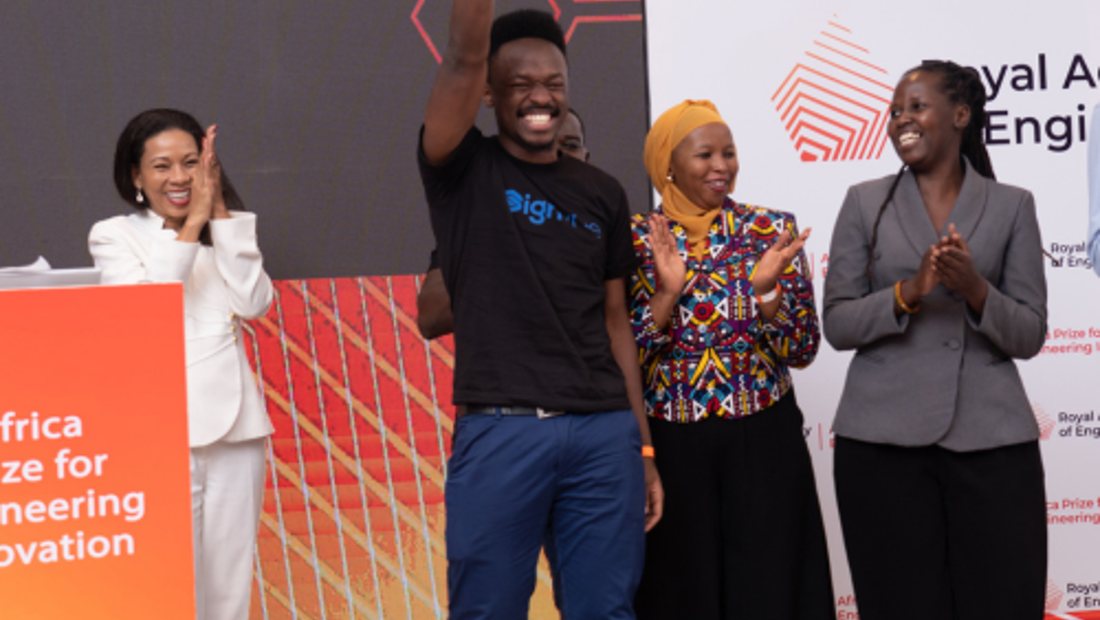
Source: the Royal Academy of Engineering's official 2027 call announcement.
Selection stages
- Stage 1 – Technical Assessment: eligibility checks followed by assessment from two technical experts in September.
- Stage 2 – Business Assessment: the strongest applicants receive instructions in October and roughly three weeks to submit business-plan, market, financial and commercial information.
- Shortlist: selected by December, with applicants notified in January 2027.
- Support programme: eight months during 2027.
- Final: four finalists are selected in September, with the final event in October 2027.
The 2027 guidance contains conflicting detailed dates for Stage 2. Treat the deadline sent directly to longlisted applicants as authoritative rather than relying on an unofficial date.
How to apply
- Read the official 2027 guidance notes.
- Create an account in the Grant Management System.
- Select Africa Prize for Engineering Innovation 2026/2027 Stage 1.
- Complete all seven sections and attach authentic supporting materials.
- Review ownership, product costs and technical evidence carefully.
- Submit before the deadline. The application cannot be edited after submission.
Frequently asked questions
Is this a student competition?
An adult student can apply if they lead an eligible engineering venture, but this is not a scholarship or a classroom idea contest. The project must have a working product and early commercial evidence.
Can a research project apply?
A laboratory or industrial research project alone is not enough. The innovation must be moving towards a scalable independent business and meet the commercialisation requirements.
Must the company already be registered?
A registration certificate can serve as the independent support document, but the guidance accepts other specified evidence such as a patent or incubator, accelerator or university letter.
Where can I ask an official question?
Email [email protected].