
Qwen Image 2.1: Alibaba's Free Open-Source Image Generation and Editing Model
Last updated: October 2026
Alibaba released Qwen-Image-2.1 on September 14, 2026 as an open-weights model that combines text-to-image generation, image editing, and native transparent-image output in a single package — with a visual generation component of just 7 billion parameters. You can try it free from anywhere in the world through the official Hugging Face demo, download the weights directly, or run it on your own hardware with no subscription at all. For designers, e-commerce sellers, and developers who have been paying monthly fees for image tools, the interesting question is no longer whether open models can compete, but which parts of your workflow they can already take over.
This guide walks through exactly what the model does (as documented by Alibaba's official announcement, not marketing echoes), how to access it today, how it compares with the paid tools most people already use, and the honest limitations — including a research-oriented license that deserves a careful read before any commercial rollout.
What Qwen Image 2.1 actually is
Qwen Image 2.1 is the newest generation of Alibaba's Qwen image family. Its defining trait is unification: three tasks that used to live in separate tools — generating images from text, editing existing images, and producing images with transparent backgrounds (RGBA) — now happen inside one model. The visual generation component holds 7 billion parameters across 32 single-stream DiT layers, which is deliberately compact for a 2026 release, and that compactness is the point: usable quality at lower compute cost.
The base model landed on September 14, 2026, on both Hugging Face and ModelScope. Six days later, on September 20, Alibaba added two companion models called PE-T2I and PE-I2I. Their job is prompt rewriting: you describe an idea in plain language, the companion model rewrites it into a far more detailed prompt, and only then hands it to the image model — one companion for text-to-image, the other for editing. Within roughly three weeks the base model passed 94,000 downloads on Hugging Face alone, a strong early-adoption signal for a specialized image model.
The release also fits a pattern we have tracked across Alibaba's Qwen family — serious open-weights releases aimed at individuals and small teams, such as the Qwen3.8-27B coding model and the 2.4-trillion-parameter Qwen 3.8-Max. For the wider picture of how open models are closing gaps with closed ones, our coverage of the summer 2026 state of open models report is worth a read.
The headline capability: native transparency
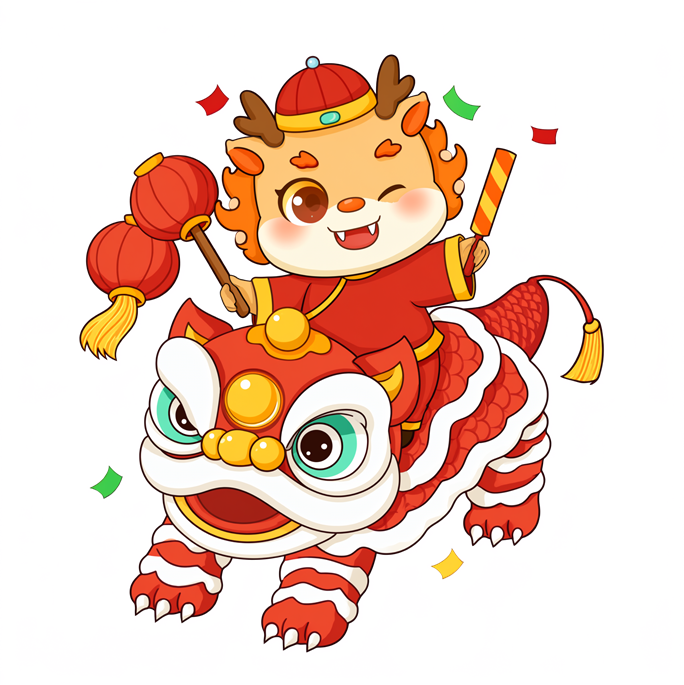
The feature working designers will notice first is native transparent-image support. Before this release, producing a transparent PNG through generative AI meant a multi-step dance: generate the image, run background removal, clean up the edges by hand. Qwen Image 2.1 decides from your prompt whether to output a regular image or an image with a transparency channel, and it edits transparent layers directly — change a subject's expression while keeping the transparent background intact, or edit text inside a transparent layer.
The capability is not entirely new to the family. A dedicated model called Qwen-Image-Layered offered transparent generation starting in December 2025. What changed is integration: instead of adding another tool to your stack, transparency is now one prompt away inside the unified model. The model also works in reverse on real photographs — given an ordinary RGB photo, it can extract your chosen subject as an RGBA layer ready for reuse in designs. Anyone who has spent hours cutting products out of photos for a store catalog will understand why that single feature matters.
Source: Official Qwen blog
Editing with up to ten reference images
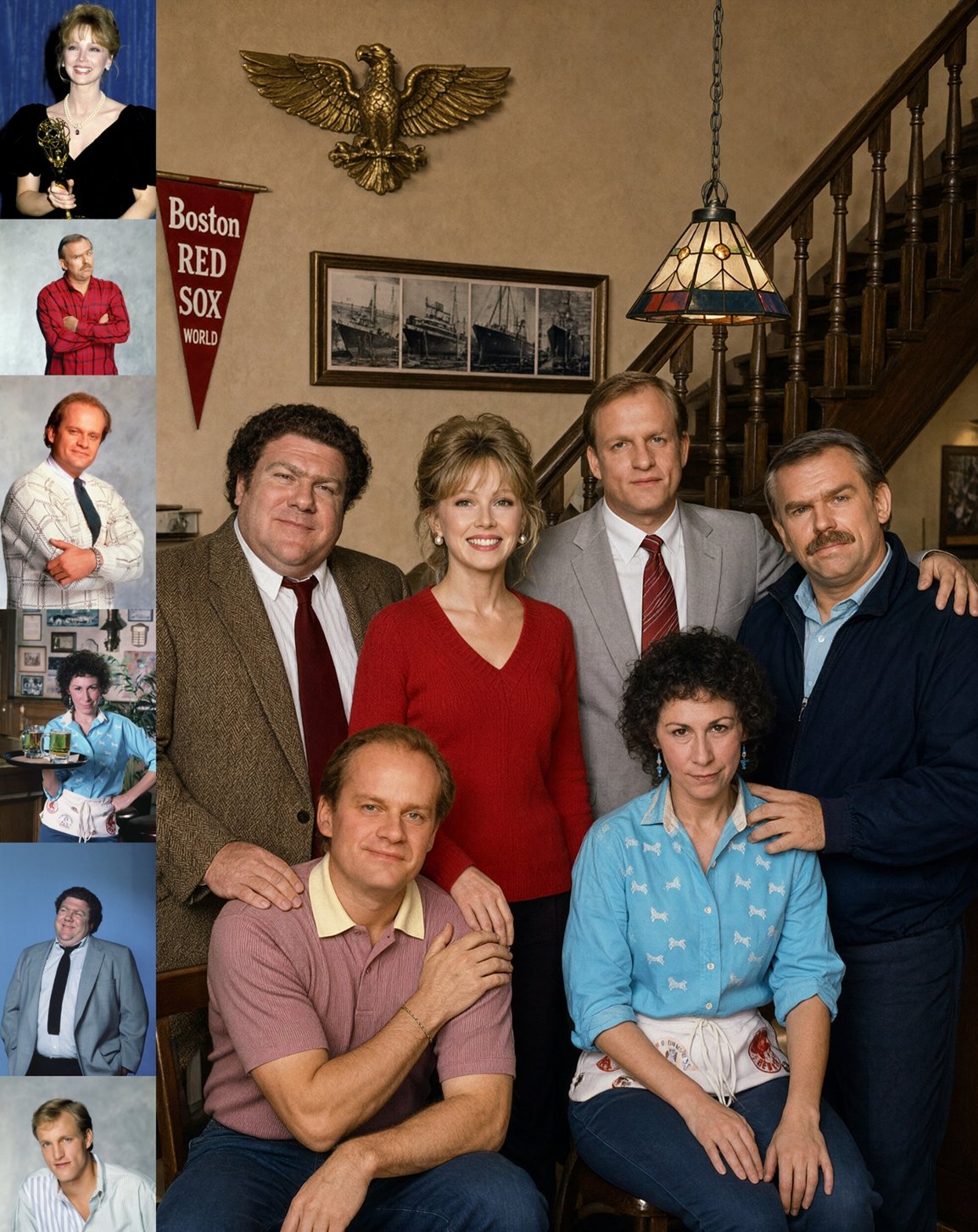
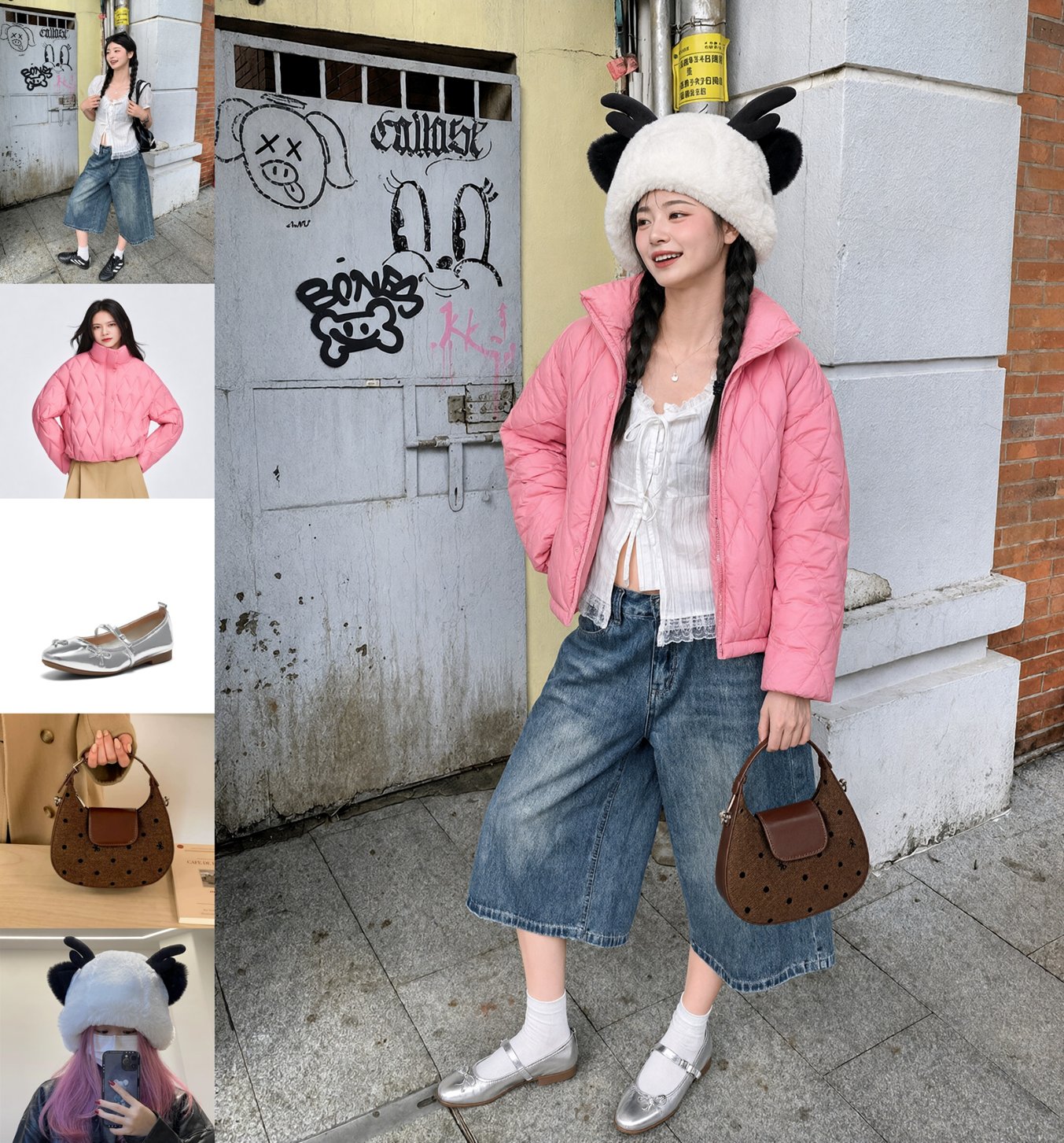
The editing side is where Qwen Image 2.1 pulls ahead of most casual alternatives. Instead of one input image, it accepts up to 10 reference images and merges their elements into one coherent result. Alibaba's announcement demonstrates three scenarios that translate directly into commercial work:
- Group photos from individual portraits: six separate portrait photos become one group shot with everyone placed in the same scene.
- Virtual try-on: five inputs — a model, a clothing item, shoes, a bag, and a hat — combine into a complete, coordinated outfit. For online fashion stores, this is product photography without photo shoots.
- Interior design: ten images of furniture and furnishings become a fully arranged room.
Beyond multi-reference composition, the model supports localized editing: circle an area, paint a rough annotation, or supply a separate mask, and only that region changes. Alibaba also emphasizes identity preservation for people and products across edits — the hard balance most editors get wrong, and the area where the company documents clear progress.
Source: Official Qwen blog
Source: Official Qwen blog
How Alibaba kept it efficient
Accepting ten input images usually explodes compute cost, so the interesting engineering question is how the model stays practical. Alibaba's answer is a mixed-granularity attention architecture: text — including the system prefix and editing instructions — is processed with a token-level causal mask, while image generation runs on larger chunks. A reused KV cache treats input images and editing instructions as static context, computed once at the start and reused across generation steps instead of being recalculated every time. The documented result is faster inference and lower memory use precisely in the heaviest scenario: multi-image editing.
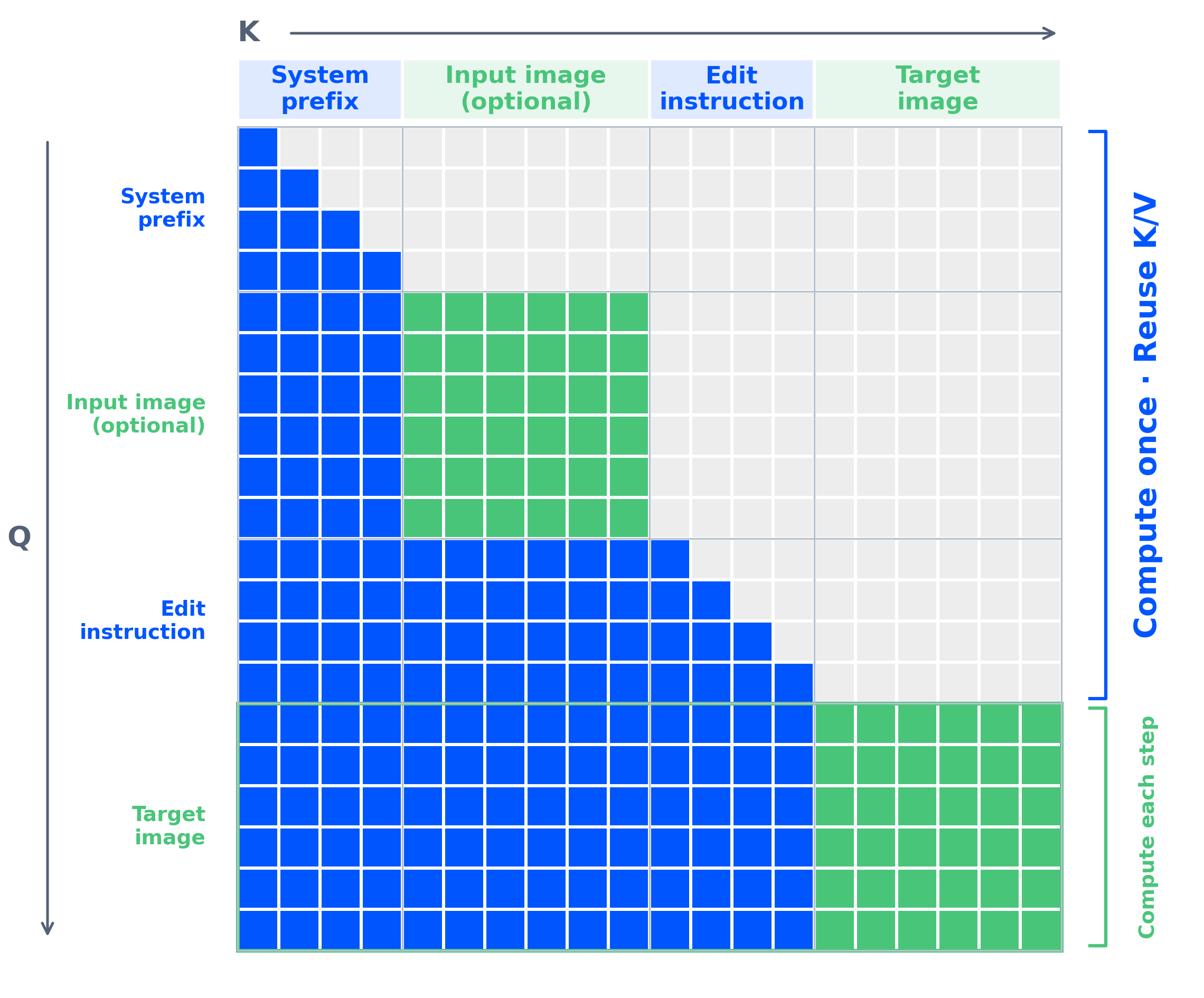
Source: Official Qwen blog
On aesthetics, the announcement lists improvements in typography, portrait lighting, and fine detail — historically weak points for small open image models. Alibaba also published a comparison on its own benchmark, Qwen-Image-Bench, against both open and closed models. Because that comparison was published as a chart rather than a numeric table, we point you to the blog itself rather than repeating scores here.
How it compares with the tools you already use
| Criteria | Qwen Image 2.1 | Midjourney | ChatGPT image tools | Traditional editing suites |
|---|---|---|---|---|
| Cost of access | Free, open weights + official demo | Monthly subscription | Subscription or limited free tier | Separate licenses, often paid |
| Multi-reference editing | Up to 10 reference images | Limited | Moderate | Mostly manual |
| Transparent images | Native generation and editing | Indirect | Indirect | Separate manual step |
| Local, private execution | Yes, on your own machine | No | No | Partially |
| License | Research license (qwen-research) — review before commercial use | Per plan terms | Per plan terms | Varies by tool |
Read the table as a decision aid rather than a verdict. Paid cloud tools still win on convenience: you type, you get results, nothing needs installing. Open weights win on control, privacy, and marginal cost — your product photos never leave your machine, and there is no monthly bill that scales with your ambition. For freelancers and small studios outside the major Western markets, where subscription costs bite harder relative to local income, that trade-off increasingly favors the open option.
Three free ways to try it today
- The official demo, instantly. The Hugging Face Spaces demo (linked in the sources below) runs in your browser. Type a prompt in English, get a result, and judge the quality yourself before committing to anything.
- Run it locally via GitHub and diffusers. The official repository documents setup with a recent PyTorch, transformers, and diffusers. Running a capable image model on personal hardware is no longer theoretical, and if you later want to fine-tune models yourself, beginner-friendly tooling such as Unsloth Desktop has lowered that barrier too.
- Download the weights for integration. Developers embedding the model into their own systems can pull it from Hugging Face or ModelScope, alongside the two PE prompt-rewriting companions.
One honest practical note: within the official sources we reviewed, Alibaba has not published a minimum GPU memory requirement. Do not build a hardware purchase decision around forum numbers. Try the demo first, then benchmark locally on your own machine with real examples from your work.
The limitations nobody puts on the landing page
- The license is not Apache. The model ships under a license named qwen-research — a research-oriented license, distinct from the Apache 2.0 licensing of Qwen's text models. If your use is commercial (a store generating product imagery, an agency delivering client work), read the license text in the repository carefully before building on it. "Open weights" does not automatically mean "do anything commercially."
- No official claim of Arabic (or other non-English) text rendering. Alibaba announced improved typography generally, but made no official claim about rendering Arabic script inside generated images. Historically the family has focused on Chinese and English. Test a simple phrase in the demo before betting a campaign on it.
- No official hardware floor. As above, the absence of a published VRAM requirement means your local experience may differ from what you read online.
- Content moderation becomes your responsibility. A local model has no cloud-side safety filter. That is a privacy advantage and a legal responsibility at the same time — especially around images of real people.
Why the timing matters
This release lands mid-race. Open Chinese models and closed Western ones are trading blows weekly, and industry analyses through late 2026 describe the quality gap between the two camps narrowing to slim margins. Download statistics on open platforms now run into the millions for successful releases within days. A compact, unified image model from one of the largest cloud vendors is a signal about where the market is heading: capable models that run locally on consumer hardware, for capabilities that were data-center exclusives a year ago.
Alibaba is also building an ecosystem, not just dropping weights: companion prompt-rewriting models, documented official repositories, and a live demo reduce the distance between "interesting paper" and "tool you can use this afternoon." What we would watch next: community adoption of the PE companions, and whether the model arrives on Alibaba's cloud APIs with official pricing — at which point the cost calculus changes again for users without capable hardware.
Frequently asked questions about Qwen Image 2.1
What is Qwen Image 2.1?
It is an open-weights AI model from Alibaba, released September 14, 2026, that unifies text-to-image generation and image editing in one model. Its visual generation component is relatively small at 7 billion parameters, it supports native transparent (RGBA) image output, and it accepts up to 10 reference images for editing — all downloadable free of charge.
Is Qwen Image 2.1 really free?
Access is free: the weights are on Hugging Face and ModelScope at no cost, there is an official browser demo, and local use has no fee. The real costs are your own hardware and electricity, and the published license is research-oriented (qwen-research), so review it before large-scale commercial use.
How does it compare with Midjourney or ChatGPT image tools?
Paid tools remain more convenient and require no setup, while Qwen Image 2.1 gives you full local control, privacy, multi-reference editing, and native transparency at no subscription cost. Choose paid tools for speed and simplicity; choose open weights for control, privacy, and zero marginal cost.
Can I run it on my own computer?
Yes. The model is intentionally compact and the official repository documents running it through diffusers with a recent PyTorch version. Since Alibaba has not published an official minimum VRAM figure, test the browser demo first and benchmark locally before buying hardware for it.
Does it render non-English text inside images?
Alibaba announced general typography improvements but made no official claim about Arabic or other non-English scripts inside generated images. A quick test with a simple phrase in the official demo is the reliable way to check for your language.
What are the PE-T2I and PE-I2I companion models?
Released September 20, 2026, these are small prompt-rewriting models. PE-T2I rewrites prompts for image generation and PE-I2I for editing, turning plain descriptions into detailed, structured prompts — a quality boost for users who do not write long, professional prompts.
Your next step is practical: open the official demo from the sources below and run three prompts from your real work — a product shot with a transparent background, one localized edit using a circle annotation, and one composition merging two references. Twenty minutes of hands-on testing will tell you more than any review.
Sources
- Official Qwen blog — Qwen-Image-2.1 announcement — the full official announcement with examples
- Qwen-Image-2.1 on Hugging Face — weights, model card, and license
- Official GitHub repository — local setup instructions via diffusers
- ModelScope model page — official download mirror
- Official Hugging Face Spaces demo — try it directly in the browser
Start Your Journey with Truescho
Whether you are hunting for a scholarship to study AI or building a technical career, Truescho brings the opportunities and tools together in one place.
Get Started Free →