
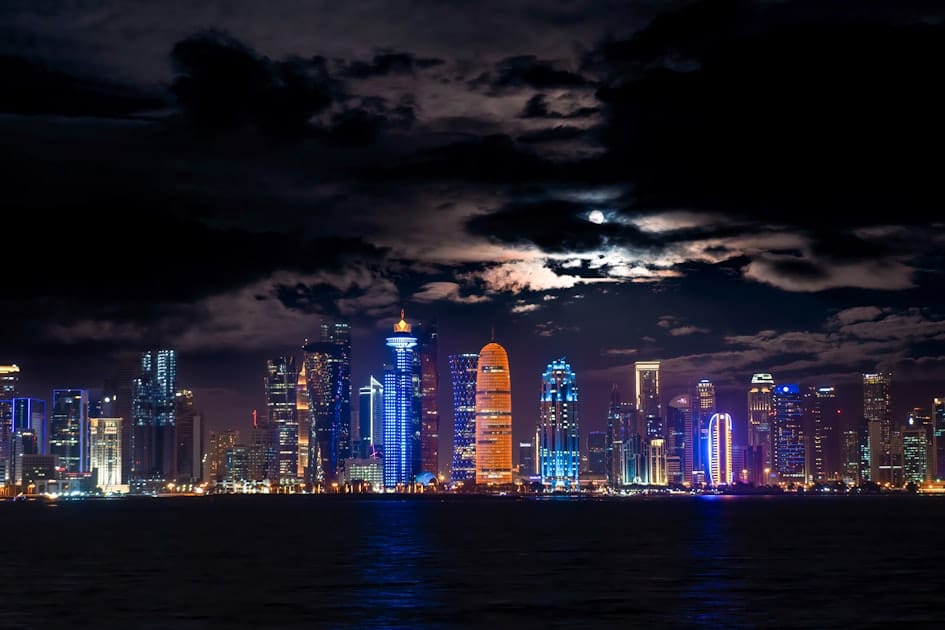

Source: Visit Qatar

Source: Henley & Partners
Qatar Permanent Residency 2026: Three Official Paths, Investment Thresholds, and Key Differences
Last updated: July 2026
One of the most damaging pieces of misinformation in Gulf investment circles is the repeated claim that buying a USD 1 million property in Qatar grants permanent residency. It does not, at least not in the legal sense that matters. Qatar operates three distinct residency systems that are routinely blurred together by brokers, bloggers, and even some consultants. The difference between them determines exactly what you can and cannot do as a foreign property owner, and confusing them can lead to a multi-million-dollar decision built on a misunderstanding.
This guide does what almost no competitor manages: it cleanly separates Qatar's three residency tracks, explains the legal basis for each, and gives you a practical framework for choosing the one that matches your actual goals. Whether you are a founder from Bangalore evaluating Gulf options, a fund manager from London diversifying real estate holdings, or a retiree from Manila seeking a premium base, the clarity below will save you from the most common and most expensive mistakes.
Quick answer: Qatar's legal permanent residency under Law No. 10 of 2018 requires 20 years of continuous residence (10 if born in Qatar), Arabic proficiency, a monthly income of at least QAR 20,000, and falls under an annual quota of 100 grants. It cannot be purchased. A property purchase of USD 1 million (QAR 3.64 million) in a designated freehold zone grants a real-estate residency with near-permanent benefits. A property purchase of USD 200,000 (QAR 728,000) grants a renewable one-year residency permit.
The Three-Track Framework: The Table That Ends the Confusion
Before diving into any detail, internalize this comparison table. It is the most important element of this guide because it resolves the confusion that plagues nearly every other article on Qatar residency.
| Feature | Legal Permanent Residency (Law 10/2018) | USD 1M Real-Estate Residency (Law 16/2018) | USD 200K Real-Estate Residency (Law 16/2018) |
|---|---|---|---|
| How you qualify | 20 years of actual residence (10 if born in Qatar) | Property purchase of QAR 3.64M (USD 1,000,000) | Property purchase of QAR 728,000 (USD 200,000) |
| Can money alone buy it? | No | Yes | Yes |
| Duration | Permanent legal status | Long-term, broadly equivalent to PR | 1 year, renewable |
| Annual quota | 100 grants per year maximum | Limited slots for the premium tier | Not similarly capped |
| Arabic language required | Yes | No | No |
| Healthcare access | Equal to citizens | Broadly equivalent to PR | Limited |
| Education access | Equal to citizens | Broadly equivalent to PR | Limited |
| Business ownership without Qatari partner | Yes | Yes | More limited |
| Minimum stay to maintain | Per legal terms | No mandatory minimum for renewal | Approximately 90 days per year |
| Legal basis | Law No. 10 of 2018 | Law No. 16 of 2018 | Law No. 16 of 2018 |
| Inheritance of status | Permanently transfers | Tied to property ownership | Tied to property ownership |
The conclusion this table forces is unambiguous. The legal PR card and the property routes are fundamentally different instruments. One is earned through two decades of life in the country. The others are purchased with capital. Both can be excellent choices, but they are not the same thing, and anyone telling you a check writes you permanent residency is conflating three separate legal systems into one.
Track 1: Legal Permanent Residency Under Law No. 10 of 2018
Qatar made history in 2018 when it became one of the first Gulf states to create a legal pathway to permanent residency for non-citizens. Law No. 10 of 2018 established the framework, and it was designed with deliberate exclusivity.
The requirements are stringent and have nothing to do with wealth:
- Residence requirement: 20 consecutive years of legal residence in Qatar for naturalized applicants. This is reduced to 10 years for individuals born in Qatar.
- Income threshold: A minimum monthly income of QAR 20,000 (approximately USD 5,495) from a legitimate, documented source.
- Good conduct: Clean criminal record, verified by Qatari authorities and home-country police clearance.
- Arabic language proficiency: Demonstrated ability in the Arabic language, a requirement that most English-language guides omit entirely.
- Annual quota: No more than 100 permanent residency grants are issued per year, approved by a committee within the Ministry of Interior.
What legal permanent residency provides:
Holders of the Law 10/2018 permanent residency card enjoy rights that approach those of Qatari citizens in several areas. These include equal access to healthcare, education, property ownership in non-military zones, and commercial and investment activities. The legal permanence of the status means it does not need to be renewed annually and is not tied to continued property ownership, employment, or any specific financial commitment.
Why is it so restrictive?
The answer lies in Qatar's demographic structure. Foreign nationals constitute the overwhelming majority of Qatar's population. Granting broad permanent residency without strict controls would fundamentally alter the country's demographic balance and social contract. The 100-per-year cap and the 20-year residence requirement ensure that those who receive permanent residency are deeply integrated into Qatari society, have invested decades of their lives in the country, and have demonstrated a long-term commitment, including language proficiency.
This is not a product for sale. It is an earned status, and no amount of capital can shortcut the 20-year rule, the language requirement, or the annual quota.
Track 2: The USD 1 Million Real-Estate Residency (Law No. 16 of 2018)
This is where the confusion reaches its peak. Law No. 16 of 2018, which governs the ownership and use of real estate by non-Qataris, established a property-based residency that delivers benefits broadly equivalent to permanent residency for investors who purchase property valued at USD 1 million or more (approximately QAR 3.64 million) in designated freehold zones.
What the USD 1 million route actually provides:
- Healthcare: Access to Qatar's public healthcare system on terms broadly equivalent to permanent residents.
- Education: Access to public education for dependents, broadly equivalent to permanent resident rights.
- Business ownership: The right to own and operate businesses without a mandatory Qatari partner in many sectors, a significant advantage for entrepreneurs.
- Family benefits: Extended benefits for immediate family members.
- No mandatory minimum stay: Unlike the USD 200,000 route, the USD 1 million tier does not require spending a minimum number of days in Qatar per year to maintain the residency.
- Duration: The residency remains valid as long as the qualifying property is retained.
Why the myth persists:
The press routinely describes the USD 1 million category as "permanent residency" because the benefits are genuinely close to what legal permanent residents enjoy. The benefits are real and substantial. The legal status, however, is different. The USD 1 million residency is created under Law 16/2018 (the real-estate ownership law), not Law 10/2018 (the permanent residency law). It is tied to continued property ownership, which means that if you sell the property, the residency associated with it may lapse.
A fair caveat: This is genuinely disputed in some circles. Certain official and semi-official sources classify the USD 1 million tier as a permanent-residency pathway with its own capped quota, rather than a pure real-estate permit. The labels have evolved over time and may continue to shift. The practical rule is this: before making any investment decision based on residency classification, confirm the current official status with Qatar's Ministry of Interior or a licensed legal advisor.
Track 3: The USD 200,000 Renewable Residency (Law No. 16/ 2018)
The entry-level property route is a purchase of at least USD 200,000 (approximately QAR 728,000) in a designated freehold zone. This grants a residency permit valid for one year, renewable annually as long as the property is retained.
Key characteristics:
- Duration: 1 year, renewable.
- Minimum stay: Holders are generally expected to spend approximately 90 days per year in Qatar to maintain the permit.
- Benefits: More limited than the USD 1 million tier. The permit provides a legal right of residence and the ability to sponsor family members, but does not include the broader healthcare, education, and business ownership benefits of the premium tier.
- Processing speed: Qatar has streamlined the process significantly. Title deeds and the associated residency can now be issued within days of property registration, making this one of the fastest residency-by-property routes in the Gulf.
Who is the USD 200,000 route for?
Investors who want a foothold in Qatar's property market and a legal right of residence without committing USD 1 million. This suits buyers who view the property primarily as an investment and want the residency as a bonus, rather than those structuring their entire life around Qatari residency. For a deeper analysis of this specific route, the Qatar 10-year property residency guide breaks down the USD 200,000 path in detail.
The 100-Per-Year Cap: What It Means in Practice
The annual quota of 100 permanent residency grants under Law 10/2018 is not a theoretical number. It is a binding constraint that shapes the entire landscape.
Consider the math. Qatar's population is approximately 2.9 million, with expatriates making up roughly 85% of that figure. Hundreds of thousands of long-term residents have lived in Qatar for decades. Many would meet the 20-year residence requirement and the QAR 20,000 income threshold. But only 100 can be approved each year.
This means the legal permanent residency is, for the vast majority of applicants, functionally unattainable regardless of how long they have lived in Qatar or how much they earn. The 100-per-year cap creates a bottleneck that makes the property routes (Law 16/2018) the realistic path for most investors. If you want Qatar residency benefits in your lifetime rather than after two decades of waiting for a quota slot, the property route is the practical answer.
Designated Freehold Zones: Where Foreigners Can Actually Buy
As with Oman's ITC rule, Qatar restricts foreign freehold ownership to specific designated zones. A property outside these zones will not qualify for any real-estate residency, regardless of its value.
Zone 1 (Doha Core):
- The Pearl-Qatar: The most established and recognized freehold zone. A man-made island with luxury apartments, villas, retail, and marina facilities. The Pearl has the deepest secondary market and the most active rental sector among Qatar's freehold zones.
- Lusail: Qatar's newest planned city, located north of Doha. Lusail is a massive development that includes residential towers, commercial buildings, a marina, and entertainment districts. It is the fastest-growing freehold zone, with significant new supply entering the market.
- West Bay Lagoon: A premium residential area in central Doha characterized by luxury villas and low-rise apartments. Established and well-located, but with a more limited supply of available units.
Zone 2 (Greater Doha):
- Al Khor, Al Dafna, and designated numbered zones including Zones 60 and 61. These areas are further from the city center but offer lower entry prices.
Zone 3 (Outside Doha):
- Designated tourist and investment zones in other parts of the country, primarily resort-style developments.
The Pearl vs Lusail: Which zone for which investor?
The Pearl offers the most mature market with established rental yields, complete amenities, and the deepest buyer pool for resale. Prices per square meter are higher than in Lusail, reflecting the maturity and brand recognition of the development.
Lusail represents the growth play. As a newer, still-developing city, prices per square meter are lower, and the potential for capital appreciation is higher as the area matures and infrastructure completes. However, the rental market is less established, and resale liquidity may be lower in the short term. Lusail suits investors with a longer time horizon who are comfortable with emerging-market dynamics.
For the residency purpose, both zones qualify equally. The choice should be driven by your investment thesis, not by residency considerations.
The Tax Position: What Qatar Costs and Does Not Cost
Qatar's tax framework is one of its strongest attractions for high-net-worth individuals and investors.
Personal income tax: 0%
No tax on salaries, investment income, rental income, capital gains, or any other personal earnings. Your income remains entirely yours.
Corporate tax: 10% standard rate
Qatar levies a 10% corporate tax on business profits, with a higher rate of 12.5% applicable to oil and gas sector activities. This is slightly higher than the UAE's 9% corporate tax rate, which is a consideration for businesses choosing between the two jurisdictions.
Property transfer tax: 0%
Qatar does not levy a property transfer tax on real estate transactions as of 2026. This is a notable advantage over Dubai, where the property transfer fee is 4% of the property value. On a USD 1 million property, this is a USD 40,000 saving compared to a comparable Dubai purchase.
No capital gains tax on real estate
Profit from the sale of real estate is not subject to capital gains tax in Qatar.
No inheritance tax
Qatar does not levy inheritance tax, though succession to property for non-Muslim owners is governed by the owner's home-country law in some circumstances, subject to bilateral agreements. This is a complex area that requires specialist legal advice.
The practical comparison with the UAE: Both jurisdictions offer 0% personal income tax. The UAE has a lower corporate rate (9% vs 10%) but charges a 4% property transfer fee, while Qatar has no property transfer fee. For property-focused investors, Qatar's zero transfer tax can offset the slightly higher corporate rate many times over, depending on the transaction volume.
Inheritance and Succession Under Real-Estate Residency
What happens to the real-estate residency permit when the property owner dies? This is one of the most frequently asked questions and one of the least addressed.
The real-estate residency is tied to property ownership. When the owner dies, the property passes to their heirs according to Qatar's succession laws (or the laws of the deceased's home country, subject to bilateral agreements and Sharia principles for non-Muslims). The residency permit itself does not automatically transfer to the heirs. Instead, the heirs would need to apply for their own residency status based on their inherited ownership of the qualifying property.
This is a significant distinction from the legal permanent residency under Law 10/2018, which has its own succession provisions. If permanent residency status and its transferability across generations are important to you, consult a Qatar-licensed inheritance lawyer before structuring any property purchase.
How to Apply for Real-Estate Residency: Step by Step
The real-estate residency application process is significantly simpler than the legal permanent residency path.
Step 1: Select a property in a designated freehold zone valued at USD 200,000 or USD 1 million, depending on your target tier. Confirm the zone designation before making any commitment.
Step 2: Complete the purchase and official registration. Qatar's Real Estate Regulatory Authority processes the transaction and issues the title deed. The system has been streamlined so that both the title deed and the associated residency permit can be issued within days of registration.
Step 3: Submit the residency application linked to the registered property, along with required documentation (passport, photographs, property title deed, application forms).
Step 4: Complete medical examination and health insurance as required by Qatari immigration authorities.
Step 5: Receive the residency card and process family member inclusion for eligible dependents.
Step 6: Comply with renewal requirements specific to your tier. The USD 200,000 permit requires annual renewal and approximately 90 days of annual presence. The USD 1 million tier has no mandatory minimum stay.
For comparing Qatar's residency routes with other Gulf investment options before committing capital, the Truescho opportunities hub provides a structured comparison tool. The Oman golden residency guide covers Oman's lower-cost alternative, and the Gulf golden visa comparison provides the full regional picture.
A Real-World Example
Consider a technology founder from Bangalore who had recently sold his company and was evaluating Gulf residency options. He had read repeatedly that USD 1 million "buys permanent residency" in Qatar and initially planned his entire relocation around becoming a legal permanent resident immediately upon purchase.
After consulting the actual legal framework, his plan changed for the better. He learned that the legal permanent residency card under Law 10/2018 was unavailable through property purchase and required 20 years of residence. However, the USD 1 million real-estate residency would provide exactly the benefits he actually cared about: healthcare access for his family, schooling for his children, business ownership without a mandatory Qatari partner, and no minimum-stay obligation.
He purchased a property in The Pearl-Qatar, received his real-estate residency within days, and stopped pursuing a legal status that was not available through purchase. The clarity saved him from over-engineering his relocation around a status he could not obtain and allowed him to focus on the benefits that the property residency actually delivers. For broader context on how wealthy individuals are relocating to the Gulf, the analysis of wealthy Britons moving to Dubai provides useful comparative data. For understanding the Qatar visit visa and insurance requirements that accompany residency, our dedicated guide covers the practicalities.
Qatar vs UAE vs Saudi Arabia: The Investor's Perspective
High-net-worth investors almost always compare Qatar against its neighbors. The three markets serve genuinely different purposes, and the comparison clarifies the choice.
| Factor | Qatar | UAE | Saudi Arabia |
|---|---|---|---|
| Primary residency mechanism | Real-estate residency (USD 200K / USD 1M) | Golden Visa via property (AED 2M+) | Premium Residency (paid) and corporate RHQ |
| Legal permanent residency | Earned over 20 years, capped at 100/year | No equivalent permanent status | Premium Residency (paid, not permanent in same sense) |
| Personal income tax | 0% | 0% | 0% |
| Corporate tax | 10% | 9% | 20% ( RHQ program offers 30-year exemption) |
| Property transfer tax | 0% | 4% (Dubai) | Varies by project |
| Standout advantage | Near-PR benefits at USD 1M tier, no transfer tax | Global hub, maximum flexibility, deepest property market | Access to largest Gulf economy, government contracts |
The pattern: Saudi Arabia's flagship incentive is built for businesses (the Regional Headquarters program), not individual property buyers. The UAE is the all-rounder with the deepest property market and the broadest global connectivity. Qatar's distinct strength is the quality and breadth of benefits attached to its USD 1 million real-estate residency, plus the significant advantage of zero property transfer tax.
For companies evaluating where to base regional operations, the Saudi RHQ program with its tax holiday is a powerful incentive. For wealthy individuals seeking premium residency benefits through property, Qatar's USD 1 million tier is compelling. For maximum flexibility and lifestyle, the UAE remains the benchmark.
To see the corporate side in detail, read how companies use the Saudi RHQ tax holiday, and for a broader comparison including Oman's value proposition, the Oman golden residency guide covers its lower-cost routes.
Common Mistakes and Expert Tips
Mistake 1: Believing money buys the legal permanent residency. It does not. Law 10/2018 PR requires 20 years of residence, Arabic proficiency, and a 100-per-year cap. Separate the legal status from the property residencies from day one of your planning.
Mistake 2: Treating the USD 200,000 permit as permanent. It is a renewable one-year residency with a roughly 90-day annual stay expectation. If you want near-permanent benefits, the USD 1 million tier is the one you need.
Mistake 3: Buying outside a designated freehold zone. Only properties in approved zones such as The Pearl, Lusail, West Bay Lagoon, and designated numbered zones qualify. Verify the zone status with the Real Estate Regulatory Authority before signing anything.
Mistake 4: Conflating Law 10/2018 with Law 16/2018. These are two different laws creating two different systems. Law 10/2018 is the permanent residency law. Law 16/2018 is the real-estate ownership and residency law. They have different requirements, different benefits, and different legal foundations.
Mistake 5: Ignoring the corporate tax differential. If you plan to operate a business from Qatar, the 10% corporate rate (vs 9% in the UAE) should be factored into your long-term cost analysis, alongside the offsetting advantage of zero property transfer tax.
Expert tip on tier selection: Define the benefits you actually need before choosing a tier. Most investors want healthcare, education access, and business ownership flexibility, all of which the USD 1 million real-estate residency provides. Chasing the legal PR card when the property residency already delivers your goals is wasted effort.
Expert tip on documentation: Do not rely on what a property broker or sales agent tells you about the type of residency you will receive. The broker's job is to sell the property, and they may use the word "permanent" in its marketing sense rather than its legal sense. Always obtain written confirmation from an independent legal advisor about the exact residency classification and its renewal terms before signing.
Expert tip on banking: For international investors managing capital flows across multiple jurisdictions during property acquisition and ongoing management, having a multi-currency business banking solution can reduce exchange costs significantly. Services like Airwallex offer multi-currency accounts designed for cross-border operations. (Disclosure: this article includes an affiliate link to Airwallex; we may earn a commission at no additional cost to you.)
Frequently Asked Questions
Can you buy permanent residency in Qatar?
No. The legal permanent residency under Law No. 10 of 2018 cannot be purchased at any price. It requires 20 years of continuous legal residence (10 if born in Qatar), Arabic language proficiency, good conduct, a minimum monthly income of QAR 20,000, and approval under an annual quota of 100 grants.
What is the difference between Qatar real-estate residency and permanent residency?
Real-estate residency is obtained through property purchase and delivers strong benefits, but it is legally distinct from the Law 10/2018 permanent residency. One is purchased with capital; the other is earned over decades of residence. The legal basis, duration, and transferability all differ.
How much property do I need for Qatar residency?
A property of approximately USD 200,000 (QAR 728,000) in a designated freehold zone grants a renewable one-year residence permit. A property of USD 1,000,000 (QAR 3.64 million) grants a real-estate residency with near-permanent benefits including healthcare, education, and business ownership rights.
What are the requirements for Qatar permanent residency under Law 10/2018?
Applicants must have 20 consecutive years of legal residence in Qatar (10 if born there), a minimum monthly income of QAR 20,000, good conduct with no criminal record, and sufficient knowledge of Arabic. A Ministry of Interior committee approves applications, and only 100 are granted each year.
Does buying a USD 1 million property give permanent residency?
Not the legal permanent residency card under Law 10/2018. A USD 1 million property grants a real-estate residency under Law 16/2018 with permanent-like benefits, including healthcare, education, and business ownership without a Qatari partner. The benefits are substantial, but the legal status is different. Some sources classify this tier differently, so always confirm the current classification with the Ministry of Interior.
Where can foreigners buy property in Qatar?
Foreign freehold ownership is permitted in designated zones, including The Pearl-Qatar, Lusail, West Bay Lagoon, the Al Khor area, and certain numbered districts such as Zones 60 and 61. Only purchases within approved zones qualify for residency.
How many permanent residencies does Qatar grant per year?
A maximum of 100 permanent residency grants are issued per year under Law No. 10 of 2018, approved by a Ministry of Interior committee. This makes legal PR one of the scarcest residency statuses in the Gulf.
Does Qatar levy personal income tax?
No. Qatar charges 0% personal income tax on all individual earnings, including salaries, investment income, rental income, and capital gains. This applies to all residents regardless of residency type.
Can Qatar real-estate residency be inherited?
The real-estate residency is tied to property ownership. When the property owner dies, the property passes to heirs according to applicable succession laws, and the residency does not automatically transfer. Heirs should consult a Qatar-licensed lawyer to determine their eligibility for residency based on inherited property.
What is the difference between The Pearl and Lusail for residency purposes?
Both zones qualify equally for real-estate residency. The Pearl offers a more mature market with deeper rental demand and resale liquidity. Lusail offers lower entry prices and higher growth potential as the city continues to develop. The choice should be based on investment strategy, not residency considerations.
For the wider Gulf comparison, see how the Oman golden residency tiers work and how the Saudi RHQ tax holiday functions for corporate investors, then evaluate every route at the Truescho opportunities hub before deciding where to commit your capital.
Sources
- Visit Qatar — Official Tourism and Investment Portal — official information on Qatar residency and property ownership.
- Qatar Ministry of Justice — Law No. 10 of 2018 — primary legislation defining permanent residency requirements and the annual quota.
- Qatar Ministry of Justice — Law No. 16 of 2018 — real-estate residency framework establishing the USD 1 million and USD 200,000 tracks.
- Henley & Partners — Qatar Residency and Citizenship Guide — independent analysis of Qatar's residency pathways.
- Al Meezan — Qatar Legal Portal — comprehensive legal database for Qatari legislation and regulatory updates.