
Portugal D7 Visa 2026: Residency for Remote Workers & Retirees
Last updated: July 2026
The Portugal D7 visa 2026 is one of the most affordable pathways to European residency for individuals with passive income, remote work earnings, pensions, or investment returns. Unlike golden visa programs that require hundreds of thousands of euros, the D7 visa focuses on steady income rather than capital investment, making it accessible to a much broader audience. Whether you are a retired teacher from the Philippines, a remote developer from Nigeria, or a freelancer from Brazil, the Truescho editorial team has built this guide to help you understand every requirement, cost, and step.
The Portugal D7 visa 2026 grants residency to non-EU nationals who demonstrate a minimum monthly passive income of EUR 820 (the Portuguese minimum wage). The initial residency permit lasts two years, is renewable, and opens a path to Portuguese citizenship after five years. It is designed for retirees, remote workers, and individuals with rental, dividend, or interest income.
What Is the Portugal D7 Visa?
The D7 visa, often called the passive income visa, was created by the Portuguese government to attract individuals who can sustain themselves financially without taking jobs from the local workforce. It falls under Article 60 of Portugal's Immigration Law (Law 23/2007, as amended). The "D7" designation refers to the specific visa category for purposes of residence.
The visa is designed for people with recurring monthly income from sources such as pensions, rental property yields, dividends from investments, interest from bank deposits, royalties from intellectual property, or income from remote work performed for companies outside Portugal. The key requirement is that the income is stable, predictable, and meets or exceeds the Portuguese minimum wage.
Unlike the D8 (digital nomad) visa, which targets active remote workers with higher income thresholds, the D7 is primarily oriented toward passive income earners. However, remote workers whose income qualifies as passive under Portuguese immigration law can also use the D7 route.
One major advantage of the D7 is its inclusivity. Family members, including spouses, dependent children, and dependent parents over 65, can join the main applicant through family reunification. Each additional adult family member requires 50% of the main applicant's minimum income, and each child requires 30%.

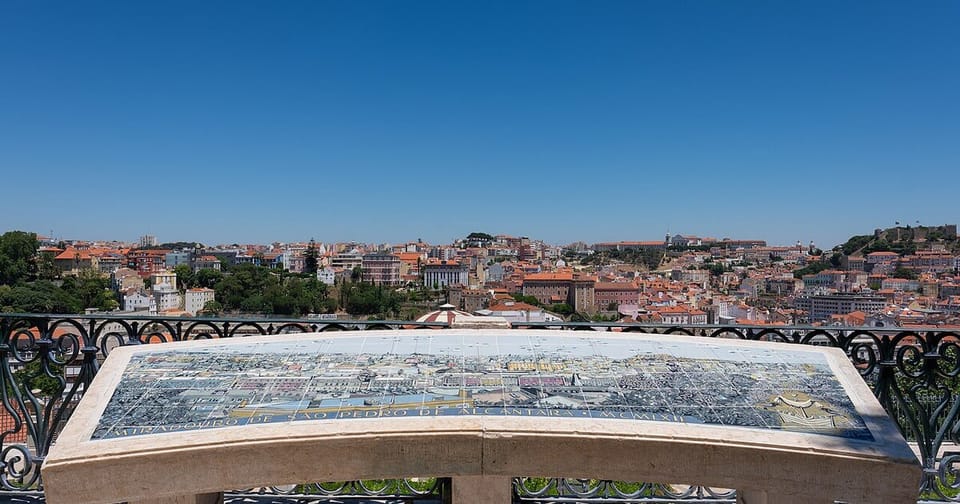
Source: Illustrative photo of Lisbon cityscape
Why the Portugal D7 Visa Matters in 2026
Portugal has become one of the most popular destinations for global migrants seeking European residency. The country offers an exceptional quality of life, with over 300 days of sunshine per year in the Algarve region, affordable living costs compared to Northern Europe, a welcoming international community, and one of the shortest citizenship timelines in the EU.
The D7 visa matters now more than ever because it remains one of the few accessible European residency pathways. Portugal's golden visa program closed to new real estate investors in October 2023. Ireland eliminated its investor visa. Spain is phasing out its real estate golden visa route. For people who do not have EUR 500,000 to invest but have a steady income, the D7 is the most viable route to EU residency.
According to the Portuguese Immigration and Borders Service (AIMA), over 10,000 D7 visas were issued between 2022 and 2024. The top applicant nationalities include United States citizens, British retirees, Brazilian professionals, and growing numbers of applicants from India, Nigeria, South Africa, and Pakistan.
The end of Portugal's Non-Habitual Resident (NHR) tax regime in 2024 has changed the tax calculus for new arrivals, but Portugal's standard tax rates remain competitive for many income levels, especially compared to countries like the United Kingdom or Germany.
Step-by-Step Guide to the Portugal D7 Visa Application
Step 1: Obtain a Portuguese Tax Number (NIF)
The Numero de Identificacao Fiscal (NIF) is your Portuguese tax identification number. You can obtain it remotely through a fiscal representative in Portugal. It costs approximately EUR 50-150 and is required for opening bank accounts, signing rental agreements, and submitting your visa application.
Step 2: Open a Portuguese Bank Account
A local bank account is essential. You need it to deposit the required savings, receive your income, and pay for housing and utilities. Opening an account as a non-resident typically requires your passport, proof of address, proof of income, and a tax identification number from your home country. Some banks require an initial deposit of EUR 250-500.
Step 3: Secure Long-Term Accommodation
You must provide proof of accommodation in Portugal, typically a 12-month rental contract or property ownership deed. This is a strict requirement, and short-term rentals or hotel bookings are not accepted. Budget EUR 700-1,500 per month depending on the city.
Step 4: Gather Documentation
Required documents include a valid passport, criminal record certificate from every country you have lived in during the past five years, proof of income (bank statements, pension letters, dividend records), proof of accommodation, Portuguese NIF, health insurance covering Portugal, and a completed visa application form.
Step 5: Submit at the Portuguese Consulate
File your application at the Portuguese consulate in your country of residence. Processing times vary from 30 to 90 days depending on the consulate's workload. Some consulates require in-person appointments, which can have long wait times. Apply early.
Step 6: Travel to Portugal and Attend AIMA Appointment
Once your visa is approved, you receive a temporary residence permit valid for 120 days. Travel to Portugal within that period and schedule an appointment with AIMA (Agency for Integration, Migrations, and Asylum) to obtain your full residency card, which is valid for two years.
D7 Visa vs D8 Digital Nomad Visa: Which Is Right for You?
| Feature | D7 Visa | D8 Digital Nomad Visa |
|---|---|---|
| Target Applicant | Retirees, passive income earners | Active remote workers, freelancers |
| Minimum Income | EUR 820/month | EUR 3,480/month (4x minimum wage) |
| Income Type | Passive (pensions, dividends, rent) | Active (employment, freelancing) |
| Employer Requirement | None | Non-Portuguese employer or clients |
| Initial Permit | 2 years | 2 years |
| Renewal | 3 years then 3 years | 3 years then 3 years |
| Citizenship Timeline | 5 years | 5 years |
| Family Reunification | Yes | Yes |
| Work Authorization | Limited (passive income focus) | Yes (remote work for foreign entities) |
| Savings Requirement | EUR 9,840 (12 months minimum wage) | EUR 41,760 (12 months at 4x) |
The choice between D7 and D8 depends on your income source. If you are a retiree with pension income or an investor with dividend income, the D7 is the clear choice. If you are an active remote employee or freelancer earning above EUR 3,480 per month, the D8 may be more appropriate. If you are looking for an investment-based route, the Spain golden visa is another option for investors with a larger budget.
How a Retired Nurse from the Philippines Built a New Life in Porto
Maria Santos, a 62-year-old retired nurse from Manila, moved to Portugal on a D7 visa in early 2024. Her monthly pension of approximately EUR 1,100 (from a combination of her government pension and a private retirement fund) comfortably exceeded the EUR 820 minimum requirement.
Maria's application took 78 days from submission to approval, slightly longer than average due to document verification requirements for Philippine financial records. She worked with a Portuguese immigration consultant who charged EUR 2,500 for the full application process, including NIF registration, bank account opening assistance, and rental contract verification.
She now lives in a one-bedroom apartment in Porto's Bonfim neighborhood, paying EUR 750 per month in rent. Her total monthly living expenses, including groceries, utilities, transportation, and health insurance, come to approximately EUR 1,400. Maria's daughter and grandson joined her six months later through family reunification, adding EUR 410 to the required monthly income threshold.
Maria's advice: "Start gathering your documents early, especially the criminal record certificate and apostilled income proof. The Portuguese bureaucracy is thorough, and missing documents can delay your application by weeks."
Cost of Living in Portugal for D7 Holders
One of the biggest draws of Portugal is its affordability relative to other Western European countries. Here is a breakdown of typical monthly expenses:
| Expense Category | Lisbon | Porto | Algarve | Small Cities (Braga, Coimbra) |
|---|---|---|---|---|
| Rent (1-bedroom) | EUR 900-1,400 | EUR 700-1,100 | EUR 700-1,200 | EUR 500-800 |
| Groceries | EUR 250-400 | EUR 250-400 | EUR 250-400 | EUR 200-350 |
| Utilities | EUR 80-150 | EUR 80-150 | EUR 70-140 | EUR 70-120 |
| Health Insurance | EUR 50-120 | EUR 50-120 | EUR 50-120 | EUR 40-100 |
| Transportation | EUR 40-80 | EUR 40-80 | EUR 50-100 | EUR 30-60 |
| Internet and Phone | EUR 30-50 | EUR 30-50 | EUR 30-50 | EUR 30-50 |
| Total Monthly | EUR 1,350-2,200 | EUR 1,150-1,900 | EUR 1,150-2,010 | EUR 870-1,480 |
If you want help choosing the right city and navigating the D7 application, Truescho connects you with immigration consultants who specialize in Portuguese residency visas.
Tax Implications After the End of NHR
Portugal's Non-Habitual Resident (NHR) regime, which offered a flat 20% tax rate on certain income for ten years, was closed to new applicants at the end of 2023. A replacement regime called the Tax Incentive for Scientific Research and Innovation (IFICI) was introduced, but it applies only to specific categories of workers in science, technology, and research.
For most D7 holders arriving in 2026, Portuguese standard tax rates will apply:
- Income up to EUR 7,703: 14.5%
- EUR 7,704 to EUR 11,623: 23%
- EUR 11,624 to EUR 16,472: 26.5%
- EUR 16,473 to EUR 21,795: 28.5%
- EUR 21,796 to EUR 38,632: 35%
- EUR 38,633 to EUR 51,551: 39%
- EUR 51,552 to EUR 77,325: 43.5%
- Above EUR 77,325: 48%
Portugal has tax treaties with most countries to avoid double taxation. Pension income is generally taxed in Portugal if you become a tax resident. Some specific pension types may be exempt under bilateral agreements, so consult a tax advisor who understands cross-border taxation.
Common Mistakes and Expert Tips
1. Underestimating processing times. Portuguese consulates in high-demand countries (US, UK, Brazil, India) often have appointment backlogs of 2-4 months. Book your appointment as soon as you decide to apply.
2. Insufficient proof of income. Visa officers want to see consistent income over at least 6-12 months. A single large deposit does not demonstrate the steady, recurring income the D7 requires.
3. Not having enough savings. Beyond monthly income, you should show bank savings equivalent to at least 12 months of the Portuguese minimum wage (approximately EUR 9,840). More savings strengthen your application.
4. Choosing the wrong accommodation. Your rental contract must be registered with Portuguese tax authorities. Informal arrangements or short-term tourist rentals will be rejected.
5. Failing the physical presence requirement. D7 holders must spend at least 183 days per year in Portugal to maintain residency. Extended absences can jeopardize your permit renewal and citizenship timeline.
6. Overlooking family reunification timing. Family members can apply simultaneously or after the main applicant receives residency. Applying simultaneously is faster but requires more documentation upfront.
7. Ignoring tax obligations. Even if you do not spend 183 days in Portugal, certain economic ties can trigger tax residency. Understand your obligations before relocating.
The Path from D7 to Portuguese Citizenship
One of the most compelling aspects of the D7 visa is the relatively short path to citizenship. Here is the timeline:
- Year 0: Arrive in Portugal on your D7 visa, obtain residency card
- Years 1-2: Hold initial residency permit, maintain physical presence (183+ days/year), pay taxes
- Years 3-5: Renew residency permit, continue integration (learn Portuguese, participate in community)
- Year 5: Apply for permanent residency and begin citizenship application
- Year 5-6: Citizenship processing takes approximately 12-24 months
You must demonstrate basic Portuguese language proficiency (A2 level on the CEFR scale) and have no serious criminal convictions. Portugal allows dual citizenship, so you do not need to renounce your original nationality.
Frequently Asked Questions
What is the Portugal D7 visa and who is it for?
The D7 is a residency visa for non-EU nationals with stable passive income, including pensions, dividends, rental income, royalties, or investment returns. It is ideal for retirees, investors with regular returns, and individuals with sustained passive income streams who want to live in Portugal.
How much passive income do I need for Portugal D7 visa in 2026?
The minimum required income is EUR 820 per month, equal to the Portuguese minimum wage. For a spouse or partner, add 50% (EUR 410). For each dependent child, add 30% (EUR 246). You should also show savings of at least EUR 9,840 for the main applicant.
Can I work remotely with a D7 visa in Portugal?
The D7 is designed for passive income, not active employment. However, if your remote work income qualifies as passive under Portuguese law, or if your employer is based outside Portugal, you may be able to work remotely. The D8 digital nomad visa is better suited for active remote workers.
What is the difference between D7 and D8 digital nomad visa?
The D7 requires passive income of at least EUR 820 per month and targets retirees and investors. The D8 requires active remote work income of at least EUR 3,480 per month and targets digital nomads. Both lead to residency and eventual citizenship after five years.
How long does it take to get Portuguese citizenship through D7?
You can apply for citizenship after five years of legal residency. The citizenship application process itself takes approximately 12-24 months after submission. You must demonstrate A2 Portuguese language proficiency, physical presence of 183+ days per year, and integration into Portuguese society.
What documents do I need for Portugal D7 visa application?
You need a valid passport, criminal record certificate from countries of residence in the past five years, proof of passive income (bank statements, pension letters), Portuguese NIF, proof of accommodation (registered rental contract or property deed), health insurance, and a completed application form. All foreign documents must be apostilled and translated.
How much does it cost to live in Portugal on a D7 visa?
Monthly costs vary by city. In Lisbon, expect EUR 1,350-2,200. In Porto, EUR 1,150-1,900. In smaller cities like Braga or Coimbra, EUR 870-1,480. The biggest variable is rent, which ranges from EUR 500 in small cities to EUR 1,400 in central Lisbon.
Can my family join me on a D7 visa?
Yes. Your spouse, dependent children under 18, and dependent parents can apply for family reunification. You must demonstrate additional income of 50% of the minimum wage per adult and 30% per child, plus adequate accommodation for the entire family.
Conclusion
The Portugal D7 visa 2026 represents one of the best value propositions in global immigration: European residency, Schengen travel access, a five-year path to citizenship, and a high quality of life, all without requiring a massive capital investment. For retirees, passive income earners, and individuals with stable monthly income, the D7 is an opportunity to build a life in one of Europe's most welcoming countries.
The key to success is preparation. Gather your documents early, ensure your income documentation is thorough and consistent, secure registered accommodation, and work with professionals who understand the Portuguese immigration system. With the right approach, you could be holding your Portuguese residency card within three to four months of starting your application.
If you are ready to take the next step, Truescho connects you with expert consultants for residency, investment migration, and visa applications. Let experienced professionals guide your journey to Portuguese residency.
Sources
- Portuguese Immigration and Borders Service (AIMA) — Official immigration authority with D7 visa requirements and procedures
- Portuguese Consular Portal — Online portal for visa applications and consular services
- Portuguese Tax Authority (Autoridade Tributaria) — Tax information for residents and non-residents
- Portuguese Ministry of Foreign Affairs — Diplomatic and consular information for visa applicants
- SEFSTAT Statistics — Official immigration statistics and trends
Start Your Journey with Truescho
Whether you're exploring residency options or need expert guidance, truescho.com gives you everything.
Get Your Free Consultation