
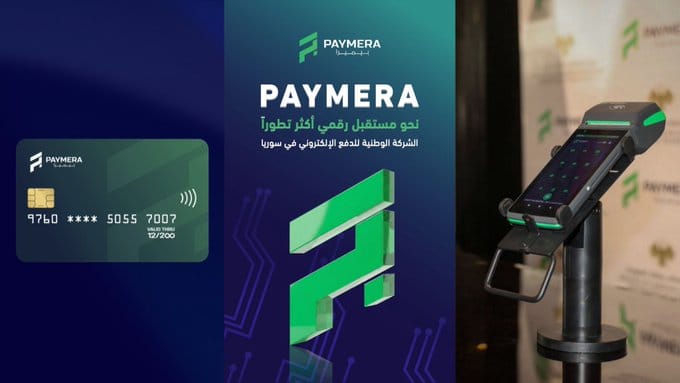
PAYMERA Syria 2026 — Syria's New Local Electronic Payment System
Last updated: May 2026
⚠️ Legal/Financial Disclaimer: This article is for educational purposes only and does not constitute financial or investment advice. Information here is accurate as of May 2026 and may change. Please verify with official sources before making any decisions. Financial institutions and international sanctions are volatile topics — consult the Central Bank of Syria and licensed legal advisors before engaging.
On 9 May 2026, in the ballroom of the Four Seasons Hotel in Damascus, a hotel staff member tapped a Mastercard at a small black point-of-sale terminal. The transaction took less than three seconds. It was the first successful card payment processed inside Syria in roughly 15 years, and it marked the public launch of the PAYMERA Syria payment system — a domestically built electronic payment network operated by the Syrian company Bimera. This article explains what PAYMERA is, how it works, the sanctions context that made it possible, and what it means for Syrians, the Syrian diaspora and international observers in 2026.
Quick answer: As of May 2026, PAYMERA is Syria's new domestic electronic payment system, operated by the Syrian company Bimera. Launched 9 May 2026, it currently runs 4,200 POS terminals with a target of 50,000 by end of 2026, and supports Visa and Mastercard transactions after the Caesar Act was permanently repealed via NDAA Section 8369 (signed 18 December 2025).
What is PAYMERA Syria?
PAYMERA is a domestic Syrian electronic payment platform that handles point-of-sale (POS), QR-based payments, and partnership-based card issuance. The executing company is Bimera, a Syrian-incorporated fintech operating from Damascus. A common misconception circulating online has labelled the system "Turkish" — likely confused with the similarly-named Turkish fintech "Papara" — but PAYMERA is Syrian, as of May 2026, operating in partnership with international technology providers and the Central Bank of Syria (CBS).
PAYMERA's role inside the payments value chain is to act as a domestic acquirer and processor: it deploys terminals at Syrian merchants, settles transactions with partner banks, and connects those banks to the Visa and Mastercard global networks. Card issuance to Syrian consumers is performed by partner banks rather than by Bimera directly.
As of May 2026 there are 4,200 POS terminals live across Syria, concentrated initially in Damascus and Aleppo with a publicly stated target of 50,000 terminals by end of 2026. The first publicly demonstrated transaction took place on 9 May 2026 at the Four Seasons Hotel Damascus.
Why does PAYMERA matter in 2026?
For 15 years, Syria operated almost entirely on cash. International sanctions, the country's exclusion from the SWIFT messaging network, and the suspension of card-network operations effectively cut off Syrian banks from the global financial system. Inside the country, mobile wallets such as Syriatel Cash and Sham Cash filled part of the gap — but with limited interoperability, recurring outages (Sham Cash itself crashed on 8 March 2026 after a wave of reported overruns), and no link to international cards.
The 2026 reopening rests on a specific legal change: the Caesar Act was permanently repealed via NDAA Section 8369, signed 18 December 2025. That removed the most consequential blocking statute on Syrian financial reintegration. Earlier executive actions — General License 24 (January 2025), GL 25 (May 2025), and Executive Order 14312 (June 2025) — had already loosened the framework, but the permanent legal repeal in December 2025 was the watershed event. As of May 2026, the conditional structure inside NDAA Section 8369 requires the US President to report every 180 days for 4 years on Syrian compliance with specified conditions.
This matters because, as of May 2026, Syrian-issued cards have begun appearing through partner banks, foreign-issued Visa and Mastercards are starting to work at PAYMERA-equipped merchants, and the foundation is being laid for SWIFT reconnection and a sovereign credit rating process. Whether the trajectory holds depends on the 180-day reviews continuing to confirm compliance.
Timeline: from Caesar Act repeal to PAYMERA launch
The chain of events that made PAYMERA possible runs as follows, with each step verifiable in official sources (see Sources section at end):
| Date | Event |
|---|---|
| January 2025 | US Treasury OFAC General License 24 issued (limited Syria transactions) |
| May 2025 | US Treasury OFAC General License 25 issued (broader humanitarian + commercial scope) |
| May 2025 | Caesar Act first 180-day suspension by Executive action |
| June 2025 | Executive Order 14312 (further sanctions lift) |
| September 2025 | CBS-Mastercard Memorandum of Understanding signed |
| November 2025 | Caesar Act second 180-day suspension |
| December 2025 | CBS-Visa operational roadmap published |
| 18 December 2025 | NDAA Section 8369 signed — Caesar Act permanently repealed |
| January 2026 | Mastercard-QNB Syria license issued |
| 4 May 2026 | CBS decision permitting banks to operate with international networks |
| 8 May 2026 | Mastercard technical integration completed |
| 9 May 2026 | First PAYMERA-processed Mastercard transaction at Four Seasons Damascus |
How PAYMERA works technically
As of May 2026, PAYMERA operates across three layers of payment functionality:
Point-of-sale (POS) terminals. Bimera deploys EMV-compliant POS devices to participating merchants. The terminals accept contactless and chip cards from any Visa or Mastercard issuer worldwide, including foreign-issued cards carried by visitors. Transactions are authorised in real time through Visa/Mastercard rails and settled in Syrian Pounds (SYP) or US Dollars depending on merchant configuration.
QR-based payments. PAYMERA supports QR-code payments through partner banks' mobile apps, allowing Syrian consumers without physical cards to pay merchants via smartphone. QR payments are domestic-only as of May 2026; cross-border QR is not yet operational.
Card issuance through partner banks. Bimera does not issue cards itself. Syrian consumers obtain Visa or Mastercard products through partner banks — most notably QNB Syria, which received a Mastercard license in January 2026, and other CBS-licensed banks as the network expands.
In the words of Giath Alawd, Assistant General Manager of Commercial Affairs at PAYMERA, the launch represented "Syria's return to the global payments map after 15 years of isolation." Mohamad Darkazanli, Executive Technical Officer at PAYMERA, has emphasised that the network's roadmap targets full interoperability with regional and international acquirers as compliance procedures mature.
Who are the key institutions and people behind PAYMERA?
As of May 2026, the governing structure includes:
- Central Bank of Syria (CBS) — regulator and licensing authority. Governor: Abdelkader Hosrieh.
- Syrian Ministry of Communications and Information Technology — oversight of digital infrastructure. Minister: Abdel Salam Haikal (in post since 29 March 2025).
- Bimera — the Syrian-incorporated company executing the PAYMERA network.
- PAYMERA leadership — Giath Alawd (Commercial Affairs), Mohamad Darkazanli (Technical).
- Partner banks — QNB Syria (live as of January 2026), plus additional CBS-licensed banks integrating through 2026.
Comparison: PAYMERA vs other Syrian payment systems
| System | Type | Coverage (May 2026) | International Cards | Outages |
|---|---|---|---|---|
| PAYMERA / Bimera | POS + QR + Card Issuance (partner banks) | 4,200 POS, target 50,000 by EOY 2026 | Yes — Visa & Mastercard | None reported (newly launched) |
| Sham Cash | Mobile wallet | National mandate for some state salaries since April 2025 | No | App crashed 8 March 2026 |
| Syriatel Cash | Mobile wallet | Estimated ~80% of mobile-wallet market | No | Periodic |
| MTN Pay | Mobile wallet | Smaller share, MTN customers | No | Periodic |
| QNB Mastercard (issued via QNB Syria) | International card | National (where merchants accept) | Yes — own product | N/A |
The systems are not mutually exclusive. As of May 2026, a Damascus shop can theoretically accept a Sham Cash QR, a Syriatel Cash QR, and a PAYMERA POS card-tap at the same counter — each routing through a different rail.
What PAYMERA means for Syrians inside Syria
For Syrians living and working inside the country, PAYMERA introduces several practical capabilities that did not exist as of December 2024:
- The ability to receive salary payments onto a domestic card and spend them at point-of-sale without converting to cash.
- The ability to pay merchants by tap, chip or QR, reducing reliance on cash logistics in a high-inflation environment.
- For larger businesses, the ability to accept card payments from foreign visitors — relevant for hotels, restaurants, tourist sites and conference venues.
What PAYMERA does not provide as of May 2026: a full international remittance capability (which still depends on SWIFT reconnection and correspondent-bank relationships), guaranteed currency stability, or any insulation from policy reversal. The Caesar Act repeal is conditional on continuing 180-day reviews.
This article is not a recommendation to subscribe, invest, or open any account. Anyone considering financial decisions related to Syrian fintech should consult the Central Bank of Syria and licensed legal advisors. See also our overview of foreign investment in Syria 2026 and our guide to starting a business in Syria 2026 for related regulatory context.
What PAYMERA means for the Syrian diaspora
For Syrians living in Beirut, Istanbul, Berlin, Dubai, London, Toronto and elsewhere, PAYMERA is mostly significant as the first piece of infrastructure that could support modern remittance and family-support flows. As of May 2026, sending money home still depends on the same hawala and informal-transfer networks that have operated for years, supplemented by limited bank channels.
What changes in 2026 is the direction of travel. With Visa and Mastercard rails now operational inside Syria, the medium-term path opens toward direct card-to-card remittance, foreign-bank-to-Syrian-bank wires once SWIFT reconnects fully, and conventional fintech corridors. None of those are guaranteed; all of them depend on the 180-day compliance reviews continuing to pass and on partner banks scaling responsibly.
What PAYMERA means for foreign visitors
A visitor arriving in Damascus in mid-2026 from Dubai, Riyadh, Cairo, Paris or London should expect a partial card-acceptance environment. As of May 2026:
- Upscale hotels in Damascus and Aleppo are among the first PAYMERA-equipped merchants and likely to accept foreign-issued Visa and Mastercard.
- Smaller merchants remain cash-only for now.
- Currency exchange remains relevant — visitors should still carry USD or EUR cash for most transactions.
- ATMs accepting foreign cards are limited; coverage is expected to expand through 2026.
This is not a recommendation to travel to Syria or to rely on card payments there; the Foreign Office of your country of citizenship is the authoritative source on travel advisories.
Sanctions status as of May 2026
The Caesar Act was permanently repealed via NDAA Section 8369, signed 18 December 2025. Executive Order 14312 (June 2025) lifted earlier executive sanctions. The repeal includes a conditional clause requiring the US President to certify compliance every 180 days for 4 years. As of May 2026, OFAC has archived its Syria sanctions programme page (though it remains accessible for historical reference), and the operational reality is that most pre-2025 financial blocks have been lifted.
SWIFT reconnection is in progress; partial reconnection has been reported with full restoration expected gradually through 2026. The Central Bank of Syria is in the process of pursuing a sovereign credit rating — Governor Hosrieh has confirmed the process is underway as of late 2025.
This is a fast-moving situation. Anyone making financial or business decisions should verify the latest status with primary sources (OFAC, US Treasury, Central Bank of Syria) directly rather than relying on any single article.
Risks and caveats (as of May 2026)
Several risks warrant attention. First, conditional repeal means reversibility: the Caesar Act has been permanently repealed in legislation, but the 180-day review structure means political risk remains elevated. A future US administration finding non-compliance could reintroduce sanctions through executive action.
Second, the Sham Cash crash of 8 March 2026 is a reminder that newly built or rapidly scaled Syrian fintech infrastructure carries operational risk. Diversifying across multiple payment options is prudent for residents and visitors alike.
Third, currency volatility: the Syrian Pound has experienced significant fluctuations and the SYP/USD exchange rate is still finding equilibrium.
Fourth, fees and limits: as of May 2026, PAYMERA has not publicly disclosed a fee schedule or transaction-limit table. Estimates based on regional Visa/Mastercard practice suggest merchant fees in the 1.5%-3% range, but this should be verified with partner banks and PAYMERA directly.
Fifth, regulatory evolution: CBS rules around foreign-currency accounts, capital controls and reporting thresholds continue to evolve. The framework in May 2026 may not match the framework in November 2026.
Dispelling the "Turkish PAYMERA" myth
A persistent online claim has labelled PAYMERA a Turkish company. This is inaccurate as of May 2026. The origin of the confusion appears to be threefold: the similarly named Turkish fintech "Papara," the regional entrepreneurial background of Communications Minister Abdel Salam Haikal, and the involvement of international technology providers in Bimera's technical stack. None of these change the underlying fact: Bimera is Syrian-incorporated and PAYMERA is operating under Central Bank of Syria licensing.
Roadmap to 50,000 POS terminals
The publicly stated target of 50,000 POS terminals by end of 2026 — up from 4,200 as of May 2026 — implies a deployment rate of approximately 6,500 terminals per month over the remaining seven months of 2026. Achieving that scale depends on partner-bank onboarding velocity, merchant acquisition outside Damascus and Aleppo, and the supply chain for EMV-compliant hardware. International observers tracking Syrian reconstruction can use the actual deployment rate as a leading indicator of broader payment-network maturity.
For context on the broader investment environment, see best sectors to invest in Syria 2026 and types of companies in Syria 2026.
FAQ
What is PAYMERA Syria and how does it work?
PAYMERA is Syria's domestic electronic payment system, launched 9 May 2026 and operated by the Syrian company Bimera. As of May 2026 it runs 4,200 POS terminals supporting Visa and Mastercard, plus QR-based payments and card issuance through partner banks. The system is licensed by the Central Bank of Syria.
Is PAYMERA Turkish or Syrian?
PAYMERA is Syrian as of May 2026. The executing company, Bimera, is Syrian-incorporated and operates under Central Bank of Syria licensing. The confusion with Turkey likely stems from the similarly named Turkish fintech "Papara" and from regional partnerships, but the operating entity is Syrian.
When did PAYMERA launch in Syria?
The public launch took place on 9 May 2026 at the Four Seasons Hotel in Damascus, with the first successful Mastercard transaction processed there. The technical integration with Mastercard was completed on 8 May 2026, following the Central Bank of Syria decision of 4 May 2026 permitting banks to operate with international card networks.
Can I use Visa or Mastercard in Syria in 2026?
As of May 2026, yes — at PAYMERA-equipped merchants, which currently number around 4,200 POS locations concentrated in Damascus and Aleppo. Acceptance is expanding toward a stated target of 50,000 terminals by end of 2026. Smaller merchants and outlying regions remain cash-only for now. Visitors should still carry USD or EUR cash as a backup.
Has the Caesar Act been fully repealed?
The Caesar Act was permanently repealed via NDAA Section 8369, signed 18 December 2025. The repeal includes a conditional structure requiring the US President to certify compliance every 180 days for 4 years. As of May 2026 the repeal is operationally in force, but the conditional review structure means political risk remains. Always verify the latest status with OFAC and US Treasury directly.
When did Syria rejoin SWIFT?
SWIFT reconnection is in progress as of May 2026, with partial reconnection already reported and full restoration expected gradually through 2026. The exact timeline depends on individual Syrian bank compliance reviews and SWIFT's own onboarding processes. Verify the current status with the Central Bank of Syria and individual partner banks.
What is the difference between PAYMERA, Sham Cash, and Syriatel Cash?
PAYMERA is a card-acquiring and POS network supporting international Visa/Mastercard plus domestic card issuance via partner banks. Sham Cash and Syriatel Cash are domestic mobile wallets — they support QR-based payments and intra-system transfers but do not connect to international card networks. As of May 2026 Syriatel Cash holds the largest mobile-wallet market share (estimated around 80%). Sham Cash experienced an outage on 8 March 2026.
Can foreign visitors pay with cards in Damascus in 2026?
As of May 2026, partially. Upscale hotels and a growing list of merchants in Damascus and Aleppo accept foreign Visa and Mastercard via PAYMERA terminals. Most smaller merchants remain cash-only. Visitors should carry USD or EUR cash as backup, verify card acceptance with their accommodation before arrival, and consult their country's travel advisory before travelling to Syria.
Conclusion
PAYMERA's launch on 9 May 2026 is one of several milestones in Syria's gradual financial reintegration after 15 years of isolation. As of May 2026, the system runs 4,200 POS terminals with a stated target of 50,000 by end of year, supports Visa and Mastercard transactions, and operates under Central Bank of Syria licensing through the Syrian company Bimera. The underlying enabling event was the permanent repeal of the Caesar Act via NDAA Section 8369 signed on 18 December 2025.
For Syrians inside Syria, for the diaspora, and for international observers, the trajectory looks promising — but the structure is new, the operational record is short, and conditional sanctions reviews continue every 180 days for 4 years. This article is educational and should not be read as a recommendation to take any financial action. For decisions, consult the Central Bank of Syria, your country's financial regulator, and licensed legal counsel.
For related context on doing business in Syria, see our guides to starting a business in Syria 2026, foreign investment in Syria 2026, types of companies in Syria 2026, and best sectors to invest in Syria 2026.
Sources
- Central Bank of Syria official decision page: cb.gov.sy
- SANA official news agency coverage: sana.sy
- Enab Baladi Arabic coverage: enabbaladi.net
- Enab Baladi English coverage: english.enabbaladi.net
- Mastercard press release on QNB Syria expansion (January 2026): mastercard.com
- OFAC Syria sanctions archive (US Treasury): ofac.treasury.gov
- Just Security analysis of NDAA Section 8369 (Caesar Act repeal): justsecurity.org
- Karam Shaar Advisory — Caesar Act current status: karamshaar.com
- Syrian Ministry of Communications: moct.gov.sy
- Central Banking Magazine on Visa Syria operations: centralbanking.com
- PBS NewsHour on Caesar Act repeal: pbs.org
How Truescho Can Help
PAYMERA is the visible face of a much larger shift in Syria's economic infrastructure. If you are a researcher, policy analyst, fintech professional, journalist or member of the Syrian diaspora trying to make sense of what comes next, read our companion guides on starting a business in Syria 2026, foreign investment in Syria 2026 and best sectors to invest in Syria 2026 — all updated for the post-Caesar-Act landscape and grounded in official primary sources. This article and our broader Syria coverage are educational only; always verify with the Central Bank of Syria and licensed advisors before acting on any information.