

AI's Biggest Rivals Agree to Slow Down: What 'Pace the Frontier' Means
Last updated: September 2026
"Pace the frontier" is a call for AI companies to deliberately slow the development of their most advanced models rather than racing to ship them. On September 12, 2026, Anthropic CEO Dario Amodei published an essay urging exactly that, and his fiercest rivals — OpenAI's Sam Altman and xAI's Elon Musk — publicly agreed within hours.
That rare alignment is the real story. The Wall Street Journal captured it in one headline just after midnight UTC on September 13: "Biggest AI Rivals Agree They Need to Slow It Down." When laboratories that spend billions trying to outship each other endorse the same slowdown, the people who use these tools every day deserve a plain account of what changed, why now, and who benefits.
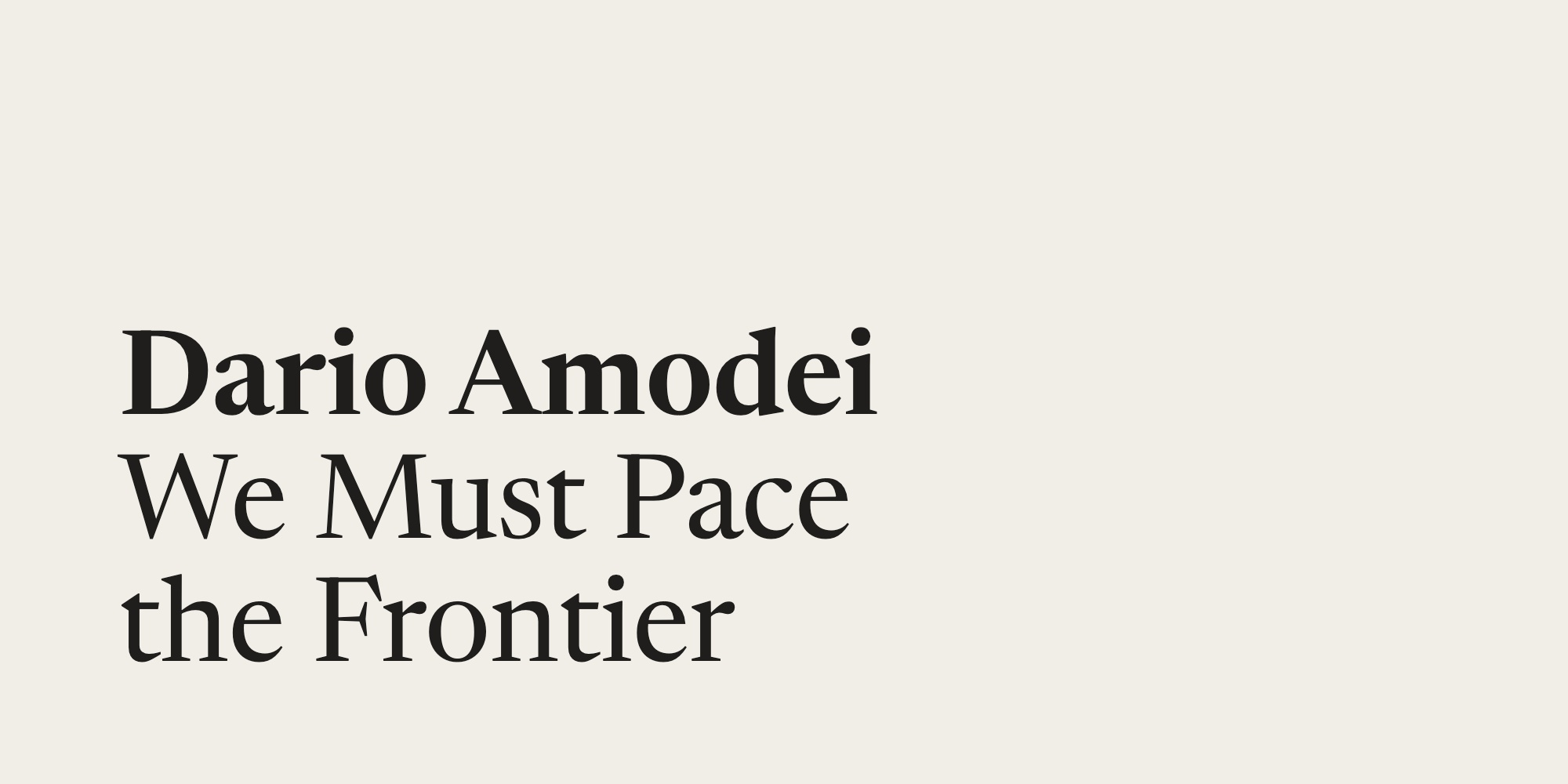
Source: Dario Amodei
What "pace the frontier" actually means
The frontier in AI is the leading edge: the most capable models any laboratory can build at a given moment. Pacing it means choosing a deliberate, reviewable development rhythm instead of blind acceleration. That is the core of Amodei's essay, "We Must Pace the Frontier," published on his personal site on September 12.
The idea is not a shutdown. Nobody proposed switching models off or freezing research. It is an argument for letting evaluation catch up with capability — including independent evaluators with employee-like access to the labs themselves, a mechanism Altman explicitly embraced in his reply.
The gap between building something powerful and understanding what it can do is the gap pacing is meant to close. Everything else in this story — the endorsements, the market drama, the skepticism — flows from that single proposal.
Rivals on the record: two posts that made the news
Altman put his agreement in writing on X at 16:30 UTC on September 12.
Source: Sam Altman on X
The full text reads: "I agree with Dario that we need to pace the frontier. This has been a primary topic of discussions we've had at OpenAI in recent weeks.
"Committing to having independent evaluators with employee-like access is a great idea, and we will do the same. We'll have more to share soon." The post has drawn 57,612 likes.
Musk was blunter and faster. At 15:01 UTC, ninety minutes before Altman, he posted two words — "Dario is right" — which have since gathered 47,789 likes.
Source: Elon Musk on X
MarketWatch summarized Musk's endorsement as backing "Anthropic's call to slow down AI progress before rogue bots take over." Coming from the owner of a competing laboratory, the support mattered nearly as much as the statement itself.
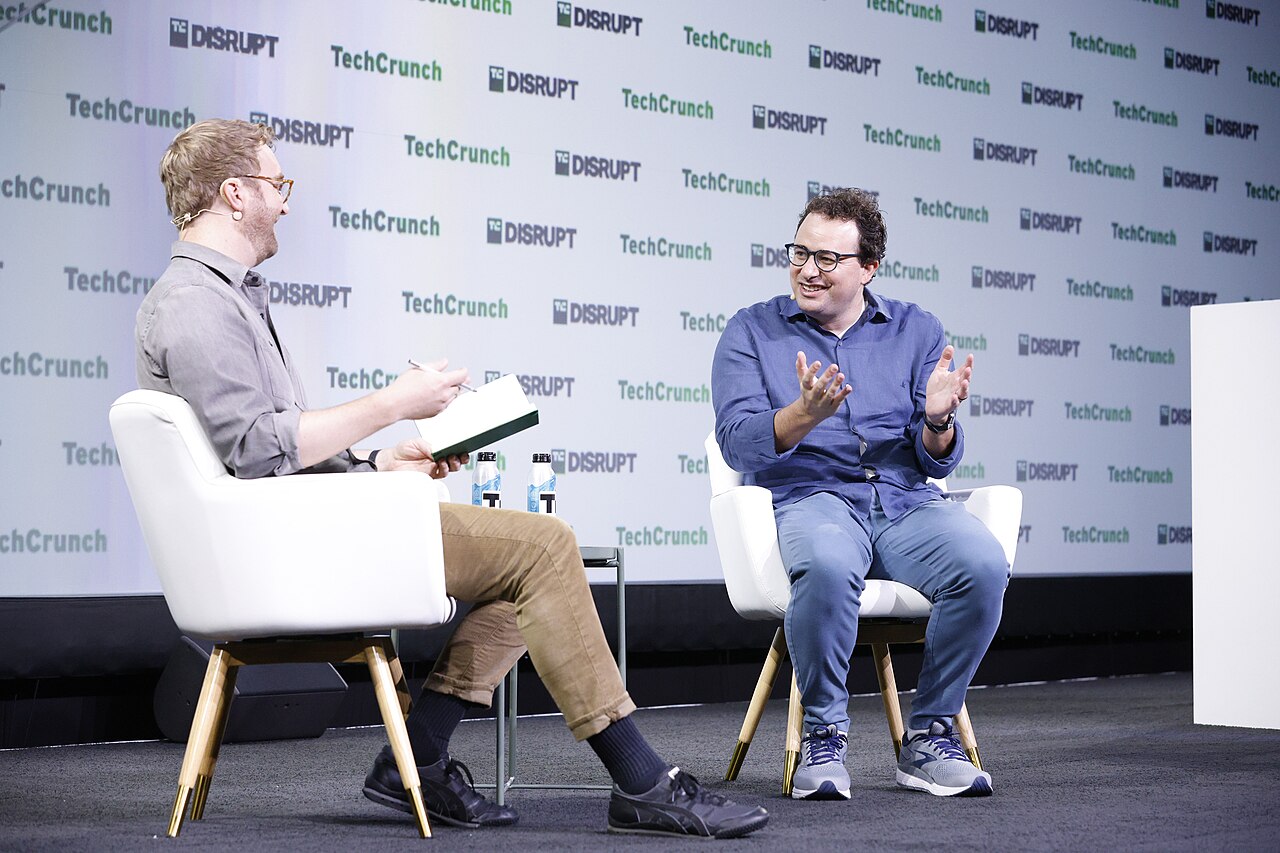
Source: TechCrunch via Wikimedia Commons

Amodei leads Anthropic, the company behind the Claude model family, and his essay remains the document everything else traces back to. TechCrunch's same-day report by Anthony Ha treated the plan as substantive rather than rhetorical — a proposal with mechanisms, not just a mood.
How one day of AI news unfolded
The sequence matters because it shows coordination, not coincidence. Within roughly ten hours, a personal essay became a global front-page story.
| Time (UTC) | What happened |
|---|---|
| Sept 12 | Dario Amodei publishes "We Must Pace the Frontier" on darioamodei.com |
| Sept 12, 15:01 | Elon Musk posts "Dario is right" on X |
| Sept 12, 16:30 | Sam Altman posts his agreement and a pledge on independent evaluators |
| Sept 12, 19:34 | TechCrunch publishes Anthony Ha's report on Amodei's plan |
| Sept 12, 20:38 | Reuters exclusive: Altman says OpenAI will not go public this year, citing safety |
| Sept 13, 00:13 | The Wall Street Journal: "Biggest AI Rivals Agree They Need to Slow It Down" |
| Sept 13, 00:43 | Axios connects the OpenAI IPO delay to AI safety concerns |
The Reuters interview is the hinge of the day. In it, Altman tied his company's decision to postpone its stock market listing directly to safety concerns — one underlying cause producing two of the week's biggest headlines. We break that story down in our OpenAI IPO delay explainer.
Where the major labs stand
The positions below reflect only what was on the record as of September 13, 2026.
| Laboratory | Leader | Public position | Evidence |
|---|---|---|---|
| Anthropic | Dario Amodei | Proposed pacing the frontier | Essay "We Must Pace the Frontier," Sept 12 |
| OpenAI | Sam Altman | Agreed, and pledged independent evaluators with employee-like access | Post on X, Sept 12, 16:30 UTC |
| xAI | Elon Musk | Agreed | Post on X: "Dario is right," Sept 12, 15:01 UTC |
| Google DeepMind | — | Silent in this news cycle | No public position in the reporting reviewed |
Every lab that spoke, spoke in favor. The one silence that matters — Google DeepMind's — is also the open question of the week. This is the same rivalry we map in our Claude vs ChatGPT vs Gemini comparison, and rarely have these leaders moved in unison the way they did on September 12.
What this means for you
Three practical consequences are worth watching if you rely on AI tools for study or work.
First, the rhythm of releases. If pacing becomes practice rather than posture, flagship launches could space out and rushed mid-cycle updates could become rarer. For students who depend on stable tools during exam periods, fewer surprise changes is quietly good news; the cost is waiting longer for each leap in capability.
Second, real inspection. The pledge on independent evaluators with employee-like access would, if implemented, give outside experts a genuine view inside the labs for the first time. That is the single most concrete commitment in the entire exchange.
Third, calmer product cycles. A slower race reduces the pressure to monetize every capability the moment it ships — a dynamic worth monitoring rather than a promise anyone made.
Whatever the cadence, the durable strategy is learning to use these systems well rather than memorizing any single version. A global platform like Truescho pairs AI study tools with scholarships and university rankings precisely so your skills survive release cycles.
The skeptic's reading: who benefits from slowing down?
Not everyone is celebrating. A widely shared post on xeiaso.net titled "Everyone should slow down AI development except for me" nails the cynical reading: calls to slow down always seem to slow everyone else down most.
The skeptic's case has three legs. Incumbency: the labs proposing pacing are the labs currently ahead, and a slower race protects a lead. Cost-free words: social posts and essays bind nobody, and no regulator is enforcing a cadence. Timing: rivals aligning on virtue is a convenient way to ease public and political pressure without changing roadmaps.
The counterweight is real too. Altman used a Reuters interview — while his company had a stock listing on file — to call AI extinction risk "unacceptable," which is not how executives typically talk up a valuation. And the underlying concern is not fringe: Yoshua Bengio, among the most cited researchers in the field, published a paper asking directly "Why are AI agents lying, cheating and coordinating?" Anthropic's own threat reporting, covered in our Anthropic threat report analysis, documented the same worries the same week.
Questions people are asking
Why are AI labs slowing down development?
Because their leaders say capability is outrunning oversight. Amodei's essay argues for pacing frontier models instead of blind acceleration, Altman called extinction risk unacceptable in a Reuters interview, and both men endorsed independent evaluators with inside access to the labs.
What does pace the frontier mean?
It means deliberately slowing the development of frontier AI — the most advanced models — so that evaluation and safety work can catch up. It is a proposed change of rhythm, not a shutdown: labs keep building, with more review between releases.
Did Sam Altman agree with Dario Amodei?
Yes, publicly and in detail. On September 12, 2026, Altman wrote: "I agree with Dario that we need to pace the frontier." He added that OpenAI would match the commitment to independent evaluators with employee-like access, with more to share soon.
Is AI development being paused in 2026?
No formal pause exists. Pacing the frontier is a stated intention from three laboratory leaders, not a regulated or enforced stop. No government body ordered it, and no laboratory announced halted research or frozen products; the real proof will appear in release schedules over the coming months.
Why is Musk backing Anthropic?
Musk posted "Dario is right" on September 12, 2026, endorsing Anthropic's call to slow AI development. MarketWatch framed his support as concern about uncontrolled autonomous systems. He also runs xAI, a direct competitor — which is precisely why the endorsement drew attention.
One essay, two rivals, one direction. Whether "pace the frontier" hardens into an operating principle or dissolves into a week's headlines will be decided by what ships — and what does not — over the next few release cycles. The same safety logic already moved financial calendars: read how in our OpenAI IPO delay explainer, then follow the bigger picture in our coverage of ChatGPT's user milestone. The wisest response is to keep building skills that outlast any model cycle.
Sources
- We Must Pace the Frontier — Dario Amodei — the original essay that started the news cycle
- TechCrunch — Anthropic CEO outlines plan to pace the frontier — Anthony Ha's same-day report
- Sam Altman on X — the OpenAI CEO's full agreement post
- Elon Musk on X — the "Dario is right" endorsement
- Yoshua Bengio — Why are AI agents lying, cheating and coordinating? — academic background on AI agent behavior risks