
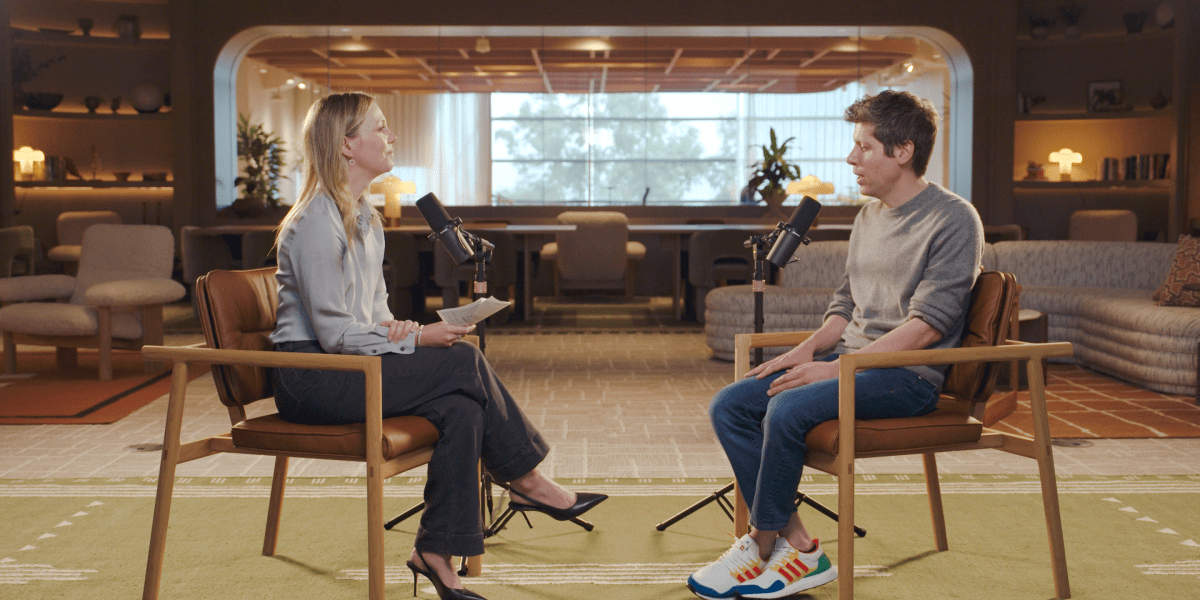
OpenAI Rules Out a 2026 IPO: Altman Calls the Timing 'Ill-Advised'
Last updated: September 2026
OpenAI has already filed confidentially for an IPO, but it will not go public in 2026. In a September 12 Reuters interview, CEO Sam Altman said listing this year would come at an "ill-advised moment," and he called the risk of AI-driven extinction "unacceptable." A listing that, per Fortune's reporting on the New York Times' June story, could value the company at $1 trillion now waits for calmer conditions.
The sentence that traveled furthest appeared in Fortune's first coverage, published at 18:04 UTC on September 12: going public now would arrive at an "ill-advised moment." By 20:38 UTC, Reuters had the exclusive interview behind the decision, and just after midnight UTC, Axios was running the simplest version of the story — OpenAI is delaying its IPO amid AI safety concerns.
What Altman actually said
Four documented statements define this decision. Fortune, first to report at 18:04 UTC, quoted Altman saying OpenAI will not go public this year because an IPO now would come at an "ill-advised moment." Reuters' exclusive interview at 20:38 UTC carried the harder edge: Altman described AI extinction risk as "unacceptable."
Business Insider, minutes earlier at 20:35 UTC, attributed the delay plainly to safety concerns. Axios confirmed the same framing after midnight UTC with its headline on the IPO delay. The quiet detail inside TechCrunch's coverage matters just as much: OpenAI has filed confidentially for an IPO. The paperwork exists; the calendar does not.
Source: TechCrunch via Wikimedia Commons

That combination — a filing in a drawer and a chief executive publicly flinching from the timing — tells you this is a postponement, not an abandonment. The company kept the door open while refusing to walk through it in 2026.
What is a confidential IPO filing?
Since that phrase is doing a lot of work in this story, it deserves a plain explanation.
A confidential filing lets a company submit its draft registration documents to the market regulator — in the United States, the Securities and Exchange Commission — without publishing them. The financial detail, the ownership structure, and the risk factors all stay private while regulators ask questions and the company revises its answers. Only when the company chooses to launch its public marketing roadshow does the paperwork become visible to everyone.
Why would a giant private startup choose this route? Flexibility. A confidential filing preserves the option to go public without committing to a date, hides strategy from competitors during preparation, and lets the company watch market conditions before showing its numbers. It can accelerate, delay, or quietly shelve the entire process.
Source: Jernej Furman via Wikimedia Commons

For OpenAI, the confidential filing means access to public markets stays open on its own schedule. Altman's September 12 statements closed the 2026 window without locking the door itself.
The numbers behind the delay, as documented by Fortune
Three figures anchor this story, all reported by Fortune in its September 12 coverage.
The valuation: $1 trillion. Fortune reported that in June, the New York Times had already said OpenAI was leaning toward pushing back its IPO — which could value the company at that level — from this year to next year. In other words, the delay announced in September had been telegraphed months earlier.
The reference point: $85 billion. Fortune wrote that a top consideration at the time was the SpaceX IPO, which raised that amount for Elon Musk's rocket and AI company. That listing is the obvious comparison for any mega-scale technology debut.
The cautionary tale: $1.8 trillion. In the SpaceX listing, shares jumped at first and sent the valuation to that peak — "then quickly tumbled," in Fortune's words. For a company weighing its own debut, it is a vivid reminder that market enthusiasm can evaporate faster than a listing can be priced.
Put together, the numbers explain the hesitation. A trillion-dollar target, one bruising mega-listing precedent, and a chief executive who says the industry's own safety questions are unresolved.
The road to September 12
| When (UTC) | Event | Reported by |
|---|---|---|
| June 2026 | OpenAI leaning toward pushing its IPO to next year, with a possible $1 trillion valuation | New York Times, via Fortune |
| September 12, 18:04 | First coverage: an IPO now would come at an "ill-advised moment" | Fortune |
| September 12, 20:19 | Parallel coverage of Altman's decision | TechCrunch |
| September 12, 20:35 | Delay attributed to safety concerns | Business Insider |
| September 12, 20:38 | Exclusive interview: no IPO this year; extinction risk "unacceptable" | Reuters |
| September 12, 21:16 | Follow-up coverage | The Verge |
| September 13, 00:43 | OpenAI delaying IPO amid AI safety concerns | Axios |
Note the cluster: five outlets within four hours, all carrying the same two facts — the confidential filing and the refusal to list in 2026.
Why this matters if you are not an investor
Most readers will never buy a share. OpenAI's listing path still touches three things you may care about.
Product rhythm. A public company answers to quarterly expectations, and pricing or packaging decisions become harder to reverse once markets are watching. Whether ChatGPT keeps growing on its current trajectory — a story we tracked in our ChatGPT user milestone coverage — will shape decisions like these for years.
The credibility signal. The stated reason is safety, the same climate that produced the week's other giant headline — the joint call by Altman, Amodei, and Musk to slow frontier AI development. A chief executive delaying perhaps the largest technology listing of the era over safety concerns is a data point about how seriously the labs now treat the issue. Anthropic's own September threat report landed the same week.
Competitive balance. Staying private longer means OpenAI answers to its existing backers rather than public markets, while rivals raise and spend on their own schedules. Investors weighing the whole sector tend to compare the big laboratories side by side — a habit our Claude vs ChatGPT vs Gemini comparison makes easy for everyone else.
If you are a student or professional learning to read industry moves like this one, structured learning pays off. Courses on Truescho cover the AI and business fundamentals behind headlines like these, on a global platform that also offers scholarships and university rankings.
Questions readers ask
Is OpenAI going public in 2026?
No. Altman told Reuters that OpenAI will not go public this year, even though the company has filed confidentially for an IPO. Fortune reported that the New York Times had already described the listing as likely slipping from this year into next.
Why did OpenAI delay its IPO?
Altman called a 2026 listing an "ill-advised moment" and tied the timing to safety concerns, as Business Insider and Axios both reported. In the same Reuters interview, he described AI extinction risk as unacceptable — a striking stance from an executive with a listing on file.
What is a confidential IPO filing?
It is a draft registration submitted privately to the market regulator instead of publicly. Financials stay secret while the company revises, tests demand, and picks its moment, and the process can be delayed or shelved quietly. TechCrunch confirmed OpenAI has filed confidentially.
What did Altman say about extinction risk?
In his September 12, 2026 Reuters interview, Altman called the risk of AI causing human extinction "unacceptable." The word anchored Reuters' headline and connected the IPO delay to the industry-wide safety debate that included Dario Amodei's slowdown essay the same day.
What we watch next
Three signposts will tell us where this ends. The first is the filing itself: a confidential registration can be revived quickly, so any report of a roadshow instantly reopens the timing question. The second is the evaluator pledge — Altman promised independent evaluators with employee-like access to OpenAI, the same commitment he made in the frontier pacing exchange, and its implementation will be the credibility test.
The third is the competitive field: how other laboratories position their own capital plans while OpenAI stays private. The deeper story is that safety arguments now move financial calendars, not just press releases. Follow that thread from its origin in our AI slowdown explainer, and keep building your understanding of this industry — the next quarter will not slow down for anyone.
Sources
- Fortune — Sam Altman: OpenAI won't go public this year — first coverage at 18:04 UTC, including the documented figures
- Reuters — OpenAI's Altman won't do IPO this year, calls AI extinction risk 'unacceptable' — the exclusive interview behind the delay
- TechCrunch — Anthropic CEO outlines plan to pace the frontier — same-day reporting that confirmed the confidential IPO filing
- We Must Pace the Frontier — Dario Amodei — the essay that set the week's safety context