
OpenAI Agents API: Build Production Agents With One API Call (2026)
Last updated: September 2026
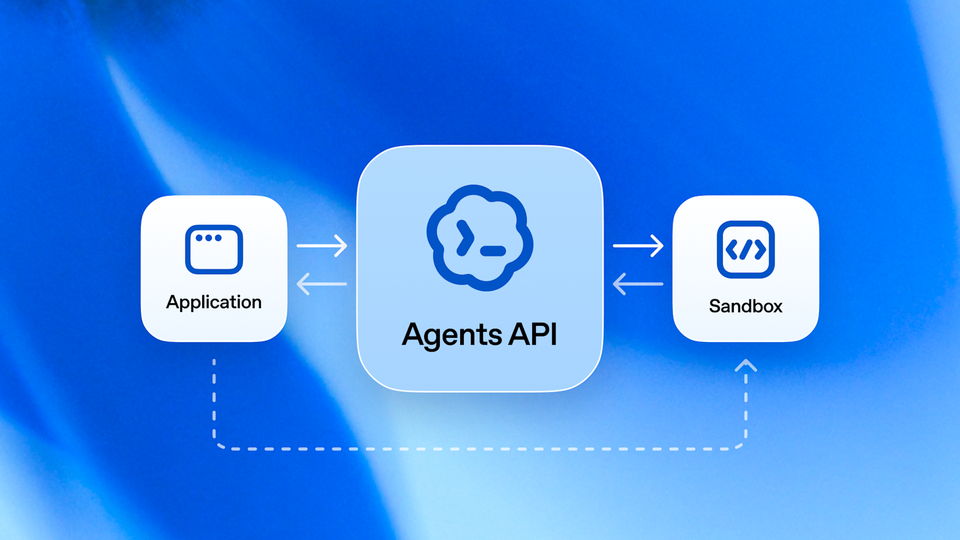
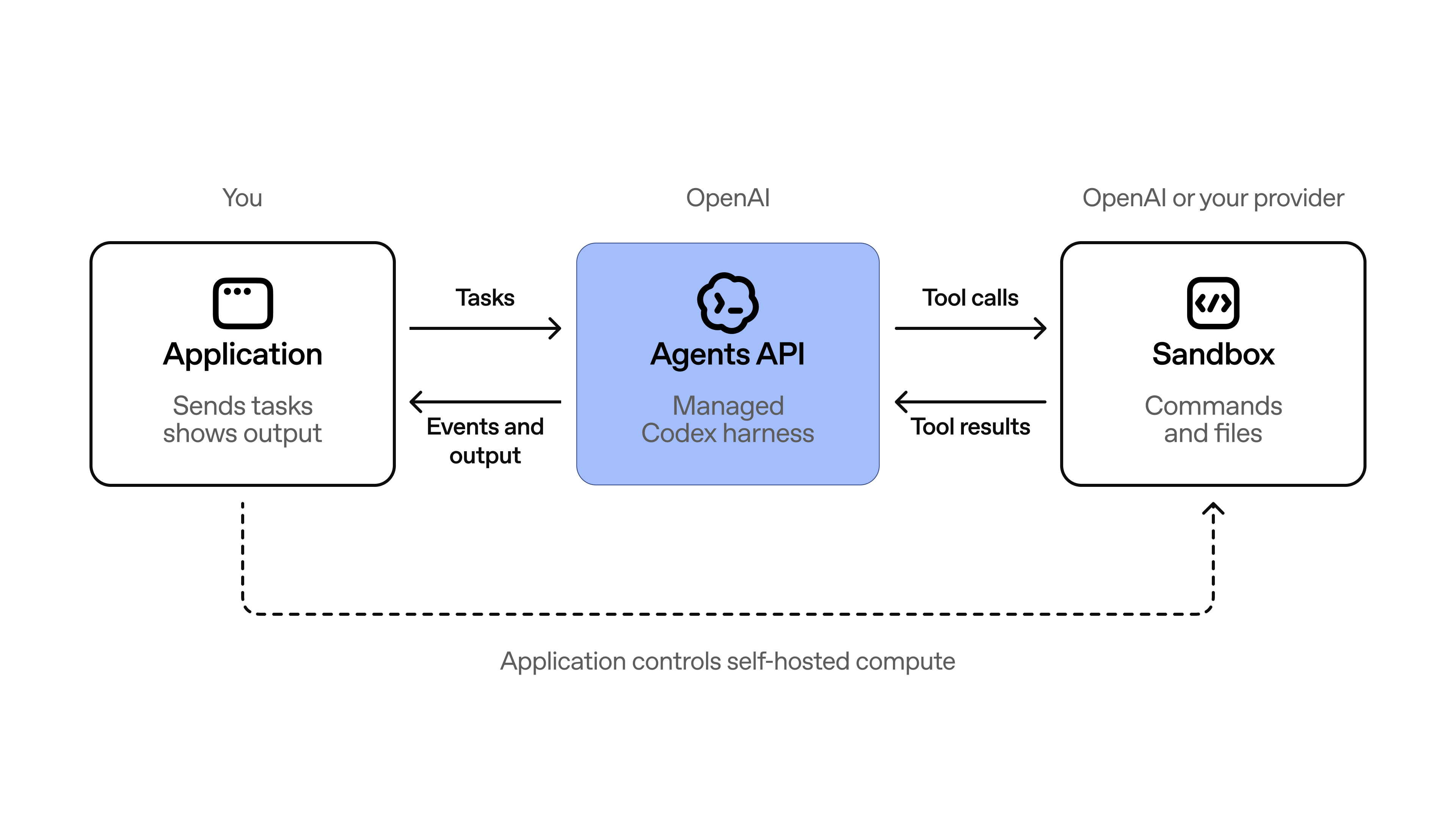
On September 10, 2026, OpenAI launched the Agents API in public beta for all developers — a layer that creates a production-ready AI agent in a single API call where you specify the task, the model, the tools, and the compute environment, while OpenAI itself operates the harness and infrastructure that power its own Codex assistant used by millions. The detail that matters most for your budget: there are no additional fees for the Agents API itself — you pay only for the tokens and tools your agent consumes.
An agent that works for days used to be a painful weekend project: you write a run loop, manage context yourself, wire up tool calls, secure a code-execution environment, and then watch it all collapse at the first long session. OpenAI's announcement named this pain precisely before offering the fix: useful agents need a strong harness that manages context, uses tools efficiently, and coordinates subagents — plus infrastructure that keeps them running reliably for days. This guide explains what changed, how to start building today from anywhere in the world, and how it compares with Google's managed agents in Gemini.
What the Agents API is, in plain terms
Stop thinking "chatbot builder" and start thinking "hiring a digital worker directly from OpenAI." You write the mission — "watch this inbox; when an invoice arrives, read it, reconcile the numbers, and file a weekly summary" — then choose the model it thinks with, the tools it may use, and the environment it works inside. Everything that used to be called "agent engineering" becomes a configuration block, and the rest is the platform's responsibility: execution, multi-day reliability, security isolation, and even evolving the harness itself with every new model release.
For developers in emerging markets, the significance is economic as much as technical. A two-person startup in Jakarta, Nairobi, or Bogotá previously needed weeks of infrastructure work before its first agent could run overnight. That cost just collapsed to a token bill.
The problem it solves: where agent builds actually break
Anyone who has built a real agent knows the four classic failure points — and each one appears in OpenAI's announcement as a named capability of the new API:
- The context window runs out mid-task. Long sessions devour context and the model loses focus. The fix here is automatic context compaction: as a session approaches the context limit, earlier context is compacted automatically while preserving what the agent needs — zero lines of code from you — so workflows span multiple context windows.
- The tool list bloats until it strangles the model. Every added tool consumes tokens in definitions and scatters attention. Tool search loads tool definitions only as needed, cutting token usage while preserving the model's cache — a smaller bill and cleaner behavior.
- Chained calls flood the context unnecessarily. Programmatic tool calling runs calls in parallel, chains related operations, and filters results in code, so only the useful summary returns to context.
- The job is bigger than one agent. Multi-agent support breaks complex tasks into independent pieces delegated to parallel subagents, each with its own context, with the main agent coordinating the results — faster research, analysis, and coding without hand-built orchestration.
The API also supports the MCP protocol, custom functions, and built-in tools like web search, so it sits on top of your existing stack instead of replacing it.
Getting started: from zero to a running agent
Before the steps, one note on intellectual cost: what follows used to be a full engineering project with an operations team — today it is a settings list. That shift in effort is the entire reason to pay attention, whether you're a freelance developer in Karachi or a product team in Warsaw.
- Open the developer docs: the full guide and quickstart are published on developers.openai.com under the Agents API section.
- Define the task in one precise sentence: an agent is blind force without a clear mission — "summarize inbound customer messages, rank by urgency, save the digest" beats "take care of customers" every time.
- Choose the model and tools: current OpenAI models, plus only the tools you genuinely need (web search, your own functions, an existing MCP server).
- Pick the compute environment — the subject of the next section.
- Fire the single API call: task + model + tools + environment = an agent running in the cloud.
Notice what never appears in these steps: no server to buy, no container to tune, no retry loop to write, no process supervisor to babysit. All of that is now part of the service itself — which is the literal difference between "an AI tool" and "agent infrastructure."
Source: OpenAI's official Agents API announcement
Compute environments: where your agent actually runs
This part is the genuinely new substance. An agent needs a place to execute code, work with files, and store intermediate results, and the API gives you three families of options:
| Option | Best for | Notes |
|---|---|---|
| OpenAI-hosted sandbox | Getting started instantly with zero ops | Same isolation infrastructure powering Codex and ChatGPT; provisioned with your files, packages, skills, and plugins |
| Your own infrastructure | Companies with strict requirements | Deployment inside your own VPC with full control |
| Ecosystem partners | Specialized performance needs | Blaxel, Cloudflare, Daytona, DigitalOcean, E2B, Modal, Oracle, Runloop, and Vercel — with different CPU/GPU/memory configurations and file and secret storage |
Source: OpenAI's Agents API announcement
The partner list alone tells you the scale of the bet: nine major infrastructure companies built first-class integrations with a single API, from Cloudflare at the edge to Modal for GPU workloads. A solo developer rents a ready sandbox; an enterprise team keeps everything inside its own walls. Both use the same interface.
A worked example: an invoice-watching agent end to end
To make it concrete, take a small design agency that wants an agent managing its vendor invoices. Here is the journey through the new API as it would actually run:
- Task definition: "Monitor the shared inbox. When a vendor invoice arrives: extract the number, amount, and due date; reconcile against the matching purchase order in the attached sheet; flag any discrepancy above 2%; save a weekly summary."
- Model and tools: a current OpenAI model, an attachment-reading tool, one internal function connecting to the accounting system, and web search for supplier verification when needed.
- Environment: an OpenAI-hosted sandbox — the agency operates no servers at all.
- Execution through the week: the agent opens each invoice, reconciles, compacts its context automatically as the week lengthens, and splits heavy invoice days across parallel subagents that merge their findings.
- Output: a weekly discrepancy report plus an alert whenever something drifts.
What used to cost the agency a part-time employee and a pile of brittle scripts becomes a carefully written task definition and a token bill. And notice the deepest point: the agent's value came not from the model's raw intelligence alone but from the precision of the task definition and the quality of the purchase-order data it was fed — work no subscription buys ready-made.
Five questions to answer before your first real agent project
Before opening a code editor, answer these in writing — they will save you weeks:
- Is the task repetitive and describable? A vague monthly task doesn't justify an agent; a precisely described daily task justifies ten.
- What error rate is acceptable? If the agent errs in 5% of cases, is the cost of those errors genuinely cheaper than human review? Answer in numbers, not feelings.
- Who reviews its output, and when? Without a named reviewer and a schedule, an agent becomes a black box trusted cumulatively — until the day it fails loudly.
- Where does its data live? If your data is sensitive or regionally regulated, start from the self-hosted or certified-partner environment before writing any logic.
- How does it stop? An agent that doesn't know when to stop is itself a definition of a problem. Define the stopping condition and the alert from day one.
Quick comparison: building your own harness vs. the Agents API
| Criterion | Building the harness yourself | OpenAI Agents API |
|---|---|---|
| Time to first working agent | Weeks | Hours |
| Long-context management | You build it | Automatic compaction built in |
| Secure execution environment | You secure it | Managed sandbox or certified partners |
| Keeping up with new models | Re-engineer every release | Harness updates automatically with each model |
| Transparency | Total (your code) | Open-source harness you can inspect |
| Cost | Team time + servers | Tokens and tools only, no extra fee |
The comparison with Google's managed agents in Gemini deserves its own article, but the headline is clear: "agent infrastructure" is now a competitive market between at least two giants — and that always ends well for the end developer.
What this means for developers worldwide
- For freelancers and small teams: the entry cost of a real "agent product" dropped from weeks of infrastructure to a token bill. A developer building tools for small businesses in Manila, Cairo, or Buenos Aires can ship an agent that runs entire nightly workflows without owning a single server.
- For everyone — the harness is open source: the harness running all of this is the Codex harness on GitHub, public code that OpenAI operates, maintains, and improves while you inspect and learn from it — rare transparency in an industry that usually buries its core logic. Reading the repository before designing your system is the highest-value hour you'll spend.
- For decision-makers: "no additional fees" makes cost comparison refreshingly direct: tokens and tools, nothing else. But model your workload for clients before signing contracts — tool-hungry agents can eat your margin if nobody watches consumption.
- For the security-minded: agents that run for days and execute code need discipline — and OpenAI itself published its model misalignment reporting framework this same week, which is recommended reading for anyone putting an agent at the center of a business process.
Limitations in the current beta
- The API is in public beta: OpenAI states plainly that it will "iterate quickly based on feedback," so expect interface and behavior changes before general availability — don't build a critical system on top without an upgrade plan.
- Documentation centers on the major US and European partner environments; verify regional data-residency options if your data is governed by local rules.
- "No additional fees" does not mean "always cheap": a multi-subagent agent with heavy tools can burn tokens faster than intuition suggests — watch the usage dashboard from day one.
- Rate limits and quotas in beta differ from production tiers; test at loads that resemble your reality.
FAQ about the Agents API
What is the OpenAI Agents API?
A programming interface OpenAI launched on September 10, 2026 in public beta that creates a cloud-based, production-ready agent in a single call: you specify the task, model, tools, and environment, and OpenAI operates the same harness and infrastructure that run Codex — from context compaction to subagent coordination.
Does the Agents API cost extra?
No additional fee applies to the API itself, as OpenAI announced — you pay for the tokens and tools your agent consumes at standard pricing. A large agent with many tools can still cost more than you expect, which makes monitoring usage part of responsible operation.
How is it different from building my own agent loop?
Building your own means writing context management, compaction, tool dispatch, task coordination, and execution security — and updating all of it with every new model. With the API, OpenAI runs and evolves that entire layer automatically, and the harness is open source if you want to inspect its logic.
Which sandbox environments are supported?
Three families: an OpenAI-hosted managed sandbox, your own infrastructure inside your VPC, or certified partners — Blaxel, Cloudflare, Daytona, DigitalOcean, E2B, Modal, Oracle, Runloop, and Vercel — with different processor, memory, file, and secret configurations for every workload.
Can an agent really run for days?
Yes — that is the stated design goal: automatic context compaction lets workflows span multiple context windows, and the infrastructure is built to keep agents reliable across long sessions, mirroring what Codex does internally at OpenAI.
Does it support the MCP protocol?
Explicitly, alongside custom functions and built-in tools like web search — meaning your team's existing MCP servers work with the API from day one without rewrites.
What does the Agents API have to do with Codex?
The API sells what Codex owns internally: the same harness managing tasks for millions of Codex users will manage your agent, with the same compaction, tooling, and isolation machinery. Codex is OpenAI's finished product for its own use cases; the API hands you that engine to build your own product under your own brand.
When infrastructure becomes a line in a config file, "we know how to build it" stops being an advantage and "we know what to build with it" starts. This launch closes the first debate and opens the second — and the opportunities there are wider than ever. If you want a companion for that shift, Truescho brings together scholarships, study tools, and career resources for students and professionals worldwide.
Sources
- Official announcement: Introducing the Agents API — OpenAI — the complete technical launch post
- Agents API developer docs — OpenAI Developers — official guide and quickstart
- The open-source Codex harness on GitHub — public code for the harness powering the API
- Google's managed agents in Gemini — our prior coverage — the comparable Google offering