

Last updated: October 2026
Oman Sick Leave Insurance 2026: The 1% Employer Contribution, Payout Tiers, and Expat Coverage Explained
Who Pays for Oman's New Sick Leave Insurance — the Employer, the Employee, or Both?
The employer pays all of it. Oman's sick leave insurance branch became compulsory on 19 July 2026, funded by a 1% contribution on each covered employee's contribution wage, borne entirely by the employer — workers contribute nothing to this specific branch. The scheme is administered by the Social Protection Fund (SPF), which electronically reimburses employers for wages paid during covered sick leave, at rates stepping down from 100% to 35% across a maximum of 182 days per year.
That single paragraph answers the question most payroll teams in Muscat, Sohar, and Salalah have been asking since the summer. The rest of this article answers the follow-ups: who exactly is covered (including expatriates), how the payout ladder works day by day, what "extraordinary leave" adds, and what your payroll run needs to look like to stay compliant and get reimbursed. Everything below is sourced from the launch coverage and statutory analysis published in June–August 2026.
When Did the Scheme Start and What Legal Basis Created It?
The start date is 19 July 2026, fixed by a chain of two royal decrees. Royal Decree 52/2023 promulgated the Social Protection Law on 19 July 2023 with a two-year runway for activating its insurance branches. Just before that deadline, Royal Decree 60/2025 (issued 13 July 2025) deferred implementation by one full year. The result: the "sick and extraordinary leave insurance branch" went live on the law's third anniversary, and payroll teams got a firm, non-negotiable go-live date to build against.
The branch is not commercial insurance you buy from a private carrier. It is a compulsory social-protection contribution registered with the Social Protection Fund, tied to your existing contribution-wage records, with claims submitted and reimbursed electronically. A June 2026 SPF decision defined the expatriate categories subject to compulsory coverage — the detail most multinational payroll teams initially got wrong. Employers extending their Oman headcount should read this alongside our Oman work visa requirements and fees guide, since total cost of an expat hire now spans visa fees, mandatory health cover, and this branch.
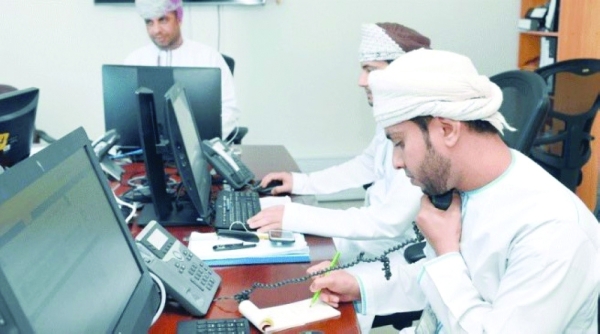
Source: Oman Observer
How Is the 1% Contribution Actually Calculated?
Three mechanical rules define the calculation, and all three matter for your payroll configuration:
- The base is the "contribution wage" registered with the SPF for each employee — not the basic salary alone, and not gross total compensation. If your registered wage and actual payroll diverge, the mismatch surfaces at the first rejected reimbursement claim.
- The assessment is daily, applied against the monthly contribution wage. Spreadsheet-driven, manually copied payroll formulas are the single biggest compliance risk under a daily accrual system.
- There is no wage ceiling on this branch, per the statutory analysis published by global payroll firm Mercans — contribution cost scales linearly with every rial of contribution wage, with no cap to plan around.
Quick sizing math: a company with 50 employees at an average contribution wage of OMR 450 adds 50 × 450 × 1% = OMR 225 per month (OMR 2,700 per year) to payroll cost. A 250-employee operation at the same average adds OMR 1,125 monthly. For most mid-size firms, the annual figure lands between one and two months of a single employee's wage per ten staff — material for budgeting, manageable for cash flow, and critical to bake into cost-per-hire models before the next expansion round, especially for companies also weighing setting up a business in Oman as a foreign investor.
Are Expat Employees Covered, or Is This Only for Omani Nationals?
Both are covered, and this is the point where early internal memos most often erred. Compulsory coverage applies to:
- Omani nationals in full-time employment within the Sultanate, across public and private sectors.
- Non-Omani nationals working within the Sultanate, per the June 2026 SPF decision: expatriate employees in units of the state administrative apparatus and other public legal entities, plus workers in private-sector establishments governed by the Labour Law.
Explicitly excluded: self-employed Omanis, part-time Omani workers, Omanis working in other GCC states, and Omanis working abroad. The practical operating assumption for a private-sector employer: everyone on your Oman payroll — national or expatriate — is covered unless a specific exclusion provably applies. For expat-heavy workforces, this branch now sits alongside mandatory health insurance; the two systems are complementary rather than overlapping, as our health insurance for expats in Oman guide explains.

Source: The Arabian Stories
What Percentage of Salary Gets Paid During Sick Leave — and by Whom?
The payout ladder runs to a ceiling of 182 sick-leave days per year, and it matters that you read it as an employer-reimbursement schedule, not an employee benefit schedule:
| Sick-leave period | Who bears the wage | Rate of wage |
|---|---|---|
| Days 1–7 | Employer, own cost, no reimbursement | 100% |
| Days 8–21 | Fund reimburses employer | 100% |
| Days 22–35 | Fund reimburses employer | 75% |
| Days 36–70 | Fund reimburses employer | 50% |
| Days 71–182 | Fund reimburses employer | 35% |
Two readings of the same table. For employers: the first week stays entirely on your books, and the tail beyond day 21 is only partially offset — the scheme compresses your long-illness exposure, it does not erase it. For employees: your paycheck is unaffected, because the employer must keep paying your full wage first and then claim back from the Fund. The percentages describe what the employer recovers, never what gets deducted from you. Read the schedule as a cost-sharing contract between the establishment and the state, triggered only when the medical evidence is in order.
The branch also continues paying the employee's old-age, disability, and death insurance contributions during covered leave, so a long illness no longer drills a hole in someone's pension record. That detail matters enormously for employees approaching vesting thresholds — and it's the kind of protection that pairs with the wider labor-law baseline covered in our Oman minimum wage and labor law explainer.
How Does a 60-Day Sick Leave Actually Play Out? A Worked Example
Theory is cheap; here is the arithmetic a Sohar logistics company with 100 employees (average contribution wage OMR 420) runs when a warehouse technician earning OMR 500 goes out on a documented 60-day sick leave.
| Period | Days | Rate | Employer pays | Fund reimburses |
|---|---|---|---|---|
| Days 1–7 | 7 | 100% employer-borne | OMR ~116.7 | OMR 0 |
| Days 8–21 | 14 | 100% | OMR ~233.3 | OMR ~233.3 |
| Days 22–35 | 14 | 75% | OMR ~233.3 | OMR ~175.0 |
| Days 36–60 | 25 | 50% | OMR ~416.7 | OMR ~208.3 |
| Total | 60 | — | OMR ~1,000 | OMR ~616.7 |
The employee received his full wage throughout. The employer's net cost after reimbursement was roughly OMR 383 — against a company-wide annual contribution bill of OMR 5,040 (100 staff × OMR 420 × 1% × 12). One extended case recovered about 12% of the year's total contributions; two or three such cases a year, normal for physical-industry workforces, push the scheme toward genuine actuarial break-even. Before July 2026, that same employer would have carried the full OMR 1,000 alone.
Scaling the same arithmetic for planning purposes: at an average wage of OMR 350, monthly cost runs OMR 3.5 per employee; at OMR 600, OMR 6 per employee. A 10-person startup pays about OMR 42–72 monthly; a 500-person operation pays OMR 1,750–3,000. Because the contribution carries no wage ceiling, executive-heavy payrolls skew toward the higher band per head — worth remembering when finance models next year's budget from this year's average, since one new C-suite hire can move the line item more than ten entry-level additions.
What Should Expats Ask HR to Confirm About Their Coverage?
Because the scheme is new, assume nothing and verify four things with your employer's HR or payroll team. First, that you appear in the company's SPF contribution file at all — coverage is automatic only if the registration is right. Second, that your registered contribution wage matches what you actually see on your payslip, since both the future benefit calculations and today's compliance depend on that number. Third, what the company's internal sick-leave policy says about the weeks where the Fund reimburses at 75%, 50%, or 35% — the law obliges the employer to keep paying you, and reputable employers in Oman already advertise full-wage sick leave as a retention perk, but your contract is the document that settles it. Fourth, how medical evidence must be submitted — which clinics' reports the company accepts and within how many days, because a late report can complicate the employer's reimbursement and, downstream, your own record.
None of this is confrontational; it is the same due diligence expats correctly apply to work visa terms and housing allowances. A payroll team that answers all four crisply is also the one whose reimbursement claims will process smoothly — the signals reinforce each other. Keep written copies of the answers, too: in a scheme this new, the record you create in month one is the reference everyone relies on in month twelve. And if the answers reveal a registration gap — a missing SPF file entry or a stale contribution wage — raise it before you need sick leave, not after; corrections processed proactively are paperwork, while corrections processed mid-illness become someone's stalled paycheck.
What Is "Extraordinary Leave," and How Is It Different From Sick Leave?
Beyond medical absence, the branch covers specified extraordinary leaves: marriage leave, bereavement leave, and leave to accompany a relative for medical treatment, each under conditions set by the implementing regulations. The distinction is procedural as much as semantic — HR teams need leave-request forms that classify sick versus extraordinary correctly from day one, because the reimbursement claim is built on that classification.
Honest caveat as of this update: the launch materials and statutory alerts publish the categories but not a consolidated day-count table for each extraordinary leave type. That belongs to the executive regulations and SPF decisions still being rolled out. Build your internal policy with placeholders and update them when the regulator publishes specifics — don't copy invented numbers from secondhand summaries, including ours.
How Do Employers Claim Reimbursement From the Fund?
The mechanism is "pay first, claim back." The employer continues paying the employee's wage during approved leave, then submits the reimbursement claim electronically to the Social Protection Fund, supported by the medical evidence and contribution-wage data. The Fund reimburses at the ladder rates above.
A nine-step compliance sequence for payroll and HR teams:
- Reconcile every employee's registered contribution wage with actual payroll.
- Configure the 1% as a distinct, automated payroll item from 19 July 2026 onward — separate from pension/disability/death branch lines. Because assessment is daily with no wage ceiling, a manual spreadsheet formula is the single biggest compliance risk in the whole sequence: one stale copy of the contribution-wage column and every subsequent claim inherits the error.
- Classify the workforce: Omani full-time, expatriate covered categories, excluded categories.
- Require medical evidence for every sick leave; file reports with start/end dates in the employee record.
- Keep paying wages in full during leave — never freeze pay pending reimbursement.
- Submit claims electronically to the SPF with documentation attached.
- Account for contributions as social-protection expense and reconcile against reimbursements monthly.
- Train payroll operators on the ladder — a 35% applied where 100% applies is a direct, repeating financial error.
- Update employment contracts and the internal policy handbook so employees know what the system covers.
What Happens to Employers Who Don't Comply?
Here is where discipline about sources matters. As of this update, the published launch materials and statutory alerts do not specify penalty amounts for non-payment or late payment under this branch. What is certain: the contribution is compulsory, the SPF administers it electronically, and Oman's Social Protection Law carries its own enforcement provisions for contributions generally. Treat any specific fine figure you read online with suspicion unless it cites an official source — including numbers an AI summary confidently invents. What we do state plainly: the financial exposure of non-compliance isn't hypothetical fines alone. An employer with unregistered or under-declared wages has employees whose sick-leave claims cannot be processed — meaning the employer then carries the entire wage cost the scheme would have shared, plus whatever enforcement follows.
What Does This Mean for Expats Planning to Work in Oman?
For the individual expatriate employee, the scheme quietly improves an already attractive package. Your wage during a long illness is system-protected rather than employer-discretionary. Nothing is deducted from your salary for it. Your pension-related record keeps accruing during covered leave. And when you evaluate job offers in the Sultanate, the existence of branch coverage like this — alongside mandatory health insurance and the residency tracks described in our Oman golden residency guide — is part of the total-protection baseline you should expect any serious employer to meet without negotiation.
For employers budgeting beyond 2026, stack this 1% alongside the income tax arriving in Oman from 2028 and recent social-protection expansions: the direction of travel is a fuller — and costlier — formal employment contract, which is precisely what makes early compliance cheaper than late compliance at every step.
The Question Nobody Has Answered Yet — and Our Answer
Every article about this scheme, including the statutory alerts, stops at "claims are submitted electronically." The question left hanging: what is the claim-cycle time — how many weeks between submission and cash hitting the employer's account? No official service-level figure has been published yet. Our working answer, from how the SPF's other electronic services behave: budget payroll cash flow as if reimbursement arrives one to two cycles late, keep a small float for long-illness wages, and reconcile monthly rather than quarterly. When the Fund publishes an official turnaround figure, the plan just gets better — but no employer should build 2026 cash-flow projections on money that arrives instantly. That, more than any percentage in the ladder, is the practical difference between a compliant payroll and a comfortable one, and it is the number finance teams should be tracking from their very first submitted claim this autumn.
Sources
- Gulf News — Oman rolls out sick leave insurance scheme from July 19 — payout tiers, expat coverage, SPF process
- Oman Observer — New payroll leave insurance reforms begin — official English-language daily coverage
- Mercans — Oman Sick and Extraordinary Leave Insurance statutory alert (June 4, 2026) — 1% employer-only contribution, daily assessment, no wage ceiling, covered categories
- The Arabian Stories — Oman to roll out sick leave insurance scheme from July 19 — June 2026 SPF decision on expatriate categories
- Al Nuha International — Mandatory sick leave insurance for expat employees — employer obligations checklist