
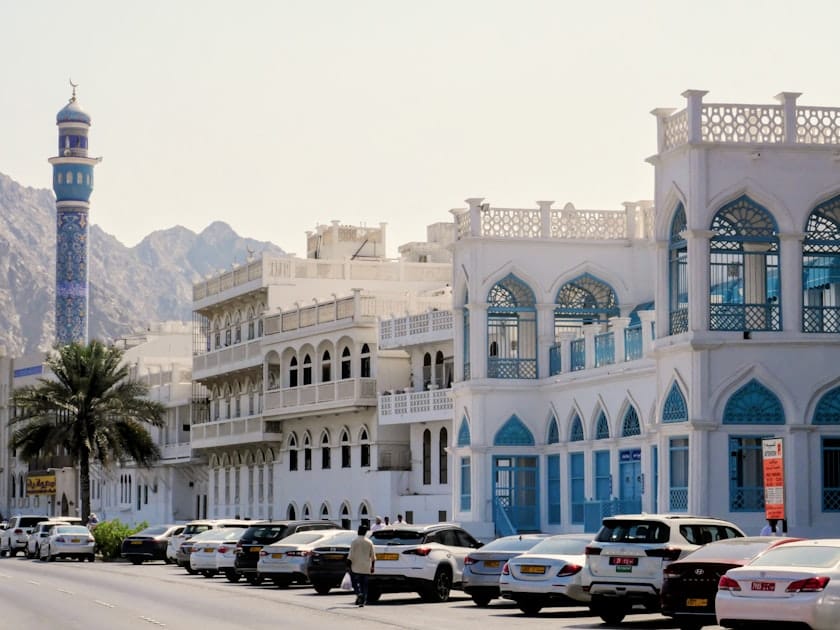
Source: InvestOman
Source: UAE Ministry of Finance
Oman Golden Residency 2026: Official Thresholds, Hidden Costs, and the Retiree Route
Last updated: July 2026
Oman has quietly built one of the most underappreciated long-term residency programs in the Gulf. While Dubai and Doha dominate the investor-visa conversation, the Sultanate has been refining a framework that delivers something its louder neighbors do not: a genuinely accessible entry point, a calmer lifestyle, zero personal income tax, and a property market where your money goes significantly further. For international investors evaluating a Gulf base in 2026, the Oman golden residency deserves far more attention than it receives.
This guide dismantles every route, every cost, and every common misconception. It reconciles the conflicting numbers circulating online, clarifies the OMR 200K versus OMR 250K confusion, deep-dives the retiree pathway that most competitors omit entirely, and compares Oman head-to-head with the UAE and Qatar so you can make a confident, informed decision rather than one built on marketing language.
Quick answer: Oman's Investor Residency Program offers two main durations. A property investment of OMR 250,000 (approximately USD 649,000) inside an approved Integrated Tourism Complex grants a 5-year residency, while OMR 500,000 (approximately USD 1,298,000) grants a 10-year residency. A bank deposit of OMR 250,000 in an accredited Omani bank is an alternative 5-year route. People aged 60 or above with a monthly income of at least OMR 4,000 (approximately USD 10,380) qualify through a separate retiree category that requires no property purchase or capital deposit at all.
What the Oman Golden Residency Actually Is
Oman launched its long-term Investor Residency Program in 2021 under Royal Decree No. 11 of 2020, as a cornerstone of Oman Vision 2040, the national strategy to diversify the economy beyond hydrocarbons and attract global capital and talent. The program is administered through the Royal Oman Police immigration framework and the Invest Oman portal, which serves as the central application gateway.
The residency is granted to foreign investors, entrepreneurs, and qualifying retirees based on the strength of their investment, deposit, or income, rather than on employer sponsorship. This is the core distinction from a standard work visa. A traditional Omani work permit ties your right to remain in the country to your employer. If the job ends, the residency ends with it. The golden residency, by contrast, exists independently of any employment relationship. It is anchored in your own capital or income, which means it survives business pivots, career changes, and even the decision to step back from active work entirely.
For an investor building a portfolio life across multiple countries, this independence is the real product being purchased. A residency you cannot lose because a single corporate relationship ended is worth more than a marginally cheaper one that depends on staying employed by a specific sponsor. Combined with Oman's 0% personal income tax and a cost of living that runs well below the flashier Gulf capitals, the program offers a compelling value proposition for the right profile of applicant.
The Five Official Routes: A Detailed Breakdown
The most common source of confusion online is the tangle of competing numbers. Some 2026 consultancy reports cite a unified OMR 200,000 threshold, others reference OMR 130,000, and still others correctly identify the tiered structure. The authoritative framework, established by Royal Decree 11/2020 and administered by the Ministry of Commerce, Industry and Investment Promotion (MOCIIP), uses a multi-route system with specific thresholds. Here is the full picture, route by route.
Route 1: Real Estate — 5-Year Residency (OMR 250,000)
The foundational entry point. Purchase a property valued at OMR 250,000 or more (approximately USD 649,000) inside a designated Integrated Tourism Complex (ITC), and you qualify for a 5-year investor residency permit, renewable. The property must sit within an approved ITC, not merely anywhere in Oman. This is the single most important restriction in the entire program, and the one that trips up the most buyers.
The 5-year permit allows you to live in Oman without a local sponsor, includes immediate family members (spouse and dependent children), and carries the right to engage in investment and business activity within the framework of Omani law.
Route 2: Real Estate — 10-Year Residency (OMR 500,000)
Double the investment, double the duration. A property purchase of OMR 500,000 or more (approximately USD 1,298,000) inside an approved ITC secures a 10-year investor residency. For anyone planning a genuine, long-term relocation rather than a flexible foothold, the upper tier often delivers far better value per year of certainty. A decade of residency eliminates the administrative friction of frequent renewals and lets a family put down real roots without anxiety about status changes every few years.
Route 3: Bank Deposit — 5-Year Residency (OMR 250,000)
For investors who prefer liquidity over real estate exposure, Oman offers a bank deposit alternative. Deposit OMR 250,000 in an accredited Omani bank, maintain the deposit for the qualifying period, and receive a 5-year residency with the same benefits as the property route. This suits investors who want to keep their capital in a financial instrument rather than committing it to a specific physical asset that requires management, maintenance, and eventual resale.
The trade-off is straightforward. Real estate may generate rental income and appreciate over time, but it carries market risk, requires property management, and involves transaction costs on entry and exit. A bank deposit is simpler, faster to arrange, and more liquid, but the funds are locked for the residency period and generate whatever interest rate the Omani bank offers, which may or may not keep pace with inflation.
Route 4: Retiree Category (Age 60+, Income OMR 4,000/month)
This is the route that almost no competitor covers properly, and it is potentially the most valuable for the right applicant. If you are aged 60 or above and can demonstrate a stable monthly income of at least OMR 4,000 (approximately USD 10,380) from a pension, annuity, investment income, or other documented recurring source, you qualify for Oman residency through the retiree category. No property purchase required. No bank deposit required. No capital lock-up at all.
The retiree pathway fundamentally changes the economics of an Oman relocation. Instead of committing USD 649,000 to real estate or a deposit, you simply prove income. For a retired professional with a solid pension portfolio, this can be a far simpler and cheaper route than any property-backed program in the Gulf. It rewards steady income rather than deployable capital, which suits a different but equally valid profile of applicant.
Route 5: Business Creation — 10-Year Residency (Employ 50+ Omanis)
The least-discussed route targets investors who create significant local employment. If you establish or operate a business in Oman that employs 50 or more Omani nationals, you may qualify for a 10-year residency. There is no fixed minimum capital threshold for this route, but the employment requirement is substantial. This pathway aligns directly with Vision 2040's goal of job creation for Omani citizens and rewards investors who contribute to the real economy rather than just parking capital in property.
The OMR 200K vs OMR 250K Confusion, Resolved
Several 2026 consultancy reports and blog posts cite OMR 200,000 as the property threshold. This figure originated from Vision 2040 consultation documents and proposals during the program's design phase. The enacted legislation, however, sets the threshold at OMR 250,000 for the 5-year route. The OMR 200,000 number was a proposal, not the final law. When you see OMR 200,000 cited online, treat it as outdated information from the drafting stage and plan your budget on the official OMR 250,000 figure confirmed by the Royal Oman Police and Invest Oman portal.
Route Summary Table
| Route | Threshold | Duration | Key Requirement |
|---|---|---|---|
| Property (entry tier) | OMR 250,000 (~USD 649,000) | 5 years | Property inside approved ITC |
| Property (upper tier) | OMR 500,000 (~USD 1,298,000) | 10 years | Property inside approved ITC |
| Bank deposit | OMR 250,000 (~USD 649,000) | 5 years | Held in accredited Omani bank |
| Retiree | OMR 4,000/month income (~USD 10,380) | Multi-year | Age 60+, documented income |
| Business creation | No fixed minimum | 10 years | Employ 50+ Omani nationals |
The True Cost: Beyond the Threshold Number
A frequent planning error is to budget only for the qualifying amount and forget the surrounding costs. These add up meaningfully and should be built into your financial model from the outset.
Property Registration Fee: 3% (effective January 2025)
The most significant transaction cost is the property registration fee, which increased from 2% to 3% of the property value effective January 2025, following a Royal Decree restructuring the Ministry of Housing. On a OMR 250,000 purchase, this is OMR 7,500 (approximately USD 19,470). On the OMR 500,000 upper tier, it rises to OMR 15,000 (approximately USD 38,940). This is a mandatory government fee, not negotiable, and must be paid at the time of title registration.
Government Application Fee: OMR 50 to OMR 100
The Royal Oman Police immigration offices charge a processing fee for the residency application, ranging from OMR 50 to OMR 100 depending on the category. This is a minor cost but should be included for completeness.
Service and Maintenance Charges (ITC Properties)
Properties inside Integrated Tourism Complexes carry annual service and maintenance fees levied by the community management. These vary by complex and unit type, ranging from approximately OMR 1,500 to OMR 5,000 per year for typical apartments and townhouses, and higher for villas with extensive facilities. These fees cover shared amenities, security, landscaping, and infrastructure maintenance.
Legal and Brokerage Fees
If you engage a real estate broker or legal advisor to assist with the purchase and residency application, expect to pay brokerage commission (typically 1-2% of the property value in the Omani market) plus legal fees for contract review and title transfer assistance.
Health Insurance
Health insurance is required for residency in many cases. The cost depends on your age, coverage level, and family size, but a comprehensive international plan for a couple in their fifties typically runs USD 3,000 to USD 8,000 annually.
The All-In Cost Example:
For a OMR 250,000 property purchase inside an ITC, a realistic all-in budget looks like this:
- Property purchase: OMR 250,000
- Registration fee (3%): OMR 7,500
- Brokerage (1.5%): OMR 3,750
- Legal fees: OMR 2,000 to OMR 4,000
- Application fee: OMR 100
- Annual service charges: OMR 2,500 to OMR 4,000
- Health insurance (year 1): OMR 1,500 to OMR 3,000
Total first-year cost: approximately OMR 267,000 to OMR 273,000 (USD 692,000 to USD 708,000). The OMR 7,500 registration fee alone is a significant line item that many buyers fail to anticipate, and the January 2025 increase from 2% to 3% added OMR 2,500 to every OMR 250,000 purchase compared to the prior rate.
Where You Can Actually Buy: The Approved Integrated Tourism Complexes
This is the detail buyers most often miss, and getting it wrong is the most expensive mistake in the entire program. To qualify for golden residency through real estate, the property must be located inside a designated Integrated Tourism Complex (ITC). You cannot buy any apartment or villa anywhere in Oman and expect it to unlock the residency. A property outside an ITC may be a perfectly good investment, but it will not qualify you for the investor visa, no matter how much you paid for it.
The ITC system was established by Royal Decree to create master-planned zones where foreign freehold ownership is explicitly permitted. Within these zones, non-Omani buyers can own property outright with full freehold title, which is not the case in the broader Omani property market where foreign ownership is heavily restricted. The residency benefit attaches specifically to ownership within these designated zones.
The Five Major Approved ITCs
1. The Wave / Al Mouj Muscat
The largest and most established ITC in the capital, Al Mouj is a master-planned waterfront community built around a marina and an 18-hole PGA-standard golf course. Developed in partnership with Majid Al Futtaim, it offers apartments, townhouses, and villas. Apartments typically start from approximately OMR 200,000 to OMR 400,000, with villas ranging from OMR 500,000 upward. The community has a strong rental market driven by Muscat's professional expatriate community, making it a practical choice for investors seeking both residency and rental yield.
2. Muscat Hills
A golf and residential community located in the hills above Muscat, Muscat Hills centers on an 18-hole championship golf course. It targets a premium buyer with villas and townhouses starting from approximately OMR 400,000. The community is quieter and more exclusive than Al Mouj, appealing to buyers who prioritize privacy and space over waterfront convenience.
3. Jebel Sifah
A marina resort community approximately 45 minutes southeast of Muscat, Jebel Sifah offers apartments and townhouses starting from approximately OMR 180,000. It is one of the more affordable entry points into the ITC market, though its distance from central Muscat means rental demand is more seasonal and tourism-oriented than year-round residential.
4. Saraya Bandar Jissah
An ultra-luxury integrated community near Muscat, developed around two resort hotels and a private beach. Saraya Bandar Jissah targets the highest end of the market, with residential units integrated into a resort-style environment. Pricing is at the premium end of the ITC spectrum.
5. Hawana Salalah
The largest ITC in southern Oman, located in Salalah in the Dhofar region. Hawana Salalah is the most affordable ITC entry point, with apartments starting from approximately OMR 150,000. It benefits from a unique seasonal dynamic: during the Khareef (monsoon) season from June to September, Salalah's population swells as Gulf tourists flock to experience the region's green mountains and cool weather, creating a strong short-term rental market. However, demand outside the Khareef season is thinner, which affects year-round rental yields.
Choosing the Right ITC
The choice of ITC should be driven by two factors: your intended use of the property (primary residence, occasional use, or pure investment) and your target rental yield profile. Al Mouj offers the most liquid rental market with steady year-round demand from Muscat professionals. Hawana Salalah offers the lowest entry price but a more seasonal rental profile. Muscat Hills and Saraya Bandar Jissah target the premium segment. Jebel Sifah sits in between, offering resort-style living at a moderate price point.
The Retiree Route: The Hidden Path Most Guides Ignore
The retiree pathway is the most underserved topic in the entire Oman residency conversation. Almost every English-language guide focuses exclusively on the property routes and ignores the retiree category entirely. This is a significant oversight because the retiree route is arguably the most cost-effective path to Omani residency for a large and growing demographic.
The requirements are straightforward:
- Age 60 or above at the time of application
- Documented monthly income of at least OMR 4,000 (approximately USD 10,380) from pension, annuity, investment returns, or other recurring sources
- Good health and no criminal record
- Valid passport and medical insurance
No property purchase. No bank deposit. No capital lock-up. You prove income, and you qualify.
How does this compare with retiree visas elsewhere in the Gulf?
The UAE offers a retiree visa for individuals aged 55 and above, but the financial requirements are higher: either AED 60,000 (approximately USD 16,335) in monthly income, or a property worth AED 2,000,000 (approximately USD 545,000), or savings of AED 1,000,000 (approximately USD 272,250). Oman's retiree route is significantly more accessible for income-rich but capital-conservative retirees.
Qatar does not have a dedicated retiree visa pathway with comparable clarity. Bahrain offers a self-sponsored residency for retirees but with less structured requirements.
Who is the Oman retiree route ideal for?
Retired professionals from high-tax jurisdictions who want to preserve their pension income. With Oman's 0% personal income tax, a retiree earning USD 12,000 per month from a combination of pension and investment income keeps every dollar, rather than surrendering 30-45% to income tax in a Western jurisdiction. The savings alone can fund a comfortable lifestyle in Muscat, where living costs are well below those of Dubai, Doha, or European capitals.
The lifestyle appeal is real. Muscat offers a calm, safe, culturally rich environment with excellent healthcare facilities, international schools, direct flights to most major hubs, and natural beauty ranging from mountain ranges to pristine coastline. For a retiree who values tranquility over urban intensity, Oman may be the most attractive Gulf destination.
Oman vs UAE vs Qatar: The Investor's Decision Matrix
Investors rarely evaluate Oman in isolation. The natural comparison is with the UAE and Qatar, the two other Gulf states offering structured residency-by-investment programs. Here is an honest, side-by-side assessment at the level that matters for a relocation or investment decision.
| Factor | Oman | UAE | Qatar |
|---|---|---|---|
| Property entry threshold | OMR 250K (~USD 649K) | AED 2M (~USD 545K) | USD 200K (renewable 1-yr) / USD 1M (near-PR) |
| Longest residency duration | 10 years | 10 years | Long-term (property-tied) |
| Retiree route | Yes (age 60+, OMR 4K/month) | Yes (age 55+, higher thresholds) | Not clearly defined |
| Personal income tax | 0% | 0% | 0% |
| Corporate tax | 15% | 9% | 10% |
| Property transfer tax | 3% | 4% (Dubai DLD) | 0% |
| Lifestyle profile | Calm, natural, lower cost | Global hub, fast-paced, high cost | Premium, smaller community |
| Property price level | Generally lowest per sqm | High in prime districts | High in designated zones |
| Path to permanent residency | No | No | Legal PR after 20 years residence |
Where Oman wins: Cost of entry (outside the UAE's lower headline threshold, Oman property prices per square meter are the lowest in the GCC prime market), quality of life for those who prefer calm over intensity, the retiree route's accessibility, and corporate tax rate competitiveness at 15% (though this is higher than the UAE's 9%).
Where the UAE wins: Global connectivity, business ecosystem depth, property market liquidity, and the sheer diversity of lifestyle options from downtown Dubai to quieter emirates like Ras Al Khaimah.
Where Qatar wins: The quality and breadth of benefits attached to the USD 1 million real-estate residency tier (healthcare, education, business ownership without a local partner), and the eventual possibility of legal permanent residency after 20 years of residence.
The honest read: Oman occupies a specific and valuable niche. It is not trying to be Dubai or Doha. It offers a quieter, more affordable, and less crowded alternative for investors who prioritize value and lifestyle over prestige and buzz. If your priority is a recognizable global hub with maximum connectivity, the UAE is hard to beat. If you want premium benefits and can deploy serious capital, Qatar's upper tier is compelling. But if you want a stable, long-horizon Gulf residency without paying a premium for the address, Oman is arguably the most underrated option in the region.
For a broader comparison of all Gulf residency programs side by side, the Gulf golden visa comparison guide provides additional context, and the UAE golden visa guide covers the UAE's specific routes in detail. If you are also evaluating Kuwait, the Kuwait investor residency guide rounds out the Gulf picture. For practical tax-free income calculations, see the Gulf tax-free salary calculator.
The Exit Strategy: Reselling ITC Property
No competitor covers what happens when you decide to sell, so here is the practical reality. Oman levies 0% capital gains tax on real estate sales. There is no withholding tax on the transfer of property proceeds. The transaction costs on exit are limited to the transfer fee payable by the buyer (3% of the property value) and any brokerage commission you agree to pay.
The key consideration is liquidity. The ITC market in Oman is smaller and less liquid than Dubai's property market, meaning sales can take longer and pricing may be less transparent. The most mature ITCs, Al Mouj and Hawana Salalah, have the deepest secondary markets because they have the largest installed bases of owners and the highest transactional volume. Newer or smaller ITCs may have thinner buyer pools.
Practical advice: if you anticipate needing to sell quickly, prioritize the most established ITCs with the deepest markets. If you are buying for long-term hold, the liquidity question is less pressing, and the lower entry prices of newer developments may offer better upside potential.
Step-by-Step Application Process
The application process is structured through the Invest Oman portal and the Royal Oman Police immigration offices. Here is the practical sequence.
Step 1: Determine your route. Decide between property purchase (5-year or 10-year), bank deposit (5-year), retiree category, or business creation. Each route has different documentation requirements.
Step 2: Fulfill the qualifying condition. Purchase property inside an approved ITC and obtain the title deed, or deposit funds in an accredited Omani bank and obtain confirmation, or prepare documented proof of retirement income.
Step 3: Prepare documentation. Valid passport (minimum 6 months validity), proof of investment or income, medical fitness certificate, police clearance certificate from your home country, passport photographs, and marriage and birth certificates if including family members (these must be authenticated and translated if not in Arabic or English).
Step 4: Submit the application. Apply through the Invest Oman portal or the Royal Oman Police immigration office, pay the processing fee (OMR 50 to OMR 100), and receive an application reference number.
Step 5: Review and approval. The authorities review the application, verify the documentation, and issue the investor residency card. Processing times vary but typically range from 4 to 12 weeks depending on the route and completeness of documentation.
Step 6: Include family members. Once the principal residency is granted, you can sponsor your spouse and dependent children under the same residency. Prepare their documentation (passports, photographs, medical certificates, and relationship proof) from the outset to avoid delays.
For investors who want to compare all Gulf residency programs before committing, the opportunities hub on Truescho maps these routes against one another and provides side-by-side cost comparisons.
Family Inclusion and Long-Term Settlement
Most investors are not relocating alone, and Oman's program is designed to accommodate the household rather than just the principal applicant. The investor and retiree pathways allow you to include immediate family members (spouse and dependent children) under the same residency. A single qualifying investment or income stream anchors the entire family in Oman for the same multi-year term.
The practical advantages compound over time. A decade of residency, obtained through the OMR 500,000 upper tier, lets a family put down genuine roots: enrolling children in Oman's international schools (which follow British, American, and IB curricula), building a local social network, and integrating into daily life without the recurring anxiety of short-term visa renewals. Combined with Oman's 0% personal income tax and a cost of living that runs significantly below Dubai or Doha, the overall proposition for a settling family is favorable.
Key documentation for family inclusion: authenticated and translated marriage certificates, birth certificates for children, medical fitness certificates for each family member, and proof of health insurance coverage. Start preparing these documents early, as authentication and translation can take several weeks and delays in family paperwork are a common cause of application hold-ups.
Tax Position: What You Keep in Oman
Oman's tax framework is straightforward and favorable for individual residents. There is 0% personal income tax on salaries, investment income, capital gains, rental income, or any other personal earnings. Your income, however generated, remains entirely yours.
On the corporate side, Oman levies a 15% corporate income tax on businesses with annual income exceeding OMR 42,500 (approximately USD 110,400). This is higher than the UAE's 9% rate, which is a consideration if you plan to operate an active business from Oman rather than simply reside there. However, Oman does not impose VAT as of 2026 (implementation is planned for April 2026 at a 5% rate, which would bring it in line with the UAE and Saudi Arabia).
The absence of personal income tax is the primary draw for high-earning individuals relocating from high-tax jurisdictions. A professional earning USD 200,000 annually in a Western European country might surrender 40-50% to income tax and social charges. In Oman, they keep the full amount. This alone can fund the qualifying investment within a year or two of relocation.
For practical tax-free salary calculations across Gulf countries, the Gulf tax-free salary calculator is a useful companion tool. The broader trend of wealthy individuals relocating to the Gulf is covered in our analysis of wealthy Britons moving to Dubai.
Common Mistakes and Expert Tips
Mistake 1: Buying property outside an ITC. This is the single most expensive error. A property outside a designated Integrated Tourism Complex does not qualify for golden residency, regardless of its value. Confirm ITC status in writing before transferring any funds.
Mistake 2: Anchoring on the wrong threshold. The OMR 200,000 figure circulates widely but reflects a Vision 2040 proposal, not the enacted law. The official thresholds are OMR 250,000 for 5 years and OMR 500,000 for 10 years. Plan on the official figures and verify any lower number directly with MOCIIP or a licensed advisor.
Mistake 3: Overlooking the retiree route. If you are 60 or older with strong recurring income (OMR 4,000/month minimum), you may not need to buy property or make a bank deposit at all. Many applicants tie up capital unnecessarily because they are unaware this pathway exists.
Mistake 4: Forgetting the surrounding costs. The 3% registration fee (since January 2025), service charges, legal fees, and health insurance add meaningfully to the all-in cost. Build them into your budget from day one.
Mistake 5: Not preparing family documents early. Authentication, translation, and legalization of marriage and birth certificates can take weeks. Start the process as soon as you decide to apply, in parallel with the property purchase or income documentation.
Expert tip on route selection: Think in durations, not just amounts. The jump from OMR 250,000 to OMR 500,000 doubles your residency from 5 to 10 years. For anyone planning a genuine long-term move, the upper tier often delivers significantly better value per year of certainty.
Expert tip on property selection: Choose your ITC based on your intended use pattern. If you will live in the property year-round, proximity to Muscat's business and social infrastructure (Al Mouj, Muscat Hills) matters. If you plan to rent the property out, focus on the rental demand profile of each ITC. Hawana Salalah excels during Khareef season but is quieter off-season. Al Mouj offers the steadiest year-round tenant base.
Expert tip on banking: For international investors managing multi-currency capital flows across Gulf and home-country accounts, having a business-grade multi-currency account can significantly reduce exchange costs during the property purchase and ongoing management. Services like Airwallex provide such capabilities, though you should evaluate whether the fee structure suits your transaction volume. (Disclosure: this article contains an affiliate link to Airwallex; we may earn a commission at no additional cost to you.)
Frequently Asked Questions
How much property do you need for Oman golden residency in 2026?
A qualifying property of OMR 250,000 (approximately USD 649,000) inside an approved Integrated Tourism Complex grants a 5-year residency. OMR 500,000 grants a 10-year residency. The property must be within a designated ITC to qualify.
What is the difference between the 5-year and 10-year Oman investor visa?
The duration is tied directly to the investment amount. OMR 250,000 secures a 5-year residency and OMR 500,000 secures a 10-year residency. Both are renewable and allow family inclusion and sponsor-free residence.
Can you get Oman residency through a bank deposit instead of property?
Yes. A fixed deposit of OMR 250,000 held in an accredited Omani bank qualifies for a 5-year residency. This is a full alternative to the property route and suits investors who prefer liquidity over real estate exposure.
Can you work or do business with an Oman investor residency permit?
Yes. The investor residency permits you to live in Oman without employer sponsorship and engage in investment and business activity within Omani legal frameworks. The residency is independent of any specific employer.
What are the requirements for Oman retirement residency?
Applicants must be aged 60 or above with a documented monthly income of at least OMR 4,000 (approximately USD 10,380) from pension, annuity, or investment income. No property purchase or capital deposit is required.
Is there personal income tax in Oman for residents?
No. Oman levies 0% personal income tax on individuals. All personal income, whether from salary, investments, rentals, or capital gains, is tax-free.
How much is the property registration fee in Oman in 2026?
The property registration fee is 3% of the property value, effective from January 2025. On a OMR 250,000 purchase, this is OMR 7,500 (approximately USD 19,470).
Does Oman golden residency cover family members?
Yes. The investor and retiree pathways allow the principal applicant to include a spouse and dependent children under the same residency, giving the household the same multi-year security.
How long does it take to process Oman investor residency?
Processing times typically range from 4 to 12 weeks, depending on the route, completeness of documentation, and whether family members are included in the initial application or added later.
Which integrated tourism complexes qualify for foreign property ownership in Oman?
The recognized ITCs include The Wave / Al Mouj Muscat, Muscat Hills, Jebel Sifah, Saraya Bandar Jissah, and Hawana Salalah. Only properties within these or other MOCIIP-designated ITCs qualify for the golden residency.
Oman is one piece of a larger Gulf residency landscape. If you are weighing it against other markets, read how the Qatar permanent residency routes work and how the UAE golden visa categories compare, then line up every option at the Truescho opportunities hub to choose the one that fits your goals.
Sources
- Invest Oman — Official Investor Residency Portal — official program overview, eligibility criteria, and application gateway.
- Royal Decree No. 11/2020 — Investor Residency Program — primary legislation establishing the five-year and ten-year residency tracks.
- Oman Tax Authority — Corporate Income Tax — official tax framework confirming 0% personal income tax and 15% corporate tax rate.
- Sovereign Group — Oman Golden Visa Guide — independent MOCIIP-licensed analysis of the residency program structure.
- Oman Vision 2040 — Official Document — national strategy framework underpinning the investor residency initiative.