
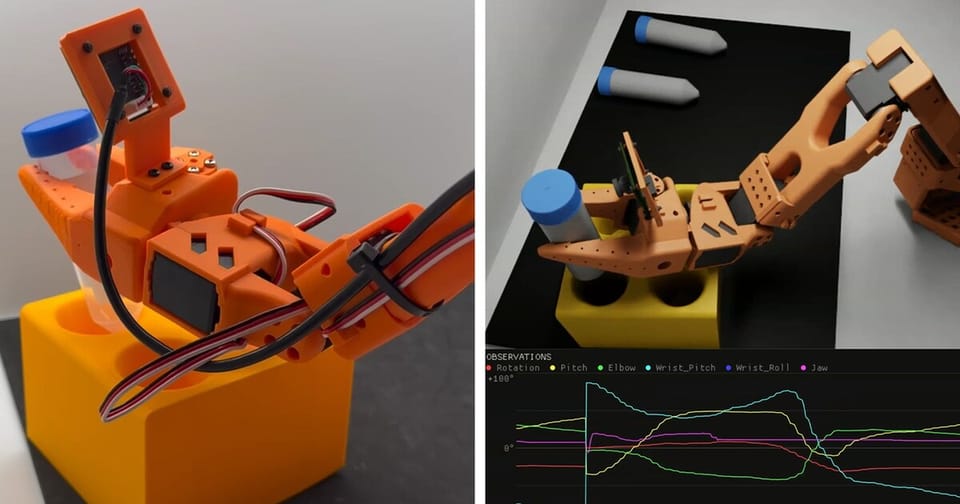
NVIDIA GR00T 1.7 and Isaac Teleop on LeRobot: Open Robotics Workflow in 2026
On July 6 and July 7, 2026, NVIDIA and Hugging Face detailed a new open robotics workflow: NVIDIA Isaac GR00T 1.7 and Isaac Teleop are available in LeRobot, Hugging Face's open source robotics library. No verified official X announcement URL was found, so this article uses official web sources and does not embed a social post.
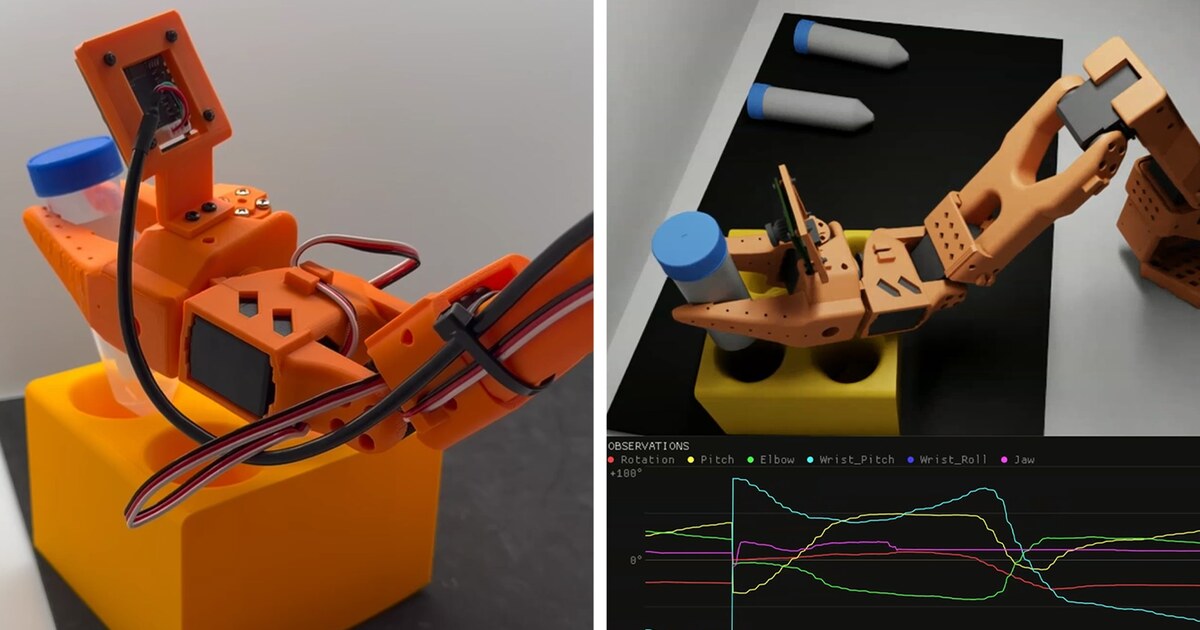
Source: NVIDIA Blog
This Is Not Just a Model Release
Robotics is not solved by a model alone. Teams need to collect human demonstrations, store data in useful formats, train or fine-tune policies, evaluate in simulation and then deploy carefully to real hardware. Each stage can use a different tool, and every conversion can slow experimentation.
Putting GR00T 1.7 and Isaac Teleop into LeRobot is an integration story. GR00T 1.7 gives developers an open vision-language-action model for humanoid skills. Isaac Teleop helps collect demonstrations. LeRobot provides an open workflow for datasets, training, sharing and deployment.
NVIDIA says the partnership connects its 3 million robotics developers with Hugging Face's 16 million AI builders. That matters because robotics needs shared data, models, tools and repeatable workflows, not only closed lab demos.
Why Robotics Teams Care
For robotics researchers and startups, the value is a more repeatable path. A small team can choose a task, collect demonstrations, convert them into a LeRobot-compatible format, fine-tune GR00T 1.7 and evaluate before touching real hardware. The field remains hard, but the workflow becomes less fragmented.
The practical opportunity is strongest for labs, universities and companies working on warehouse tasks, industrial handling, service robotics and humanoid experimentation. The limiting factors are still hardware, calibration, safety, task data and deployment discipline.
Open Workflow Pieces
| Workflow piece | Role | Why it matters |
|---|---|---|
| GR00T 1.7 | Open VLA model for humanoid skills | A foundation model to adapt instead of starting from scratch |
| Isaac Teleop | Demonstration collection | Captures human demonstrations for imitation and fine-tuning |
| LeRobot | Open robotics workflow library | Standardizes datasets, training and sharing |
| Isaac Sim and Isaac Lab | Simulation and testing | Reduces risk before real-world deployment |
| Cosmos 3 | Planned integration | Could support future data and simulation workflows |
What Changed in GR00T 1.7
NVIDIA's technical blog describes GR00T 1.7 as an open, commercially usable VLA model with Apache 2.0 licensing and publicly available weights. VLA means the model connects vision, language and action: it sees the environment, understands an instruction and produces robot actions.
NVIDIA also describes support for deployment paths such as ONNX and TensorRT. That matters because physical robots need latency, reliability and deployment practicality, not only benchmark scores.
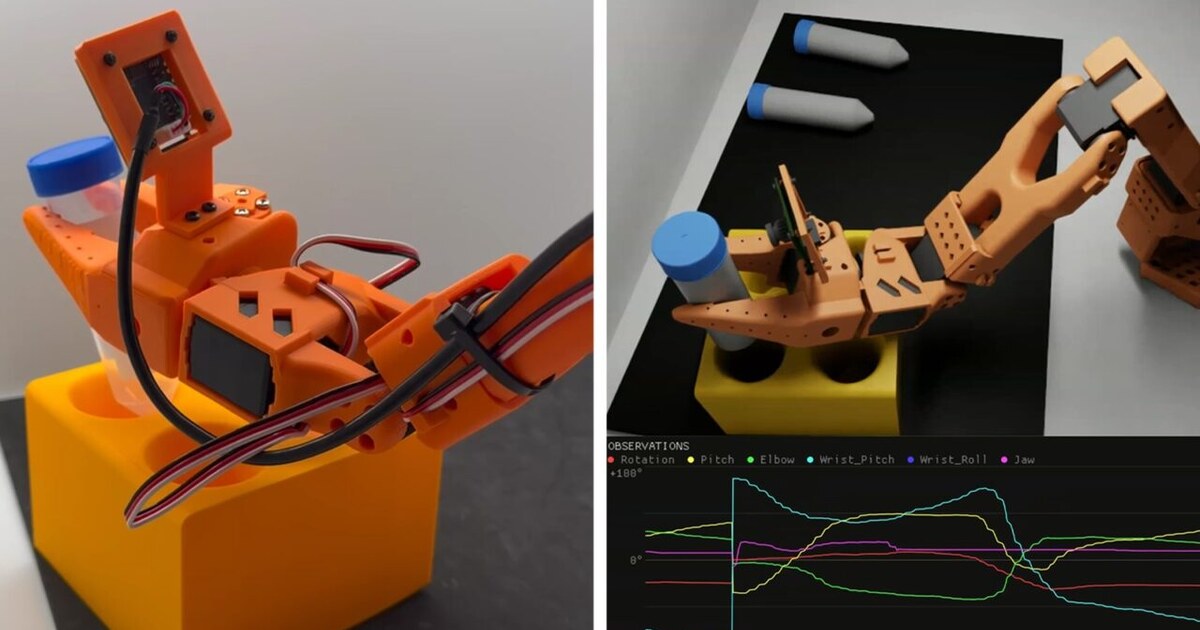
Source: NVIDIA Developer Blog
The Data Angle
NVIDIA points to an open physical AI dataset with more than 350,000 real and simulated trajectories and 57 million grasps. Those numbers matter because robotics data is embodied. It contains timing, geometry, contact, sensor context and control, not just text or pixels.
Shared datasets plus teleoperation tools give smaller teams a starting point. They can fine-tune with their own task data instead of funding a full pretraining effort. That could make robotics experimentation more comparable and more reproducible.
Where Reality Gets Hard
The first limitation is safety. A web app can fail with an error message. A robot can collide, drop objects or damage hardware. Policies need simulation, safety boundaries, controlled test areas and human oversight.
The second limitation is embodiment. Humanoid covers many body shapes, grippers, cameras and controllers. A model that performs well on one platform may need significant adaptation for another.
The third limitation is data quality. Isaac Teleop can help collect demonstrations, but poor demonstrations still produce poor policies. Teams need consistent camera views, clean actions, task definitions and evaluation criteria.
Finally, Cosmos 3 is described as planned for LeRobot. It should not be treated as an already available production capability in this July announcement.
Developer Questions
What is GR00T 1.7?
NVIDIA Isaac GR00T 1.7 is a vision-language-action model for generalized humanoid robot skills.
What does Isaac Teleop do?
Isaac Teleop helps collect robot demonstration data from external devices or simulation for downstream training and fine-tuning.
Is GR00T 1.7 commercially usable?
NVIDIA's technical blog describes GR00T 1.7 as open and commercially usable under Apache 2.0, with public weights.
Does this make robotics easy?
No. It reduces workflow fragmentation, but teams still need hardware, safety, calibration, data collection and real-world testing.
Is Cosmos 3 already available in LeRobot?
NVIDIA says Cosmos 3 integration is planned, so it should be treated as a future capability until developers can use it in the workflow.
A Small Robotics Experiment Plan
A small team does not need to start with a full humanoid showcase. It can choose a narrow task such as picking a known object from a table, collect a small number of high-quality demonstrations, document lighting, cameras and gripper setup, then test a policy in simulation before touching real hardware. The task should be narrow enough to evaluate clearly.
The team can then compare three versions: a policy trained from scratch, a policy fine-tuned from an open model and a policy improved with additional local data. That comparison is useful because it shows where GR00T 1.7 helps and where the team still needs better task data or hardware.
Why Open Community Matters
In software, an open community means libraries, examples and tests. In robotics, it also means motion data, simulation files, camera setups and safety practices. If LeRobot can make those pieces easier to share, small experiments could compound in the same way open language-model work accelerated. Success will depend on contribution quality and documentation, not model count alone.
Practical Learning Path
The GR00T 1.7 and LeRobot integration matters because it makes the robotics workflow easier to learn and repeat. It does not mean humanoid robots are now a general product. Smart teams will treat it as an experimental stack: define a task, collect data, test in simulation and move slowly toward reality.
For universities and startups, the best use now is building internal skill in the data, training and evaluation loop. Teams that learn that loop early will be better prepared when hardware and models improve. Teams waiting for a fully general robot may miss the most important learning phase.
What Teams Should Avoid
Do not start with a broad task like make the robot organize the room. That is hard to measure and can fail for many reasons at once. Start with one action, one object or one controlled object class, and one environment. Do not mix model testing, hardware testing and perception testing in a single experiment. Separate variables so failure is diagnosable.
Safety should be present from day one. Even a small experiment needs an emergency stop, motion boundaries and a test area without uninvolved people nearby. Open models lower the entry barrier, but they do not lower operational responsibility.
What To Watch Next
The next important signal is reproducibility inside LeRobot. If a new developer can load a model, dataset and documented experiment and run it on similar hardware, that is real progress. If results remain tied to private settings and undocumented setups, openness will remain partial.
Example: One-Object Picking
A useful first experiment could be picking one known object from a table under fixed lighting. The team collects demonstrations with teleoperation, documents cameras, gripper and object position, trains a policy and measures success across 50 attempts. Then it changes one variable at a time: lighting, a similar object or a new position. Small tests reveal whether the model learned a skill or memorized narrow conditions.
If the first task is broad, failure is hard to diagnose. It could come from perception, control, data or the model. Narrow experiments are not less ambitious. They are how teams build trust in a real robot.
Where Commercial Value Starts
The first commercial value is not a general humanoid robot tomorrow. It is reducing the cost of developing specific skills: picking, moving, sorting, inspecting or operating tools in structured environments. If LeRobot and GR00T 1.7 make those skills faster to test, warehouses, labs and small factories may benefit before general-purpose robots reach consumers.
Any company considering production still needs to model hardware, safety and maintenance costs, not only model access.