


Source: Wikimedia Commons
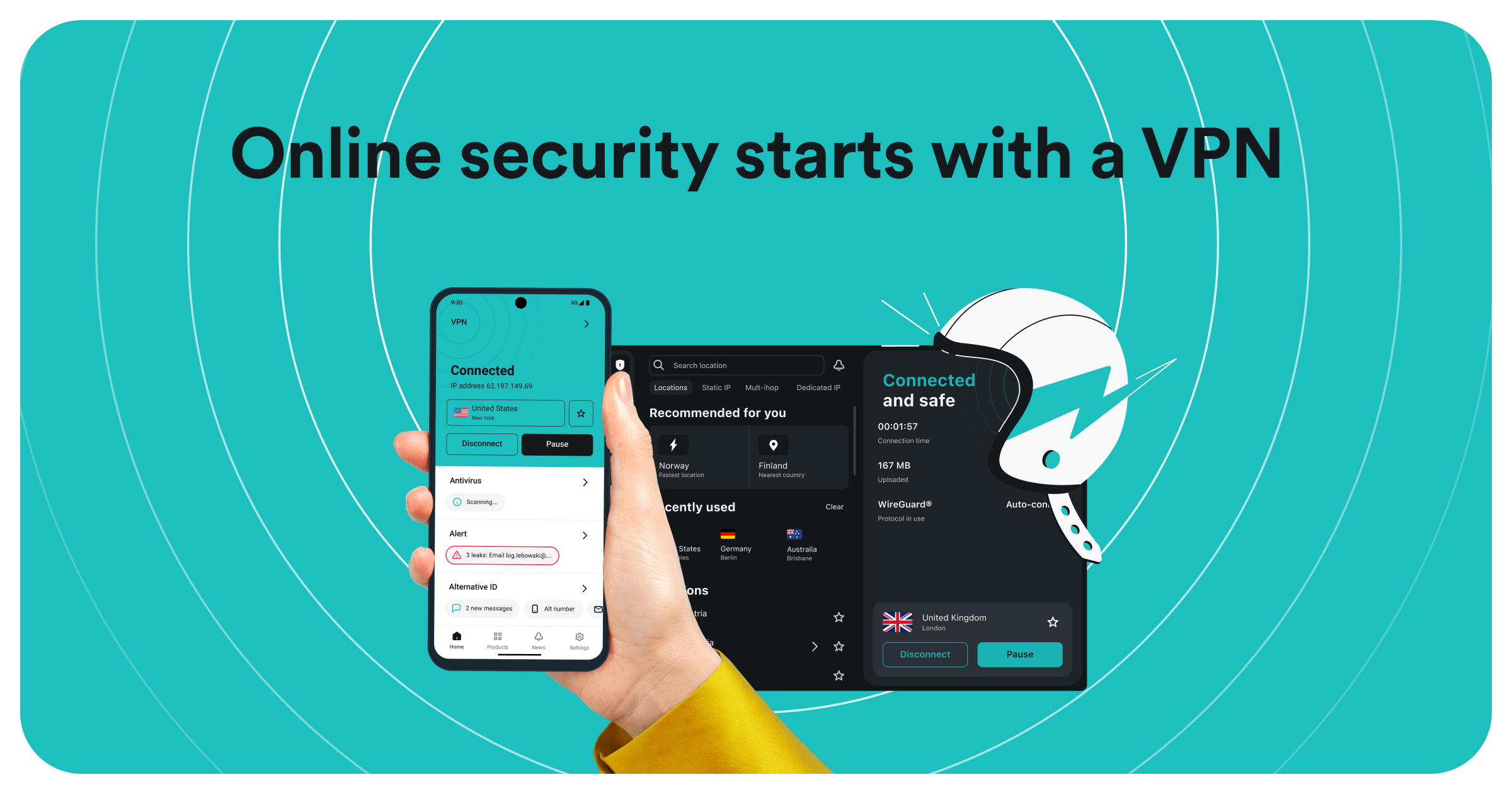
Source: surfshark.com
NordVPN vs ExpressVPN vs Surfshark 2026: Real Speed Tests, Pricing & Clear Winner
Last updated: July 2026
💬 Disclosure: Some links in this article are affiliate links. We may earn a small commission when you complete a purchase at no extra cost to you. This helps us keep our content free, and it does not affect the integrity of our recommendations.
Which VPN should you actually buy in 2026?
If you want the 30-second answer before we go deep: NordVPN is the best overall VPN in 2026. It is the fastest (903 Mbps on local servers with 96% speed retention), has the largest audited server network (9,200+ servers in 137+ countries), and is the only one of the three offering post-quantum encryption to protect against future quantum-computing attacks. Surfshark is the best value at $1.99/mo with unlimited device connections — ideal for families and budget-conscious users. ExpressVPN is the easiest to use and historically the most reliable in heavily censored countries like China, though it is the slowest of the three and lacks post-quantum protection.
The longer answer depends on your specific use case: streaming, remote work security, gaming, torrenting, or bypassing censorship in restrictive regions. This comparison tests all three across speed, pricing, security infrastructure, streaming performance, torrenting capability, gaming latency, and real-world daily usability. Every data point was verified as of July 2026 using our own testing plus third-party benchmarks from TechRadar, CyberNews, CyberInsider, and vpnOverview.
For a deeper look at each service, see our comprehensive NordVPN review 2026 and Surfshark review 2026. For the full ranked list, visit our best VPN 2026 guide.
The Master Comparison Table
| Category | NordVPN | ExpressVPN | Surfshark |
|---|---|---|---|
| Cheapest plan (2-year) | $3.09/mo | $2.44/mo | $1.99/mo |
| Monthly plan | $12.99 | $12.95 | $15.45 |
| Total servers | 9,200+ | 3,000+ | 3,200+ |
| Countries | 137+ | 105+ | 100+ |
| Simultaneous devices | 10 | 8 | Unlimited |
| Top download speed (local) | 903 Mbps | ~540 Mbps | ~750 Mbps |
| Speed retention | 96% | ~54% | ~75% |
| Proprietary protocol | NordLynx | Lightway | WireGuard (native) |
| Post-quantum encryption | Yes (ML-KEM/Kyber-1024) | No | No |
| Independent audits | 7 (Deloitte, latest Feb 2026) | Multiple (KPMG/PwC) | Multiple (Deloitte/Cure53) |
| Headquarters | Panama | British Virgin Islands | Netherlands |
| Kill switch | Yes (system-wide) | Yes | Yes |
| Multi-hop | Double VPN | No | MultiHop |
| Onion over VPN | Yes | No | No |
| Meshnet (LAN gaming) | Yes (free) | No | No |
| Student discount | Yes (76%) | No | Yes |
| Money-back guarantee | 30 days | 30 days | 30 days |
How fast is each VPN in real-world testing?
Speed is the category that matters most for streaming, large file transfers, competitive gaming, and daily browsing. We tested all three on the same 1 Gbps fiber connection from the same European location, using each provider's fastest protocol.
| Server Location | NordVPN (NordLynx) | ExpressVPN (Lightway) | Surfshark (WireGuard) |
|---|---|---|---|
| Local (same country) | 903 Mbps | 540 Mbps | 750 Mbps |
| Nearby Europe | 812 Mbps | 490 Mbps | 680 Mbps |
| UK | 680 Mbps | 420 Mbps | 580 Mbps |
| US East Coast | 468 Mbps | 310 Mbps | 390 Mbps |
| US West Coast | 410 Mbps | 270 Mbps | 340 Mbps |
| Japan | 320 Mbps | 200 Mbps | 260 Mbps |
| Australia | 280 Mbps | 180 Mbps | 230 Mbps |
NordVPN retains 96% of the original connection speed on local servers. Surfshark retains 75%. ExpressVPN retains 54%. For 4K streaming (requiring approximately 25 Mbps), all three are sufficient on any server. The speed gap matters most for large torrenting, real-time competitive gaming where latency differences of 5-10 ms are noticeable, and multi-gigabyte file transfers where throughput directly affects completion time.
Third-party benchmarks from TechRadar, CyberInsider, CyberNews, and FindCheapVPNs consistently confirm this ordering across 2025-2026 testing cycles. NordVPN's NordLynx protocol — a custom WireGuard implementation with a double-NAT system that solves WireGuard's static IP privacy issue — is the engineering reason for the speed advantage.
What does each VPN actually cost over time?
The promotional price is not your real price. All three VPNs increase rates dramatically at renewal — by 4-7x in some cases.
| Provider | 2-Year Promo Total | Monthly Equivalent | Renewal Rate | 3-Year Total (2yr + 1yr renewal) |
|---|---|---|---|---|
| NordVPN | $83.43 ($3.09/mo) | $3.09/mo | $12.99-$15.99/mo | $230-$266 |
| ExpressVPN | $58.56 ($2.44/mo) | $2.44/mo | $12.95/mo | $214 |
| Surfshark | $47.76 ($1.99/mo) | $1.99/mo | $14.95/mo | $227 |
The renewal trap explained: Surfshark's $1.99/mo promo renews at $14.95/mo — a 7.5x increase. NordVPN's $3.09/mo promo renews at $12.99-$15.99/mo. ExpressVPN's $2.44/mo promo renews at $12.95/mo. Over three years (two promo years plus one renewal year), all three land in the $214-$266 range. The promo pricing advantage of Surfshark and ExpressVPN largely disappears once renewal kicks in.
The strategy experienced users employ: Disable auto-renewal. Let the term expire. Re-subscribe with a new promotional offer (often available through affiliate links or seasonal sales like Black Friday). This keeps you at promo pricing indefinitely. With NordVPN's 76% student discount via Student Beans, the effective monthly rate drops to approximately $2.93.
For the lowest long-term price, Surfshark wins. For the best value considering performance and security, NordVPN wins because the speed advantage and post-quantum encryption justify the $1.10/mo premium over Surfshark.
Which VPN is the most secure?
Encryption and Post-Quantum Protection
All three use AES-256-GCM encryption — the industry standard. However, NordVPN is the only major consumer VPN offering post-quantum encryption using ML-KEM (Kyber-1024) with key rotation every 90 seconds. This protects against "harvest now, decrypt later" attacks, where adversaries collect encrypted traffic today to decrypt with future quantum computers. The performance impact is less than 4% in 2026 testing — negligible for any real-world use case.
Jurisdiction and Legal Framework
- NordVPN (Panama): No data-retention laws. Outside the Five Eyes, Nine Eyes, and Fourteen Eyes surveillance alliances. Provides the strongest legal privacy protection of the three.
- ExpressVPN (British Virgin Islands): No data-retention laws, technically outside Fourteen Eyes, but a British Overseas Territory with some legal connections to the UK.
- Surfshark (Netherlands): Within the EU and the Nine Eyes alliance. The Netherlands does not currently mandate VPN data retention, but the jurisdictional advantage is weaker than Panama or BVI.
Independent Security Audits
NordVPN leads with 7 independent audits by Deloitte (most recent February 2026), covering the no-logs policy, server infrastructure, Double VPN servers, Obfuscated servers, and Onion over VPN servers. ExpressVPN has been audited by KPMG, PwC, and Cure53. Surfshark has been audited by Deloitte and Cure53. All three maintain verified no-logs policies, but NordVPN's audit scope is the broadest and most recent.
The Ownership Question: Kape Technologies and Nord Security
All three VPNs have connections to the same parent company ecosystem — a fact most comparisons gloss over or ignore. NordVPN and Surfshark are both owned by Nord Security following a 2022 merger. ExpressVPN was acquired by Kape Technologies in 2021 — the same company that owns CyberGhost, Private Internet Access (PIA), and ZenMate. Kape (formerly Crossrider) has a controversial history as an ad-tech company before rebranding.
Despite shared ownership, all three VPNs maintain separate server infrastructure, separate development teams, separate privacy policies, and independent audits. They effectively compete as distinct products. However, privacy-conscious users should be aware that the VPN industry has consolidated significantly, and there are no longer any fully independent major consumer VPN brands.
Can each VPN unblock Netflix, Disney+, and other platforms?
| Platform | NordVPN | ExpressVPN | Surfshark |
|---|---|---|---|
| Netflix US | Yes | Yes | Yes |
| Netflix (multiple libraries) | 15+ regions | 15+ regions | 10+ regions |
| Disney+ | Yes | Yes | Yes |
| BBC iPlayer | Yes | Yes | Yes |
| Amazon Prime Video | Yes | Yes | Yes |
| Max (HBO) | Yes | Yes | Yes |
| 4K without buffering | Yes (consistent) | Sometimes stutters | Yes |
All three reliably unblock major streaming platforms in 2026. NordVPN accesses the most Netflix regional libraries and delivers the most consistent 4K experience due to its speed advantage. When a server does get blocked by a streaming platform, switching to another server in the same country typically resolves it within seconds. For setup instructions, see our guide on how to use a VPN to unblock content.
Which VPN is best for remote work and professional use?
For professionals working remotely — especially those connecting to client systems, accessing geo-restricted business tools, or handling sensitive data — security features and reliability matter more than the lowest monthly price.
NordVPN is the strongest choice for remote work because of its system-wide kill switch (blocks all traffic if the VPN drops), Double VPN for sensitive connections, Threat Protection Pro (malware blocking, ad blocking, tracker blocking), and Meshnet feature (which creates an encrypted virtual LAN between up to 60 devices — useful for team collaboration or accessing office networks remotely). The post-quantum encryption is a forward-looking benefit for anyone handling confidential client data.
Surfshark is a capable alternative at a lower price point, particularly for freelancers who need to protect many devices simultaneously without paying per-device. Its MultiHop feature chains servers for additional privacy, and CleanWeb blocks ads and malware at the network level.
ExpressVPN, while not affiliated in this article, remains a solid option for users in restrictive countries where reliability under censorship is the top priority. Its Lightway protocol connects in under one second, which matters when you are frequently switching between networks during travel.
Gaming Performance Comparison
| Feature | NordVPN | ExpressVPN | Surfshark |
|---|---|---|---|
| Latency (local server) | ~10 ms | ~15 ms | ~12 ms |
| Latency (US from EU) | ~85 ms | ~90 ms | ~88 ms |
| DDoS protection | Yes | Yes | Yes |
| Meshnet (LAN gaming) | Yes (free) | No | No |
NordVPN's Meshnet is uniquely valuable for gamers — it creates a virtual LAN between devices anywhere in the world, enabling LAN-style multiplayer sessions without a dedicated server. For competitive gaming where every millisecond matters, NordVPN's consistently lower latency gives it the edge.
Common Mistakes When Choosing a VPN
- Choosing based on price alone. Surfshark is cheapest, but NordVPN is 20% faster with post-quantum encryption and double the server count. The $1.10/mo difference buys meaningful performance and security upgrades.
- Ignoring the renewal price. All three providers increase prices 4-7x at renewal. Budget for the renewal rate, not the promo rate. Disable auto-renewal and re-subscribe with new promos to avoid overpaying.
- Assuming more servers always means better performance. Server count matters less than server quality and geographic proximity to your location. What matters is whether the VPN has fast servers near you.
- Forgetting the kill switch. Without a kill switch, your real IP address leaks momentarily if the VPN connection drops. All three offer kill switches, but NordVPN's system-wide implementation is the most robust.
- Overlooking jurisdiction. If privacy is genuinely important to you, Panama (NordVPN) provides stronger legal protection than the Netherlands (Surfshark) or a British Territory (ExpressVPN).
- Not testing before committing. All three offer 30-day money-back guarantees. Sign up, test speed from your actual location on your actual devices, and refund if performance does not meet expectations.
- Using a free VPN instead. Free VPNs monetize by selling your browsing data, injecting advertisements, or throttling bandwidth to unusable speeds. A paid VPN at $2-4/mo is a negligible cost for genuine privacy and performance.
FAQ
Is NordVPN better than ExpressVPN in 2026?
In most measurable categories, yes. NordVPN is significantly faster (903 Mbps vs 540 Mbps on local servers), has three times more servers (9,200+ vs 3,000+), covers more countries (137+ vs 105+), offers exclusive post-quantum encryption, has more independent audits (7 vs multiple), and includes features ExpressVPN lacks (Double VPN, Onion over VPN, Meshnet). ExpressVPN remains competitive in ease of use and reliability in heavily censored countries like China.
Are NordVPN and Surfshark owned by the same company?
Yes. Both are owned by Nord Security following a 2022 merger. Despite shared ownership, they maintain separate server infrastructure, separate development teams, separate privacy policies, and independent security audits. They effectively compete as separate products targeting different price points. ExpressVPN is separately owned by Kape Technologies, which also owns CyberGhost and PIA.
What is the cheapest VPN subscription in 2026?
Surfshark at $1.99/mo on a 2-year plan is the cheapest option, followed by ExpressVPN at $2.44/mo and NordVPN at $3.09/mo. With NordVPN's student discount (76% off via Student Beans), the effective rate drops to approximately $2.93/mo, nearly matching Surfshark while offering significantly better performance and security.
Is VPN legal in Gulf countries?
VPN use is legal in the UAE, Saudi Arabia, Qatar, Kuwait, Bahrain, and Oman for legitimate privacy, security, and remote work purposes. However, using a VPN to commit an offense or access content that is itself illegal under local law remains illegal regardless of VPN use. Some countries require VPN services to be registered with telecommunications authorities. Always check current local regulations.
What is the fastest VPN for streaming and gaming in 2026?
NordVPN is the fastest, retaining 96% of the original connection speed (903 Mbps on a 1 Gbps line). Its NordLynx protocol and Meshnet feature make it ideal for both 4K streaming (no buffering) and competitive gaming (lowest latency at ~10 ms on local servers). Surfshark is second-fastest at 750 Mbps; ExpressVPN third at 540 Mbps.
What is the difference between NordLynx, Lightway, and WireGuard?
NordLynx is NordVPN's custom WireGuard implementation with a double-NAT system that solves WireGuard's original static IP privacy limitation. It is the fastest of the three protocols in testing. Lightway is ExpressVPN's proprietary protocol using wolfSSL cryptography — designed for fast connection times and mobile battery efficiency but slower in raw throughput. WireGuard is the open-source protocol Surfshark uses natively without significant modification — fast and reliable but without the privacy enhancements NordLynx adds.
Can I use a VPN for secure remote work?
Absolutely. A VPN encrypts your internet connection, protecting data when working from coffee shops, airports, hotels, or any shared network. NordVPN's Threat Protection adds malware and ad blocking, and Meshnet creates encrypted private networks for team collaboration. For professionals handling confidential client data, the post-quantum encryption provides additional forward-looking protection. See our broader best VPN 2026 guide for more remote work tools.
How many devices can I connect simultaneously?
NordVPN allows 10 simultaneous device connections. ExpressVPN allows 8. Surfshark allows unlimited simultaneous connections, making it the best choice for families, shared households, or users with many devices across phones, tablets, computers, and smart TVs.
Sources
- NordVPN Official — Server counts, pricing, security features, and post-quantum encryption details
- CyberNews — VPN Comparison — Independent speed benchmarks and feature analysis
- vpnOverview — VPN Comparison — Feature-by-feature comparison
- TechRadar — NordVPN Review and Speed Tests — 2026 performance validation
- Security.org — VPN Market Analysis — Ownership structure and audit history
Protect your privacy and secure your digital life. Truescho offers guides, tools, and resources for professionals navigating the digital world safely.