

New Zealand Active Investor Plus Visa 2026: The New Investment Rules Explained
Last updated: September 2026
Start with the data, because the data explains everything else: more than 900 applications worth close to NZ$5 billion (roughly USD 3 billion) have landed since New Zealand rebuilt its Active Investor Plus visa in April 2025 — and more than 80% of applicants chose the lower-threshold Growth category. In May 2026 the government widened philanthropy options and tightened English requirements. On September 17, 2026, it announced that Build to Rent fund investments will join the Growth category from December 2026.
This guide walks through the numbers first, then the rules as they stand today: the two categories and their thresholds, what qualifies and what gets refused, how the application and official funds-transfer stage work, and what marketing sites systematically omit — including the fact that the government guarantees no investment performance, ever.
The Numbers First: What 900 Applications Actually Tell You
Investor-visa programmes are usually judged by volume, and New Zealand's rebuild delivered:
- 900+ applications since April 2025, spanning approval and processing stages, with a combined value near NZ$5 billion — government figures released with the September 17, 2026 announcement.
- Reuters reported the programme had attracted around NZ$4 billion by April 2026, meaning the run-rate accelerated rather than faded through the year.
- More than 80% of applicants picked Growth (NZ$5 million, 3-year holding) over Balanced (NZ$10 million, 5-year holding) — a decisive revealed preference for shorter commitments and direct investment.
- For scale: the pre-2025 version of the programme was widely described as underperforming, prompting two redesigns in roughly two years. The current demand is a policy success by the government's own metric: capital directed into productive New Zealand companies rather than passive deposits.
Why the surge matters to an applicant: the programme has political momentum and bureaucratic capacity, but popularity also means queues — and it means the rules can move again in either direction, as May and September 2026 both proved.
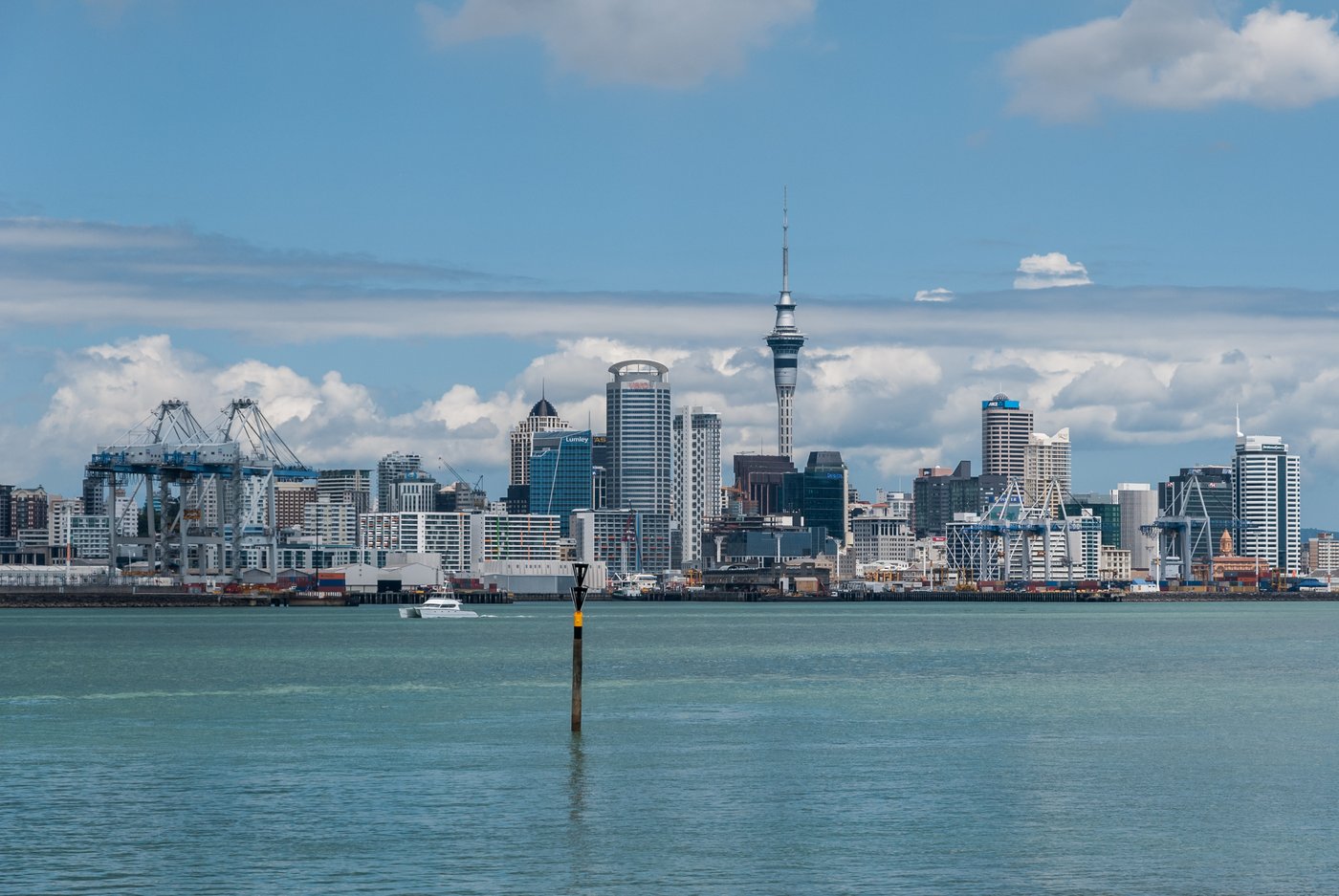
Source: Wikimedia Commons — Auckland Skyline

Two Categories Replaced the Old Weighted System
Since April 2025, the Active Investor Plus visa has run on two tracks, replacing the old weighted-points model that made calculators necessary:
| Criterion | Growth category | Balanced category |
|---|---|---|
| Minimum investment | NZ$5 million (~USD 3 million) | NZ$10 million (~USD 6 million) |
| Holding period | 3 years | 5 years |
| Acceptable investments | Direct investment in companies + approved managed funds + philanthropy up to 20% | Everything in Growth, plus listed equities, bonds, and qualifying property developments |
| New from December 2026 | Build to Rent via approved managed funds only | Already includes qualifying property developments |
| Share of applicants | More than 80% | The minority — portfolio-style investors |
The policy logic is public, not secret: Growth channels capital directly into companies, innovation, and productivity — hence the lower threshold and shorter commitment. Balanced suits investors who want a broader, quieter portfolio in exchange for double the money and a longer hold.
A persistent search question deserves a direct answer: there is no NZ$1 million investor visa in New Zealand. The old NZ$2 million track was abolished years ago, and the official minimum since April 2025 is NZ$5 million in Growth. Any site selling "New Zealand residency for a million dollars" is selling an obsolete programme or a different country.
The September 17, 2026 Announcement: Build to Rent Explained
The newest change, announced with days-old freshness at the time of writing:
- From December 2026, Growth applicants may direct part of their investment into Build to Rent funds — long-term rental housing built to be rented, not sold.
- The binding condition: investment flows only through managed funds approved by Invest New Zealand — no direct purchases of units or buildings.
- The applicant and family are explicitly barred from living in any rental development their investment finances — this is not a backdoor around New Zealand's foreign-buyer restrictions on homes.
- Housing Minister Chris Bishop framed the move around the need for more dedicated long-term rental supply; Immigration Minister Erica Stanford confirmed the option extends the Growth list without changing its philosophy.
- Immigration New Zealand will publish eligibility details, accepted structures, and fund criteria (capability, governance, delivery) before December.
For investors who like near-stable rental yields, this is a meaningful addition — but it remains a fund investment, not direct ownership. Control and security differ fundamentally, and the residential occupancy bar is policed by design.
The May 2026 Changes: Wider Philanthropy, Stricter English
Two synchronized adjustments announced in May 2026, reported by Reuters and Bloomberg:
- Expanded qualifying philanthropy options within the programme — unusual in investor schemes, reflecting a deliberate steer of migrant wealth toward underfunded community sectors.
- Tightened English-language requirements — the precise level is published in the official immigration guide and changes; the direction is unmistakable. New Zealand wants investors who can operate independently inside an English-speaking business environment.
The practical read: if you have been postponing your file on the strength of an older, lower language benchmark, book a recognized test now. Requirements have moved twice in under two years, and waiting rarely improves them.
What the Money Can and Cannot Buy
| Investment type | Growth | Balanced | Notes |
|---|---|---|---|
| Direct investment in New Zealand companies | Yes | Yes | The heart of Growth; private equity and venture stakes |
| Approved managed funds | Yes | Yes | The central channel for most Growth applicants |
| Philanthropy | Up to 20% of total | Up to 20% of total | Widened May 2026 |
| Listed equities and bonds | No | Yes | The Balanced advantage |
| Qualifying property developments | No | Yes | Development projects, not personal homes |
| Build to Rent funds | From December 2026 | — | Approved funds only; no living in financed developments |
| Passive deposits and personal real estate | No | No | Passive character can sink an otherwise large application |
Note the last row: the programme demands genuine economic substance. Purely passive placements can be refused even at sufficient scale, and buying a personal home is immigration-neutral — foreign-buyer rules on residential property stand independently of this visa.
The Application Pipeline: From Intent to Residence
- Choose the category with portfolio logic, not price logic. Growth is faster and cheaper but demands active, direct investment; Balanced doubles the money and the years but widens the instruments.
- Prove the source of funds. New Zealand is among the strictest jurisdictions on wealth provenance — bank records, ownership histories, independent valuations, professionally translated. This is the single most common failure point.
- Clear the English requirement under the tightened May 2026 rules before filing.
- File through Immigration New Zealand — typically an expression of interest first, then an invitation to a full application with an investment plan.
- Move the capital through the official stage. Transferring investment funds runs through a defined process Immigration New Zealand calls the Transfer of Investment Funds (TOFI) stage — the official video below explains it directly.
- Deploy within the allowed window after approval and hold for the full 3 or 5 years.
- Meet the time-in-New Zealand conditions across the holding period — days are distributed across years, with precise counts published in the official category guide.
Source: Immigration New Zealand official YouTube channel
The Mathematics of Choosing Growth or Balanced
Model the commitment as a five-year balance sheet, not a sticker price:
- Liquidity: Growth locks NZ$5M for 3 years; Balanced locks NZ$10M for 5. If your capital has better uses elsewhere in years 4–5, the "cheaper" category is actually the more expensive one in opportunity cost.
- Instrument fit: an investor who wants listed-equity exposure cannot use Growth at all — the category simply does not accept it — while a venture-minded investor wastes Balanced's flexibility and pays double for it.
- Presence burden: both categories carry day-count requirements across the holding years; the longer Balanced hold stretches travel and tax-planning obligations over more tax years.
Three illustrative profiles:
- An active tech founder (say, a Vietnamese fintech entrepreneur, 45, wanting board presence): Growth, unambiguously — NZ$5M, 3 years, direct stakes she can help govern with her own operating experience.
- A pre-retirement executive (a Hong Kong–based finance director seeking family stability without day-to-day management): Balanced — the larger amount buys breadth across equities, bonds, and funds that do not need him in the room.
- A yield-oriented Gulf investor asking about monthly rental income: wait for December 2026 and the Build to Rent option inside Growth — with full awareness that it is a fund holding, not a titled building, and that he cannot live in what he finances.
New Zealand vs Australia vs Singapore
The Pacific and Asian alternatives shifted under investors' feet in recent years:
| Criterion | New Zealand (AIP) | Australia | Singapore (GIP) |
|---|---|---|---|
| Flagship investment route | Growth: NZ$5 million | The Significant Investor Visa was closed in early 2024, replaced by innovation-focused pathways | Around SGD 10 million with business-operation conditions |
| Programme philosophy | Growth capital via approved funds and companies | A deliberate pivot from passive capital to talent and innovation | Regional business hub — investment buys genuine operating presence |
| Path to citizenship | Available with substantive residence conditions | Available with longer timelines generally | Extremely difficult and slow |
| Investor's edge | Quality of life, stability, rule of law | Larger economy, deeper market | Asian gateway, low taxes |
| The weakness | Small market, geographic distance | Higher competition and cost | Operating threshold unsuited to passive investors |
Australia is the cautionary tale: investors who planned around its programme found it closed by cabinet decision. Investor-visa rules are political instruments, revocable in both directions — geographic diversification is part of risk management, not a luxury.
For readers weighing a Pacific move against the Gulf, Oman's June 2026 reforms created a property-owner residency without a sponsor at a fraction of the threshold — a different tier of commitment entirely. And for internationally mobile professionals rather than investors, New Zealand also rewrote its post-study work rights, which changes the math for families splitting across pathways.
Taxes for New Resident Investors
New Zealand's tax system is comparatively kind to capital, with details that matter:
- No general capital gains tax — true, and globally famous, with specific exceptions (most notably a duration test for residential property).
- Investment income has its own treatment: returns from local managed funds typically flow through the PIE (portfolio investment entity) regime, a capped, lighter treatment than the top personal rates. Choosing a tax-qualifying fund changes net returns materially.
- Foreign income after residence: full New Zealand tax residence can pull some offshore income into scope under foreign-investment-fund rules — cross-border advisers earn their fees on exactly this point for investors holding assets in multiple countries.
- Goods and services tax: 15% on most purchases — a cost-of-living line, not an investment one.
Net position: materially lighter on wealth than Western Europe, heavier than the zero-tax Gulf — a middle position that suits investors buying stability and lifestyle alongside returns.
Choosing an Approved Managed Fund Without Regret
Managed funds are the central channel for Growth applicants — and from December 2026, the only channel for Build to Rent. Selection matters more than market timing:
- Approval first. The official list of qualifying funds is published and updated; a brilliant fund outside it does nothing for your visa.
- Delivery record. Funds with a documented history in the same asset class carry less administrative risk than new vehicles assembled to capture visa demand.
- Reporting transparency. Quarterly net-of-fees performance and clear portfolio composition also make your evidence trail with Immigration New Zealand easier — they require proof of invested funds, not intentions.
- Fees. One percentage point annually on NZ$5 million is NZ$50,000 a year. Demand complete written fee schedules and compare at least three funds before committing.
- From December 2026: Build to Rent funds must meet capability, governance, and delivery standards published before the month begins — commit to nothing before the official list lands.
From Residence to Citizenship: The Road Map
The visa is a first station, not a destination:
- Residence is granted on approval and investment completion — the right to live, work, and study in New Zealand indefinitely in principle, conditioned on completing the holding period and presence obligations.
- Permanent residence follows once you demonstrate commitment through the holding years — the point at which the investor's position becomes truly unconditional.
- Citizenship is a separate statutory track: typically five years of substantive physical presence under strict annual day counts and genuine settlement intent. The investor visa shortens nothing here, whatever a brochure implies.
Design the investment as a five-year transition cost, not as a residence-card fee, and every downstream decision improves.
What Marketing Sites Do Not Tell You
- No government guarantee, ever. Immigration New Zealand repeats literally that approving an investment type is not a recommendation or a promise of return, and that due diligence is the investor's alone.
- The demand is recent. Before the rebuild, the programme underperformed by the standards of golden-visa programmes, and the government redesigned it twice in two years to reach 2025–2026 numbers — rules can move again in either direction.
- A wider system is moving around you. July 2026 opened a separate Business Investor Visa for franchises and specified funds. Do not conflate it with the Active Investor Plus visa this guide covers.
- Citizenship is not automatic. Years of actual presence with strict attendance standards separate residence from a passport; anyone selling "near-guaranteed citizenship" is selling an illusion.
- Substance is the point. Purely passive investments can be refused regardless of size — the programme exists to fund productive New Zealand economic activity.
FAQ: New Zealand Investor Visa
How much money do I need for the New Zealand investor visa in 2026?
NZ$5 million (about USD 3 million) in the Growth category with a 3-year hold, or NZ$10 million (about USD 6 million) in Balanced with a 5-year hold. There is no NZ$1 million pathway — the old NZ$2 million track was abolished before the April 2025 redesign.
What is the difference between Growth and Balanced?
Growth: NZ$5M, 3 years, direct investment plus approved managed funds plus philanthropy up to 20%, joined by Build to Rent funds from December 2026. Balanced: NZ$10M, 5 years, adding listed equities, bonds, and qualifying property developments. More than 80% of applicants choose Growth.
Can I buy a house in New Zealand with this visa?
No — the visa is not a route around foreign-buyer restrictions on residential homes. The property-adjacent options are qualifying developments inside Balanced, or Build to Rent funds inside Growth from December 2026, with an explicit bar on living in any development your investment finances.
Does the visa include my family?
Yes. A partner and dependent children are included in the application, with access to education and healthcare as residents. Family members do not make separate investments, though everyone meets the standard health and character checks.
What English level is required?
The requirement tightened with the May 2026 changes reported by Reuters and Bloomberg. The exact level per category is published in the official immigration guide and changes over time — rely on the official source at filing, and start preparing for a recognized test early.
Is my investment guaranteed by the government?
No. Immigration New Zealand states explicitly that approving an investment type carries no government guarantee of performance or return, and that due diligence is the investor's responsibility. Engage licensed New Zealand financial advisers rather than overseas marketing intermediaries.
How long until permanent residence and citizenship?
Residence is granted on approval and completed investment, but keeping it depends on fulfilling the holding period and presence conditions. Citizenship is a separate track under the Citizenship Act — typically five years of substantive presence with strict day counts, with no shortcut offered by the investor visa.
What changes should I watch next?
Three open files: the Build to Rent fund details and eligibility criteria (published before December 2026), the updated lists of approved managed funds for both categories, and any further movement on English requirements. Anyone filing in late 2026 should track official updates weekly — the rules are actively forming.
Our Verdict
New Zealand is selling the rarest product in the investor-residence market: a developed-country programme with clear rules and genuine governmental demand for capital — sold only to those who treat it as an investment under holding, presence, and language rules, not as a residence-card purchase. For a serious file, the post-amendment window (May and December 2026) is the best version of the programme in years. For investors wanting a lower-cost, faster Gulf alternative, compare Oman's property-owner residency and Kuwait's investor residency. And for students weighing New Zealand more than portfolios, our study pathways and the opportunities portal remain the closer, cheaper door.
Sources
- Outbound Investment Group — New Zealand to Add Build to Rent Fund Investments to NZ$5 Million Investor Visa from December 2026 (September 17, 2026) — announcement details and application figures
- Immigration New Zealand — official channel — official TOFI stage video
- Wikimedia Commons — Auckland Skyline — Auckland photograph
- Parallel coverage by name: Reuters (May 24, 2026 and April 21, 2026), Bloomberg (May 24, 2026), IMI Daily (July 7, 2026), Newland Chase (February 2026) — headlines documented with the editorial team