
Money in Syria in 2026: Cash, Cards, ATMs and the New Pound — What Foreigners Actually Need to Know
You land at Damascus International Airport, phone buzzing with the family group chat, and one practical question matters more than anything on your itinerary: how am I going to pay for things here? The taxi, the hotel, the meal in the Old City, the gift for your host — what actually works in Syria in 2026?
The honest answer: Syria is in the middle of the biggest change to its money in decades, and the rules you may remember from before 2025 no longer apply. There is a new currency in your pocket, card networks that switched on only months ago, an ATM network that is still finding its feet, and — the biggest trap of all — two different ways of quoting the same prices.
This guide puts all of it in one place: what to bring, where to exchange, what cards actually do today, and how to read Syrian prices without getting confused by a factor of one hundred. Everything here is dated and sourced by the Truescho editorial team, because with money in Syria, the date is half the truth.
Source: SANA
First, the one thing that confuses everyone: Syria has "two" pounds
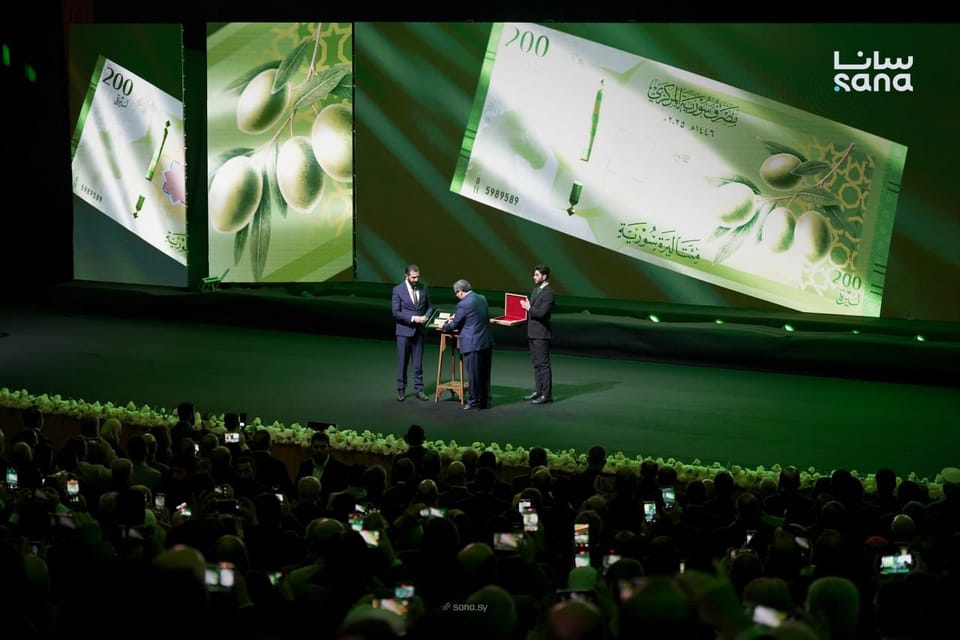
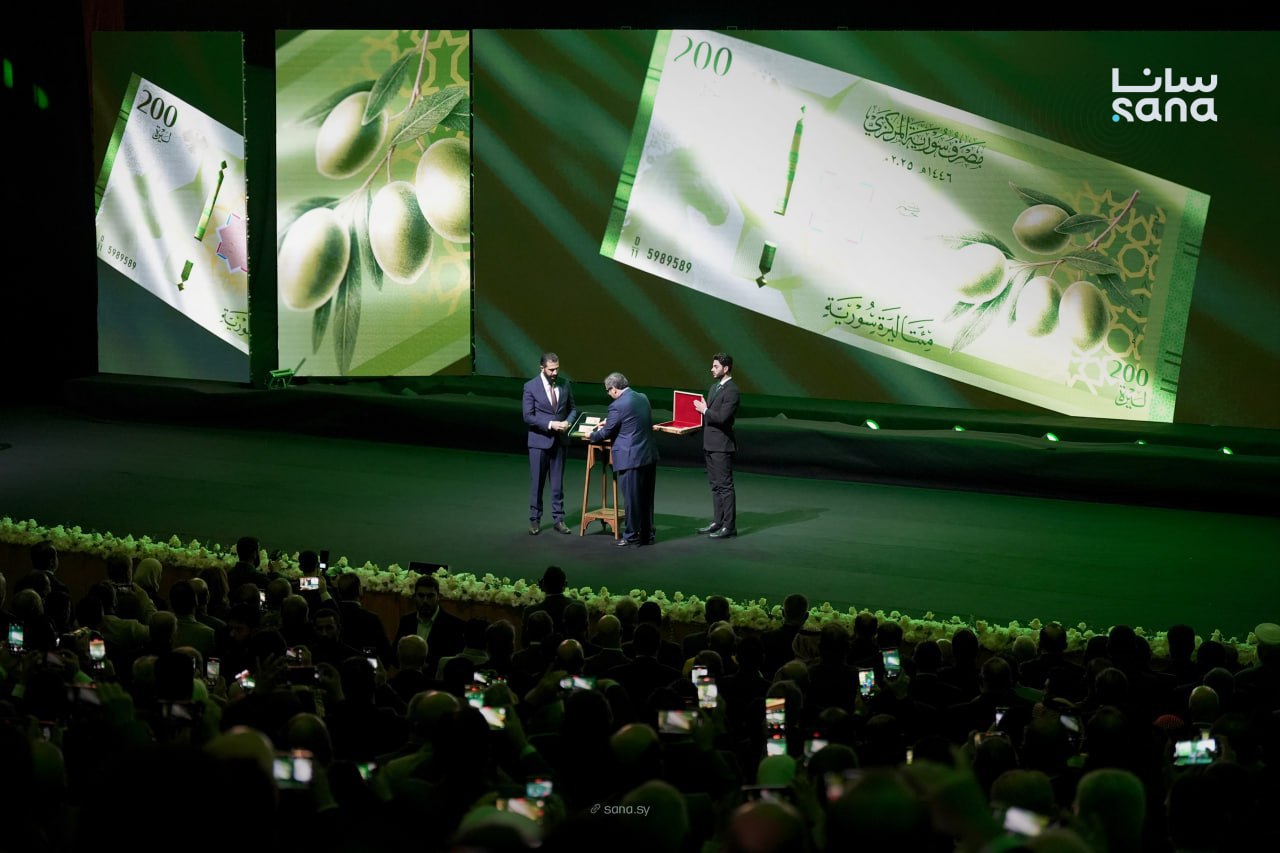
On 1 January 2026, new Syrian pound banknotes entered circulation. One new pound replaced 100 old pounds — two zeros were removed. The old and new notes circulated side by side for a 90-day transition window, and on 1 April 2026 the old notes stopped being legal tender, according to the Central Bank of Syria's statements carried by SANA.
Why does this matter to you as a visitor? Because almost every number you will encounter — exchange rates, prices, menus, hotel bills, a friend's salary — can be quoted in new pounds (new SYP) or old pounds (old SYP), and they look completely different. A rate of "131.50" in new pounds is the same as "13,150" in old pounds. Half the websites and apps on the internet still quote the old figures, because their data has not caught up.
So the single most useful habit you can build before arriving: every time you see a Syrian pound figure, ask which pound? In this guide, every figure is tagged new SYP or old SYP, without exception.
| Amount in old SYP | Equivalent in new SYP |
|---|---|
| 100 old SYP | 1 new SYP |
| 1,000 old SYP | 10 new SYP |
| 10,000 old SYP | 100 new SYP |
| 100,000 old SYP | 1,000 new SYP |
| 1,000,000 old SYP | 10,000 new SYP |
If you want the full story of the redenomination — the timeline, the new designs, and why foreign websites still show numbers 100 times bigger — we cover it in depth in Old vs New Syrian Pound: What the 100:1 Redenomination Means for Your Money in 2026.
And if you are checking the rate several times a day while planning, SYPNow shortens those steps — it shows the market buy/sell figures in new SYP and converts old to new for you automatically. SYPNow is a project built by our team here at Truescho, which is why we can vouch for how its numbers are labelled.
Cash is still the default — plan around it
Despite all the changes of 2026, the working assumption for any visitor should be: cash first. Syria's card infrastructure is brand new (more on that below), acceptance is thin outside major cities, and daily life still runs on notes.
A few practical rules:
- Bring hard currency — US dollars or euros — in physical notes. Crisp, undamaged notes exchange best. Large denominations get better rates at exchange offices, but carry some smaller notes too.
- Exchange at licensed offices, not individuals. Syria's exchange sector expanded massively for the currency swap: by late December 2025, SANA reported around 66 licensed exchange companies with more than 1,000 outlets participating in the transition. Licensed offices are easy to find in Damascus and Aleppo.
- Know roughly what the rate should be before you walk in. As observed on 1 September 2026 on sypnow.com/en, parallel-market quotes were around 131.50 buy / 132.00 sell per US dollar, in new SYP — equivalent to 13,150/13,200 in old SYP. That is a snapshot at the time of writing, not a promise; check the day's figure before you exchange. For how the buy/sell spread moves week to week, our team's trackers cover it in the Syrian pound exchange rate today and the daily dollar buy/sell rate in Syria. Syrian market trackers (sp-today is the best-known) publish buy/sell quotes daily if you want a second reference.
- Refuse old notes. Old-series notes ceased to be legal tender on 1 April 2026. If someone hands you an old note in change — it happens less every month, but it happens — politely ask for new ones. An old note is not money anymore; it is a souvenir.
The new notes you should expect to see come in denominations of 25, 50, 100, 200 and 500 new SYP. The designs dropped the Assad-era portraits entirely and moved to Syrian heritage motifs — birds, wheat, cotton, olive branches — a visual break that is hard to miss.
Source: SANA
Cards in Syria: real for the first time in years — but thin
This is where 2026 genuinely changed things. For most of the past decade, Syria was effectively cut off from global payment networks. Syrians carried stacks of cash for everything; foreign cards were useless. Three things changed, in quick succession:
- Early May 2026: Syria formally allowed global payment networks to operate again, as reported by ANBA on 5 May 2026.
- 15 May 2026: Visa payments returned, with Wired Middle East reporting the milestone under the headline "Syrians Have Been Carrying Stacks of Cash for Years. Now Visa Payments Are Back."
- Late August 2026: Days after Syria's removal from the US list of state sponsors of terrorism on 24 August 2026, the first widely reported Visa and Mastercard transactions went through — including a presidential coffee purchase in Damascus — reported by Sada Elbalad on 27 August and Haaretz on 29 August 2026.
So yes: a Visa card can now, factually, work in Syria. But there is a large gap between "works" and "reliable." Acceptance today is concentrated in upscale Damascus hotels, some restaurants and a growing but limited set of merchants. Coverage in smaller cities and rural areas remains minimal. Terminal and ATM availability is still being rebuilt, and issuing banks abroad are updating their Syria rules one by one — your card's behaviour in Damascus depends on your bank's own policy, not just on the network.
The practical conclusion: treat cards as a bonus, not a plan. Bring them — two, on different networks, if you have them — but build your budget around cash and treat any successful card payment as a pleasant surprise.
| Situation | Cash (USD/EUR exchanged to new SYP) | Card (Visa/Mastercard) |
|---|---|---|
| Airport taxi or street taxi | Works everywhere | Rarely accepted |
| Old City souqs and small shops | Works everywhere | Almost never accepted |
| Mid-range restaurants | Works everywhere | Occasionally accepted |
| Upscale Damascus hotels | Works | Increasingly accepted — best card odds |
| ATMs | Available but sparse and city-centred | Usable in principle; verify limits and fees with your bank first |
| If lost or stolen | Gone — carry in splits | Replaceable — but support for Syria issues is new |
ATMs: what to expect
ATMs exist in Syria's main cities, but the international connectivity that makes them useful to a foreign card is weeks-to-months old. Expect:
- Sparse coverage. Machines cluster around Damascus and Aleppo commercial districts; a machine that accepts your specific card is harder to find than the presence of ATMs suggests.
- Uncertain limits and fees. Withdrawal caps and fee structures for foreign cards in this first phase vary by bank and change as rules settle. Ask your issuing bank before travel whether Syria is enabled on your card, and what fees apply — that answer is theirs to give, not something to assume.
- Backup discipline. Never be in a position where the plan is "find an ATM." Carry enough cash for two to three days at all times, split between your bags and pockets.
If you will be in Syria for an extended stay, a local bank account becomes worth considering — Syrians and some residents opened accounts during 2026 as the sector reconnected. We walk through that process separately in How to Open a Bank Account in Syria in 2026.
Reading prices and rates without the 100x headache
Because the old pound still haunts menus, apps and conversation, train your eye on three patterns:
- A figure around 130–135 for the dollar = new SYP. The parallel-market dollar rate was around 131.50/132.00 new SYP at the time of writing (observed 1 September 2026, sypnow.com/en).
- A figure around 13,000–13,500 = old SYP — the same rate, quoted the old way.
- Conversations with locals vary. Many Syrians still say prices in old pounds out of habit, especially for large amounts ("the generator bill is 200,000" meaning old). Confirm which pound is meant before agreeing to anything significant — it is a completely normal question in Syria in 2026, asked dozens of times a day.
For the day's actual buy/sell figures — the same numbers exchange offices work from — our team's tracker SYPNow publishes them in new SYP with the old-pound equivalents shown alongside, which removes the guessing. It is free on the web and as an app, and it is built by the same team as this site (Truescho), so the labelling is one we stand behind.
Sending money into Syria (briefly)
If your trip involves bringing support to family or paying an organization, the mechanics of transfers changed as much as the currency did. Sanctions relief in 2025 and the removal of Syria from the US state-sponsors list in August 2026 reopened corridors that were closed for years — but which channels actually work, and at what cost, is a moving target. We cover that in full, with a cost comparison table, in How to Send Money to Syria in 2026: Legal Channels, Real Costs, and What the Caesar Repeal Changed.
The one-line version: cash you carry yourself remains the benchmark everything else is measured against.
Digital wallets: the quiet fourth option
Alongside cash and cards, wallet apps grew into a real payment layer inside Syria during 2025–2026. Services like Paymera let Syrians hold pounds, send to each other by phone number, and pay participating merchants — useful context for visitors mainly because your counterparts may ask to settle smaller amounts wallet-to-wallet, and because a local contact with a wallet can be a practical bridge when your own options run short. Non-resident onboarding for foreigners remains limited and policy-dependent, so treat wallets as something your Syrian counterpart uses, not something to plan your trip around. We reviewed the wallet landscape for Syrians in detail in Paymera in Syria in 2026.
Money safety in 2026: three Syria-specific risks
- The old-note handoff. Old-series notes are worthless as legal tender since 1 April 2026. Count your change, and hand old notes back immediately.
- The "13,000 vs 131" confusion. Agree on which pound before any price, fare or rate is accepted. This is the most common genuine misunderstanding visitors hit — it is not usually a scam, but it can cost you 100x if you are careless.
- Counterfeit panic — calibrated. Rumors of fake new notes spread widely in January 2026, strong enough that the Central Bank publicly dismissed them, per SANA on 15 January 2026. The calm response: exchange at licensed offices, check the security features on larger denominations when you receive them, and treat viral counterfeit claims on social media with skepticism unless officials confirm them.
Frequently Asked Questions
Are there credit cards in Syria?
Syrian banks issue domestic cards, and 2026 brought the return of international networks — Visa payments resumed in May 2026, with Mastercard activity reported in late August after Syria's removal from the state-sponsors-of-terrorism list. Foreign-issued cards are usable in a small but growing set of hotels and restaurants in Damascus. Coverage outside major cities remains minimal.
Does a Visa card work in Syria in 2026?
Yes, in a limited way. Visa's return was reported on 15 May 2026 by Wired Middle East, and the first post-delist Visa and Mastercard payments were reported in late August 2026. Acceptance is concentrated in upscale Damascus venues. Whether your specific card works also depends on your issuing bank's policy for Syria — confirm with your bank before relying on it.
Can foreigners use ATMs in Syria?
ATMs exist in Damascus and other cities, but international-card acceptance is new and uneven. Limits and fees vary as banks settle their rules. Treat ATMs as a supplement, never as your plan: carry sufficient cash and a backup card.
Should I bring US dollars or euros to Syria?
Both exchange well in Damascus and Aleppo; dollars are quoted slightly more universally. Bring clean, undamaged notes in a mix of denominations, and exchange them at licensed exchange offices rather than with individuals.
What is the exchange rate for the Syrian pound?
At the time of writing — observed 1 September 2026 on sypnow.com/en — the parallel market quoted around 131.50 buy / 132.00 sell per US dollar in new SYP, i.e. 13,150/13,200 in old SYP. Rates move: check the live buy/sell figures on the day you exchange.
Are old Syrian pound notes still valid?
No. Old-series notes ceased to be legal tender on 1 April 2026, at the end of the 90-day dual-circulation window that began on 1 January 2026. Refuse them in change; they cannot be spent.
Is Syria expensive for visitors in 2026?
Costs feel low in hard-currency terms — at the observed rate, 100 USD is roughly 13,200 new SYP — but prices for services oriented to foreigners (hotels, guides, drivers) are typically quoted and negotiated individually, and often in dollars. Budget in cash terms rather than expecting card or published-price systems to do it for you.
Can I rely on my card alone and skip cash?
Not yet. Card acceptance is real but thin, concentrated in Damascus. Every practical guide to Syria in 2026 — this one included — starts from cash as the default and treats cards as a bonus.
Sources
- SANA — President al-Sharaa reveals the new currency at a Damascus ceremony
- SANA — Official trading of new Syrian banknotes begins
- SANA — Central Bank dismisses counterfeit-currency rumors (15 January 2026)
- SANA — Syria's new banknote series (25, 50, 100, 500)
- ANBA (5 May 2026) — Syria allows global payment networks; Wired Middle East (15 May 2026) — "Syrians Have Been Carrying Stacks of Cash for Years. Now Visa Payments Are Back"; Sada Elbalad (27 August 2026) and Haaretz (29 August 2026) — first Visa/Mastercard payments after terror-designation lift.
- Rate context: sypnow.com/en, observed 1 September 2026 (parallel market, new SYP).