
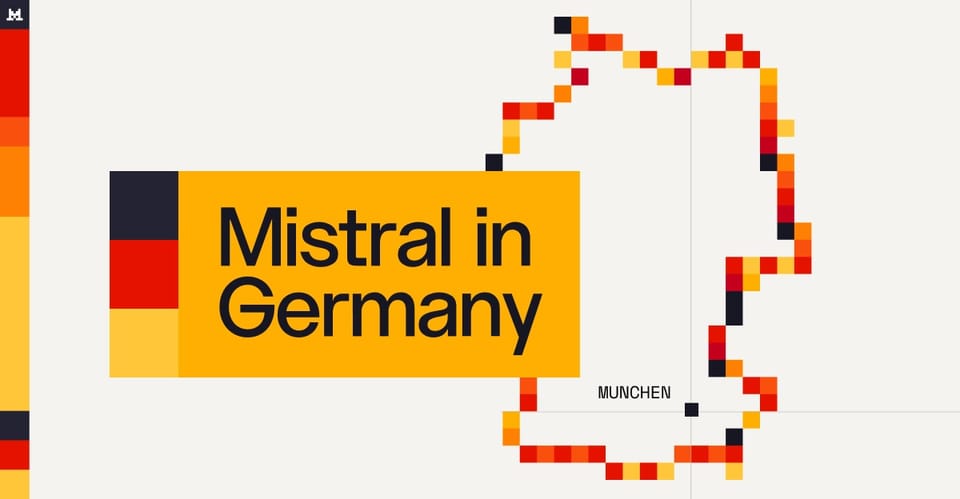
Mistral's Munich Hub: 1 GW of European Compute and Physics AI for German Industry
Last updated: October 2026
Mistral AI opened its new German hub in Munich on September 28, 2026, in a move that takes the French company out of the chat-model arena and into the heart of European heavy industry. The official announcement carried three numbers worth pausing on: specialized research teams in Physics AI and Industrial AI, a pledge to build one gigawatt of European compute capacity by 2030, and more than 30 physicists, researchers, and engineers who joined through the May 2026 acquisition of Emmi AI. Behind the numbers sits an unmistakable political message — "technological sovereignty is political sovereignty," in the words of Bavarian State Chancellery head Florian Herrmann that led the launch statement.
What Mistral actually announced
The official post on Mistral's site laid out four elements:
- A new Munich hub housing specialized research teams in Physics AI and Industrial AI, alongside applied engineers serving enterprise partners directly.
- A compute pledge: one gigawatt of European compute capacity by 2030 "to secure Europe's AI sovereignty."
- A different posture: "We are not coming as a software vendor. We are coming as a long-term technological partner."
- Hiring: the hub anchors recruitment across research, engineering, and applied AI roles in the Munich region.
The commercial context is substantial: Germany is the largest industrial economy in the European Union, and its enterprises hold proprietary data and process knowledge accumulated "over generations, across automotive, energy, aerospace, and advanced manufacturing" — exactly where, in Mistral's framing, AI compounds into competitive advantage.

Source: Wikimedia Commons — Mistral AI logo (public domain)

What "Physics AI" is, and why Munich
This is the deepest part of the announcement — and the least covered in quick headlines. Mistral argues that the next major advance in industrial AI will come from systems that understand the physical world: fluid dynamics, material deformation, thermal behavior, and mechanical stress. These are the calculations at the core of German manufacturing — and today they demand "enormous compute time, sometimes taking days per run."
The announced partnerships put flesh on those bones:
| Partner | Collaboration area | Official detail |
|---|---|---|
| BMW | Crash simulation and engineering AI | Active work already underway in Munich |
| Siemens Energy | Industrial AI applications | Building what Mistral calls "the blueprint for Physics AI in European heavy industry" |
| Technical University Munich | Joint research | Wind-tunnel facilities for automotive aerodynamics digital twins, with Prof. Dr. Nikolaus A. Adams |
| Emmi AI | Acquisition (May 2026) | 30+ physicists, researchers, and engineers in large-scale fluid dynamics, structural mechanics, and multi-physics simulation |
The TUM collaboration is the most technically distinctive: fusing real-time experimental sensor data with offline computational fluid dynamics "to deliver highly accurate aerodynamic predictions in real time" — effectively testing a car's aerodynamics digitally instead of through thousands of wind-tunnel hours.
As for "why Munich," the company's answer is cumulative: Bavaria's long record of scaling new technologies from precision manufacturing and defence tech to semiconductors, world-class research institutions, a dense technology ecosystem, and engineering talent "drawn from across Europe and beyond by the quality of life and proximity to the Alps."
Open-weight sovereignty: the real differentiator
The paragraph every buyer should read carefully is the one distinguishing Mistral's offer from OpenAI, Anthropic, and Google:
"What makes this stack genuinely sovereign is our open-weight architecture. Unlike closed AI systems where the model's internal logic is hidden and runs on the vendor's servers, Mistral's model weights are fully accessible to the customer. Our models run on the customer's own infrastructure, trained on their data, operated under European law, with full auditability and no data leaving the organization."
This is the actual commercial battle inside Europe: industrial companies hold process data too sensitive to ship to American cloud services, and Mistral sells them the model itself rather than access to it. The message also targets European governments competing over sovereignty projects with large budgets.
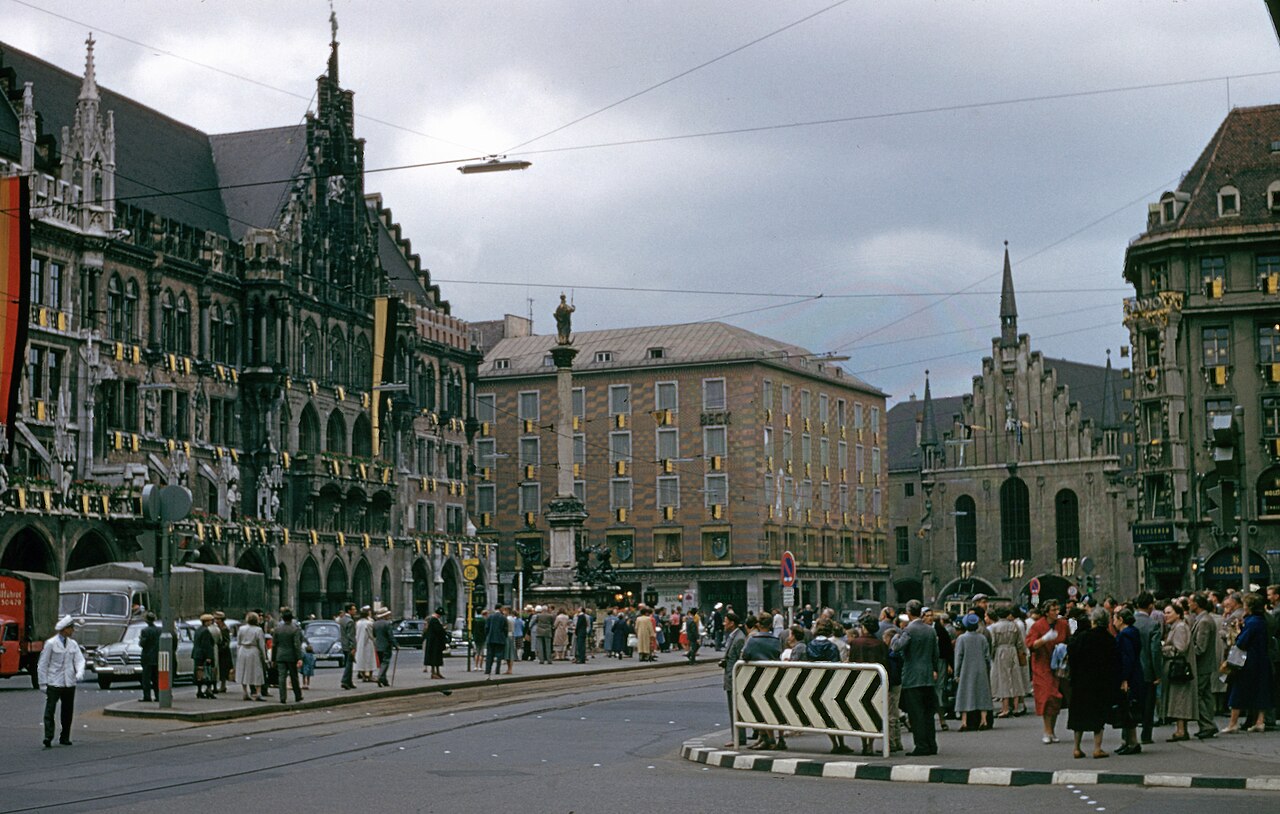
Source: Wikimedia Commons — Marienplatz Munich (CC BY 2.0)

Political backing: two official quotes from the launch
This was not an isolated corporate event; the announcement carried two senior German political voices:
Dr. Karsten Wildberger, German Federal Minister for Digital Transformation and Government Modernisation, called Mistral "a powerful example of what Europe can achieve: developing cutting-edge technology, turning it into a global success, and taking responsibility at the same time," adding that "technological success and responsible AI development are not contradictory."
Dr. Florian Herrmann, Head of the Bavarian State Chancellery and State Minister for Federal and Media Affairs, delivered the sharper message: "Mistral stands for powerful AI made in Europe. Technological sovereignty is political sovereignty. That is why we need strong European AI champions that take a leading role in international competition. Mistral's decision to choose Munich sends a strong signal for our position as a high-tech location."
This level of official presence at a private company's office launch shows how the "European sovereignty" file has become an electoral and competitive issue inside Germany — the same context explaining the accelerating pace of sovereign-compute projects across the EU.
Why an international reader should care
Three practical angles:
The race for non-English models. Mistral previously signed a strategic partnership with Saudi Arabia's HUMAIN to build Arabic-first frontier models, and is now pushing hard into the German industrial market. The company is transforming from "Europe's OpenAI alternative" into a global sovereign-AI contractor — which means deeper investment in multilingual models, including Arabic, as already visible in the humain-m3 Arabic model built on similar cooperation.
Open weights are winning institutional buyers. If you are a university, bank, or manufacturer anywhere — not just Europe — that wants models running inside your own infrastructure under your own laws, Mistral currently fields the strongest argument in the market, reinforced by guaranteed European compute (1 GW by 2030) and deep ties into German industry.
A lesson in focus. After a €3 billion Series D round led by Samsung and European investors, Mistral chose to compete where the American labs don't directly: physical simulation for heavy industry. That "depth over breadth" strategy is the same one worth copying for any team building an AI product in 2026 — specializing in a real industrial problem sells better than another general-purpose chat model.
The gigawatt in context: what the compute pledge actually means
The "one gigawatt" figure could pass as marketing, but its context reveals the scale of the commitment. Modern AI factories are measured not by server counts but by the electrical power they draw, and the training clusters behind frontier models are measured in tens to hundreds of megawatts per facility. Mistral's pledge of a full gigawatt inside Europe by 2030 means building compute infrastructure of the class only a handful of players worldwide command — and self-sufficiency from American or Asian data centers for both training and inference.
Three groups of readers should care specifically:
- European industrial companies: guaranteed continental inference capacity means the service won't cross regulatory borders or choke as usage grows.
- Governments and public institutions: their sovereignty tenders require that data and processing stay inside the EU, and the promised gigawatt is the structural guarantee of that — not merely a legal promise.
- Competitors: the message is that Europe will not settle for open-weight models but will build full infrastructure for them, raising the ceiling on the continent's technology-sovereignty race.
The difference between a "compute promise" and "an enforceable commitment" is a dated public target — and that is exactly what this announcement provides, explicitly tied to "securing Europe's AI sovereignty," meaning it is anchored in a public political agenda rather than one company's interest alone.
Mistral's expansion map in months: from Paris to Munich and Riyadh
The Munich hub is not an isolated event but one station in a rapid sequence that is redrawing the company's identity. The milestones as documented in official coverage over mere weeks:
| Date | Milestone | Significance |
|---|---|---|
| August 2026 | Strategic partnership with Saudi Arabia's HUMAIN | Deep entry into the Arabic-first model market |
| September 2026 | €3 billion Series D funding round | Led by Samsung and European investors; the fuel for expansion |
| September 28, 2026 | Munich hub + gigawatt pledge | Specialization in Physics AI and heavy industry |
| October 2026 | The humain-m3 Arabic model | First fruits of the Saudi cooperation in multilingual models |
Read together, the trajectory reveals a deliberate strategy: massive funding invested along two parallel tracks — European sovereignty (continental compute plus German industry) and non-English markets (Arabic-first models with HUMAIN). The company is no longer an "European alternative to OpenAI" so much as a global sovereignty contractor selling full control to institutions that do not want dependence on a closed American platform.
What this means for students and engineers
Behind the numbers and partnerships sit three practical messages for readers building their careers:
First — a rare emerging specialty. "Physics AI" needs people who combine physical engineering (computational fluid dynamics, structural mechanics, multi-physics simulation) with machine learning. That exact combination is what Mistral acquired with Emmi AI and what it will hire for in Munich. An engineer who builds this dual skill enters a market nearly empty of competition, because most AI developers gravitate to language models rather than physical simulation.
Second — Munich as a destination. The announcement is explicit that the hub "anchors recruitment across research, engineering, and applied AI roles in the Munich region," and the city itself ranks among Europe's leading engineering destinations, home to top technical universities such as TUM, the hub's research partner. For readers considering graduate study or work in Europe, this file opens a clear door: simulation and computational-engineering specialties are now part of the AI sector and its salary scale.
Third — the Arabic alternative is coming. The humain-m3 model built on similar cooperation means the Arabic market itself will soon demand professionals who understand how sovereign multilingual models are built and operated inside institutional borders — from banks to universities to factories. Following these shifts seriously, and preparing for them skill-wise, is an opportunity to seize now before the field crowds.
Frequently asked questions
What did Mistral announce in Munich?
The opening of a new hub in Munich housing Physics AI and Industrial AI research teams plus applied engineers, a pledge to build one gigawatt of European compute capacity by 2030, and working partnerships with BMW, Siemens Energy, and the Technical University of Munich. The official announcement was published on September 28, 2026, on the company's site.
What is "Physics AI"?
It refers to AI systems that understand the physical world — fluid dynamics, material deformation, thermal behavior, and mechanical stress — to replace computational simulations that currently take days per run in industrial design, such as crash simulation and real-time aerodynamic digital twins.
How does Emmi AI fit into the new hub?
Mistral acquired Emmi AI in May 2026, bringing in more than 30 physicists, researchers, and engineers specialized in large-scale modeling of computational fluid dynamics, structural mechanics, and multi-physics simulation. They form the scientific core of the Munich hub and of the Physics AI projects with BMW and Siemens Energy.
Why did Mistral choose Munich specifically?
Bavaria offers a long record of scaling technologies from precision manufacturing and defence tech to semiconductors, world-class research institutions, a dense tech ecosystem, and engineering talent from across Europe. Germany is also the EU's largest industrial economy, meaning the target customers for applied industrial AI are concentrated there.
What does the one-gigawatt compute pledge mean?
Mistral commits to building one gigawatt of compute capacity inside Europe by 2030 for training and serving its models without relying on data centers outside the continent — a core requirement for European government and industrial customers whose rules demand that data and processing stay within the EU.
How is Mistral's offer different from OpenAI's or Google's?
The core difference is open weights: Mistral's models can be downloaded and run on the customer's own infrastructure under European law with full auditability, while closed American models run on their vendors' servers under defined access terms. That makes Mistral the natural choice for highly sensitive industrial data.
Does this matter outside Europe?
Yes. Mistral partners with Saudi Arabia's HUMAIN on Arabic-first models, so its financial and technical expansion deepens investment in non-English languages including Arabic. Its open-weight approach also gives institutions worldwide an option for self-hosted AI aligned with local data-sovereignty requirements.
Sources
- Official announcement: Hallo, Deutschland! — Mistral AI — the primary source for every figure, quote, and partnership in this article
- Mistral Munich Hub coverage — FourWeekMBA — secondary coverage of the hub details and timing
- Mistral × HUMAIN partnership on Truescho — the Middle East background to the company's expansion
Start Your Journey with Truescho
Understanding where AI is heading globally — and catching the study and career opportunities it creates — is easier with Truescho: scholarships, tools, 1500+ university rankings, and continuously updated guides in one platform.