
Fully Funded AI Degrees in the Gulf 2027: MBZUAI vs KAUST — the Official Numbers, Side by Side
Last verified: 20 August 2026 — every financial fact below is published on the official websites of Mohamed bin Zayed University of Artificial Intelligence (mbzuai.ac.ae) and King Abdullah University of Science and Technology (admissions.kaust.edu.sa) and was checked on this date.
💬 Disclosure: Some links in this article are affiliate links. We may earn a small commission when you complete a purchase at no extra cost to you. This helps us keep our content free, and it does not affect the integrity of our recommendations.
Only two Gulf universities currently offer the region's richest study deal in artificial intelligence: Mohamed bin Zayed University of Artificial Intelligence (MBZUAI) in Abu Dhabi, and King Abdullah University of Science and Technology (KAUST) on Saudi Arabia's Red Sea coast. Both state on their official websites — texts verified by the Truescho editorial team on 20 August 2026 — full funding for admitted students: one hundred percent tuition, a monthly allowance or stipend, on-campus housing, health insurance and residency. The question this guide answers is not which one is "better", but which one fits your profile — because the real differences in programmes, admission logic and daily life are significant, and choosing wrong costs you a full academic year, not merely an opportunity.
This head-to-head is built exclusively on what the two universities publish officially, connected to our earlier coverage of fully funded Gulf opportunities for 2027 and to the labour-market trajectory we tracked in the future-of-jobs report: 170 million new jobs by 2030.
The Head-to-Head Table: Official Numbers Side by Side
| Dimension | MBZUAI (Abu Dhabi) | KAUST (Thuwal, Saudi Arabia) |
|---|---|---|
| Who funds it | The UAE Government — "fully funded by the UAE Government" per the official site | A Saudi-founded research university with institutional endowment |
| Programmes | New undergraduate degrees + Master's and PhD in AI and computing | Master's and PhD across scientific, engineering and computing disciplines |
| Funding for admits | Full scholarship + monthly allowance: 100% tuition, on-campus housing, health insurance, UAE residence visa | Over 90% of admitted students: full tuition support, monthly stipend, housing, medical coverage, relocation assistance |
| Where you study | Abu Dhabi, UAE capital | A purpose-built research community on the Red Sea at Thuwal |
| Application status (verified 20 Aug 2026) | Open via the official portal | Open "on a space-available basis" (rolling) |
| Student body | International students from dozens of countries | Students and researchers from 100+ nationalities per the official site |
MBZUAI: the university a state built for a single discipline
MBZUAI, located in Abu Dhabi, describes itself on its official website as "fully funded by the UAE Government" — one sentence that explains its entire financial model: the university does not sell education, it recruits talent. The official text states that accepted full-time graduate students "will be given a full scholarship and monthly allowance. This includes 100% tuition and other benefits such as on-campus accommodation, health insurance, UAE residence visa." The new undergraduate programmes carry a comparable announcement of a full scholarship with a monthly allowance — meaning the entire academic path, from first year through the PhD, can in principle be completed without paying tuition.
The university adds something few institutions offer: a fully funded summer research internship for undergraduates from anywhere, officially described as its "fully-funded flagship experiential AI research internship" — a clever entry point for testing the university before committing to a degree. Its listings also feature the Tahnoon bin Zayed Scholarship in AI Excellence as an additional distinction track.
Source: Mohamed bin Zayed University of Artificial Intelligence
KAUST: a research city on the Red Sea
KAUST in Thuwal is not a university in the merely administrative sense — it is a purpose-built research community on the Red Sea coast: labs, housing, schools and recreation in one place, with an admissions site that says its students "live and study alongside students and researchers from 100+ nationalities". The financial equation is published just as plainly: "Over 90% of admitted students receive full tuition support, a monthly stipend, housing, medical coverage, and relocation assistance."
One timing note we verified today: the admissions portal currently displays an "Accepting Applications On A Space Available Basis" notice — meaning review is rolling rather than a single window that shuts for the year, which makes applying early the dominant strategy even when a formal deadline seems distant.
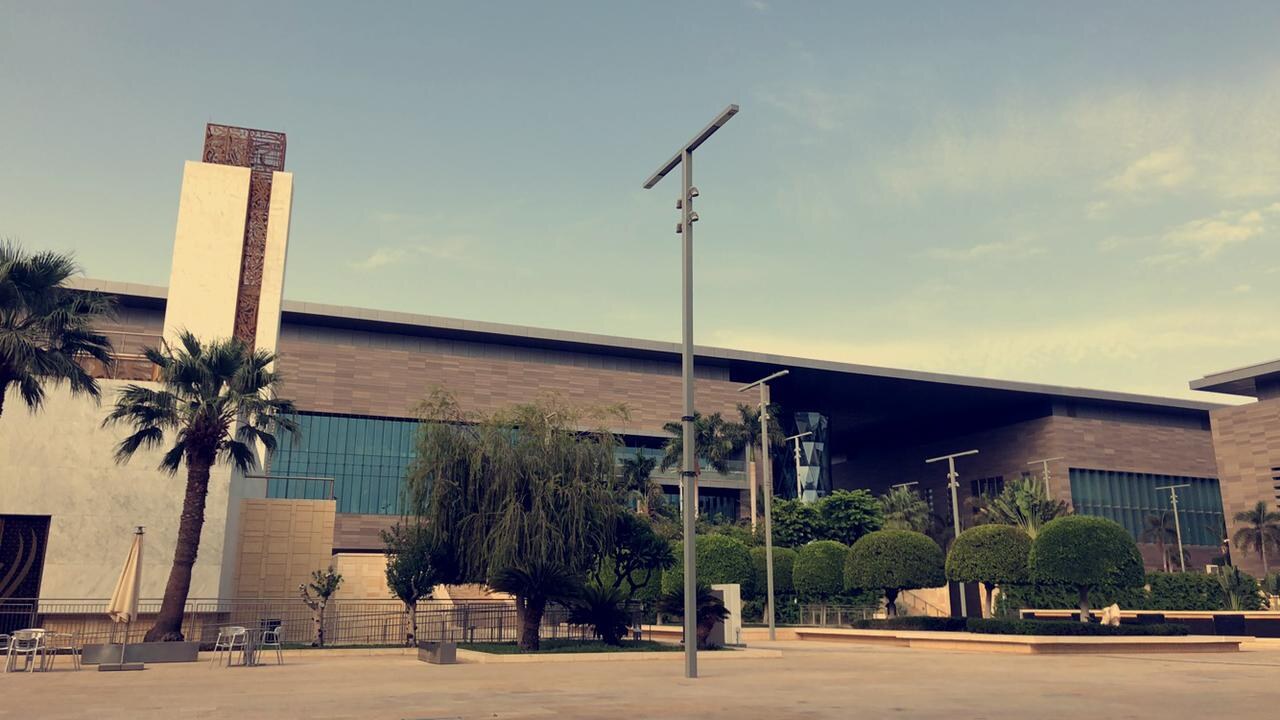
Source: King Abdullah University of Science and Technology — About
Where the two roads genuinely diverge
The funding is almost boringly similar, so the decision is settled by three substantive differences:
First — depth versus breadth. MBZUAI is a university whose entire identity is artificial intelligence: its programmes and centres revolve around machine learning, computer vision and language technology. KAUST is a broad research university spanning the sciences, engineering and computing, where AI is also an applied weapon across other fields — from cyclone forecasting to energy and water. If you know your future is AI through and through, the first is the simpler decision; if your background is broader science and you want AI as a tool inside another discipline, the second is the wider arena.
Second — country and post-graduation residency. The MBZUAI package includes a UAE residence visa during your studies, and studying in Abu Dhabi places you inside a dense regional technology job market. KAUST grants you Saudi residency within its purpose-built community during your studies, while the Saudi labour market is expanding its employment and skill-verification programmes — including the Saudi Skill Verification Program (SVP) that matters to anyone planning to work in the Kingdom after graduating.
Third — language of instruction. Both teach in English, and neither makes IELTS an absolute barrier in every track — several comparable Gulf scholarship routes can be entered without it. But make your real goal genuine command of the language, not escaping a requirement: the entire degree is in English, and students who arrive unprepared pay the price in the first semester, not in the application.
What this means for you
If your file is solid in mathematics, computing or any science, you are standing in front of one of the most generous educational pairings in the world today — zero tuition by design, plus a monthly allowance that makes the degree itself a source of income rather than expense. The practical application equation:
- Prepare one strong file (a good GPA, small projects or research, an honest motivation letter) and submit it to both universities — neither is competing for your fees; both are competing for your level.
- Verify the specific programme, not the university in general: open the programme page on the official site, read the faculty and their recent work, and name one or two of them with a precise topic in your motivation letter — that single detail genuinely moves admission outcomes.
- Use funded internships as the side door: MBZUAI's fully funded undergraduate research internship and KAUST's funded research internship programme are both official pathways that occasionally convert directly into admission.
And remember the larger trend that makes this effort rational: the labour-market analyses we tracked in the 170-million-new-jobs-by-2030 report place AI and data-analysis roles among the fastest-growing worldwide — and the Gulf is investing today in building these skills locally at full funding, instead of importing them a decade from now.
Frequently Asked Questions
Is the funding really full at both universities, or are there hidden conditions?
Per both official websites on 20 August 2026: yes — MBZUAI states a full scholarship with a monthly allowance covering 100% tuition, housing, insurance and residency; KAUST states that over 90% of admitted students receive full tuition support, a monthly stipend, housing, medical coverage and relocation assistance. The only "hidden" conditions are academic: maintaining satisfactory progress.
Can I apply with an undergraduate degree from any Arab country?
Yes — both accept internationally recognised degrees, and evaluation is based on grades and the quality of your portfolio and projects. Both officially enrol students from dozens of nationalities.
Which one is easier to get into?
There is no official acceptance-rate answer. KAUST is a broader research university suited to science and engineering profiles; MBZUAI is smaller and more focused, so competition concentrates on its AI seats specifically. The correct strategy is to apply to both.
Are the research internships genuinely funded?
Yes — MBZUAI officially describes its undergraduate AI research internship as "fully funded", and KAUST runs its funded research internship programme with a monthly stipend.
Does the scholarship include residency after graduation?
No — the included residency covers the study period in both cases. What happens after graduation follows each country's labour and residency rules, so read the post-study work and residency routes of your target country before choosing the university.
Official sources (verified 20 August 2026)
- MBZUAI — funding and programmes: https://mbzuai.ac.ae/ (including the Study section)
- KAUST Admissions — funding and support rates: https://admissions.kaust.edu.sa/
- KAUST — About the university: https://www.kaust.edu.sa/en/about
All figures above are quoted from published official texts; we have not quoted any cash amount that is not officially published — allowances vary by programme and degree, and the programme's official page is the mandatory reference before applying.