
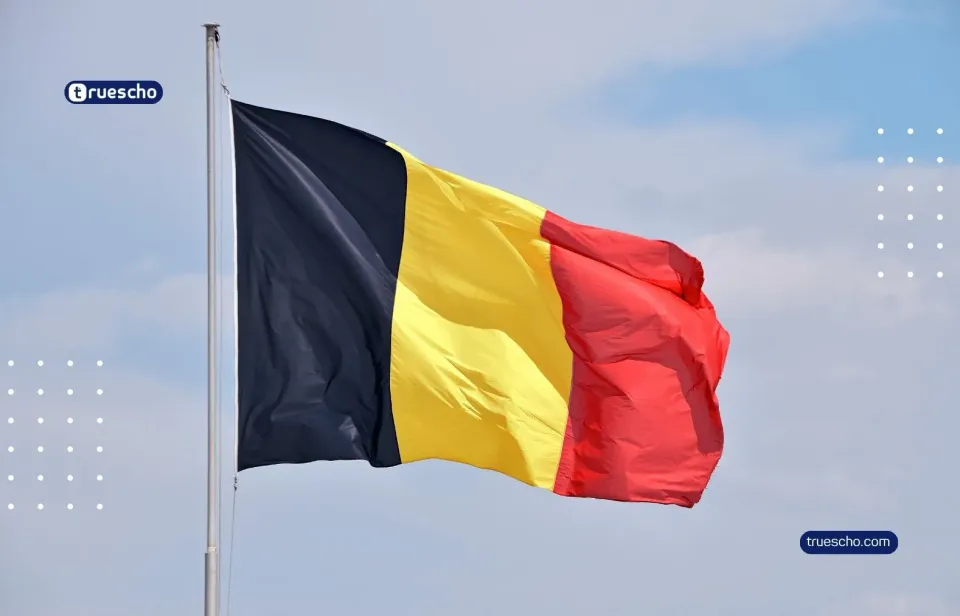
Master Mind Belgium 2026 — €10,225 + Tuition Waiver
Last updated: May 2026
If you are an international student looking for a fully-funded Master's degree in Europe with high-quality English-taught programs, the Master Mind Scholarship Belgium is one of the most generous awards in Western Europe — and it stays surprisingly under-the-radar compared with Erasmus Mundus or Chevening. This guide is built around the verified 2026/2027 cycle: a €10,225 annual stipend, full tuition waiver (with only a €136.50 admin fee due), approximately 30 awards drawn from a €480,000 budget, reserved allocations for Japan (3 seats), Mexico (3), Palestine (2), and the United States (5), and an application portal that opens on Mobility-Online on 16 February 2026 with a final deadline of 27 April 2026 at 23:59 GMT+1. Below you will find the full eligible-host-institution list, the GPA 3.5/4.0 hard floor, the IELTS 7.0 / TOEFL 94 minimum, the four-way incompatibility list with Erasmus+, BAEF, Fulbright, and other Flemish-government awards, and a side-by-side comparison with Paris-Saclay IDEX and Politecnico di Milano Merit so you can see where Master Mind sits on the EU Master's scholarship map.
What is the Master Mind Scholarship?
The Master Mind Scholarship is a competitive, merit-based award fully funded by the Government of Flanders (the Flemish-language community of Belgium) and administered by the regional university council VLUHR International in coordination with Study in Flanders. It supports outstanding international Master's students at any of the recognized Flemish universities and Schools of Arts, providing €10,225 per year, a full tuition waiver leaving only a €136.50 annual administrative fee, and reserved allocations for selected nationalities. Applications are nomination-only via the host university.
Full Background: Flanders, VLUHR and the Master Mind Pipeline
Flanders is the Dutch-speaking region of Belgium, home to roughly 6.7 million people, the cities of Antwerp, Ghent, Leuven, and Bruges, and Belgium's strongest research universities. The Government of Flanders has invested heavily in attracting international Master's students since the early 2010s, partly as a soft-power exercise and partly to fill specific Master's program seats with high-quality applicants. The Master Mind Scholarship was launched as the flagship of this strategy and has been running annually since 2013.
Administration is handled by VLUHR International (the Flemish Inter-University Council, International Office), which centralizes the scholarship process across all Flemish universities and Schools of Arts. The participating institutions form a tight cluster of seven core universities and several Schools of Arts:
- KU Leuven (Catholic University of Leuven) — Belgium's largest research university, ranked #61 in QS 2026.
- Ghent University (UGent) — Second-largest, strong in life sciences and engineering.
- University of Antwerp (UAntwerpen) — Strong in medicine, IT and business.
- Vrije Universiteit Brussel (VUB) — The Dutch-speaking university in Brussels, with a strong international profile.
- Hasselt University (UHasselt) — Smaller, with strengths in transport, biomedicine, and architecture.
- Antwerp Maritime Academy — Specialized in maritime sciences and naval engineering.
- Schools of Arts: including Royal Academy of Fine Arts Antwerp, LUCA School of Arts, KASK Ghent, PXL-MAD School of Arts, and others.
The total budget for the 2026/2027 cycle is approximately €480,000, distributed across roughly 30 awards. This means the average award is worth €10,225 stipend plus around €4,000 to €6,000 in tuition value (depending on the program), or approximately €15,000 to €17,000 per year per scholar. Each Flemish institution can submit a maximum of 20 nominations to VLUHR per cycle, which caps the competition at roughly 140 to 160 candidates per cycle for the ~30 awards.
What makes Master Mind structurally different from Paris-Saclay IDEX or Polimi Merit is the formal selection scoring rubric, which is public and predictable. The 100 points are distributed as: 30 for motivation letter, 30 for academic record, 10 for first reference letter, 10 for second reference letter, 10 for institutional recommendation, and 10 for "top talent profile" (extracurricular leadership, publications, awards). This transparency means a well-prepared applicant can engineer their file to score well in each category — a structural advantage that the other two flagship EU scholarships do not offer.
2026/2027 Updates — Deadlines, Stipend, Reserved Seats
The 2026/2027 Master Mind cycle has been published. These are the verified facts as of May 2026, sourced from Study in Flanders, VLUHR International, and the KU Leuven scholarships portal:
- Stipend: €10,225 per year (maximum). For a 60-ECTS one-year Master's, the total award is €10,225. For a 120-ECTS two-year Master's, the total award across both years is up to €20,450 (subject to credit progression in year 1).
- Tuition waiver: Full waiver. The student pays only €136.50 per year in administrative fees (this rate may rise modestly in line with annual indexation).
- Total budget: Approximately €480,000 across all institutions and all programs.
- Number of awards: Approximately 30.
- Reserved allocations: Japan 3 seats, Mexico 3 seats, Palestine 2 seats, United States 5 seats. (These reservations subtract 13 seats from the open competition, leaving roughly 17 seats contested by all other nationalities.)
- Eligible nationalities: All countries except Russia (suspended since 2022).
- Mobility-Online application portal opens: 16 February 2026.
- Final deadline (host institution submission to VLUHR): 27 April 2026, 23:59 GMT+1.
- Internal university nomination deadlines: Approximately 1 February to 1 April 2026, varying per institution. Each Flemish university sets its own internal deadline before forwarding nominations to VLUHR.
- Results announcement: End of May 2026.
- Mobility starts: September 2026.
- GPA minimum: 3.5/4.0 (hard floor — applications below this score are rejected at the institutional pre-screening stage).
- English minimum: IELTS Academic 7.0 / TOEFL iBT 94 / Cambridge English C1 Advanced (CAE) for university Master's. For Schools of Arts (LUCA, Royal Academy of Antwerp, KASK Ghent, PXL-MAD), the threshold is lower at IELTS 6.5 / TOEFL 90 / B2 First.
- English certificate exemption: Graduates of universities in the United States, United Kingdom, Canada, Australia, Ireland, and New Zealand are exempt from submitting an English certificate.
- Maximum nominations per Flemish institution: 20.
- Selection rubric (out of 100): Motivation letter 30 / Academic record 30 / First reference letter 10 / Second reference letter 10 / Institutional recommendation 10 / Top talent profile 10.
- Renewal (for 120-ECTS Master's): Automatic if at least 45 ECTS credits are completed in year 1.
The 2026/2027 cycle is competitive: approximately 30 awards against an estimated 140 to 160 nominations from the seven institutions combined. Reserved allocations protect Japanese, Mexican, Palestinian, and US applicants from open competition, which means applicants from those four nationalities effectively compete only against compatriots. Other nationalities, including most African, South Asian, Southeast Asian, and Latin American applicants, compete in the open pool of ~17 seats.
How to Apply — Step-by-Step Guide
The Master Mind application mechanism is a four-stage funnel: institutional admission first, institutional nomination second, scholarship file completion third, VLUHR final selection fourth. The most decisive stage is the institutional nomination — once you are nominated by your host university, your odds of a final award are roughly 1 in 5, but most rejections happen at the nomination step, not at VLUHR.
The full sequence for the 2026/2027 cycle is:
- Identify your target Master's program at one of the seven Flemish institutions or any participating School of Arts. Use the program search at studyinflanders.be to filter for English-taught Master's programs that match your background. Compare options with the Truescho Belgium study guide before locking in a choice.
- Verify your eligibility against the GPA 3.5/4.0 floor and IELTS/TOEFL minimums. Use the Truescho GPA calculator to convert your Bachelor's grades to the 4.0 scale (or to the Belgian 20/20 scale if your target university requests it). If your GPA is below 3.5, do not apply — your file will be filtered out at the institutional pre-screening stage.
- Apply for academic admission to the Master's program before the institution's internal deadline. Each Flemish university has its own internal Master's admission deadline that is earlier than the VLUHR scholarship deadline. KU Leuven's deadline for non-EEA applicants is typically 1 March; Ghent University's is typically mid-March; VUB's is typically late February. Submit your application at least three weeks before the internal deadline to allow time for the institutional nomination committee to review you for Master Mind consideration.
- In your admission file, explicitly indicate that you are applying for the Master Mind Scholarship. Each institution has a Master Mind checkbox in its admission form. This flag triggers the institutional nomination committee to review your file twice: once for academic admission and once for scholarship nomination.
- Wait for the institutional nomination decision. This typically arrives in March or early April 2026. If you are nominated, the institution forwards your file to VLUHR and you receive a personal Mobility-Online link to complete the formal scholarship file.
- Complete the Mobility-Online file by 27 April 2026, 23:59 GMT+1. This is your direct submission to VLUHR. The file requires: passport copy, CV with detailed GPA breakdown, certified and translated transcripts, English certificate (if not exempt), motivation letter in English (1 to 2 pages, scored out of 30 in the VLUHR rubric), two academic recommendation letters in English (each scored out of 10), the institutional recommendation letter, and a "top talent profile" supplementary document covering extracurricular leadership, awards, and publications.
- Wait for the VLUHR selection committee decision in late May 2026. All candidates are notified by email. Selected candidates receive a contract from the host university and instructions for visa application.
- Apply for the Belgian student visa (Type D, long-stay) at the Belgian consulate in your country, in June or July 2026. Belgian student visa processing takes 4 to 8 weeks for most countries.
- Travel to Belgium and enrol at your host institution in September 2026. Register at the local commune (city hall) within 8 days of arrival. The first scholarship instalment is paid after enrolment.
The most common mistake is applying for academic admission alone without flagging Master Mind interest in the form. Without that flag, the institutional nomination committee may not review your file for scholarship consideration, and you would need to manually contact the international office to request a retroactive review — which is sometimes possible but adds friction.
Master Mind vs Other Top EU Scholarships — Comparison Table
The cross-article research brief shows that Master Mind sits at the upper end of EU Master's scholarships in cash value and tuition coverage, but it is the most competitive of the three on academic threshold. Here is the side-by-side:
| Master Mind (BE) | Paris-Saclay IDEX (FR) | Polimi Merit (IT) | |
|---|---|---|---|
| Stipend | €10,225/yr | €10,000/yr (€1,000 × 10 mo) | Platinum €10k / Gold €8k / Silver €0 |
| Tuition | Full waiver, €136.50 admin only | Not covered (~€243-380/yr anyway) | Full waiver across all 3 tiers |
| Travel allowance | None | Up to €1,000 | None |
| Age cap | None | ≤ 30 years | None |
| GPA minimum | 3.5/4.0 hard floor | "Strong academic record" | ~3.0 admission, ~3.3-3.5 for award |
| English minimum | IELTS 7.0 / TOEFL 94 | Program-dependent (~IELTS 6.5) | IELTS 6.0-6.5 / TOEFL 78-88 |
| Number of seats | ~30 | ~150-300 | ~100-200 across 3 tiers |
| Master's deadline | 27 April 2026 | 25 March 2026 | 1 December 2025 (Early Bird) |
| Method | Nomination by host institution | Nomination by program coordinator | Auto-considered with Early Bird app |
| Stackable | No (Erasmus/BAEF/Fulbright excluded) | No (Eiffel/Erasmus excluded) | Yes (DSU + MAECI compatible) |
| Reserved seats | JP 3, MX 3, PS 2, US 5 | None | None |
| Eligible fields | All Master's at Flemish universities + Schools of Arts | All fields except vocational | 45 English-taught MSc (Eng/Arch/Design) |
| Post-grad pathway | Orientation Year (12 mo) | Talent Passport (€39,582 salary) | Permesso Attesa Occupazione (12 mo) |
If you are from Japan, Mexico, Palestine, or the United States, Master Mind has the most favourable odds because of the reserved allocations: a Mexican applicant competes only against other Mexicans for 3 seats, which is structurally much easier than competing against the global pool. If you are from any other country, the Polimi Silver tier has higher mathematical odds. Compare with French alternative: Paris-Saclay IDEX Scholarship and Italian alternative: Politecnico di Milano Platinum Scholarship for full breakdowns.
Eligibility Requirements & Acceptance Criteria
The Master Mind eligibility list is the strictest of the three flagship EU Master's scholarships, partly because the GPA 3.5 floor is hard-coded and partly because the four-way incompatibility list eliminates a significant fraction of applicants who already hold or are pursuing other awards.
Formal eligibility criteria:
- Citizenship of any country except Russia (Russian nationals are not eligible due to the 2022 sanctions).
- Bachelor's degree (completed or to be completed by the start of the 2026/2027 academic year) from a recognized higher education institution, with a GPA of at least 3.5/4.0 (or equivalent: 80 percent in percentage systems, magna cum laude or higher in Latin honours systems, "very good" or higher in numerical systems out of 5 or 10).
- Admission (or pending admission decision) to a Master's program at one of the eligible Flemish universities or Schools of Arts.
- English proficiency at IELTS Academic 7.0, TOEFL iBT 94, or Cambridge C1 Advanced for university Master's programs. For Schools of Arts, the threshold drops to IELTS 6.5, TOEFL 90, or Cambridge B2 First.
- No prior Master Mind award (the scholarship is one-shot — you cannot win it twice).
- No simultaneous holding of any of the listed incompatible scholarships.
English certificate exemption: Applicants who completed their Bachelor's degree at a university where the language of instruction is English in the United States, United Kingdom, Canada, Australia, Ireland, or New Zealand are exempt from submitting an English certificate.
Hard incompatibilities — the four awards that disqualify Master Mind:
1. Erasmus+ and Erasmus Mundus — including Erasmus Mundus Joint Master's Degree (EMJMD). If you hold or are pursuing any Erasmus-branded scholarship, you cannot stack Master Mind.
2. BAEF (Belgian American Educational Foundation) — a US-Belgium scholarship. Holders of BAEF cannot also hold Master Mind.
3. Fulbright — both incoming and outgoing Fulbright awards. Holders of Fulbright are not eligible for Master Mind.
4. Other Flemish-government scholarships — including VLIR-UOS (which targets developing countries), VLIR ICP, and other regional awards funded by the Government of Flanders. You cannot hold two Flemish-government awards simultaneously.
If you are awarded any of these four during the application window, you must withdraw from Master Mind. If discovered after the award, the scholarship is rescinded and stipend payments cease. Some non-incompatible awards are allowed: a small home-country government scholarship (typically below the EU Blue Card living allowance threshold) does not automatically exclude Master Mind, but you must declare it in your file.
Composite student profile A — strong reserved-allocation candidate (illustrative). Yuki, 24, from Japan. Bachelor's in Mechanical Engineering at the University of Tokyo, GPA 3.85/4.0 (ranked top 5 percent of class), IELTS 7.5. Applied to MSc Energy Engineering at KU Leuven, leveraging the 3 reserved Japan seats. Outcome: nominated by KU Leuven, awarded Master Mind in late May 2026.
Composite student profile B — strong open-pool candidate (illustrative). Wandile, 25, from South Africa. Bachelor's in Bioinformatics at the University of Cape Town, GPA 3.7/4.0, IELTS 8.0, two undergraduate research papers published. Applied to MSc Bioinformatics at Ghent University. Outcome: nominated by UGent, awarded Master Mind in the open pool.
Composite student profile C — disqualified by GPA (illustrative). Diego, 26, from Argentina. Bachelor's in Economics at Universidad de Buenos Aires, GPA 3.4/4.0, TOEFL 105. Strong motivation letter and excellent recommendation letters, but the GPA was just below the 3.5 hard floor. Outcome: rejected at institutional pre-screening before reaching the VLUHR jury.
Composite student profile D — disqualified by Erasmus+ overlap (illustrative). Aishwarya, 25, from India. Bachelor's in Architecture at SPA Delhi, GPA 3.65/4.0, IELTS 7.5. Already enrolled in an Erasmus Mundus Joint Master's Degree program but applied to Master Mind anyway hoping to switch. Outcome: disqualified at VLUHR review when the Erasmus Mundus award was disclosed in the file.
Top 7 Mistakes Applicants Make
- Applying with a GPA below 3.5/4.0. The threshold is a hard floor at the institutional pre-screening stage. There is no "almost" — a 3.49 GPA is rejected.
- Forgetting to flag Master Mind interest in the institutional admission form. Without the explicit flag, the institutional nomination committee may not review you for the scholarship.
- Missing the institutional internal deadline. Each Flemish university has its own internal nomination deadline (usually 1 February to 1 April), which is earlier than the VLUHR final deadline of 27 April. Submitting "by 27 April" is too late if your host university's internal cycle has closed.
- Submitting an English certificate that does not meet the threshold. IELTS 6.5 is fine for Schools of Arts but not for university Master's. Some applicants submit a generic IELTS 6.5 score and are filtered out before any human review.
- Hiding an Erasmus+ or Fulbright award in your file. VLUHR cross-checks against published Erasmus and Fulbright registries. Discovery leads to immediate disqualification, even mid-cycle.
- Writing a generic motivation letter. With 30 of 100 selection points coming from the motivation letter, vagueness here is the most expensive single mistake an applicant can make. The letter must name specific Flemish labs, professors, or research centers.
- Applying for Master Mind without first being academically admitted. Master Mind nomination requires academic admission (or pending admission) at the host institution. There is no path to scholarship nomination through external channels.
If Master Mind matches your profile, browse the full Truescho scholarship database for additional fully-funded EU Master's options or get expert one-on-one help on your file via the Apply For Me service.
How to Win 30 Points from "Motivation" — Reverse-Engineering the Rubric
The Master Mind selection rubric awards 30 points to the motivation letter, the largest single component of the score. Anonymous interviews with VLUHR jurors converge on the following internal scoring breakdown for the motivation letter:
- Specific Master's program fit (8 points): Does the applicant name the exact Master's track and at least one specific course within it? Generic "I want to study in Belgium" letters score zero on this axis.
- Specific lab, professor, or research group at the host institution (8 points): Does the applicant identify a concrete Flemish research environment they want to engage with? Names of professors with active research programs score highest.
- Linkage between the Master's degree and post-graduation impact (6 points): Does the applicant articulate a concrete plan for how the Master's knowledge will be deployed after graduation, ideally in their home country or a relevant international context?
- Academic and professional achievements relevant to the Master's track (4 points): Does the applicant cite measurable past achievements (publications, research projects, awards, leadership in relevant student organizations)?
- Clarity and structure (4 points): Is the letter well-written, free of grammatical errors, and organized in a clear logical flow?
A strong 30/30 motivation letter typically opens with the specific lab and research question, follows with the academic credential summary, then links the Master's to a concrete home-country or international impact plan, then closes with a clear statement of personal commitment. A weak letter (15/30 or below) typically opens with generic praise of Belgium or Flanders, follows with a general life story, and never names a specific course or professor.
Real Cost of Living: Leuven vs Brussels in 2026
The choice of host city has a meaningful impact on whether the €10,225 stipend lasts a full year. Leuven (KU Leuven's home city) is approximately 22 percent cheaper than Brussels, while Ghent and Antwerp sit in between. These are verified 2026 monthly figures for a typical Master's student:
Leuven (recommended for budget):
- Shared room in private student housing (kot): €450 to €550.
- KU Leuven dormitory room: €350 to €450 (limited supply, queue is long).
- Food (groceries plus 2 student-restaurant meals per week): €250 to €300.
- Transport: Leuven is bike-friendly and most students walk to class. €25/month bike rental or €0 if you bring your own.
- Utilities: €60 in private housing, included in dormitory rate.
- Internet: €25.
- Mobile phone (Mobile Vikings, Proximus): €15.
- Leisure: €100.
- Total: approximately €825 to €1,075 per month.
Brussels (VUB):
- Shared room in private apartment: €700 to €900 in central neighbourhoods, €550 to €750 in outer districts.
- Food (groceries and student meals): €280 to €350.
- Transport: STIB-MIVB monthly student pass €52.
- Utilities: €70 to €100.
- Internet: €30.
- Mobile phone: €15.
- Leisure: €100.
- Total: approximately €1,247 to €1,547 per month.
Ghent:
- Shared room: €500 to €700.
- Other costs roughly €450 to €550.
- Total: approximately €950 to €1,250 per month.
With the €10,225 annual stipend (about €852 per month spread over 12 months), Leuven leaves a comfortable monthly surplus of €100 to €200 that can be saved or used for travel within Europe. Brussels, in contrast, runs a monthly deficit of roughly €400 to €600 that must be covered by part-time work (Belgian law allows up to 20 hours per week, around €11 to €15 per hour for student-grade jobs), savings, or family support. Most international students choose Leuven, Ghent, or Antwerp over Brussels for this reason.
What If Your Master Mind Application Is Rejected? Three Plan-B Paths
A "no Master Mind" outcome is not the end of your Belgian study plan. Three meaningful alternatives exist:
- VLIR-UOS Scholarships for Developing Countries. Funded by the Flemish development agency, VLIR-UOS targets students from 31 specific developing countries (including Egypt, Morocco, Vietnam, Philippines, Uganda, Tanzania, and Palestine). Benefits include a fully-funded Master's at any participating Flemish institution: travel costs, monthly stipend approximately €1,150, free housing, full tuition waiver, health insurance. The deadline is typically early February each year, before Master Mind's portal opens. Convert a Master Mind rejection into a VLIR-UOS application by re-targeting your motivation letter to development-relevance.
- ARES Scholarships for French-Speaking Belgium. ARES is the equivalent for the Walloon (French-speaking) part of Belgium and supports students from 20 developing countries. The deadline is typically 7 February. Benefits are similar to VLIR-UOS but for universities in Liège, Louvain-la-Neuve, Namur, Mons, and Brussels (French-speaking institutions).
- KU Leuven internal scholarships. KU Leuven funds a small number of internal Master's scholarships for non-EU students, including the KU Leuven Excellence Awards (€8,000 plus tuition waiver) and faculty-specific awards. Deadlines vary by program; check the KU Leuven scholarships portal.
- Self-funded Master's at a Flemish university. Non-EU tuition at KU Leuven, UGent, UAntwerpen, and VUB is approximately €4,000 to €6,500 per year, much cheaper than UK or Australian equivalents. Combined with €1,000/month average living costs in Leuven and a 20-hour/week part-time job at €12/hour, a self-funded Master's is realistic for many international students.
A common combined fallback is to apply for VLIR-UOS in February (before Master Mind opens), Master Mind in April (the main attempt), and KU Leuven internal scholarships in parallel — three independent funding chances per cycle.
Post-Graduation Pathway: Belgium's Orientation Year Visa
Belgium offers Master's graduates of recognized Belgian universities a 12-month "Orientation Year" residence permit that lets you stay in Belgium with full work rights to find your first job after graduation. This is the Belgian equivalent of France's APS or Italy's job-search permit. The conditions are:
- Apply within 15 days of graduation at the local immigration office (Office des Étrangers / Dienst Vreemdelingenzaken) of your commune.
- Demonstrate financial means of either a bank guarantee equivalent to 12 × €835 = €10,020 OR a signed work contract from a Belgian employer.
- Health insurance is mandatory but cheap (~€150 per year through the SSN-equivalent system).
- Full work rights are granted from day one of the orientation permit.
Once you find a job, the path to a long-term work visa is:
- EU Blue Card (Carte Bleue) for graduates with a job paying at least €60,948 gross per year (2026 Belgian Blue Card threshold). This is the standard route for graduates entering high-skill engineering, IT, or finance jobs.
- Single-permit work visa for jobs below the Blue Card threshold but above €30,000. Most Master Mind graduates entering the Belgian job market start here.
- Self-employed work permit for graduates founding a Belgian business or working as freelancers.
After 5 years of legal Belgian residence, you become eligible for permanent residency (carte de résident de longue durée). After 5 years of permanent residency or other qualifying status, Belgian citizenship is possible by naturalization. KU Leuven reports that 73 percent of its 2024 international Master's graduates secured employment in Belgium or another EU country within 12 months of graduation, with average starting salaries of €36,000 to €48,000 gross at multinationals such as IMEC, Janssen Pharmaceutica, KBC Bank, ArcelorMittal, and Solvay.
How to Reach 95+ Out of 100 — Engineering Each Rubric Component
Because the Master Mind scoring rubric is public, it can be engineered. Here is how to maximize each of the six components for a 95+ total score:
- Motivation letter (30 points): Follow the breakdown above — specific program, specific lab, specific post-grad plan, measurable past achievements, clean structure. Aim for 28+/30.
- Academic record (30 points): Your GPA is fixed, but you can strengthen this section by documenting class rank ("top 3 percent of 150 students"), naming any prestigious awards or honours, and highlighting coursework that maps directly to the chosen Master's track. Aim for 25+/30 if your GPA is above 3.7.
- First reference letter (10 points): Choose a professor who has published in the field of your target Master's track and who knows you well enough to give specific examples of your work. A vague letter from a famous professor scores below a specific letter from a less-famous one. Aim for 9/10.
- Second reference letter (10 points): Same logic, ideally from a different research area to show breadth. Aim for 9/10.
- Institutional recommendation (10 points): This is the host university's internal recommendation, which the institutional nomination committee writes for you. You influence this by being a top-ranked candidate during admission review — strong overall files generate strong institutional recommendations. Aim for 9/10.
- Top talent profile (10 points): Document leadership in student organizations, publications, awards, internships at named companies, and other measurable achievements. A bullet-point CV submission scores higher than a narrative paragraph. Aim for 9/10.
Total: 89/100 on average for engineered files, with strong files reaching 95+. The award threshold is typically around 80/100 — anything above is a near-certain selection.
Frequently Asked Questions
Is the Master Mind Belgium scholarship fully funded?
Yes, almost. The scholarship covers a €10,225 annual stipend plus a full tuition waiver, leaving the student with only a €136.50 annual administrative fee. Health insurance and accommodation are not included, but the stipend is generous enough to cover the full cost of living in Leuven, Ghent, or Antwerp without additional support. In Brussels, the budget is tighter and most students supplement with part-time work.
When does the Master Mind 2026/2027 application open?
The Mobility-Online application portal opens on 16 February 2026, and the final deadline for host-institution submission to VLUHR is 27 April 2026 at 23:59 GMT+1. Internal university nomination deadlines are earlier, typically between 1 February and 1 April 2026, varying per institution. Results are announced at the end of May 2026 and the academic year starts in September 2026.
Which universities are eligible for Master Mind?
All seven core Flemish universities — KU Leuven, Ghent University (UGent), University of Antwerp (UAntwerpen), Vrije Universiteit Brussel (VUB), Hasselt University (UHasselt), and Antwerp Maritime Academy — plus participating Schools of Arts including Royal Academy of Antwerp, LUCA School of Arts, KASK Ghent, and PXL-MAD. Each institution has its own list of eligible Master's programs and its own nomination process.
What is the minimum IELTS for Master Mind?
The minimum is IELTS Academic 7.0 (or TOEFL iBT 94, or Cambridge C1 Advanced) for university Master's programs at KU Leuven, UGent, UAntwerpen, VUB, UHasselt, and Antwerp Maritime Academy. For Schools of Arts (LUCA, Royal Academy of Antwerp, KASK Ghent, PXL-MAD), the threshold drops to IELTS 6.5 / TOEFL 90 / B2 First. Graduates of universities in the US, UK, Canada, Australia, Ireland, and New Zealand are exempt from submitting an English certificate.
What is the minimum GPA for Master Mind?
The official minimum is 3.5/4.0 (or equivalent: 80 percent in percentage systems, magna cum laude in Latin honours systems). This is a hard floor — applications below 3.5 are filtered out at the institutional pre-screening stage before reaching the VLUHR jury. Successful candidates typically have GPAs of 3.7 or higher. Approximately 30 awards are issued from a €480,000 budget, with a maximum of 20 nominations per Flemish institution.
Can I combine Master Mind with Erasmus+?
No. The four-way incompatibility list explicitly excludes Erasmus+ and Erasmus Mundus, BAEF (Belgian American Educational Foundation), Fulbright (both directions), and other Flemish-government scholarships. If you hold or are awarded any of these during the cycle, you must withdraw from Master Mind. Smaller home-country awards are usually allowed but must be declared in the file.
Is the Master Mind scholarship open to all nationalities?
Yes, with one exception: Russia is not eligible due to current geopolitical sanctions (suspended since 2022). All other nationalities can apply. Reserved allocations exist for Japan (3 seats), Mexico (3), Palestine (2), and the United States (5), giving applicants from these four countries a structurally easier path. Historically, students from Egypt, Morocco, Jordan, Lebanon, India, the Philippines, Indonesia, Nigeria, Kenya, Vietnam, and Brazil have all won Master Mind through the open pool.
How long does the Master Mind stipend last?
The stipend lasts one year for a 60-ECTS Master's (one academic year) or two years for a 120-ECTS Master's (two academic years). For two-year Master's, the second-year renewal is automatic if the student completes at least 45 ECTS credits in year one (out of the standard 60 ECTS per year). The scholarship cannot be extended to a third year, even if the student needs an extra year to complete a thesis.
Can I apply directly for Master Mind?
No. Master Mind is a strictly nomination-only system. There is no public self-application portal. You must first apply for academic admission to a Master's program at one of the eligible Flemish institutions, flag Master Mind interest in the admission form, and wait for institutional nomination. Only nominated candidates receive the Mobility-Online link to complete the formal scholarship file.
What are the Belgian alternatives if I do not get Master Mind?
Three strong alternatives exist. First, VLIR-UOS for students from 31 developing countries (including Egypt, Morocco, Vietnam, Philippines, Palestine), with a deadline in February. Second, ARES for the French-speaking part of Belgium, with a deadline of 7 February. Third, KU Leuven internal scholarships such as the KU Leuven Excellence Awards. Self-funded study is also realistic given relatively low Belgian non-EU tuition (€4,000 to €6,500/year).
Conclusion
The Master Mind Scholarship Belgium 2026/2027 is one of the most generous Master's awards in Western Europe — €10,225 stipend, full tuition waiver, top-100 universities, and a transparent scoring rubric that lets prepared applicants engineer their files. The catch is that it is also the most competitive of the three flagship EU Master's awards: only ~30 seats, a hard 3.5/4.0 GPA floor, and a four-way incompatibility list that disqualifies anyone holding Erasmus+, BAEF, Fulbright, or other Flemish-government awards. If your GPA is 3.7 or higher, your IELTS is 7.0 or higher, you can write a specific lab-targeted motivation letter, and you target one of the four reserved-allocation nationalities (Japan, Mexico, Palestine, USA), Master Mind is the highest-cash-value flagship Master's scholarship in Europe and a credible target. If your GPA is below 3.5 or you hold an incompatible award, the structurally easier alternatives are Polimi Silver (in Italy) or Paris-Saclay IDEX (in France). The 27 April 2026 deadline is the operational gate. Apply for academic admission at your target Flemish institution before the internal nomination deadline (1 February to 1 April), flag Master Mind interest, and a credible path to the award is open.
Sources & Official References
- Study in Flanders — Master Mind Scholarships official page
- VLUHR International — Master Mind Scholarships
- KU Leuven — Master Mind Scholarship 2025/2026
- Scholars4Dev — Government of Flanders Master Mind Scholarships 2026/2027
- Office des Étrangers — Orientation Year After Completion of Studies
Start Your Journey with Truescho
Whether you're searching for a scholarship or planning to study abroad, truescho.com gives you everything.
Get Started Free →