

Malta Permanent Residence Programme 2026: MPRP Investment Guide
Last updated: July 2026
For international investors seeking a direct path to permanent residency in the European Union, the Malta Permanent Residence Programme 2026 (MPRP) stands as the only European program that grants immediate permanent residence status rather than a renewable temporary permit. Administered by Residency Malta Agency, the MPRP replaced the earlier Malta Individual Investor Programme (MIIP) and offers a structured investment framework combining government contributions, property investment, and charitable donation. With total costs starting from approximately EUR 150,000 for the renting route and EUR 200,000+ for the property purchase route, Malta's program appeals to investors who value certainty, speed, and the prestige of a Mediterranean EU member state with a robust financial services sector.
The Malta Permanent Residence Programme 2026 requires a non-refundable government contribution of EUR 30,000, a property investment (purchase from EUR 300,000 or rental from EUR 8,750/year), a EUR 2,000 charitable donation, and administrative fees of approximately EUR 40,000. Processing takes 4-6 months with no mandatory physical residence.
What Is the Malta Permanent Residence Programme?
The Malta Permanent Residence Programme 2026 is officially regulated under Legal Notice 122 of 2021, as subsequently amended. It is administered by Residency Malta Agency, a government body established specifically to oversee residency-by-investment programs. The program is designed for non-EU, non-EEA, and non-Swiss nationals who wish to obtain permanent residence status in Malta.
Unlike most European golden visa programs that issue renewable temporary permits (typically valid for 1-5 years), the MPRP grants a Malta Permanent Residence Certificate. This certificate does not expire and does not require renewal in the traditional sense. The associated residence card (issued for five years and then re-issued) is a practical identity document, but the underlying permanent residence status is indefinite.
The program replaced the Malta Individual Investor Programme (MIIP), which was the country's citizenship-by-investment program that ran from 2014 until its closure to new applicants in September 2020. While the MIIP offered direct citizenship, the MPRP focuses on permanent residency, though it does not preclude the possibility of eventual naturalization through standard legal channels after meeting residence requirements.
The MPRP accepts applications from principal applicants aged 18 and above who can demonstrate capital assets of at least EUR 500,000 (of which at least EUR 150,000 must be liquid financial assets). The program covers the principal applicant, their spouse, children up to age 29 (if unmarried and financially dependent), and economically dependent parents and grandparents of both the principal applicant and spouse.
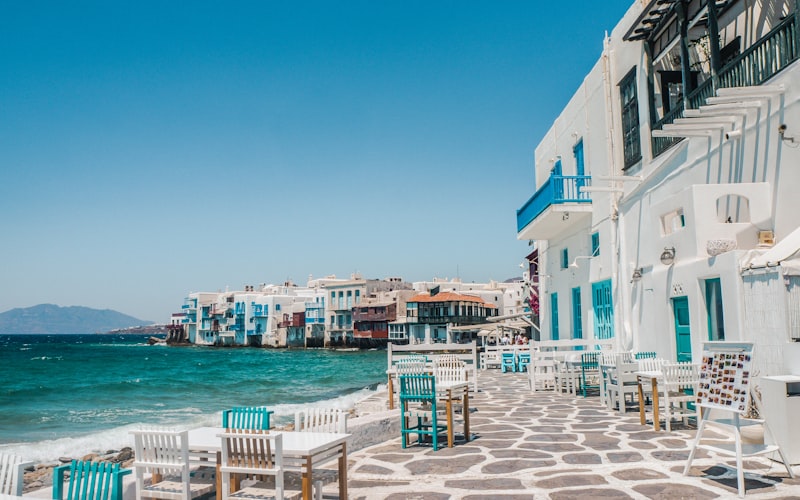
Source: Unsplash — Malta Mediterranean Coast
Why Malta MPRP Stands Out Among EU Residency Programs
The Malta Permanent Residence Programme 2026 occupies a distinctive position in the European investment migration landscape for several reasons.
First, Malta is the only EU member state offering direct permanent residency rather than a renewable temporary permit. When you obtain MPRP status, you receive a permanent residence certificate that remains valid indefinitely, provided you comply with ongoing property investment obligations and maintain a clean criminal record. This provides a level of security that temporary permits, subject to annual renewal and political risk, simply cannot match.
Second, Malta is a full member of the European Union, the Eurozone, and the Schengen Area. Maltese permanent residents enjoy visa-free travel across all 29 Schengen countries. The country operates under EU law, providing strong legal protections for property rights, business ownership, and personal freedoms.
Third, Malta has a highly favorable tax system for non-domiciled residents. The non-dom tax status allows individuals who are resident in Malta but not domiciled there to pay Maltese tax only on income remitted to Malta, rather than on worldwide income. Foreign-source income that is not brought into Malta is not subject to Maltese taxation. For high-net-worth individuals with international income streams, this can represent substantial annual tax savings.
Fourth, Malta has a sophisticated financial services infrastructure, an English-speaking professional services sector (English is an official language alongside Maltese), and strategic geographic positioning between Europe and North Africa. The country is particularly attractive for businesses operating in financial services, iGaming, blockchain and digital assets, aviation, and maritime industries.
Finally, processing times for the MPRP are competitive. Most applications are completed within 4-6 months, which is faster than many comparable European programs and significantly faster than citizenship-by-investment routes in Caribbean jurisdictions that typically take 6-12 months.
Step-by-Step MPRP Application Process
Step 1: Engage a Licensed Agent
You cannot submit an MPRP application directly. Maltese regulations require all applicants to work through a licensed Manditary (accredited agent) registered with Residency Malta Agency. The agent acts as your legal representative throughout the process, handles document preparation, liaises with government authorities, and ensures compliance with all program requirements.
Agent fees typically range from EUR 5,000 to EUR 15,000 depending on family size and complexity. Choose an agent with a proven track record and direct relationships with Residency Malta Agency.
Step 2: Prepare and Authenticate Documents
Document preparation is the most time-consuming phase. Required documents include:
- Valid passport for each applicant
- Birth certificates for all applicants
- Marriage certificate (if applicable)
- Police conduct certificates from every country of residence in the past 10 years for all adult applicants
- Proof of capital assets of at least EUR 500,000 (with EUR 150,000 in liquid assets)
- Proof of health insurance covering Malta and the Schengen area
- Professional reference letter from a banker, lawyer, or accountant
- Detailed business and employment history
All documents must be apostilled or legalized by the Maltese embassy in the country of issuance and translated into English by a sworn translator. Allow 4-8 weeks for document gathering, authentication, and translation.
Step 3: Submit the Residency Application Form
Your licensed agent submits the complete application package to Residency Malta Agency along with the initial government contribution payment of EUR 5,000 (this forms part of the total EUR 30,000 government contribution). At this stage, the agency conducts a four-tier due diligence process:
- Tier 1: Administrative review for completeness
- Tier 2: Background verification through international databases
- Tier 3: Open-source intelligence and media screening
- Tier 4: Field investigation where warranted
Malta's due diligence process is considered one of the most rigorous in the investment migration industry, which contributes to the program's credibility and the international acceptance of Maltese permanent residence certificates.
Step 4: Receive the Principle Approval Letter (In Principle)
After successful due diligence (typically 2-3 months from submission), Residency Malta Agency issues an In Principle letter of approval. This letter is valid for 8 months and requires the applicant to complete the remaining financial commitments within this window.
Step 5: Complete the Financial Commitments
Within the 8-month validity period of the In Principle letter, you must:
- Pay the remaining EUR 25,000 of the government contribution
- Pay the remaining administrative fees (total fees approximately EUR 40,000)
- Complete the property commitment: sign a qualifying property purchase deed (minimum EUR 300,000 in Gozo/North Malta or EUR 350,000 in the rest of Malta) or a qualifying rental agreement (minimum EUR 8,750/year in Gozo/North Malta or EUR 10,000/year in the rest of Malta)
- Make the EUR 2,000 charitable donation to a registered Maltese NGO
- Pay dependant fees (EUR 5,000 per parent/grandparent; EUR 200 per child under 18; EUR 750 per adult dependant 18-29)
Step 6: Receive the Malta Permanent Residence Certificate
Once all commitments are verified, Residency Malta Agency issues the Malta Permanent Residence Certificate and the biometric residence card. The card is valid for five years and can be reissued indefinitely. The permanent residence status itself never expires.
Complete Cost Breakdown for Malta MPRP
Understanding the full cost of the Malta Permanent Residence Programme 2026 is critical for financial planning. Many investors focus on headline figures and overlook cumulative expenses.
| Cost Component | Single Applicant | Applicant + Spouse | Family of Four | Notes |
|---|---|---|---|---|
| Government contribution (non-refundable) | EUR 30,000 | EUR 30,000 | EUR 30,000 | EUR 5,000 on application, EUR 25,000 after approval |
| Administrative fees | EUR 40,000 | EUR 40,000 | EUR 40,000 | Paid to Residency Malta Agency in stages |
| Property purchase (minimum) | EUR 300,000-350,000 | EUR 300,000-350,000 | EUR 300,000-350,000 | Lower threshold in Gozo/North Malta |
| OR property rental (annual minimum) | EUR 8,750-10,000 | EUR 8,750-10,000 | EUR 8,750-10,000 | Must be maintained indefinitely |
| Charitable donation | EUR 2,000 | EUR 2,000 | EUR 2,000 | To registered Maltese NGO |
| Licensed agent fees | EUR 5,000-15,000 | EUR 8,000-18,000 | EUR 10,000-25,000 | Varies by agent and family complexity |
| Document authentication and translation | EUR 1,000-3,000 | EUR 1,500-4,000 | EUR 2,000-5,000 | Apostille, legalization, sworn translation |
| Health insurance (annual) | EUR 500-2,000 | EUR 1,000-4,000 | EUR 1,500-6,000 | Must cover Malta and Schengen area |
Total first-year cost (property purchase route): EUR 378,000 to EUR 463,000 for a family of four, depending on property choice and agent fees.
Total first-year cost (property rental route): EUR 78,000 to EUR 113,000 for a family of four, with ongoing annual rental and insurance commitments.
The rental route is significantly cheaper upfront but creates perpetual annual obligations. The purchase route requires higher initial capital but builds an asset that may appreciate over time. Most investors with available capital opt for the purchase route for this reason.
Malta's Non-Dom Tax Status Explained
One of the most powerful financial advantages of the Malta Permanent Residence Programme 2026 is the ability to claim non-domiciled tax status. Here is how it works.
Under Maltese tax law, an individual can be resident in Malta without being domiciled there. Domicile is a legal concept referring to the country that an individual considers their permanent home or the country to which they have the closest ties. Most expatriates retain their original domicile even after moving to Malta.
A non-domiciled resident of Malta is taxed only on income that arises in Malta and on foreign income that is remitted (transferred) to Malta. Foreign-source capital gains are not taxed in Malta regardless of whether they are remitted, because Malta distinguishes between income and capital gains for non-doms.
This means that if you have investment income, business income, or employment income generated outside Malta and you do not transfer those funds to a Maltese bank account, that income is not subject to Maltese tax. If you do remit foreign income to Malta, it is taxed at a flat rate of 15% under the Malta Retirement Programme rules or standard progressive rates up to 35% under general rules, depending on which specific tax regime applies to your situation.
For practical purposes, a non-dom MPRP resident with EUR 200,000 in foreign annual income who keeps EUR 195,000 outside Malta and remits EUR 5,000 would pay Maltese tax only on the EUR 5,000. This represents a significant advantage compared to becoming tax resident in a country that taxes worldwide income.
It is essential to engage a Maltese tax advisor to structure your affairs correctly, as the rules are nuanced and depend on your specific income sources, treaty positions, and intended remittance patterns.
For those comparing this to other European residency options, the Bulgaria Golden Visa 2026 offers a different tax model with a flat 10% rate on worldwide income for residents, while Malta's non-dom regime focuses on remittance-based taxation.
MPRP vs the Old MIIP: What Changed
The Malta Permanent Residence Programme 2026 differs fundamentally from the now-closed Malta Individual Investor Programme (MIIP). Understanding these differences helps investors set realistic expectations.
| Feature | MIIP (Closed Sept 2020) | MPRP (Current) |
|---|---|---|
| Outcome | Direct Maltese citizenship | Permanent residency (not citizenship) |
| Minimum investment | EUR 690,000+ | EUR 150,000+ (rental route) |
| Timeline | 12-18 months | 4-6 months |
| Due diligence | Extremely rigorous (citizenship level) | Rigorous (residency level) |
| Physical residence requirement | 1-3 years before citizenship | None for status, 4 years for citizenship |
| EU citizenship | Immediate upon naturalization | Possible via naturalization after 5+ years |
| Program status | Permanently closed | Active and accepting applications |
The closure of the MIIP was driven by European Commission pressure regarding the direct sale of EU citizenship. The MPRP was designed as a compliant alternative that provides permanent residency without the political sensitivity of immediate citizenship. However, MPRP holders can still pursue Maltese citizenship through standard naturalization after meeting residence requirements (typically 5 years with physical presence).
Property Investment Guide for Malta MPRP
Choosing the right property is both a regulatory requirement and an investment decision. Malta's property market has shown consistent appreciation, with average residential prices increasing approximately 5-7% annually over the past five years.
Property Purchase Thresholds
- Gozo and North Malta: Minimum EUR 300,000. This covers areas like Mellieha, St. Paul's Bay, Bugibba, Qawra, and all of Gozo island. These areas offer larger properties and better value per square meter.
- Rest of Malta: Minimum EUR 350,000. This covers central and southern Malta including Sliema, St. Julian's, Valletta, Mosta, and the Three Cities.
Rental Thresholds
- Gozo and North Malta: Minimum EUR 8,750 per year (approximately EUR 730 per month)
- Rest of Malta: Minimum EUR 10,000 per year (approximately EUR 833 per month)
Best Areas for Property Investment
Sliema and St. Julian's: The premium residential and commercial districts. Modern apartments, sea views, strong rental demand from expatriates and professionals. Purchase prices from EUR 350,000 for a two-bedroom apartment. Rental yields of 4-5%.
Valletta: The capital city and UNESCO World Heritage site. Historic properties, boutique apartments, and limited supply drive appreciation. Purchase prices from EUR 300,000 for a one-bedroom apartment in restored buildings.
Gozo: Malta's sister island offers the lowest property prices and a quieter lifestyle. Purchase prices from EUR 250,000 for a three-bedroom house with garden. Rental yields are lower at 3-4% but capital appreciation has been steady.
Three Cities (Vittoriosa, Senglea, Cospicua): An emerging area with historic character and significant regeneration investment. Purchase prices from EUR 280,000 for a two-bedroom townhouse.
If you want expert guidance on navigating the MPRP property market, Truescho connects you with licensed agents and property specialists who understand both the regulatory requirements and the investment fundamentals.
Real-World Case Study: Chen Wei, Singapore to Malta
Chen Wei, a 38-year-old fintech entrepreneur from Singapore, chose the Malta Permanent Residence Programme in mid-2024 as a hedge against potential regulatory changes in Southeast Asia and as a base for his European expansion.
Chen opted for the property rental route to preserve capital for his business. He rented a two-bedroom apartment in Sliema for EUR 12,000 per year (above the EUR 10,000 minimum) and completed his government contribution, administrative fees, and charitable donation for a total first-year outlay of approximately EUR 94,000 including agent fees and document costs.
His primary motivation was obtaining permanent status quickly (he received his certificate in 5 months) without a large property commitment. The non-dom tax status allowed him to keep his Singapore-based company income outside the Maltese tax net while maintaining EU residency.
Chen's daughter, age 9, now attends an international school in Malta (annual fees approximately EUR 8,500), and the family splits time between Singapore and Sliema, meeting the physical presence requirements for potential future naturalization.
Path from MPRP to Maltese Citizenship
While the MPRP grants permanent residency, not citizenship, it does not close the door on eventual naturalization. Here is the realistic pathway.
Maltese citizenship through naturalization generally requires 5 years of legal residence, though the specific requirements for MPRP holders can vary. The Citizenship Act of Malta allows the Minister responsible for citizenship to naturalize individuals who have resided in Malta for a sufficient period, demonstrated integration, and shown good character.
For MPRP holders, the practical requirements typically include:
- Physical residence in Malta for at least 4 years out of the 6 years preceding the application (the exact requirement can vary)
- Maintaining permanent residence status in good standing throughout the period
- Demonstrated knowledge of the English or Maltese language
- Clean criminal record
- Evidence of integration into Maltese society (employment, business, community involvement)
Upon naturalization, the new citizen receives a Maltese passport, ranked among the top 10 most powerful passports globally, providing visa-free access to over 185 destinations including the United States (via ESTA), Canada, the United Kingdom, Australia, and all EU member states.
For comparisons with other citizenship pathways, explore our guide on citizenship through investment and learn about Gulf region golden visa programs for a broader perspective.
Common Mistakes to Avoid with Malta MPRP
1. Underestimating Total Costs
Many investors focus on the EUR 30,000 government contribution and overlook the EUR 40,000 administrative fees, agent fees, document costs, and ongoing property commitments. A realistic total budget for a family of four on the rental route is EUR 90,000-120,000 in the first year, with EUR 10,000-15,000 in annual ongoing costs.
2. Choosing the Cheapest Agent
Licensed agent quality varies significantly. An inexperienced agent may submit incomplete documentation, causing delays or rejections. Request references, verify the agent's license number with Residency Malta Agency, and confirm their success rate before engaging.
3. Ignoring Due Diligence Preparation
Malta's four-tier due diligence is thorough. Any discrepancy between your application and your actual background (undeclared previous addresses, minor legal issues not disclosed, unexplained wealth) can trigger delays or rejection. Be transparent and provide complete information upfront.
4. Failing to Maintain Property Commitments
The property investment (whether rental or ownership) must be maintained for the entire duration of your MPRP status. If you stop renting or sell your qualifying property without immediately replacing it with another qualifying property, your permanent residence status may be revoked.
5. Misunderstanding Non-Dom Tax Requirements
Non-dom status in Malta is powerful but requires careful planning. Simply obtaining MPRP does not automatically grant non-dom status. You must formally establish your tax residence and domicile position, file the appropriate declarations with the Maltese tax authorities, and maintain proper documentation of your remittance patterns.
Frequently Asked Questions
What is the Malta Permanent Residence Programme (MPRP)?
The MPRP is a residency-by-investment program allowing non-EU nationals to obtain permanent residence in Malta through a combination of government contribution (EUR 30,000), property investment, and charitable donation. It grants indefinite permanent residence status, not temporary renewable permits.
How much does Malta MPRP cost for a family of four?
A family of four can expect total first-year costs of EUR 78,000-113,000 on the rental route or EUR 378,000-463,000 on the property purchase route, including all government fees, administrative costs, agent fees, and property commitments.
Does Malta permanent residency lead to citizenship?
Yes, but not automatically. MPRP holders can apply for Maltese citizenship through naturalization after meeting residence requirements, typically 4-5 years of physical presence in Malta. The process is separate from the MPRP and handled by the citizenship authorities.
What is the minimum property investment for Malta MPRP?
The minimum property purchase is EUR 300,000 in Gozo or North Malta, or EUR 350,000 in the rest of Malta. Alternatively, the minimum annual rental is EUR 8,750 in Gozo/North Malta or EUR 10,000 in the rest of Malta.
Can I work in other EU countries with Malta permanent residency?
No. Maltese permanent residency allows visa-free travel within the Schengen Area but does not grant the right to work in other EU countries. To work in another member state, you would need that country's work authorization.
How long does Malta MPRP processing take?
The standard processing time is 4-6 months from application submission to receiving the permanent residence certificate. Document preparation before submission typically adds another 4-8 weeks.
Do I need to physically live in Malta to keep MPRP status?
No physical residence is required to maintain permanent residence status, provided you continue meeting the property investment commitment and maintain a clean criminal record. However, physical presence is relevant if you plan to pursue eventual naturalization.
Is Malta MPRP worth it compared to other EU programs?
Malta MPRP is the only EU program offering direct permanent residency (not renewable temporary permits), combined with non-dom tax advantages, English as an official language, and full Schengen access. Whether it is worth it depends on your priorities: if permanent status and tax efficiency matter most, Malta is highly competitive. If you seek the lowest entry cost, Bulgaria or Greece may offer better value.
Conclusion
The Malta Permanent Residence Programme 2026 offers international investors a unique combination of certainty, speed, and financial advantages that no other European residency program can fully match. The ability to obtain permanent (not temporary) residence status, combined with Malta's non-dom tax regime, English-speaking environment, and full EU and Schengen membership, creates a compelling value proposition.
However, the MPRP is not the right fit for every investor. The total cost is higher than Bulgaria's golden visa, and the program requires ongoing property commitments that represent a permanent financial obligation. The decision should be based on your specific circumstances: your tax position, your family's needs, your long-term goals (residency versus citizenship), and your comfort with Malta's regulatory and economic environment.
For a comprehensive comparison and personalized recommendation, the Truescho consulting team provides expert guidance across all major European residency and citizenship programs. We help you evaluate Malta alongside alternatives like the Bulgaria Golden Visa, the UK Skilled Worker Visa, or the UK Innovator Founder Visa, ensuring you choose the program that best fits your profile and objectives.
Sources
- Residency Malta Agency — Official government agency administering the MPRP
- Malta Citizenship Act (Cap. 188) — Legal framework for naturalization requirements
- Malta Tax and Customs Administration — Official tax authority with non-dom residency rules
- European Commission — Malta Country Report — Economic data and Eurozone membership status
- Identity Malta — Government agency for identity documents and residence cards