
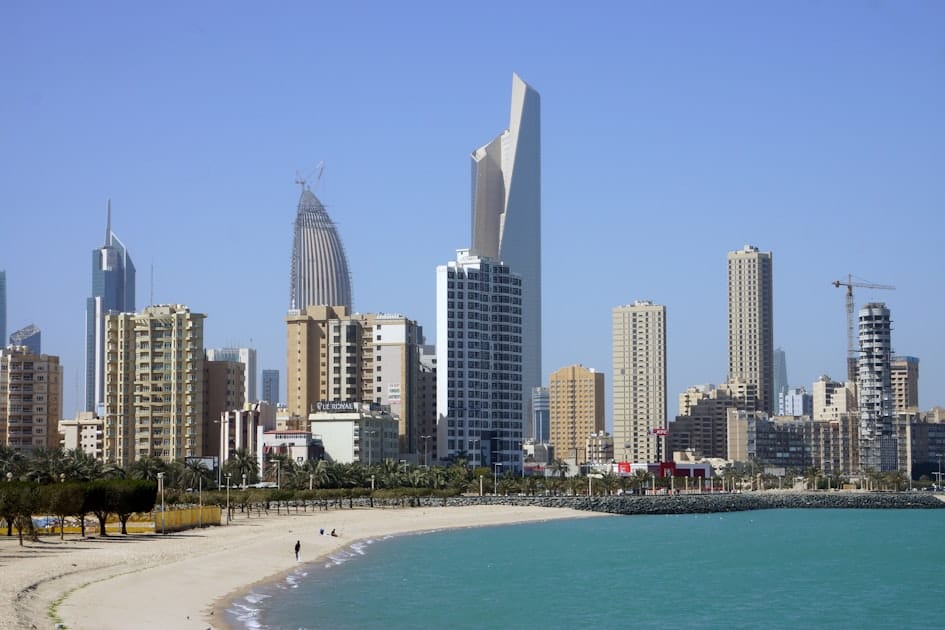

Source: KDIPA — Kuwait Direct Investment Promotion Authority
Kuwait KDIPA Foreign Investor Residency 2026: License, Tax Incentives & Steps
Kuwait may not be the first GCC market that comes to mind when you think of foreign investment residency, but the Kuwait Direct Investment Promotion Authority (KDIPA) offers one of the most generous packages in the region. The Kuwait KDIPA investor residency route grants 100% foreign ownership, up to 10 years of corporate tax exemption, customs duty exemptions on equipment, and a sponsorship chain for you and your family without a personal kafeel. This guide covers everything from Law 116 of 2013 to the nine-step licensing process and a full GCC comparison. Last updated: July 2026.
The Kuwait KDIPA investor residency is granted under Law No. 116 of 2013 (the Direct Foreign Capital Investment Law). Foreign investors who obtain a KDIPA license receive 100% foreign ownership, up to 10 years of corporate tax exemption, customs duty exemptions on project equipment, and residency for themselves and their family sponsored by KDIPA itself. The license covers 13 broad sectors and is processed through the KDIPA online portal.
What Is the Kuwait KDIPA Investor Residency?
The Kuwait Direct Investment Promotion Authority (KDIPA) is the government body responsible for attracting and facilitating foreign direct investment into Kuwait. Established under Law No. 116 of 2013, KDIPA acts as a one-stop shop for foreign investors seeking to establish a presence in Kuwait with benefits that go well beyond what an ordinary commercial license offers.
Under the ordinary Kuwait Commercial Companies Law, foreign investors historically needed a local partner holding at least 51% of the shares, and they required an individual Kuwaiti sponsor (kafeel) for residency. The KDIPA license overrides both of these requirements. A KDIPA-licensed entity can be 100% foreign-owned, and KDIPA itself acts as the official sponsor for the investor, their spouse, and their dependent children.
The 13 eligible sectors verified on the official KDIPA website as of July 2026 are:
- Infrastructure and Construction
- Renewable Energy
- Education and Training
- Industrial
- Oil and Gas
- Healthcare
- Integrated Housing and Urban Development
- Banking, Financial Services, and Insurance
- Storage and Logistics
- Air, Maritime, and Rail Transport
- Tourism and Hotels
- Media and Marketing
- IT, Software, and Technology
Each sector has its own typical capital requirements, expected processing timeline, and regulatory touchpoints. KDIPA's office is located on Floor 44 of the Al-Hamra Business Tower on Al-Shuhada Street in Sharq, Kuwait City.
Why Kuwait KDIPA Matters in 2026
Kuwait sits between the UAE (which has introduced a 9% corporate tax) and Saudi Arabia (which has a 20% corporate tax for non-GCC-owned businesses and the RHQ programme). For investors in logistics, oil services, healthcare, and industrial manufacturing, KDIPA offers a structurally different value proposition:
- Tax exemption of up to 10 years from the start of production, extendable by Council of Ministers decision. No other GCC country offers a comparable blanket exemption through a formal investment promotion law.
- 100% foreign ownership as a statutory right, not a discretionary approval.
- No personal kafeel. KDIPA is your sponsor, which removes one of the most friction-heavy elements of the traditional Gulf residency system.
- Customs duty exemptions on machinery and equipment imported for the licensed project.
- Subsidised utilities. Industrial electricity tariffs as low as $0.005 per kWh, among the lowest in the world.
For investors evaluating a multi-country GCC strategy, KDIPA complements rather than competes with the UAE corporate tax regime and the UK Global Talent visa. Many holding structures use Kuwait for industrial and oil-services operations, the UAE for commercial and trading headquarters, and the UK for talent and capital markets access.
Step-by-Step Guide to the KDIPA Licensing Process
The KDIPA licensing process is conducted through the KDIPA online portal and typically takes between 8 and 16 weeks from initial submission to license issuance, depending on the sector and completeness of documentation.
Step 1 — Confirm Eligibility
Verify that your intended business activity falls within one of the 13 approved sectors. If your activity straddles categories (for example, a healthtech company that combines IT and Healthcare), you can apply under the primary sector and explain the secondary in your business plan.
Step 2 — Prepare Your Business Case
KDIPA evaluates applications on the strength of the business case. You will need:
- A detailed business plan (3–5 year projections, market analysis, employment plan for Kuwaiti nationals)
- Proof of source of funds (bank statements, audited accounts from your existing businesses)
- CVs of key personnel and shareholders
- Corporate documents of any parent company (certified and apostilled)
Step 3 — Register on the KDIPA Online Portal
Create an account on the KDIPA online portal, complete the investor profile, and select "New Investment License Application."
Step 4 — Submit Your Application
Upload all documents, pay the applicable processing fees (fee schedules are communicated by KDIPA based on sector and scope), and submit. You will receive an application reference number.
Step 5 — KDIPA Review and Committee Decision
KDIPA's technical committee reviews your application, typically within 4–8 weeks. You may receive requests for clarification or additional documentation during this period.
Step 6 — Conditional Approval
If approved, you receive a conditional approval letter specifying the sector, activities, capital commitment, and any conditions you must meet before final licensing.
Step 7 — Company Incorporation
With the conditional approval in hand, proceed to incorporate your Kuwaiti entity (typically a closed shareholding company or a single-owner limited liability company) through the Ministry of Commerce and Industry.
Step 8 — Final License Issuance
Submit your incorporation documents to KDIPA, pay the final license fee, and receive your KDIPA investment license. This license is your basis for residency applications.
Step 9 — Apply for Residency
With your KDIPA license, apply for Article 19 residency for the investor. KDIPA acts as your sponsor. You can then sponsor your spouse and unmarried children under 24, and in some cases your parents.
If you are developing a training or education business, the Truescho Rankings can help you position your partnership with Kuwaiti universities and demonstrate institutional credibility in your KDIPA application.
GCC Residency-by-Investment Comparison
| Feature | Kuwait (KDIPA) | Saudi Arabia (RHQ) | UAE (DMCC/IFZA) | Qatar (IFQ) |
|---|---|---|---|---|
| Foreign ownership | 100% | 100% | 100% | 100% |
| Corporate tax exemption | Up to 10 years | No (20% standard) | No (9% above AED 375k) | Up to 10 years (selective) |
| Customs duty exemption | Yes (project equipment) | Selective | No | Selective |
| Sponsor (kafeel) requirement | KDIPA acts as sponsor | Employer sponsors | Free zone authority | QFC or ministry |
| Family residency | Yes | Yes | Yes | Yes |
| Path to permanent residency | No | Selective (Premium Residency) | Yes (Golden Visa) | Selective |
| Typical processing time | 8–16 weeks | 4–12 weeks | 2–6 weeks | 8–12 weeks |
| Best for | Industrial, oil services, logistics | Regional HQ for GCC | Trading, fintech, services | Financial services |
Priya, Logistics Entrepreneur from Bangalore: Setting Up in Shuwaikh
Priya is a third-generation logistics entrepreneur from Bangalore who had been running a family freight forwarding business across India and the Gulf for over a decade. In 2024, she decided to establish a formal Kuwaiti entity to bid on contracts with Kuwait Ports Authority and Kuwait Oil Company, both of which require local presence.
Her KDIPA application was filed under the Storage and Logistics sector. Her business plan projected $2.5 million in capital investment over three years, the creation of 18 jobs for Kuwaiti nationals (drivers, warehouse supervisors, and operations staff), and the use of the Shuwaikh Free Trade Zone as her operating base.
The KDIPA committee approved her conditional license in 10 weeks. She incorporated her Kuwaiti LLC, leased warehouse space in Shuwaikh, and received her final KDIPA license a further 5 weeks later. Her investor residency (Article 19) was issued within 3 weeks of the final license. She then sponsored her husband and two children.
Her total setup cost, including capital deposit, legal fees, license fees, and first-year office lease, was approximately $180,000. Her projected annual tax saving versus operating through a mainland company is roughly $95,000 per year, meaning the KDIPA structure effectively pays for itself within two years.
Priya's advice: "The business plan is everything. KDIPA wants to see how your investment creates jobs for Kuwaitis and brings technology or know-how that is not already available locally. If you can show that, your approval odds are very strong."
Common Mistakes and Expert Tips
Mistake 1 — Applying without a credible Kuwaitisation plan. KDIPA prioritises applications that create jobs for Kuwaiti nationals. A vague or unrealistic employment plan is a leading cause of rejection.
Mistake 2 — Underestimating capital. While Law 116/2013 does not set a statutory minimum capital, KDIPA evaluates the adequacy of capital against the business plan. For most sectors, KD 50,000 to KD 250,000 (roughly $163,000 to $815,000) is the realistic range.
Mistake 3 — Choosing the wrong sector category. Investors sometimes apply under a sector that does not match their actual activity, leading to delays or rejection. Map your activity carefully to the 13 approved sectors.
Mistake 4 — Not preparing documents in advance. All foreign corporate documents must be authenticated (apostilled or legalised through the Kuwait embassy in your country of origin). This process can take 4–8 weeks.
Mistake 5 — Assuming KDIPA is always the best route. For pure trading businesses with no industrial or strategic significance, an ordinary commercial license or a free trade zone setup may be faster and cheaper. KDIPA is most valuable when you need the tax exemption, customs exemption, or 100% ownership in a sector that does not allow it under ordinary rules.
Expert tip: Before applying, browse Truescho's opportunities to identify Kuwaiti and GCC government-backed partnership programmes that can strengthen your application and provide co-investment or grant support.
Tax Incentives in Detail: What the 10-Year Exemption Actually Covers
The KDIPA tax exemption applies to corporate income tax on profits generated by the licensed project. Under Kuwait's tax law, foreign-owned corporate profits are generally taxed at 15%. The KDIPA exemption removes this liability for up to 10 years from the start of commercial production, and it can be extended by a decision of the Council of Ministers.
What the exemption covers:
- Corporate income tax on profits from the licensed activity
- The Kuwaiti share of any withholding tax on distributions to foreign shareholders (under certain structures)
What the exemption does not cover:
- Customs duties on goods not classified as project equipment
- Personal income tax (Kuwait does not levy personal income tax, so this is not a loss)
- Zakat or social contributions applicable to Kuwaiti entities
- VAT (Kuwait has not implemented VAT as of July 2026, but plans are advancing)
For a business generating $1 million in annual taxable profit, the 10-year exemption saves approximately $150,000 per year, or $1.5 million over the full exemption period. This is the single most powerful financial incentive in the GCC for industrial and logistics investors.
Source: KDIPA — YouTube channel
Family Residency Under KDIPA Sponsorship
One of the most underappreciated benefits of the KDIPA license is the family residency chain. Because KDIPA acts as the sponsor for the investor, you avoid the individual kafeel system entirely. Your residency is tied to your investment license, not to a personal relationship with a Kuwaiti national.
You can sponsor:
- Your spouse (with a marriage certificate authenticated by the Kuwait embassy)
- Your unmarried children under 24 years of age
- In some cases, your parents (subject to KDIPA approval and financial proof)
Your spouse can obtain a work permit under certain conditions, and your children can enrol in Kuwaiti or international schools. Kuwait's education sector includes strong international schools following British, American, and Indian curricula.
When KDIPA Is Not the Best Option
KDIPA is powerful, but it is not universal. Consider alternatives when:
- You are a freelancer or sole consultant with no employees. KDIPA is designed for genuine investment projects, and a one-person operation is unlikely to be approved.
- You are in a sector that is already fully open to foreigners under ordinary rules (for example, many IT and consulting businesses can operate through the Free Trade Zone).
- You need speed above all. KDIPA processing takes 8–16 weeks, whereas a Dubai free zone setup can be completed in 2 weeks.
In those cases, explore the UAE corporate tax regime or the UK Global Talent visa as faster alternatives.
FAQ: Kuwait KDIPA Investor Residency 2026
What is KDIPA in Kuwait?
KDIPA is the Kuwait Direct Investment Promotion Authority, established under Law 116 of 2013 to attract foreign direct investment. It grants licenses with 100% foreign ownership, tax exemptions, and residency sponsorship.
Can a foreigner own 100% of a company in Kuwait?
Yes, under a KDIPA investment license. Without KDIPA, foreign investors generally need a Kuwaiti partner holding at least 51% of the shares.
What are the tax exemptions for foreign investors in Kuwait?
KDIPA licensees can receive up to 10 years of corporate income tax exemption from the start of production, plus customs duty exemptions on project equipment and machinery.
How long does it take to get an investment license in Kuwait?
The typical timeline is 8 to 16 weeks from application submission to final license issuance, depending on the sector and completeness of documentation.
What is Law 116 of 2013 in Kuwait?
It is the Direct Foreign Capital Investment Law that established KDIPA and created the legal framework for 100% foreign ownership, tax incentives, and KDIPA-sponsored residency.
Which sectors are eligible for KDIPA investment?
13 broad sectors including IT, healthcare, logistics, renewable energy, oil and gas, industrial, education, and financial services, among others listed on the KDIPA website.
Can KDIPA sponsor my family's residency?
Yes. KDIPA acts as the official sponsor for the investor, and you can then sponsor your spouse and unmarried children under 24 for residency in Kuwait.
How much capital do I need for a KDIPA license?
There is no statutory minimum, but most successful applications show capital between KD 50,000 and KD 250,000 ($163,000 to $815,000), depending on the sector and business plan.
Conclusion
The Kuwait KDIPA investor residency is one of the most underpublicised but structurally powerful residency-by-investment routes in the GCC. The combination of 100% foreign ownership, a 10-year tax exemption, customs duty relief, and KDIPA-sponsored family residency makes it especially attractive for investors in logistics, industrial, oil services, healthcare, and IT. The trade-off is a longer processing timeline and a more rigorous business-case evaluation than a free zone setup.
Truescho is your single platform for international career and investment decisions. Browse opportunities, compare university rankings, use our GPA Calculator for credential verification, and read our companion guides on the UK Global Talent visa and UAE corporate tax compliance.