
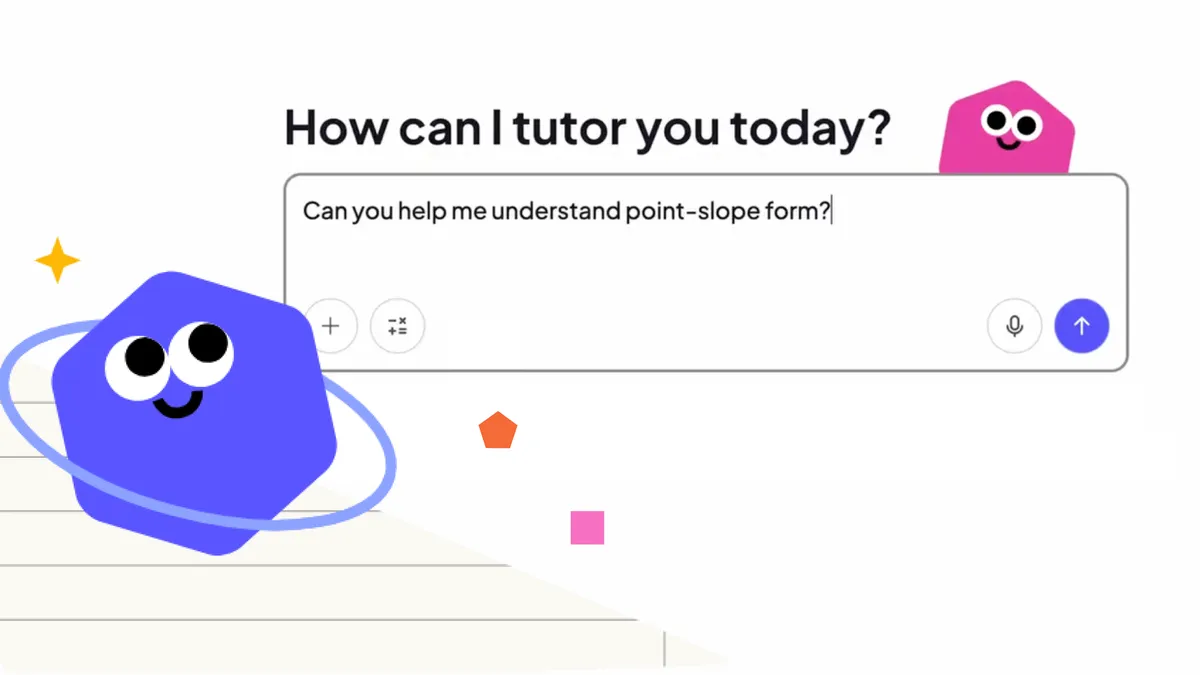
Picture a middle-school student wrestling with how a line's slope changes as its endpoints move. Instead of reading a long text explanation, the tutoring assistant draws an interactive shape on screen; the student drags a vertex with the mouse, and the assistant notices what changed and adjusts its explanation on the spot. That scene is no longer a futuristic pitch — it is a literal description of the newest feature in Khanmigo, Khan Academy's AI-powered tutor, announced on August 27, 2026 in partnership with Google.org as part of a back-to-school 2026 update. The release includes two headline capabilities: interactive diagrams generated by AI while students solve problems, and a rebuilt practice tool that keeps the teacher as the final reviewer of every question before it reaches the class.
The Partnership Story: Six Engineers, Six Months, Early Access to Gemini
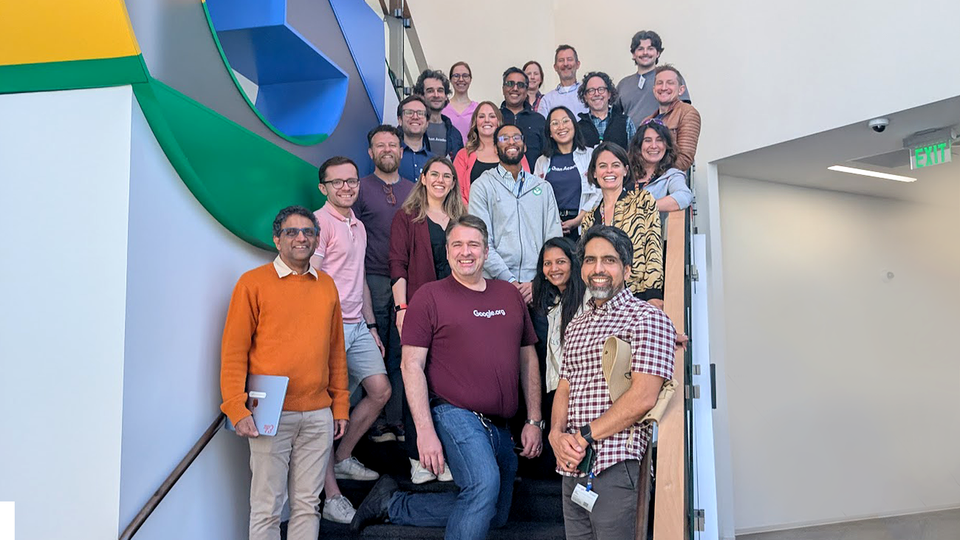
Behind the announcement lies a collaboration worth understanding, because it models how large technology companies are entering education. In January 2026, Google shared that new AI-powered learning tools were coming to Khan Academy. Since March, Google.org has assigned six of its engineers to work alongside Khan Academy's product and engineering organization for a six-month Google.org Fellowship, accompanied by a grant and direct access to Gemini models ahead of the school year.
Sal Khan, founder and CEO of Khan Academy, summarized the partnership's value: the Google.org Fellows supercharged their engineering effort, allowing the team to ship several new AI-powered features in time for students and teachers to use them in the new school year. From Google's side, Jen Carter, head of technology at Google.org, said the company is proud to support Khan Academy's approach — combining the organization's deep expertise in student learning with Google's AI engineering to give teachers and students tools designed to make learning more effective, engaging, and accessible than ever.
The practical outcome: features that lived in early pilots matured within a single summer into production tools inside a platform used by millions of learners. That is the measuring stick for any education-technology announcement — whether it actually reached real users or stayed a demo.
What's New for Students: Diagrams That React to What You Do
The student-facing feature changes how Khanmigo responds in math and science courses. Previously the assistant replied in text only. Now it uses the advanced reasoning of Google's Gemini models to generate interactive visual aids at the exact moment it detects a diagram could help: charts, geometric shapes, parallel coordinate plots, and more.
The crucial part is not generating the image but the interaction. A student can drag a vertex or a line segment inside the figure, and Khanmigo recognizes the change and builds the next explanation around it. To make this work well, the joint team defined underlying metrics for what makes a high-quality diagram, then evaluated generated visuals for relevance, helpfulness, and clarity so diagrams appear exactly when students benefit most, and built a feedback widget directly into the product so user input keeps improving the experience.
On impact, Khan Academy reports encouraging early signals it explicitly labels preliminary: increased student engagement, and improvement in a measure the platform calls next-item correctness — whether the student correctly answers the very next problem on the same skill in the same session, without any help from Khanmigo. The emphasis on preliminary is ours as much as theirs; nothing stronger than that has been claimed by the official source.
Source: Google's official blog post
Why Interactive Visual Explanation Works at All
The underlying idea is not new to education research. For decades, learning science has documented the dual-coding principle: the brain processes verbal and visual information through complementary channels, and combining them anchors understanding more deeply than text alone. The same research shows visual explanation is most powerful when it arrives at the moment of need — not before, not after — which is precisely what the Khan Academy team engineered: the diagram appears not because the student asked for it, but because the system judged the current moment to be the right one.
Add the interaction layer. A static diagram keeps the student a spectator; when a learner drags a triangle's vertex and watches the base and height change together, they build a live mental model of the relationship between variables. That is why the first use cases concentrate on mathematics and science, the subjects where relationships become obvious through motion. To keep the feature from turning into visual theater, the joint team defined objective quality metrics for generated diagrams — relevance, helpfulness, clarity — before launch, and tied an in-product feedback button to continuous improvement after it.
What's New for Teachers: AI Drafts, Humans Sign Off
The second feature is a complete rebuild of a tool called Practice My Knowledge, and its stated philosophy compresses into one line from the official announcement: Gemini drafts the materials, but teachers have the final say on what students see. In practice it works in four steps:
- Plan and draft. The teacher works with Gemini to generate high-quality, targeted multiple-choice questions in seconds.
- Ground in your own materials. Teachers can upload their own files for Gemini to reference, so questions follow the course rather than generic content.
- Review and veto. Before an assignment goes out, the teacher reviews the full set, editing or rejecting any question that does not fit the class level.
- Assess. Teachers assign scored or unscored practice and receive structured performance reports showing where students are doing well and where they need support.
Districts already using Khanmigo can try the new features today, per the official announcement. This design addresses educators' biggest fear about AI in assessment — handing grading quality to an unregulated machine. Here the teacher remains the quality gate, while AI absorbs only the repetitive drafting hours.
Source: Khan Academy's official blog post
How to Benefit from the Update Wherever You Are
Access depends on your situation:
- If your school uses Khanmigo: the new features are available to try today through the educator tools, and the cleanest approach is for one math or science department to run a single controlled rollout before comparing notes.
- If you are an individual teacher or student outside a connected district: Khan Academy's core content remains completely free — the organization is a nonprofit — and is available in dozens of languages through the official site, so the curriculum itself is available to you today. Khanmigo's newest capabilities, however, arrive through school and district plans as announced by the organization.
- If you are a parent: the most useful question for your child's school is how it plans to handle AI-assisted practice, since the mandatory teacher-review step is exactly what turns usage from random individual experimentation into organized classroom practice.
The AI study-tools landscape has become crowded, and we have guides that place each tool in context: our NotebookLM for students walkthrough, our coverage of Google Search's new AI study tools, the guide to using Gemini for free as a student, and our Perplexity Pro vs Gemini vs ChatGPT comparison for students. Add the new Khanmigo capabilities and you have a nearly complete map.
Quick Comparison: New Khanmigo Versus General AI Study Tools
| Aspect | Khanmigo with the 2026 update | General AI tools like NotebookLM or Gemini |
|---|---|---|
| Learning substrate | Khan Academy's structured curriculum and graded exercises | Your own uploaded materials |
| Visual interaction | Interactive diagrams that react when students drag elements | General on-demand visual generation |
| Teacher's role | Mandatory question review before students see anything | No built-in institutional role |
| Measurement | Structured performance reports and next-item correctness | Summaries and assistance without classroom reporting |
| Cost | Platform content free; Khanmigo via school and district plans | Free and paid tiers depending on the service |
Why This Update Matters to Anyone Watching the Education Market
The new Khanmigo project represents a third model beside the two dominant ones in AI education: the general chatbot serving individual students with no classroom context, and the closed commercial platform selling turnkey systems to districts at premium prices. Khan Academy, as a nonprofit with a globally free curriculum, chose a different route: AI embedded inside an already-structured curriculum, funded by an institutional partnership rather than student subscriptions.
Three things make this significant for industry observers. First, an organization of Google.org's caliber investing in a free education platform raises expectations for every commercial competitor selling lesser features. Second, the stated philosophy — AI drafts, the teacher decides — offers a ready-made governance template that any education authority could adopt as policy before allowing AI tools into classrooms. Third, measures like next-item correctness give the sector a shared measurement vocabulary beyond marketing claims. For students comparing tools themselves, our earlier deep-dive comparing Perplexity Pro, Gemini, and ChatGPT for study workflows shows exactly what each option gives and withholds.
How to Trial the Features and Measure Impact Yourself
If you teach in a Khanmigo school, the announcement opens a simple, bounded experiment: pick one math or science unit this term, run the new practice tools with two comparable class sections while a third continues as usual, then compare results on a common short assessment. The structured reports inside the platform hand you the data, and you end up with a small local measurement of whether the tool genuinely helps your students or is merely a nicer interface for what you already did. That habit — bounded trial, then a scale decision — is precisely how large districts evaluate any tool, and it takes one organized teacher to run. For the individual student, the closest available approximation today is practicing the same free curriculum and comparing recall after a text explanation versus after drawing the relationship by hand on paper; the principle of visual understanding holds even where the tool has not arrived yet.
Limitations to Keep in Mind
- The announced improvement signals are labeled preliminary by the official source itself; no peer-reviewed study of the interactive-diagram feature's impact has been published.
- Real availability of the new features runs through schools and districts using Khanmigo — not an individual account a student buys directly, according to the announcement's own wording.
- Khan Academy has not announced additional-language availability for the new AI features themselves; the platform's curriculum is translated, but the new capabilities are launching for the US market first.
- AI-drafted questions carry the same error risk as any generated content; the quality guarantee here is bound to the teacher-review step, and skipping it voids the entire philosophy.
- Interactive diagrams currently focus on mathematics and science, so do not expect them in humanities courses soon.
Frequently Asked Questions
What is new in Khanmigo for 2026?
Two headline features announced on August 27, 2026: interactive diagrams generated by Gemini when a student needs a visual explanation in math or science — which students can manipulate by dragging elements — and a redesigned Practice My Knowledge tool that lets teachers generate AI-assisted questions and review everything before students see it.
Is Khanmigo free for students?
Khan Academy's core content is completely free as a nonprofit, while Khanmigo's advanced features are offered to teachers, schools, and districts under the organization's plans; no free individual plan covering the new features has been announced.
Does Khanmigo support languages other than English?
Khan Academy's curriculum is available in dozens of languages on the official site, but the announcement of the new update does not mention additional-language support for Khanmigo itself, and the new features are launching in English for the US market first.
How do teachers use AI to create safe practice questions?
The teacher asks Gemini to draft multiple-choice questions for a specific skill, optionally uploads their own materials for the model to reference, then reviews every question — editing or rejecting — before assigning scored or unscored practice, followed by structured performance reports.
What is the difference between Khanmigo and using ChatGPT for studying?
Khanmigo operates inside a structured curriculum with graded exercises, teacher reports, and a philosophy that keeps the school in control of what students see, while a general chatbot lacks the classroom layer and puts the full burden of direction on the student.
Can schools outside the United States subscribe to Khanmigo?
The announcement addresses districts already using the platform without geographic restrictions, so the practical path is contacting Khan Academy through its official channels to ask about international and private-school availability.
Education is one of the fastest-moving fronts of the current AI wave, and Truescho tracks every development that matters to learners worldwide. Start today by exploring the AI tools on Truescho and find what saves you hours of study and work.