
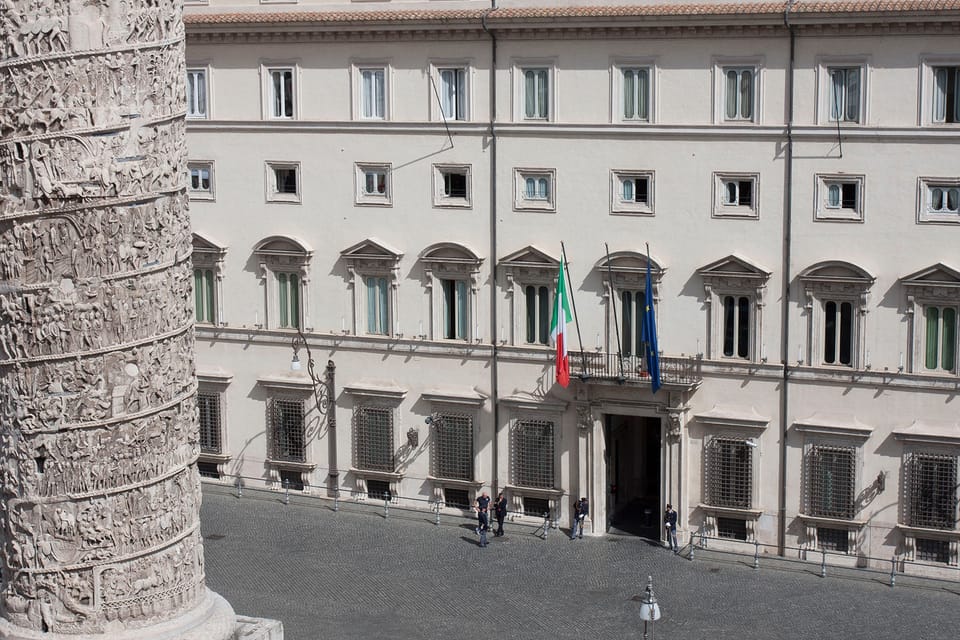
Italian Prime Minister Giorgia Meloni announced on the evening of Sunday, September 20, 2026, at a youth festival organized by her Brothers of Italy party, a package of school-focused restrictions: a maximum cap on the number of foreign students per class, a requirement that parents of foreign children who struggle to integrate learn Italian, and a ban on burqas and niqabs inside schools. Reuters first reported the announcement, and by Monday morning it led international coverage — with one figure doing most of the explaining: 11.6% of students in Italian schools are non-citizens.
What exactly did Meloni announce?
According to Reuters and the wave of coverage that followed on September 20–21, 2026, the package centers on three measures aimed at Italy's public schools:
- A cap on foreign students per class. Meloni said the government will "soon present" a measure setting a maximum number of foreign students per class. The exact threshold has not been announced yet.
- Mandatory Italian for some parents. Parents of foreign students who show signs of struggling to integrate would be required to study the Italian language — one of the most controversial elements of the announcement.
- A ban on burqas and niqabs in schools. Meloni argued that "students should not cover their faces at school," framing openness and communication as core to the learning environment. The announced ban targets full-face coverings — the burqa and niqab — not the conventional headscarf that covers the hair, which remains governed by existing rules.
Her rationale, as quoted in the Reuters-based reporting: if only one child in a class does not understand Italian, that child can learn and integrate; but when many do not, real integration stalls for everyone. She also pointed to Italy's geographic position in the central Mediterranean and the continuous migration flows it brings.
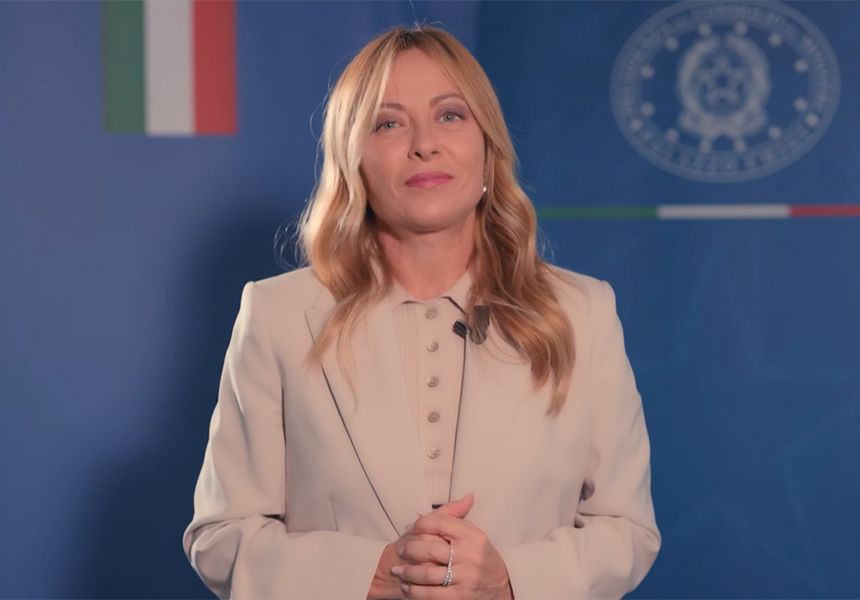
Source: The official website of the Italian government, governo.it — official photo archive
The number behind the decision: 11.6%
The statistic at the heart of this debate is the share of non-citizen students in Italian schools: 11.6%, the figure cited in the coverage of the announcement. That is roughly one in every nine pupils, with far higher concentrations in the industrial cities of the north and in the suburbs of major urban centers.
This number anchors a debate Italy has been having for years over so-called multicultural classes. In some schools, children of migrants already form local majorities. The government argues a cap protects both educational quality and fairness for Italian and foreign families alike; critics — including teachers' associations and opposition parties — counter that the real fix is more resources, more language-support teachers, and smaller classes across the board, not numerical quotas that risk segregating pupils by origin.
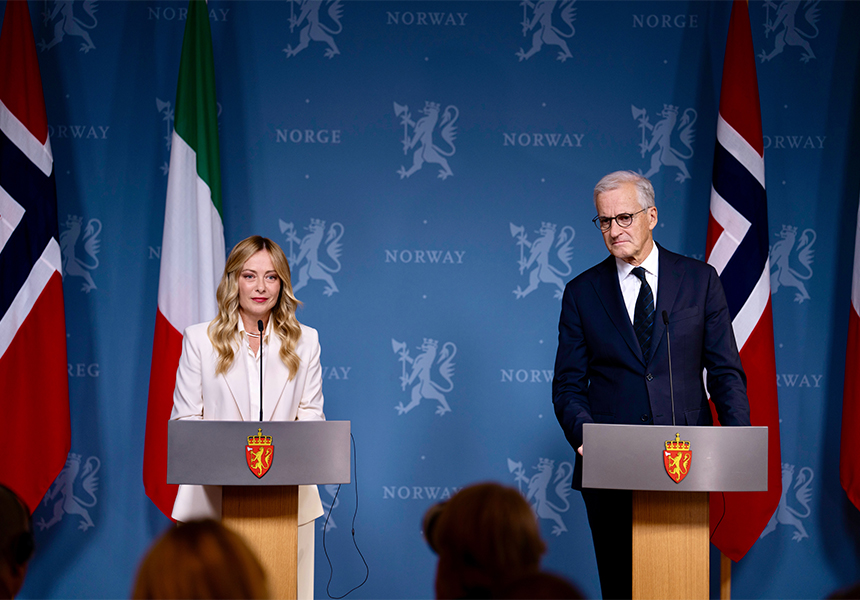
Source: The official website of the Italian government, governo.it
The clarification that matters for international students
Here is the distinction most headlines blur: the announced restrictions target K-12 public schools — children and teenagers — not Italian universities. International students enrolling in bachelor's, master's, or doctoral programs are not covered by this measure. University admission, student visas, and the existing system of regional scholarships follow their own rules, including the DSU regional aid windows that typically open for applications in September — our guide to Italy's 2026–2027 regional scholarships covering housing, meals, and fees walks through the current cycle.
Nor does the announcement touch residence-by-investment routes. If long-term residency in Italy is on your radar, our updated explainer on the Italian Golden Visa: investor tracks, requirements, and real costs remains the reference for 2026 rules.
What the foreign-student map of Italian schools looks like
Behind the 11.6% national average sit wide regional gaps. In the industrial cities of the north — Milan, Turin, Brescia — where factories and services have drawn foreign labor for decades, some districts run at double the national rate or higher, while the south sits well below it. The share is also highest in kindergartens and primary schools: the children of migrants who arrived in the 1990s and 2000s are now parents raising children born inside the Italian school system itself.
The largest groups trace back to Albania, Romania, the Maghreb, and Asia — with the children of Egyptian and Moroccan families forming a particularly significant Arab presence across Lombardy and Emilia-Romagna. That composition is precisely why the class-cap debate is, in practice, an Arab-community issue as much as an Italian political one.
Reactions: sharp support, sharper opposition
Italy's political map split on cue. Governing right-wing parties framed the announcement as protecting "real integration and the dignity of public schools," with coalition figures arguing that balanced classes serve immigrant children first. Opposition parties on the left and center attacked it as an exclusionary message to families who work and pay taxes, while teachers' unions warned that a numerical cap without new resources simply moves the problem from one classroom to another — demanding more language-support teachers and smaller classes for everyone instead.
Within civil society, Arab community networks in Italy circulated the news with practical anxiety more than political anger: How will children be allocated? Could a child be moved out of their current school because the foreign share exceeded the limit? Those answers will only come when the implementing text defines the distribution mechanism and its exceptions.
Practical steps for resident families while the law is pending
Until the final text lands, several proactive moves protect resident families and improve children's school experience regardless of the outcome:
- Enroll in free language courses early. Most Italian municipalities offer free evening Italian courses for adults through permanent-education centers (CPIA) — joining now positions you ahead of any future language requirement.
- Invest in local extracurriculars. Sports, scouts, and municipal activities are the fastest integration channels for children, building friendships outside the classroom walls.
- Communicate with your child's school regularly. Teachers value involved parents; that relationship doubles in importance if class-allocation rules change.
- Document your children's language progress. Course certificates and activity records build a useful file if you ever need to demonstrate the family's integration.
- Follow trusted community associations. Established Arab-community associations in Milan and Rome publish verified updates the moment any ministry circular is issued.
The context: Italy, migration, and integration politics
The announcement does not come out of nowhere. Italy's migration and integration policy has escalated in stages over recent years — from stricter rules for Mediterranean rescue operations to external-border agreements, and now into the sensitive territory of education. The government presents clear rules as protection for "real integration"; the opposition and left-leaning parties accuse it of sending exclusionary signals to migrant families who have been contributing legally to the Italian economy for decades.
The next battleground is parliament, where the announcements must become law. Watch for four details when the text lands: the exact cap number; whether children born in Italy to foreign parents count toward it; how the parental language obligation is enforced and funded; and whether municipalities get waivers. Those details will determine the real-world effect on thousands of Arab, South Asian, and African families living in cities like Milan, Rome, and Turin.
What this means for you
- If you are a parent residing in Italy: nothing is binding yet, but if your children attend public school, track the law's final text — and start strengthening their Italian now through the free municipal language courses most communes offer.
- If you are an international university student: nothing in this announcement changes university admission, student visas, or scholarships. Plan with confidence and check the continuously updated opportunities hub on Truescho.
- If you are weighing family migration: factor early language integration into your destination choice — several other European countries offer comparable pathways with lighter language conditions.
- If you are exploring work or investment routes: long-term residency and the Golden Visa files are entirely separate from the schools debate; our updated guides cover them in detail.
- For the follow-up: this article will be updated as soon as the official legislative text with final numbers is published.
Frequently asked questions
Does the announced ban cover the conventional hijab?
No. As announced, the ban targets full-face coverings — the burqa and niqab — in schools. Headscarves that cover the hair remain subject to existing, unchanged rules.
Is the decision in force now?
No. Meloni said the government will "soon present" the legislative measure, which must be formally adopted — and may require a parliamentary vote — before becoming binding.
Does the foreign-student cap apply to universities?
No. The measure targets general-education classrooms. Universities operate their own admission and scholarship systems.
What share of Italian school students are foreign?
About 11.6% of pupils in Italian schools are non-citizens, per the figures cited in the announcement's coverage.
Where can I follow the details?
We will update this article when the final text is published; the opportunities page always lists the newest open programs.
Sources
- Reuters-based report via Modern Diplomacy, September 20, 2026
- Official website of the Italian government, governo.it
- Parallel coverage: Politico Europe, Euronews, Los Angeles Times, UPI (September 20–21, 2026)
Read next: Italy's 2026–2027 regional scholarships: applications open in September