
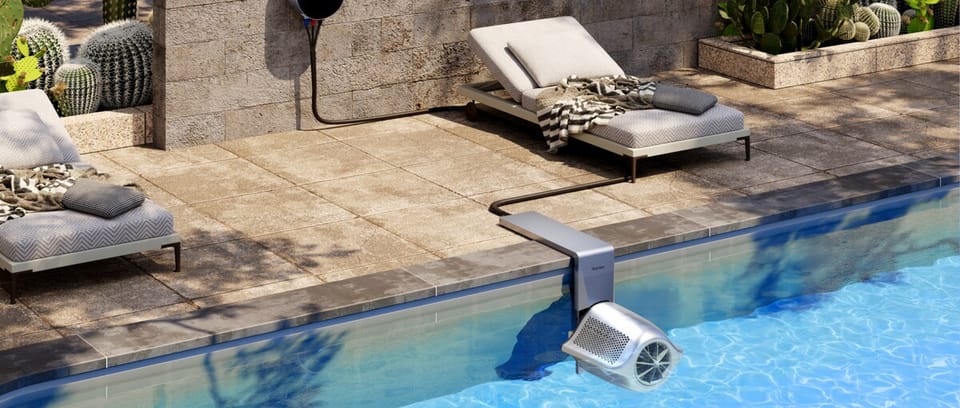
iGarden Swim Jet Review 2026: X Series or P Series for Your Pool?
This iGarden Swim Jet review 2026 needs a more careful answer than a normal mature-product review. The portable X Series is still a very new launch-stage product, while the P Series is the more established, permanently installed option. The X Series looks appealing for owners who want counter-current swimming without construction, but fresh launch material is not the same thing as years of reliability evidence.
Updated May 16, 2026, this guide separates what the company has officially announced, what the current pages show, and what buyers still cannot know yet. If you want a swim-current system today, the first decision is not simply price. It is whether portability or proven permanence matters more for your pool and your training style.
💬 Disclosure: Some links in this article are affiliate links. We may earn a small commission when you complete a purchase at no extra cost to you. This helps us keep our content free, and it does not affect the integrity of our recommendations.
The short answer
Choose the X Series if you want a portable swim jet for an existing pool, do not want construction, and accept that you are buying a new product line with limited long-term evidence. Choose the P Series if you want a stronger, fixed system for serious training, have a suitable installation plan, and value continuous AC power over portability.
The portable X Series is the exciting idea. The P Series is the steadier ownership proposition. The right choice depends less on one launch headline and more on how often you train, how powerful a current you need, what your pool can physically support, and how comfortable you are with a new device category.
What a swim jet actually does
A swim jet creates a current strong enough for you to swim against in place. Instead of needing a long lap pool, you stay in one zone and keep moving while the system pushes water toward you. That can turn a modest backyard pool into a space for drills, light fitness, family play, or more structured training.
The concept is not new, but product design varies widely. Some systems are built into the pool and connected to permanent power. Others focus on portability and easier installation. The iGarden Swim Jet lineup now spans both ideas: the established P Series for permanent strength and the newer X Series for a battery-powered portable setup.
That distinction is important because shoppers often compare swim jets as if every model served the same swimmer. A beginner who wants thirty minutes of low-friction movement after work does not need the same machine as a competitive swimmer who trains hard several times per week.
X Series versus P Series at a glance
The most useful comparison is not "which one is better?" but "which one matches the job?" The X Series is built around flexibility: no permanent installation, portability, battery power, and compatibility with smaller existing pools. The P Series is built around output and consistency: permanent installation, continuous AC power, stronger training credentials, and no battery limit during a session.
| Question | X Series | P Series |
|---|---|---|
| Main idea | Portable counter-current unit | Permanent counter-current system |
| Installation | Designed to avoid major construction | Intended for planned integration |
| Power source | Battery-powered | Continuous AC power |
| Best fit | Existing pools, smaller spaces, flexible use | Serious training, larger pools, frequent use |
| Long-term evidence | Very new in 2026 | More established product family |
| Maximum runtime claim | Depends on model; launch materials cite up to 10 hours | No battery runtime limit during powered use |
| Warranty shown in policy | 2 years for X Series | 3 years for P Series |
The company's own comparison page frames the same divide: X Series for flexibility and smaller spaces, P Series for stronger professional use. That framing is useful because it is more honest than pretending the launch-stage portable unit and the installed system are interchangeable.
Why the X Series is interesting
The X Series is interesting because it tries to remove the hardest part of many swim-current purchases: installation. Official launch materials describe a portable, wireless system intended to work with existing pools rather than requiring major construction. For homeowners who already have a pool and do not want to rebuild part of it, that is a meaningful advantage.
The company has also promoted multiple X Series models with different power and runtime targets. Launch materials named entry, middle, and top models with runtimes ranging from about 1.7 hours up to 10 hours depending on model. That spread matters. The longest figure belongs to the highest-end version, not the whole line.
The attraction is easy to understand. A portable unit can be stored, moved, and potentially used without committing to a renovation. It may also suit smaller pools that were never designed as training spaces. Those are real benefits even before long-term ownership data arrives.
Why the X Series still deserves caution
The X Series was launched in March 2026 and remained described in launch materials as a new release with shipping beginning around May 2026. That makes it too early to treat early demonstrations, launch videos, or fresh creator coverage as proof of durability over several seasons. New products can be promising and still need time before buyers know how batteries, mounts, seals, software, and service hold up.
The live storefront also appears to be changing quickly. Product names, launch framing, and prices shown on current pages may not match the earliest press release material forever. A careful buyer should check the exact live model page before paying rather than relying on a headline that says "starting at" or a launch discount that may have expired.
There is also a physical compatibility question. Official support guidance lists requirements involving wall distance, water depth, coping overhang, and the gap between coping and water surface. A portable product is still not universal. If your pool geometry falls outside those requirements, portability does not rescue the purchase.
Why the P Series is still the safer training choice
The P Series is less novel, but that can be an advantage. It is the more established line, it uses continuous power, and official material positions it for stronger swimming and more committed training. If several people use the pool, if workouts are long, or if you dislike the idea of charging another large device, the P Series has a cleaner ownership story.
Official comparison material says the P Series can reach stronger performance, with the US model listed up to 1,100 gallons per minute and 4.0 meters per second. More important than the exact headline is the design logic: a fixed system does not need to manage a battery budget during a session.
The trade-off is obvious. Permanent systems ask for planning, suitable pool structure, and more commitment up front. They are a worse fit for renters, seasonal users, owners who may move, or anyone whose pool was not built with installation in mind.
Which X Series model would suit which buyer?
Because the X Series is so new, model selection should stay conservative. Launch material described three versions aimed at different users: an entry model for lighter use, a middle model for regular fitness, and a top model for the longest sessions. Later storefront details may move, so the safer principle is to shop by need rather than by launch label.
| Buyer need | Likely direction |
|---|---|
| Family play and occasional light exercise | Entry X model |
| Repeated home workouts without permanent installation | Mid X model |
| Longest portable sessions and strongest X option | Top X model |
| High-intensity daily training with no charging concern | P Series |
Do not buy the highest X model simply because it has the biggest number. A beginner may be better served by the cheaper unit and a realistic understanding of their routine. A serious swimmer may still be better served by the P Series even if the top X model looks more modern on paper.
Pool requirements before you spend anything
This is the section many shoppers skip, and it is the one that can save the most money. Official support guidance for the X Series states that the opposite wall should be more than 4 meters away, the vertical water depth should exceed 76.5 centimeters, coping overhang should be less than 10 centimeters, and the gap between coping and water surface should stay below 40.6 centimeters.
Those measurements are not decorative details. They determine whether the device can be installed and used as intended. A compact plunge pool may be wide enough for casual bathing yet still fail the working-space requirement for counter-current swimming. A pool with a large overhanging edge can also create a mounting problem even if the water area seems adequate.
Measure before shopping. Photograph the intended installation area. If the official support team offers compatibility review, use it. A portable product is only convenient after it fits.
Pros
The portable X Series has several strong arguments:
- Avoids the construction burden of a built-in system
- Makes counter-current swimming possible in more existing pools
- Portable format suits seasonal storage and flexible ownership
- Different models can serve casual users and more demanding swimmers
- May be far easier to consider than rebuilding a pool for lap training
The P Series has its own clear advantages:
- More established product family
- Continuous power rather than battery-limited sessions
- Stronger fit for serious training and repeated use
- Longer official warranty term than X Series
- Better choice when installation is already part of the pool plan
Cons
The X Series drawbacks are mainly about uncertainty and fit:
- Very new product family with limited long-term evidence
- Launch claims are not the same as multi-season reliability data
- Pool geometry requirements can rule out some installations
- Battery-based use means charging, battery aging, and model-dependent runtime
- Store details may change quickly during early release periods
The P Series drawbacks are about commitment:
- Less flexible once installed
- Requires more planning than a portable device
- May be excessive for casual family use
- Not the right answer for owners who cannot or do not want to alter the pool setup
Who should not buy the X Series?
Do not buy the X Series if your pool fails the published dimensional requirements, if you need a product with years of established reliability evidence right now, or if you are a serious swimmer who already knows you need sustained high-power training. It is also a weak fit if you dislike charging large battery devices or if your pool use is so infrequent that a swim jet would become expensive novelty equipment.
The X Series is most persuasive when its portability solves a real constraint. If you could install a permanent system easily and train hard every week, the newer portable route may be solving the wrong problem.
Who should not buy the P Series?
Do not buy the P Series if you are unwilling to commit to permanent installation, if your pool is a temporary or seasonal setup, or if you simply want occasional recreation rather than a dedicated training station. It may also be more system than needed for households whose main goal is family fun rather than repeatable workouts.
The P Series becomes rational when permanence is a feature, not a burden. If that sentence does not describe your situation, start with the portable question first.
What about price and value?
Price is especially unstable around a fresh launch, so value should be judged by use rather than by discount language. Official launch material for X Series referenced an entry starting price, while live store pages can change model names, displayed prices, and offer structures as the product moves from launch into normal sale. Check the current listing on the day you buy.
A portable unit can be cheaper than major construction even if the device itself is not cheap. But it is only good value if you use it. A $799 launch offer that sits unused is worse value than a higher-priced permanent system used four times every week. The same logic applies in reverse: an expensive built-in system is wasteful if all you wanted was light movement and family play.
If you are still deciding whether pool equipment should come before cleaning automation, the best robotic pool cleaner guide and the K Pro review cover a different kind of pool investment. They are useful if your actual frustration is maintenance, not training.
Warranty and return caveats
The official warranty policy lists two years for X Series main components and three years for P Series main components. That difference reinforces the idea that these are not equivalent ownership propositions. It is also worth reading the exact policy language because consumables, purchase channels, and regional rights can be treated differently.
Return rules deserve the same attention. A swim jet is not a small impulse purchase, and compatibility problems are easier to prevent before ordering than after opening a large product. Review the live policy, preserve packaging until fit is confirmed, and document your pool measurements before checkout.
If the portable route suits you, check the current iGarden Swim Jet listing carefully. If the permanent route sounds better, compare the current P Series details on the official pages rather than assuming the newest product is automatically the best one.
Frequently asked questions
Is the X Series already proven for long-term use?
No. The X Series is still a very new 2026 release, so launch material and early demonstrations should be treated as early evidence, not proof of multi-year durability. Buyers who need the most established option today should compare the P Series before accepting fresh product claims as settled ownership history.
Is the X Series better than the P Series?
It is better for portability and existing pools that cannot easily take a permanent installation. It is not automatically better for training. The P Series remains the stronger choice for buyers who want continuous power, more committed workouts, and a product family with a steadier ownership story.
Can the X Series work in any backyard pool?
No. Official guidance lists physical requirements involving distance to the opposite wall, water depth, coping overhang, and the gap between coping and water level. A pool can be usable for swimming yet still be a poor fit for a swim jet. Measure first and verify compatibility before buying.
Does the X Series really run for 10 hours?
The longest runtime claim applies to the highest X Series model in launch material, not to every X Series unit. Entry models were described with much shorter runtime. Always match the runtime figure to the exact model shown on the current product page, especially while the lineup is still changing.
Which line is better for serious swimmers?
The P Series is usually the better fit for serious swimmers because it is designed around stronger fixed performance and continuous power. The X Series may suit regular fitness users who need portability, but competitive or high-volume training generally benefits from the more permanent setup.
Is a swim jet worth it if I only swim casually?
It can be, but only if it changes how often you use the pool. Casual users may value the X Series for low-friction exercise and family fun, yet they should be honest about likely use. If you rarely swim now, a large purchase may not create a habit by itself.
Should I buy a swim jet before a pool cleaner?
That depends on your current pain point. A swim jet adds exercise value; a robotic cleaner reduces maintenance labor. If dirty floors keep you from enjoying the pool, start with cleaning. If the pool is already well maintained and you want more purposeful workouts, a swim jet is the more relevant upgrade.
Related reading
- Best robotic pool cleaner 2026: is M1-AI worth it?
- Full M1-AI review for 2026
- M1-AI versus K Pro comparison
- K Pro review for large pools and long trips
Final verdict
The best iGarden Swim Jet review 2026 conclusion is deliberately measured. The X Series is attractive because it lowers the barrier to counter-current swimming in an existing pool. The P Series remains the better-grounded choice for committed training, continuous power, and buyers who prefer an established product line over a very fresh launch.
Choose X when portability is the reason the product becomes possible. Choose P when permanence is the reason the product becomes better. Then verify the current listing, your pool measurements, and the live policy details through iGarden before making a decision that will live beside your pool for years.