

💬 Disclosure: Some links in this article are affiliate links. We may earn a small commission when you complete a purchase at no extra cost to you. This helps us keep our content free, and it does not affect the integrity of our recommendations.
Seven courses, every one rated 4.9 stars or higher, from Google, Meta, Microsoft and accredited universities. Between them, 4,961,245 enrolled learners.
Before you open a single link, here is what no other list publishing these courses will tell you: three of the seven are rated a perfect 5.0, and two of those rest on fewer than 50 reviews — one on ten.
That does not make them bad courses. It means a 5.0 does not carry the same weight as a 4.9 built on a hundred thousand reviews, and knowing the difference is what separates choosing well from choosing on impression.
The full table — with a confidence rating for each score
| Course | Institution | Rating | Reviews | Enrolled | Confidence |
|---|---|---|---|---|---|
| Foundations of Project Management | ⭐ 4.9 | 101,825 | 3,150,245 | 🟢 Very high | |
| Excel Skills for Business: Essentials | Macquarie University | ⭐ 4.9 | 51,163 | 1,172,813 | 🟢 Very high |
| Brand Management | University of London + LBS | ⭐ 4.9 | 7,862 | 517,590 | 🟢 High |
| Measure and Optimize Social Campaigns | Meta | ⭐ 4.9 | 1,962 | 108,337 | 🟡 Moderate |
| Project Management Principles | Microsoft | ⭐ 5.0 | 48 | 7,013 | 🟠 Low |
| Protect and Grow Your Freelancing Business | CalArts | ⭐ 5.0 | 41 | 3,413 | 🟠 Low |
| Mastering Sales | Hult International | ⭐ 5.0 | 10 | 1,834 | 🔴 Too early |
Total: 4,961,245 enrollments. All figures verified against the official course pages on 15 August 2026.
How to actually read a rating
Picture two restaurants: one rated 4.9 by 100,000 diners, the other 5.0 by ten. Which do you book?
The answer is obvious with restaurants and almost universally ignored with courses.
The reason is simple statistics: the fewer the reviews, the wider the margin of error. Ten positive reviews might mean an exceptional course, or might mean the first ten enrollees happened to be enthusiastic and well matched to it. A single negative review drops a 5.0 built on ten reviews to 4.5 instantly — while it moves a 4.9 built on a hundred thousand not at all.
And why are early reviews systematically optimistic? Because the first people to enroll in a new course are the most motivated about the subject, the most likely to finish, and the most forgiving of its rough edges. The average learner arrives later, and ratings settle to their real level.
The working rule:
| Review count | How to read the rating |
|---|---|
| Over 10,000 | Trustworthy. Rely on it. |
| 1,000 – 10,000 | Good signal. Read some written reviews. |
| 100 – 1,000 | Treat with caution. Read the syllabus yourself. |
| Under 100 | Do not decide on it. Judge the syllabus and the institution instead. |
This does not disqualify the last three on our list — Microsoft, CalArts and Hult carry real weight through their names and curricula, not through ten reviews. But choose with your eyes open.

1. Foundations of Project Management — Google
⭐ 4.9 from 101,825 reviews · 3,150,245 enrolled · ~11 hours · 4 modules, 16 assignments
By a wide margin the most statistically reliable rating on this list. A hundred thousand reviews turn 4.9 into a fact rather than an impression.
It is the opening course of the Google Project Management Professional Certificate — which matters, because you are not entering a standalone course but the gateway to a full track designed to move someone with no experience into an entry-level project management role.
It covers what project managers actually do, the project lifecycle, delivery methodologies both traditional and agile, and how organisational structures shape your real authority. Available in 11 languages, and 99% of learners rated it valuable — the highest figure on this list.
Who it fits: people already coordinating work without the title, graduates wanting a clear route to a first role, and anyone who wants a credential hiring managers recognise by name.
Who it does not fit: experienced PMs targeting the PMP. This is foundational and half of it will be familiar.
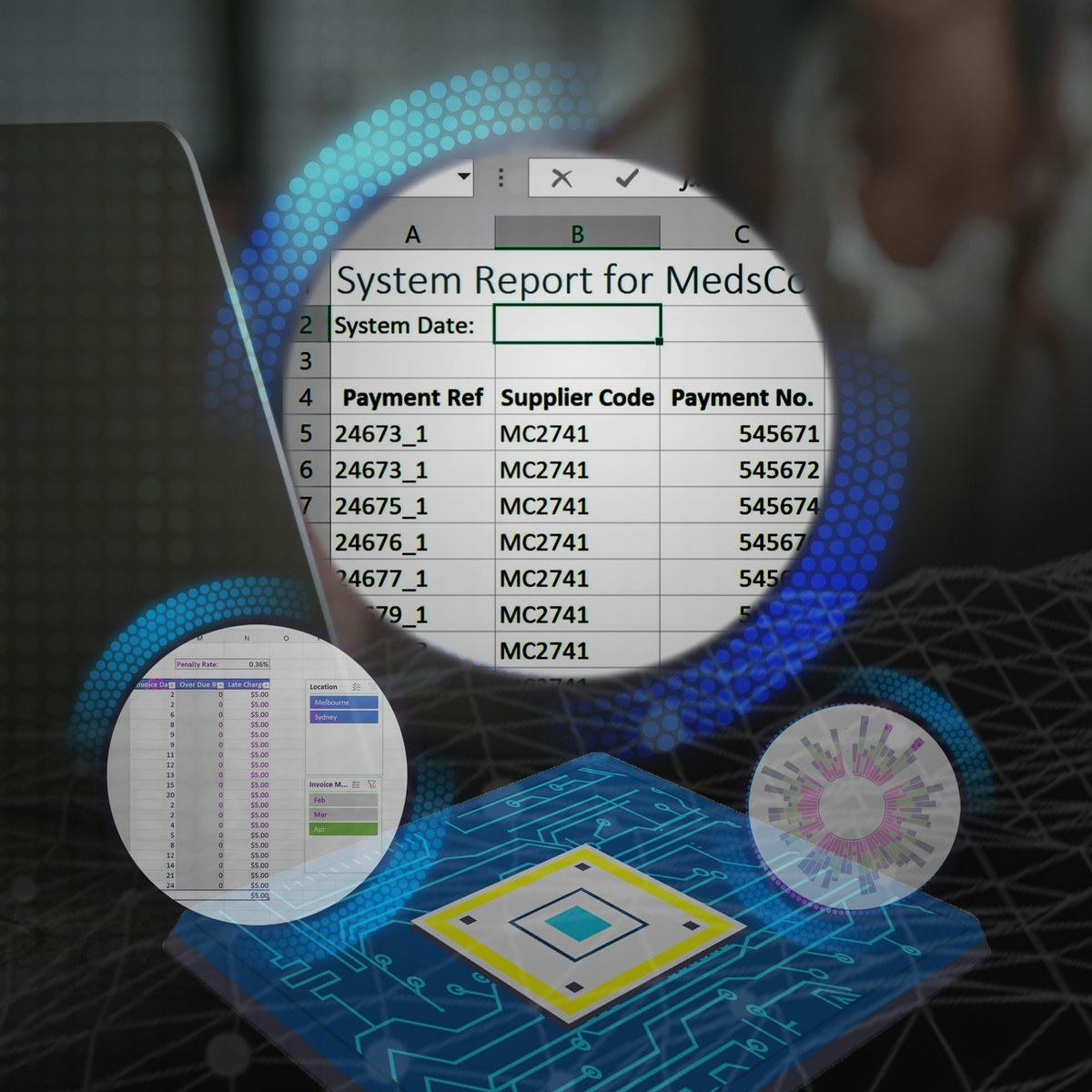
2. Excel Skills for Business: Essentials — Macquarie University
⭐ 4.9 from 51,163 reviews · 1,172,813 enrolled · 3 weeks × 10 hours · 7 modules
Fifty thousand reviews at 4.9 — the second most reliable score here, and a rare achievement for a software course.
It starts at the Excel interface and reaches data visualisation across seven modules, taught by three instructors at Macquarie University in Australia. It opens the full Excel Skills for Business specialization.
Why it belongs in a business list: Excel is not a technical skill, it is the shared language of every finance, operations and marketing team on earth. People who are fluent stop waiting on the data team and answer their own questions.
Who it fits: anyone who works in spreadsheets — accounting, HR, procurement, marketing, small business owners. Also anyone who assumes they "know Excel" because they use SUM; the middle modules will correct that.
Who it does not fit: confident pivot table and Power Query users. Skip to part two of the specialization.
3. Brand Management: Aligning Business, Brand and Behaviour — University of London + London Business School
⭐ 4.9 from 7,862 reviews · 517,590 enrolled · 2 weeks × 10 hours · 5 modules
Taught by Professor Nader Tavassoli of London Business School (personal rating 4.9 from 3,252 reviews), and produced by the University of London with London Business School — one of the strongest name pairings in management education.
Its central idea runs deeper than logos and design: a brand is not what you say about yourself, it is what your employees actually do. The course therefore links brand strategy, customer experience design, leadership alignment, employee behaviour, and measurement. 95% of learners rated it valuable.
Who it fits: founders building an identity, marketers moving from execution to strategy, and managers leading customer-facing teams.
Who it does not fit: anyone wanting to design a logo or visual identity system. This is strategy and organisational behaviour, not design.

4. Measure and Optimize Social Media Marketing Campaigns — Meta
⭐ 4.9 from 1,962 reviews · 108,337 enrolled · 1 week × 10 hours · 4 modules
The only course here taught by the company that owns the platform. Learning to measure Facebook and Instagram ad performance from Meta directly means learning from the source of the data rather than an outside interpretation of it.
Taught by Anke Audenaert, it covers aligning marketing metrics with business objectives, measuring advertising effectiveness, A/B testing, attribution modelling, and communicating results upward. It is part of the Meta Social Media Marketing Professional Certificate.
What makes it different: most people working in social media can publish but cannot prove return. This course addresses exactly that gap — the one separating a "social media person" from a performance marketer.
Who it fits: anyone managing accounts or ad budgets who gets asked about ROI, and freelancers who need numbers to justify their rates.
Who it does not fit: anyone who has never run a campaign. Learn to build one first, then learn to measure it.

5. Project Management Principles — Microsoft
⭐ 5.0 from just 48 reviews · 7,013 enrolled · 2 weeks × 10 hours · 4 modules
Read the number carefully: 5.0 from 48 reviews. This is a relatively new course that has not yet accumulated enough ratings for its score to be evidence. Judge it on its syllabus and on Microsoft's name, not its stars.
And the syllabus rewards a look: it is built around the twelve project management principles in the PMBOK Guide — the reference standard behind the PMP credential. Four modules: People and Team (5 hours), Adaptability and Governance (4 hours), Tailoring and Value (3 hours), and a final project and assessment (3 hours).
How it differs from the Google course: Google teaches you the process — what to do, step by step. Microsoft teaches you the principle — why you do it, and how to decide when the process does not apply. It is part of the Microsoft Project Management Professional Certificate.
Who it fits: anyone who has finished the Google foundations course and wants depth, and anyone preparing for the PMP who needs to understand the principles rather than memorise them.
Who it does not fit: complete beginners. Start with Google.

6. Protect and Grow Your Freelancing Business — California Institute of the Arts
⭐ 5.0 from 41 reviews · 3,413 enrolled · 6 hours · 5 modules · Intermediate
The shortest course here at six hours, the most overlooked, and practically the most important for one whole segment of readers.
Taught by Tatiana Mulry, it handles the side of freelancing everyone ignores until it bites them: the legal and financial one. The laws governing freelance work and how to navigate them, preparing for taxes, intellectual property in your own output, and how to write a contract that actually protects you.
Why we push it: a great many freelancers work with no written contract, then meet a client who refuses to pay after delivery, or discover that the rights to their design transferred entirely to the buyer. Six hours here can save you an entire project.
An important note: it is classified Intermediate and is designed for people already freelancing, not people considering it. It is the fourth part of the Building Your Freelancing Career specialization.
Who it does not fit: anyone who has not landed a first client yet. Start with the earlier parts of the specialization.
7. Mastering Sales: From Fundamentals to Career Success — Hult International Business School
⭐ 5.0 from just 10 reviews · 1,834 enrolled · 1 week × 10 hours
Ten reviews. This is the newest course here and by far the thinnest on data, so let us be direct: do not choose it because it shows 5.0. At this sample size the number means nothing statistically.
What does mean something is the syllabus and the source: it is taught by Dr Matthew Fisher of Hult International Business School, an accredited international business school. It covers sales fundamentals and methodologies, building confidence through practical role-plays, and the full sales process from prospecting to closing, with emphasis on communication and relationship building.
Why we keep it on the list anyway: because sales is the highest-return skill that almost nobody learns systematically. Most people who sell learned by trial and error. Six months of error can be compressed into one structured week.
Who it fits: freelancers selling their own services, small business owners, and anyone who feels awkward about pricing and following up.
Who it does not fit: experienced sales professionals.
Which to start with — pick by your situation, not by stars
Graduate looking for a first role:
Google Foundations of Project Management → finish the full professional certificate. That track is built literally for this case.
Employee seeking promotion:
Excel Skills → Microsoft Project Management Principles. The combination that makes you the person the department relies on.
Freelancer:
Protect and Grow Your Freelancing Business → Mastering Sales. Six hours and one week, and together they do more to protect and grow your income than anything else here.
Marketer:
Meta measurement → Brand Management. The first proves your return in numbers; the second moves you from execution to strategy.
Business owner:
Brand Management → Mastering Sales → Excel Skills.
Mistakes that waste these courses
- Choosing on stars alone. Check the confidence column. A 5.0 from ten reviews is not a promise.
- Taking one course from a professional certificate and stopping. The Google, Microsoft and Meta courses are all parts of full certificates — the complete certificate is what employers name in job posts, not its first unit.
- Learning measurement before execution. Do not take the Meta course before you have run a campaign.
- Ignoring the legal side of freelancing until something goes wrong. Course six is the only one here that might save you actual money this month.
- Assuming a certificate substitutes for delivered work. In project management and marketing especially, a project you genuinely ran — even a volunteer one — beats any certificate in an interview.
Frequently asked questions
Are these courses free?
You can enroll and view the content for free. Certificates and graded assignments require the paid track, or Coursera Financial Aid, which covers the full course and certificate for approved applicants.
What is the difference between a single course and a professional certificate?
A single course is one unit, typically 4 to 11 hours. A professional certificate is a series, typically 6 to 8 courses, ending in an applied project and a credential employers recognise by name. Four courses on this list are parts of full certificates.
How much time do I need?
From 6 hours (CalArts) to about 30 hours (Excel). At an hour a day you finish any of them in one to three weeks.
Is the Google Project Management certificate genuinely recognised by employers?
It reads as a credible professional qualification for entry and mid-level roles and appears in real job listings. It does not replace the PMP for senior roles, but it is far faster and cheaper as an entry point.
I started a course and did not finish. Have I lost anything?
Nothing financially if you were on the free track. But the more important point: do not enroll in more than one at a time. The data is unambiguous that people who enroll in five finish none.
The bottom line
Nearly five million learners, and seven courses all above 4.9 stars. But the most valuable thing in this article is not any one of them — it is how to read the number: a rating built on a hundred thousand reviews tells you something, and a rating built on ten tells you something else entirely.
If you take only one, start with Google's Foundations of Project Management — the most reliable score here and the clearest route to a job. If you freelance, Protect and Grow Your Freelancing Business is six hours that might save you a whole project.
Browse every curated business and marketing course on Truescho →