
Harvard's $699 Bootcamp Is Taught by AI Clones of Its Faculty: Inside HBS Foundry
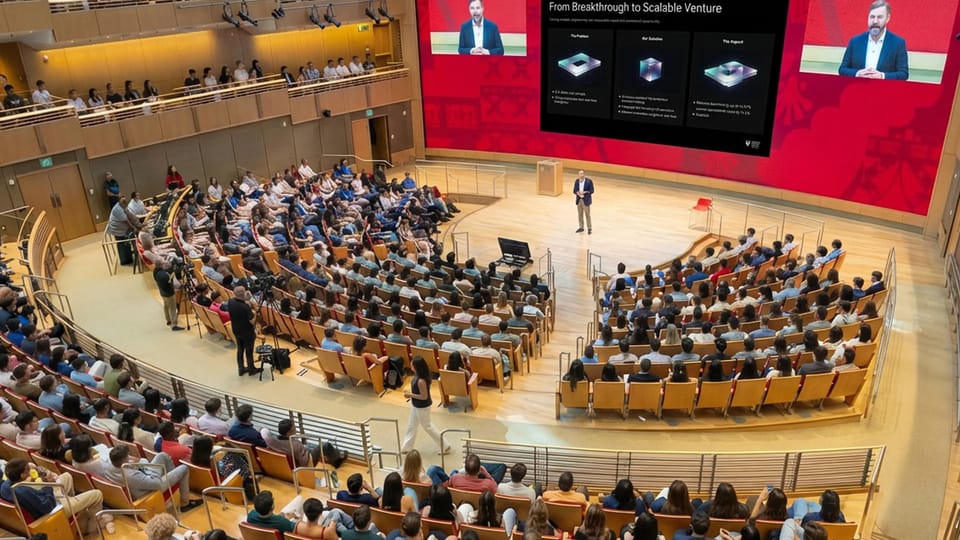
Harvard Business School is selling a startup bootcamp for $699, and among its instructors are digital humans: AI-generated video avatars of real HBS faculty and mentors, built with startup HeyGen, that coach founders through practice pitches and mock board meetings. The story, first reported by the New York Times' Sarah Kessler on August 22, 2026, and summarized by TechCrunch the same day, is less about a gimmick and more about economics — the world's most famous business school has found a way to package its most scarce resource, individual coaching hours, at a mass-market price.
If you are a first-time founder, an international student, or a professional weighing whether $699 buys anything more than a Harvard-branded badge, this guide breaks down what the program actually contains (verified against HBS's official Foundry pages), how the avatar coaching works, and who should skip it.
What exactly is HBS Foundry Bootcamp?
Foundry is Harvard Business School's online platform for early-stage founders. Its foundational program, the Bootcamp, is an 8-week course that the official HBS page describes as taking you "from raw idea to funding-ready pitch": developing a business model, validating your market, and building an investor pitch deck — powered by Foundry's AI platform, with a chance to compete for a $100,000 funding opportunity in front of investors.
What changed — and why this became news in August 2026 — is the coaching layer. The official site markets it as "personalized AI mentorship modeled on Harvard Business School faculty — plus live sessions with real experts." Translation per the NYT report: the avatars, created by HeyGen, are now the ones delivering individual feedback during practice pitches and simulated board meetings, while human instructors appear in weekly live sessions.
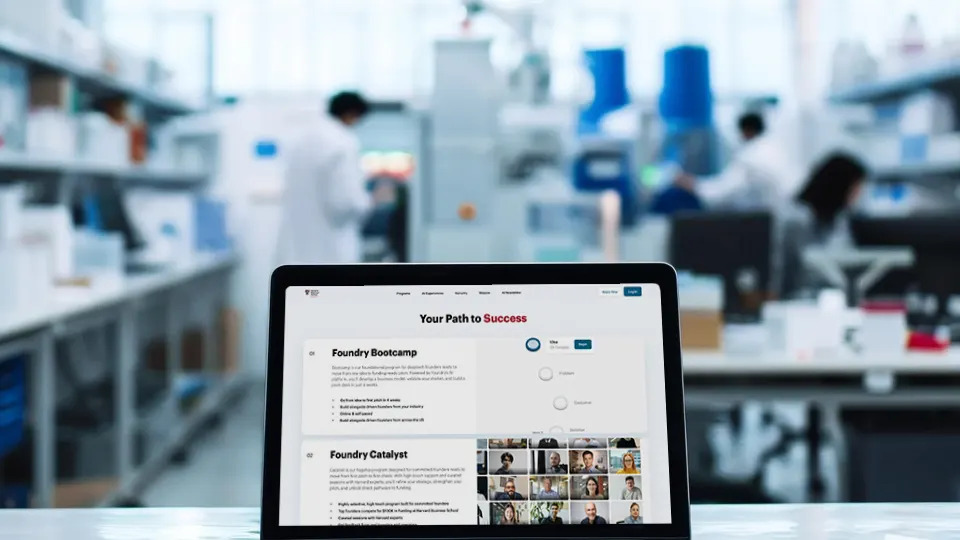
Source: HBS Foundry official site
The experiment: pitching to a digital Jeff Bussgang
The most revealing detail in the NYT piece is the reporter's own trial. Kessler pitched a deliberately absurd startup idea — an "Uber for bananas" — to the AI clone of Jeff Bussgang, co-founder of Flybridge Capital and one of the program's mentors. Both the human and the clone were unimpressed, but the clone delivered its critique with what she described as a noticeably frozen smile. Bussgang himself admitted the digital version is "a little creepy," then added plainly: "My students love it."
There is also a product-management lesson inside the story. Program director Katharina Rings told the Times she originally imagined the AI component as something closer to a plain chatbot. After a trial version launched, participants pushed back — they wanted a guided experience, a presence that watches your pitch and responds like a coach. The avatar format won because learners wanted simulated humans, not a Q&A box.

Source: HBS Foundry official site
What the official pages actually promise (and what they don't)
We verified the program structure directly on hbs.edu. Here is the honest breakdown:
- Duration and output: 8 weeks; business model, market validation, pitch deck. The broader Foundry funnel promises "from idea to a pressure-tested first pitch in four to eight weeks."
- Coaching mix: AI mentorship modeled on HBS faculty + live expert sessions (TechCrunch reports the live sessions are weekly).
- Funding hook: opportunity to pitch investors for $100K — a program-run competition, not guaranteed capital.
- Community: cohort-based; you work alongside founders at the same stage.
One transparency note that matters: the big numbers on the Foundry site — 1,906 founders, 1,757 companies, $84.6B in capital raised — are, per the site's own footnote, Harvard Business School alumni entrepreneurship statistics from 2014–2025 (PitchBook data). They are not outcomes of this bootcamp. Do not let that banner shape your $699 decision.
What this means for you
- Price anchor: $699 for eight weeks with the Harvard Business School name attached is unusually cheap for anything HBS-branded; in-person executive education there is priced in the tens of thousands of dollars. The trade-off is that most of your individual feedback comes from software.
- Access: the program runs fully online, and enrollment goes through the official Apply Now page. No US residency requirement is listed. English fluency is effectively mandatory — content, feedback, and live sessions are all in English.
- Payment practicalities: the fee is charged in US dollars; international cards generally work, but check your bank's foreign-transaction terms first. No public scholarship or discount tier is mentioned on the program page.
- For CV value: completing it gives you a credential line ("Harvard Business School Foundry Bootcamp") — useful signaling for first-time founders, accelerator applications, and LinkedIn. It is not an academic credit or degree.
Quick comparison: Foundry Bootcamp vs. the alternatives
| Criterion | HBS Foundry Bootcamp | University MOOCs (Coursera/edX) | Local accelerators |
|---|---|---|---|
| Price | $699 | Free to ~$49/month | Usually free (for equity) |
| Duration | 8 weeks | Self-paced | 8–12 weeks |
| Coach | AI avatars of HBS faculty + weekly live sessions | Recorded video | Human mentors |
| Individual feedback | Yes (instant, automated) | Rare | Yes (human) |
| Funding path | Pitch for $100K | None | Sometimes pre-seed |
| Brand weight on a CV | Strong | Moderate | Strong locally |
If your real constraint is budget rather than brand, structured free alternatives exist — most major platforms now ship entrepreneurship tracks at zero cost, and the AI-tools landscape gives you a comparable "instant feedback" loop without any enrollment.
Honest limitations before you pay
- The avatar is not the person. However accurate the clone, it does not carry Bussgang's network, intuition, or ability to introduce you to a check-writer. You are buying a simulation of a teaching style.
- No independent outcome data yet. HBS has not published completion or funding rates for the avatar-coached cohorts. The $84.6B figure, again, is historical alumni data.
- Refund and time terms. Eight weeks of dense English-language participation is a real commitment across time zones; review the refund policy on the enrollment page before paying.
- Third-party dependency. The avatar technology comes from HeyGen — a startup, not Harvard's own infrastructure. Your experience quality rides on an external vendor's product.
Frequently asked questions
Is the Harvard Foundry Bootcamp an accredited course?
No. It is a non-degree executive-style training program. You receive a certificate of completion, not academic credit.
How much does the HBS Foundry Bootcamp cost and how do I apply?
The price reported by the New York Times and TechCrunch is $699 for the 8-week program, and applications go through the official HBS Foundry site's Apply Now page.
Do real Harvard instructors take part?
Yes, partially. The official page promises live sessions with real experts (weekly, per TechCrunch), while the AI avatars handle instant feedback on practice pitches and mock board meetings.
Who built the AI avatars of Harvard faculty?
HeyGen, a startup specializing in AI-generated video avatars, according to the NYT report published August 22, 2026.
Can international students and founders join from outside the US?
The program is fully online with no listed residency requirement, so international founders can apply — but everything is delivered in English with no other language support.
The bottom line
The Foundry story is not "robots replace Harvard professors." It is Harvard productizing scale: the same methodology, for far more learners, at roughly 2% of the price of a campus program, because the most expensive ingredient — one-to-one human hours — is now generated. For a first-time founder who wants HBS-style pitch discipline and a name on the CV, $699 is a defensible buy. For someone seeking mentor relationships, network, or funding access, the humans — and the free alternatives — still matter more.
Updated August 23, 2026 — based on the NYT report (Aug 22, 2026), TechCrunch's coverage, and Harvard Business School's official Foundry pages.
Sources
- HBS Foundry — official Harvard Business School site
- Foundry Bootcamps — official page
- New York Times: "Harvard Is Selling a $699 Course Taught by A.I. Clones of Its Faculty" — Sarah Kessler, Aug 22, 2026 (headline and date verified via news index; article behind paywall)
- TechCrunch coverage — Anthony Ha, Aug 22, 2026
Start Your Journey with Truescho
Explore free AI study and productivity tools in the Truescho AI tools hub, and see our student-focused comparisons before you spend a dollar on any paid program.