
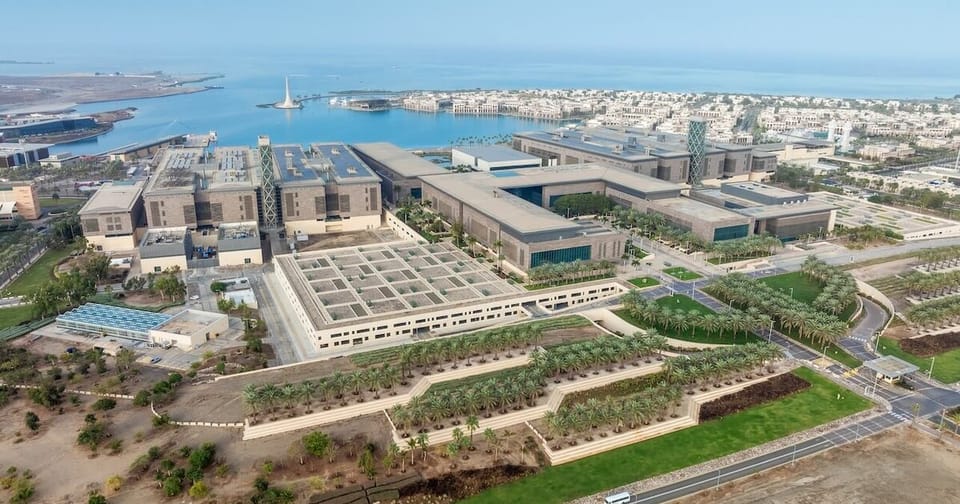
4 Funded Gulf Opportunities for 2027: KAUST, Doha Institute, the Global Fellowship and Paid Student Work in Qatar
Last updated: August 2026
Four funded opportunities in Saudi Arabia and Qatar are on the table this season, and they come in two kinds.
Three fully funded scholarships open between mid-August 2026 and 1 September 2026: KAUST graduate admissions for master's and PhD study, Doha Institute scholarships for the 2027/2028 academic year, and the KAUST Global Postdoctoral Fellowship. All three cover tuition, housing and health insurance, and add either a monthly salary or an annual stipend on top.
A fourth opportunity is different in kind: paid hourly student work inside Qatar Foundation. It is the only one open for applications right now — though only to a narrowly defined group of students — and it closes on 21 August 2026.
What separates them is not generosity — it is who they admit and when they close. An applicant from Lagos, Karachi or Jakarta who reads the timeline a month late loses an entire intake year. This guide puts all four side by side using the figures each institution has published so far, then answers the practical question: which one actually fits your profile?
Source: King Abdullah University of Science and Technology
The three fully funded scholarships at a glance
| KAUST (MS / PhD) | Doha Institute 2027/2028 | KAUST Global Postdoctoral Fellowship | |
|---|---|---|---|
| Country | Saudi Arabia — Thuwal, on the Red Sea | Qatar — Doha | Saudi Arabia — Thuwal |
| Level | Master's and PhD | Master's (and doctoral programmes) | Postdoctoral |
| Opens | Mid-August 2026 | 1 September 2026 | 1 September 2026 |
| Closes | Follows the previous cycle's pattern (timeline below) | 15 January 2027 | Stage 1: 1 October 2026 |
| Tuition | Fully covered | Up to 100% depending on award | Not applicable |
| Housing | On-campus | Free accommodation | Free housing |
| Stipend | USD 20,000–30,000 per year | Monthly salary | USD 75,000 per year |
| Extra research funding | — | — | Up to USD 40,000 per year |
| Health insurance | ✅ | ✅ | ✅ |
| Nationalities | All | Qatari, resident and international | All |
| Language of study | English | Arabic and English | English |
The short version: science and engineering applicants go to KAUST. Social sciences and humanities applicants go to the Doha Institute. Recent PhD holders should look hard at the Global Fellowship, which is by a wide margin the largest package on this page.
The fourth opportunity — Mehnaty — sits outside this table because it is a different category entirely: not a scholarship but paid hourly student work inside Qatar Foundation, and the only one on this page whose portal is actually open at this moment. It gets its own section after the Doha Institute, with an explicit statement of who is and is not eligible.
KAUST graduate admissions 2027: the one closing in on you
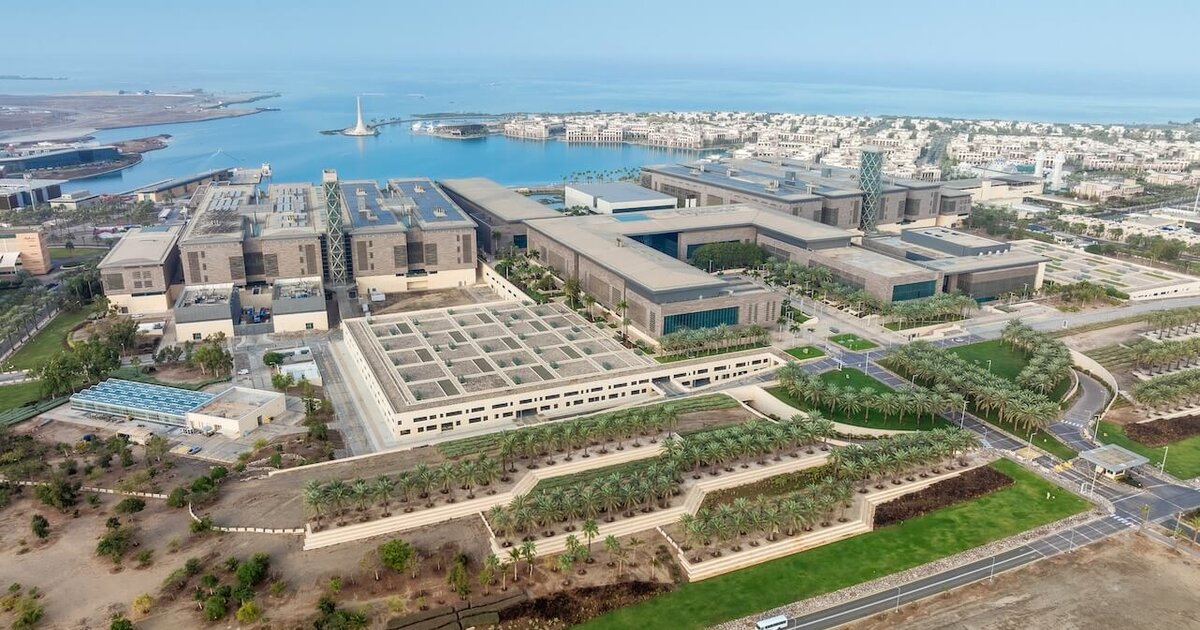
King Abdullah University of Science and Technology (KAUST) is a graduate-only research university — it runs no undergraduate programmes at all. It sits in Thuwal, north of Jeddah on the Red Sea coast, and teaches entirely in English.
The admissions office states plainly that applications for 2027 entry open in mid-August, and that 2026 entry is already closed. In other words, the portal is days away from opening as this guide goes out.
Source: King Abdullah University of Science and Technology
What the KAUST Fellowship actually covers
The detail most applicants miss: there is no separate scholarship application. Every admitted student receives the KAUST Fellowship automatically, except those arriving through partnership programmes or external sponsors that already fund them.
According to the university's own page, the fellowship includes:
- Full tuition support — you pay nothing in fees.
- A living allowance of USD 20,000–30,000 per year, with the exact figure depending on your qualifications and academic progression.
- On-campus housing (charges may apply for dependants).
- Medical and dental coverage (charges may apply for dependants).
- Relocation support to campus.
Widely circulated breakdowns split that allowance into roughly USD 20,000 for master's students and USD 25,000–30,000 for PhD students. That is consistent with the official range, though the university does not publish it in that form. The often-quoted "total package worth USD 70,000–80,000 a year" is an estimate that adds tuition, housing, insurance and stipend together — treat it as a valuation of the package, not as cash you receive.
The published requirements
- English proficiency: minimum 81 on the TOEFL iBT, or 6.5 on IELTS. Waived if your degree was earned in the United States, Canada, the United Kingdom, Ireland, Australia or New Zealand.
- GRE: not required, but the university strongly encourages it and notes that a high quantitative score strengthens an application.
- Documents: official transcripts with the grading scale (in the original language plus a certified English translation), three letters of recommendation from professors or supervisors, and a CV.
Note what is not listed: no published minimum GPA. That does not make grades irrelevant — it means review is holistic, and a modest GPA can be offset by a publication, strong references, or a high quantitative GRE score. For applicants from universities whose grading scales are unfamiliar to admissions committees, that flexibility matters more than it first appears.
The expected 2027 timeline
KAUST has not yet published closing dates for the 2027 cycle, but it has published the full 2026 cycle. Because the university repeats the same rhythm each year, this is the frame to plan against:
| Stage | 2026 cycle (officially confirmed) | Expected for 2027 |
|---|---|---|
| Applications open | 15 August 2025 | Mid-August 2026 (month officially confirmed) |
| Spring deadline | 1 October 2025 | Early October 2026 |
| Spring semester begins | 25 January 2026 | January 2027 |
| Fall deadline — international | 7 May 2026 | Early May 2027 |
| Fall deadline — Saudi nationals | 14 May 2026 | Mid-May 2027 |
| Fall semester begins | 30 August 2026 | Late August 2027 |
How to use this: if you are targeting spring entry, you have roughly six weeks from the moment the portal opens — not enough time to obtain certified translations and three recommendation letters from a standing start. If you are targeting fall, you have room, but places fill progressively and early applications work in your favour.
Which fields are covered
KAUST offers master's and PhD degrees across five divisions: Biological and Environmental Science and Engineering; Biomedical Sciences; Computer, Electrical and Mathematical Science and Engineering; Physical Science and Engineering; and Technology Innovation and Entrepreneurship.
If your field sits outside those — law, literature, political science, media — KAUST is not your route, and the next option is.
Doha Institute scholarships 2027/2028: the humanities gateway
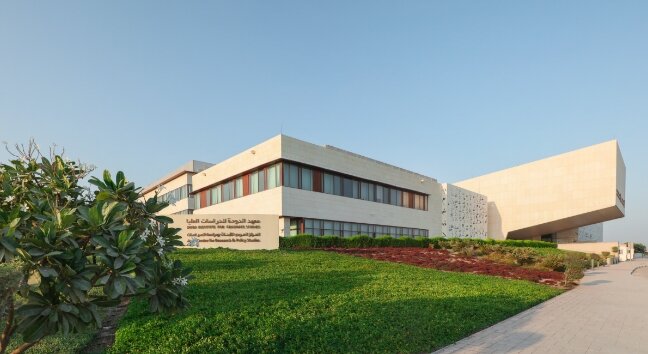
The Doha Institute for Graduate Studies is a Qatari institution specialising in social sciences, humanities, public administration and development economics — precisely the territory KAUST does not cover.
Source: Doha Institute for Graduate Studies
The official dates
The Institute's own scholarships page displays three dates clearly:
- September 2026 — admissions open for the 2027/2028 academic year
- January 2027 — admissions close for 2027/2028
- August 2026 — the 2026/2027 academic year begins
The specific opening date is 1 September 2026 and the closing date is 15 January 2027. That four-and-a-half-month window is the widest of the three scholarships here, which works in your favour if you are assembling a file from scratch.
Tamim and Sanad: the distinction that shapes your file
The Institute runs two funding tracks with fundamentally different logic:
| Tamim Scholarship | Sanad Scholarship | |
|---|---|---|
| Basis | Academic excellence | Demonstrated financial need |
| Coverage | Full funding | Partial to full, depending on assessment |
| Tuition | 100% waiver | Assessed case by case, up to 100% |
| Housing | ✅ | ✅ for students coming from outside Qatar |
| Monthly stipend | ✅ | ✅ for students coming from outside Qatar |
| Health insurance | ✅ | ✅ |
| What strengthens it | GPA, research output, statement of purpose | Evidence of need plus meeting the academic bar |
International applicants living outside Qatar tend to fare best on either track: coverage for them leans toward full, including housing and a monthly stipend, on the assumption that they are relocating to Doha specifically to study.
Core eligibility
- A bachelor's degree, or proof that you will complete one by 1 August 2027.
- A minimum GPA of 3.0 on a 4.0 scale.
- The ability to study in both Arabic and English — a substantive requirement, not a formality, because coursework itself is bilingual.
That last point is decisive. If you are an English-speaking applicant with no Arabic, this programme is not a realistic target regardless of how strong the rest of your file is. If you already work across both languages — a large share of applicants from North Africa, the Levant, the Horn of Africa and South Asian communities with Arabic training — it converts a language you already have into a competitive advantage that most international scholarships never credit.
If the Gulf is on your shortlist, start by filtering fully funded opportunities on Truescho against your actual field before you begin gathering paperwork — preparing documents without a specific target is the single biggest waste of an application season.
Qatar Foundation's Mehnaty programme: the only one open right now
The three scholarships above are waiting for their portals to open. This one is different: it is open today and closes on 21 August 2026.
Mehnaty is a paid student work programme run by Qatar Foundation, allowing students to work for an hourly wage inside the Foundation's entities while they study. One posting is currently live on the official portal: a Research and Evaluation Research Assistant role at the Pre-University Education Head Office, with an application deadline of 21 August 2026.
⚠️ Who is this actually for?
This is the most important point in the section, and it is routinely misunderstood when the posting gets reshared:
The programme is for Qatar Foundation students — those already enrolled at the Education City universities. It is not an international internship, it does not accept applications from abroad, and it does not provide a visa or relocation to Doha. If you are not currently enrolled at a Qatar Foundation university, this opportunity is not available to you no matter how strong your profile — which is exactly why it sits in its own section rather than in the comparison table.
The published requirements:
- Be a Qatar Foundation student, actively enrolled during the work period.
- Maintain a GPA of 2.5 or higher.
- If you hold a scholarship, confirm that its terms permit employment — some scholarships explicitly prohibit it, and this is a common disqualifier.
Pay and hours
| Item | Detail |
|---|---|
| Hourly rate | QAR 50 |
| Maximum during the semester | 20 hours per week |
| Approximate monthly ceiling | Around QAR 4,000 (≈ USD 1,100) at maximum hours |
| Type of work | Paid student work inside Qatar Foundation entities |
| Deadline for the current posting | 21 August 2026 |
To put the figure in context: twenty hours a week across a sixteen-week semester works out to roughly QAR 16,000 per term. That does not compare to a scholarship covering tuition and housing, but it is a meaningful difference to a student already living in Doha — and it adds documented research experience at a recognised institution to a CV, which is usually the larger long-term return.
The kinds of roles typically offered
The programme is not limited to research. Roles advertised across its cycles span administrative support, research assistance, communications, event coordination, IT and digital innovation, creative design, library services and sustainability projects. A humanities or business student has as much of an entry point here as a technology student.
What to do if you are not a Qatar Foundation student
The logical route is to enter through admissions first: a place at one of the Education City or Qatari universities is what later opens these student programmes to you. Mehnaty becomes an option only after enrolment, not before it.
KAUST Global Postdoctoral Fellowship 2027: the largest package here
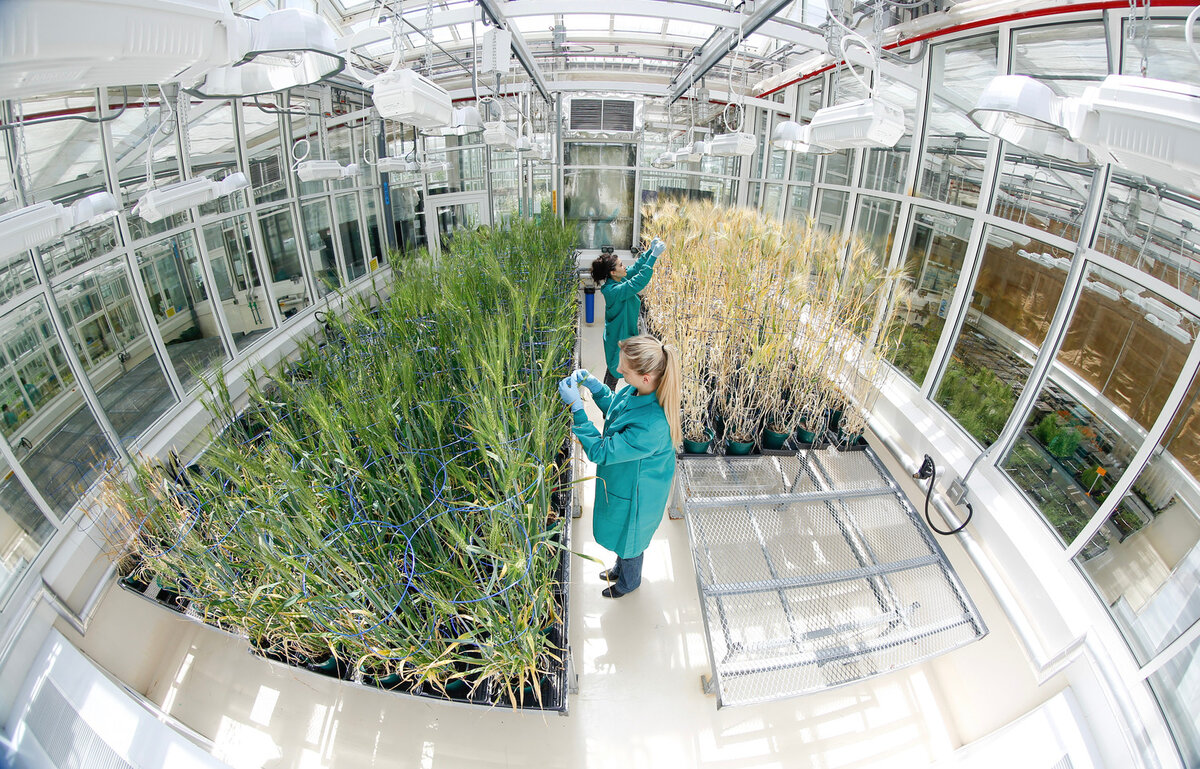
This is not a degree scholarship but a research fellowship for people who have recently completed a PhD. It is the highest-value opportunity covered in this guide.
Source: King Abdullah University of Science and Technology
The numbers
- USD 75,000 per year as a living stipend.
- Up to USD 40,000 per year in research funding — note that this is a recurring annual allocation, not a one-off grant, which changes the arithmetic considerably.
- A three-year term.
- Free housing and schooling for children, plus medical insurance, relocation support and travel allowances.
Add it across the full term: USD 225,000 in stipend plus up to USD 120,000 in research funding equals as much as USD 345,000 over three years, before housing, insurance and schooling are counted. That places it among the most generous postdoctoral fellowships available anywhere.
Two stages: how the portal really works
The official programme site sets out a two-stage process, and understanding it before you start is the most useful thing on this page for postdoctoral applicants:
| Stage 1 — Concept Note | Stage 2 — Full Proposal | |
|---|---|---|
| Window | 1 September – 1 October 2026 | Deadline 15 January 2027 |
| Who applies | Everyone | By invitation only |
| What is required | A short concept note outlining your proposed research, an updated CV with publications (max 4 pages), two representative publications, and two referees ready to submit letters | A full research proposal |
| Host PI | Optional at this stage — you may name up to three potential hosts | Settled at this stage |
This is the critical detail: Stage 1 does not require a KAUST faculty member to have already agreed to host you. Many candidates spend months emailing potential supervisors, then watch the window close while still waiting for replies. What 1 October asks for is a strong concept note — not a signed arrangement.
Priority research areas
The fellowship concentrates on water, food, energy, health, artificial intelligence, and marine science with a focus on the Red Sea. The closer your proposal sits to those themes, the stronger your position, because assessment weighs scientific quality alongside the Kingdom's research priorities.
Eligibility
Open to applicants of all nationalities, aimed at researchers at the start of their independent careers. The commonly cited condition for the 2027 call is that the PhD must have been awarded after January 2023 — roughly a four-calendar-year window. That specific cut-off was not published on the official call page at the time of writing, so verify it in the full application pack, which the site says will be released when applications open on 1 September.
Which one fits you? Four scenarios
A computer engineer two years past their bachelor's, comfortable in English, wanting a funded master's.
Route: KAUST. The portal opens within days and the field sits squarely in its divisions. Immediate priority: book an IELTS date if you do not have a score, and email three professors about recommendation letters before the end of August.
A political science graduate with a 3.4 GPA who works in both Arabic and English and cannot pay fees.
Route: the Doha Institute, targeting Sanad, while also being assessed for Tamim if the academic record supports it. The deadline is 15 January 2027 — enough time to write a genuinely considered statement of purpose and get documents translated without rushing.
A researcher who received their PhD in 2024 and wants research independence, not a postdoc assistantship.
Route: the KAUST Global Fellowship. The hard date is 1 October 2026, and the deliverable is a concept note — not a full proposal, and not a supervisor's agreement. Start today by selecting your two strongest publications and cutting your CV to four pages.
A student already enrolled at an Education City university in Doha with a 2.8 GPA.
Route: Mehnaty, and it carries the nearest deadline on this entire page — 21 August 2026. First confirm that the terms of any scholarship you hold permit employment, then apply immediately. Peers outside Qatar Foundation cannot use this route at all.
Source: King Abdullah University of Science and Technology
The shared paperwork: prepare once, apply three times
All three scholarships ask for essentially the same core documents — Mehnaty needs none of this list, because its applicants are already enrolled students inside the Foundation. The common mistake is starting to gather them after the portal opens, only to discover that some take weeks. Here is a realistic timing estimate for each:
| Document | Realistic turnaround | Start now? |
|---|---|---|
| Official transcript from your university | 3 days – 3 weeks depending on institution | ✅ immediately |
| Certified translation of transcript + grading scale | 3–7 days after receiving the original | ✅ immediately |
| Three recommendation letters | 2–4 weeks (professors run late) | ✅ immediately — the riskiest item |
| IELTS or TOEFL score | 2–6 weeks (test date plus results) | ✅ if you don't have one |
| Academic CV | 2–4 days | ⏳ later |
| Statement of purpose or concept note | 1–2 weeks with revisions | ⏳ later |
| Valid passport | 2–8 weeks to renew | ✅ check the expiry date today |
Recommendation letters are the dangerous item, because they are the only ones that do not depend on you. A professor contacted on 25 August for a 1 October deadline may reply on 20 September. Email today, and email four people to reliably secure three.
What "fully funded" actually means
The phrase gets used loosely in scholarship marketing, and its meaning shifts between programmes. Here is a practical breakdown of what still lands on you:
| Item | KAUST (MS/PhD) | Doha Institute (full award) | Global Fellowship |
|---|---|---|---|
| Tuition | 0 | 0 | Not applicable |
| Housing | 0 (dependant charges possible) | 0 | 0 |
| Health insurance | 0 (dependant charges possible) | 0 | 0 |
| Initial travel | Covered via relocation support | Return airfare | Covered |
| Daily living costs | From the annual stipend | From the monthly salary | From the USD 75,000 |
| Application and test fees | On you | On you | On you |
| Certified translations and attestations | On you | On you | On you |
| Additional dependant costs | Partly on you | Case by case | Schooling covered for children |
Those last three rows are what catch applicants out. Test fees, certified translation and document attestation can together run into several hundred dollars before a single dollar of funding arrives. Budget for it.
Mistakes that cost people a place
- Waiting for a social-media announcement. Portals open on the institutions' own websites, often days before any promotional post. Watch the official site directly.
- Assuming a mid-range GPA ends the conversation. KAUST publishes no minimum GPA. An average transcript paired with a publication and strong references can outperform a high GPA with nothing else attached.
- Hunting for a supervisor before submitting a concept note. For the Global Fellowship, naming a host is optional at Stage 1. Waiting for someone to "agree" usually means missing 1 October entirely.
- Ignoring the bilingual requirement at the Doha Institute. Applicants with excellent English but weak academic Arabic struggle in the coursework itself, not only in admissions.
- Submitting uncertified translations. KAUST explicitly asks for a certified English translation alongside the original transcript and grading scale. A self-made translation will not be accepted.
- Targeting a spring intake on a tight timeline. If your documents are not ready, aim for fall rather than submitting an incomplete file that gets rejected.
Frequently asked questions
Do I need a separate application for the KAUST Fellowship?
No. The university states explicitly that there is no separate application, and every student admitted to a master's or PhD programme receives the fellowship automatically. The only exception is applicants arriving through partnership programmes or external sponsors who already fund them.
Can I apply to KAUST without IELTS or TOEFL?
The published requirement is 81 on the TOEFL iBT or 6.5 on IELTS. It is waived if you earned your degree in the United States, Canada, the United Kingdom, Ireland, Australia or New Zealand. Outside those cases, a score is required.
Is the GRE mandatory at KAUST?
No, but the university strongly encourages it and notes that a high quantitative score strengthens an application. If your GPA is mid-range, the GRE is one of the fastest ways to compensate.
When exactly does the Doha Institute application open and close?
It opens on 1 September 2026 and closes on 15 January 2027 for the 2027/2028 academic year. Both dates appear on the Institute's official scholarships page, giving a window of roughly four and a half months.
Is the KAUST Global Fellowship open to non-Saudi researchers?
Yes, it is open to all nationalities. The binding condition concerns your career stage — having recently completed a PhD and being at the start of an independent research career — not your passport.
What is the difference between the Tamim and Sanad scholarships?
Tamim is awarded for academic excellence and covers full tuition plus housing, a monthly stipend and health insurance. Sanad is awarded on financial need, with coverage ranging from partial to full depending on the assessment of each applicant's circumstances, and can reach comparable full coverage for students arriving from outside Qatar.
Can I apply to more than one of these at the same time?
Yes, and there is no conflict between them. The core documents overlap — translated transcripts, recommendation letters, CV — so one round of preparation serves all three scholarship applications. Rewrite only the statement of purpose so it speaks to each institution on its own terms.
Can I apply to the Mehnaty programme from outside Qatar?
No. The programme is for Qatar Foundation students already enrolled at the Education City universities, and it requires a GPA of 2.5 or higher. It is not an international internship and provides no visa or relocation support. Applicants outside Qatar need to go through university admissions first.
What if I graduate after the application deadline?
The Doha Institute accepts applicants who can show they will complete a bachelor's degree by 1 August 2027, so final-year students are eligible. For KAUST, check your programme's requirements in the portal once it opens, as the university handles expected-graduation cases through conditional admission.
Our verdict
If your field is scientific or engineering and your documents are close to ready: KAUST first, and the portal is about to open. It is the nearest deadline and the broadest coverage, and because there is no separate scholarship form, all your effort goes into a single admission file.
If you work in the social sciences or humanities and read academic Arabic: the Doha Institute, and do not wait for September to start. Four and a half months feels generous until you count the weeks certified translation and recommendation letters actually take.
If you finished a PhD two or three years ago: the Global Fellowship is the highest-return option on this page by a clear margin — and the minimum ticket to enter the race is a concept note, not a full proposal and not a supervisor's blessing.
And if you are already a Qatar Foundation student: Mehnaty is the nearest deadline on this page — 21 August — and it asks for no certified translations and no recommendation letters. Check your scholarship terms and apply.
The one practical step that applies to all three scholarships and starts today: email your professors about recommendation letters. Everything else on the list can be compressed into a fortnight. That single item cannot.
Browse fully funded opportunities on Truescho to track these portals as they open, and convert your grades with the GPA calculator before you fill in any form — a surprising share of rejections trace back to a mis-entered number rather than a missing qualification.
Sources
- KAUST Admissions Office — Admission Timeline — opening and closing dates for the 2026 and 2027 cycles
- KAUST — Applying to KAUST — fellowship benefits, language requirements and document list
- Doha Institute for Graduate Studies — Scholarships — 2027/2028 academic year dates
- KAUST Global Fellowship — official site — priority research areas and application stages
- KAUST Global Fellowship — How to Apply — stage deadlines and concept note requirements
- KAUST News — Global Fellowship Program for early career researchers — stipend, research fund and fellowship duration
- Mehnaty and Meydan portal — Qatar Foundation — hourly rate, weekly hours, eligibility rules and the live posting with its closing date